

















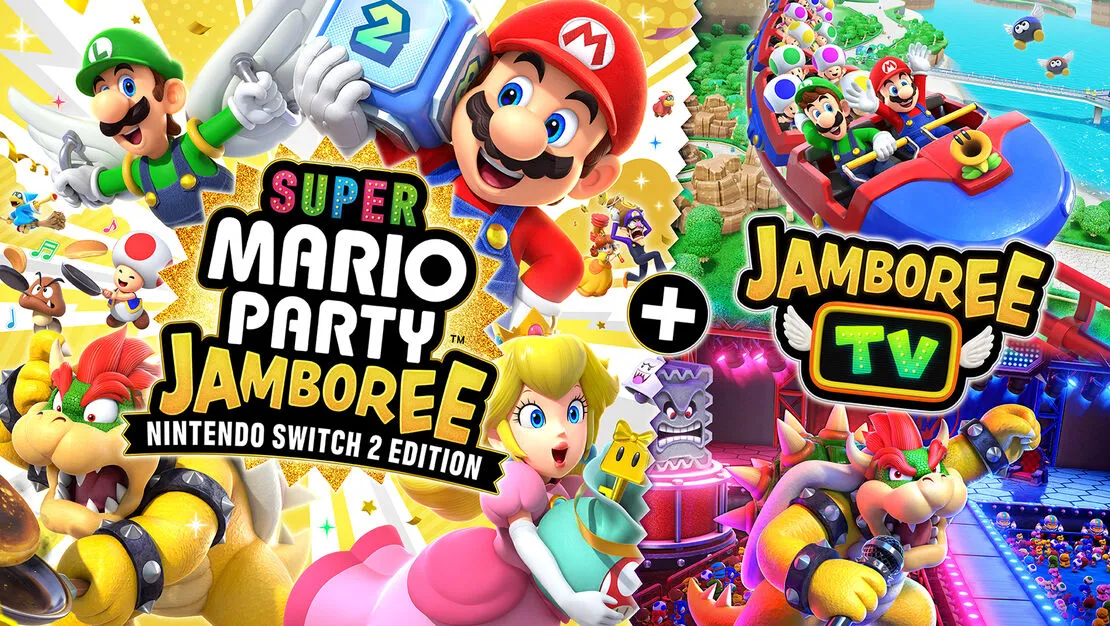

Super Mario Party Jamboree represented a genuine return to form for Nintendo’s long-running series on its original Switch release. It confidently shed the gimmicks of its recent predecessors and refocused on the strategic board game action and high-quality minigames that defined the Nintendo 64 classics.
Now, arriving as a launch title for the Switch 2, the game has been rereleased with the unwieldy title of Super Mario Party Jamboree – Nintendo Switch 2 Edition + Jamboree TV. This package bundles the original game with a brand-new expansion designed to serve as a showcase for the new console’s hardware.
It promises an enhanced experience with new features like Joy-Con mouse controls and camera integration. The core question, then, is whether this expanded edition seamlessly builds upon the original’s success to create the definitive version of the game, or if its implementation introduces a host of new, unnecessary complications.
The Foundation: A Superb Party Still Stands Strong
Before digging into the new Switch 2 additions, it’s vital to understand what made the original game so successful, because that entire experience is preserved here. The base Super Mario Party Jamboree is arguably the best the series has ever been. Its selection of boards is fantastic, moving beyond the simple, linear paths of older titles.
Here, boards are dynamic spaces with moving parts, like trains that can alter routes or race cars that offer high-speed shortcuts, forcing players to think several turns ahead. The design encourages actual strategic thinking—weighing the risk of a dangerous but rewarding path versus a safer, slower one—in a way the series often avoids in favor of pure chance.
This renewed focus on player agency was perfectly encapsulated by a standout feature: the brilliant “Pro Rules” option. For decades, Mario Party has held a reputation as a “friendship ender,” a game where victory can be snatched away by a random, infuriating event in the final turn. Pro Rules was the antidote. By toggling this option, players could significantly reduce the impact of luck-based events, reining in the series’ notorious randomness.
This masterstroke catered not just to new players, but to a dedicated, veteran audience that had grown with the franchise and now craved a more skill-based and satisfying competitive experience. The core of the game was supported by a uniformly excellent lineup of minigames, offering a robust mix of 2v2, 1v3, and free-for-all formats that tested reaction time, puzzle-solving skills, and rhythmic timing.
The inclusion of character-specific challenges added another layer of replayability, making the choice of avatar more meaningful. This entire package was wrapped in a gorgeous, polished presentation, with vibrant colors, expressive character animations, and a charming soundtrack that brought every moment to life. The original Jamboree set a very high bar, and that complete, polished game is the bedrock of this new edition.
Welcome to Jamboree TV: The Switch 2 Technology Showcase
Booting up the game presents a choice: the original Jamboree or the new “Jamboree TV.” This new section is where all the Switch 2-exclusive content lives, and it immediately impresses with a noticeable visual upgrade. Running at a crisp 1440p resolution when docked, its presentation makes the original 1080p game look noticeably softer in comparison. Character models are sharper, environmental textures are clearer, and new visual flourishes like volumetric lighting and reflective floors make the game boards feel more tangible and modern. It’s a clear step up.
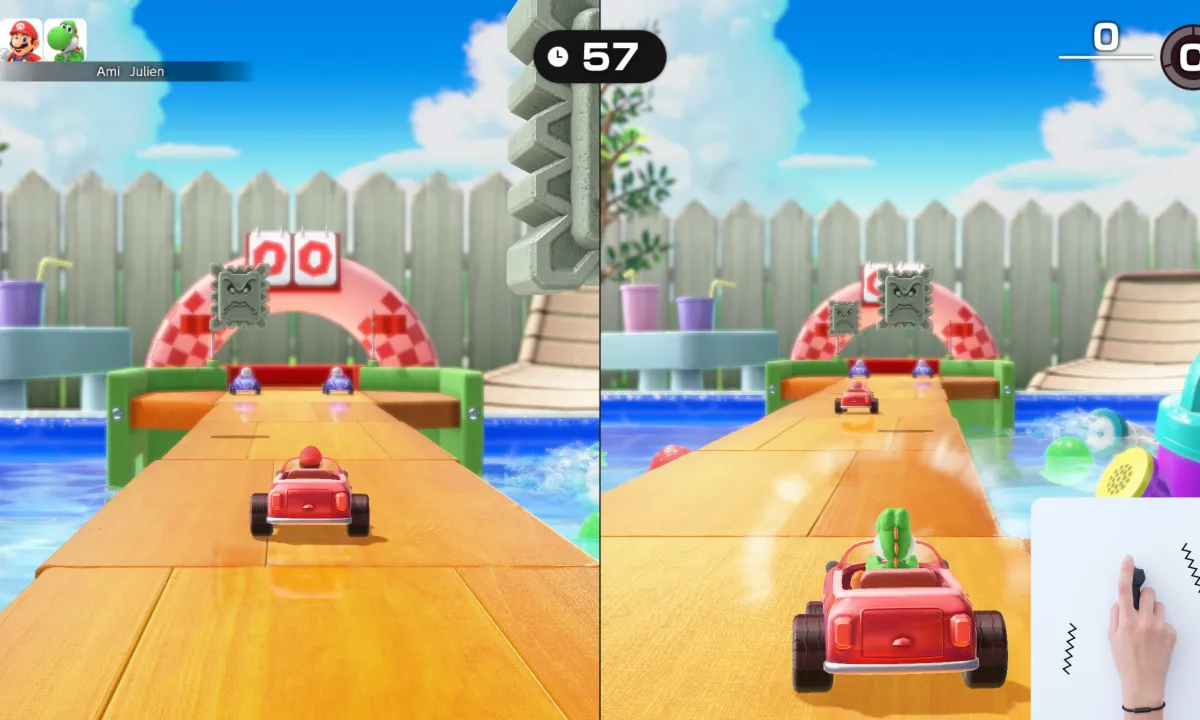
The undeniable star of Jamboree TV, however, is the implementation of the new Joy-Con 2’s mouse controls. While the idea of pointer controls might evoke memories of the Wii’s era of imprecise “waggle,” the execution here is flawless. The controls are responsive, accurate, and perfectly suited for the short, 45-second burst of a minigame. This intuitive input method requires no complex button memorization, making it incredibly accessible for non-gamers or younger kids joining the party. The 14 new mouse-controlled minigames are some of the best in the package.
Stuffie Stacker, a frantic cooperative game where you and a partner must build the tallest possible tower of plushies and blocks, is a masterclass in chaotic teamwork. Goomba Scoopas, which has you driving a snowplow to frantically shove piles of Goombas into your team’s goal, is pure, unadulterated fun. Others, like a clever take on air hockey or a fast-paced mail-sorting challenge, demonstrate the versatility and simple joy of the pointer. All of these games are 2v2, a welcome decision that bolsters the roster of team-based challenges.
Where the mouse controls succeed by feeling modern and refined, the camera and microphone features recall a less-evolved era of motion gaming. The ability to see a live feed of your friends’ faces during a match is a cute novelty that might elicit some laughs from children, but it adds little of substance to the actual game. For many, it will feel less like a gameplay feature and more like a forced social media integration.
The gameplay built around these peripherals, found primarily in the “Bowser Live” mode, feels imprecise and shallow. Tasks like trying to balance a stack of virtual Goombas on your real head using camera tracking, or shouting into a microphone to make an object move, suffer from a critical lack of tactile feedback. It’s a lesson Nintendo should have learned years ago from titles like WarioWare: Snapped!
on the DSi; minigames that rely on cameras and microphones are almost always less satisfying than those using a proper controller. Trying to clap to a beat picked up by a mic is far less precise than the certainty of a button press. The appeal of these gimmicks wears off almost immediately, leaving them to feel like shallow tech demos rather than compelling activities.
New Ways to Party: An Analysis of Expanded Modes
Beyond the new minigames, Jamboree TV introduces two new rulesets that inject fresh life into the core board game, and thankfully, these are far more successful than the camera-based modes. “Tag-Team Rules” pits two teams of two against each other in a deeply strategic format. Each pair shares their coins, stars, and items, which completely changes how you approach the game.
Suddenly, inventory management is a team sport, and having a shared pool of resources encourages one player to take on a “quarterback” role, planning out the team’s moves. Special mechanics like “Together Dice” further enhance this cooperative spirit, making it a fantastic addition for players who love to strategize. The second new ruleset, “Frenzy Rules,” offers a brilliant solution to one of Mario Party’s oldest problems: game length.
With matches sometimes lasting 90 minutes or more, fitting in a game can be a challenge. Frenzy Rules condenses the entire experience into just five turns. Lasting about 30 minutes, it gets to the action immediately by starting every player with 50 coins, a Double Dice, and even a star. Every single roll and minigame feels critical, making for an exciting, high-stakes variant that respects the player’s time.
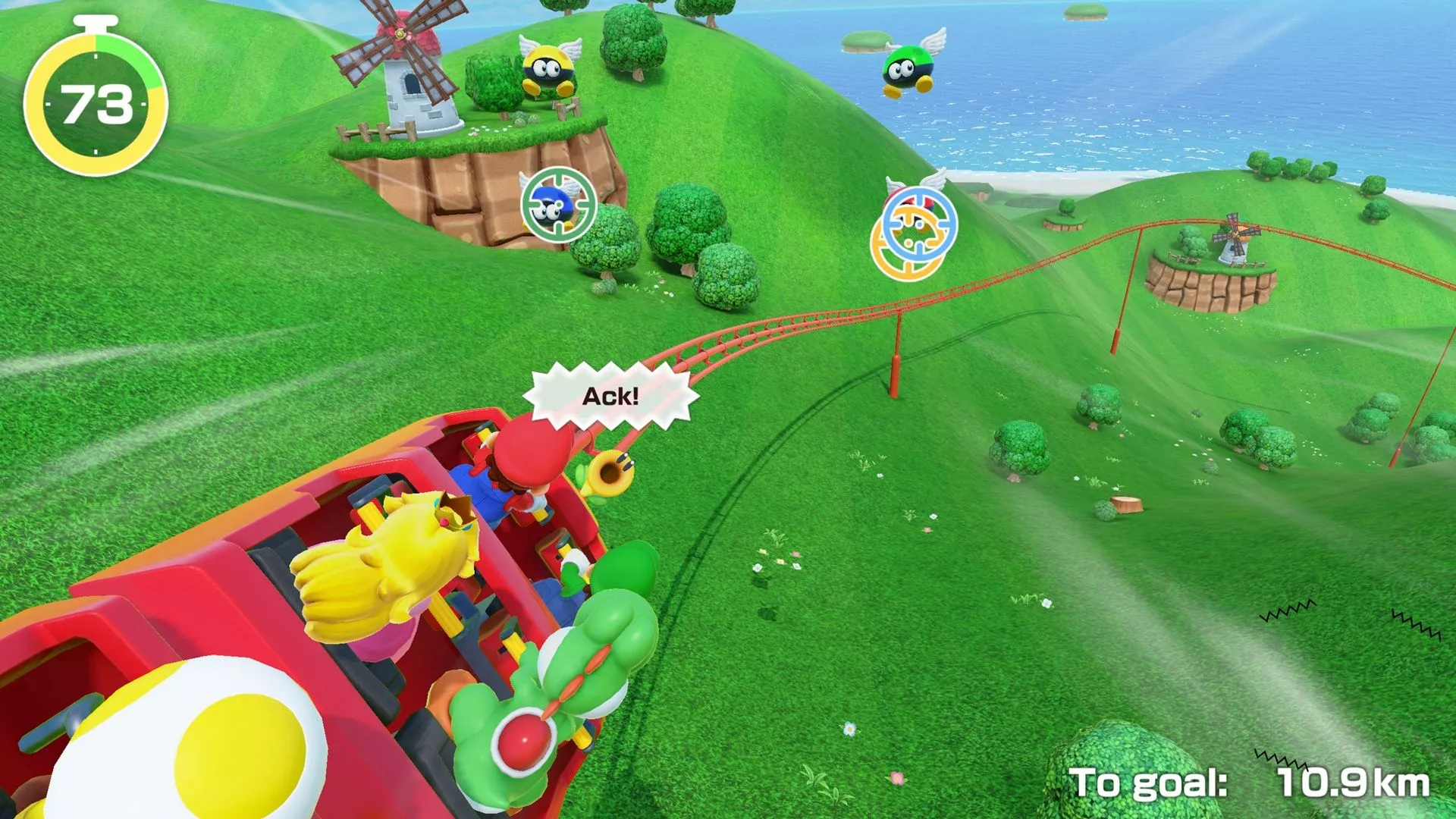
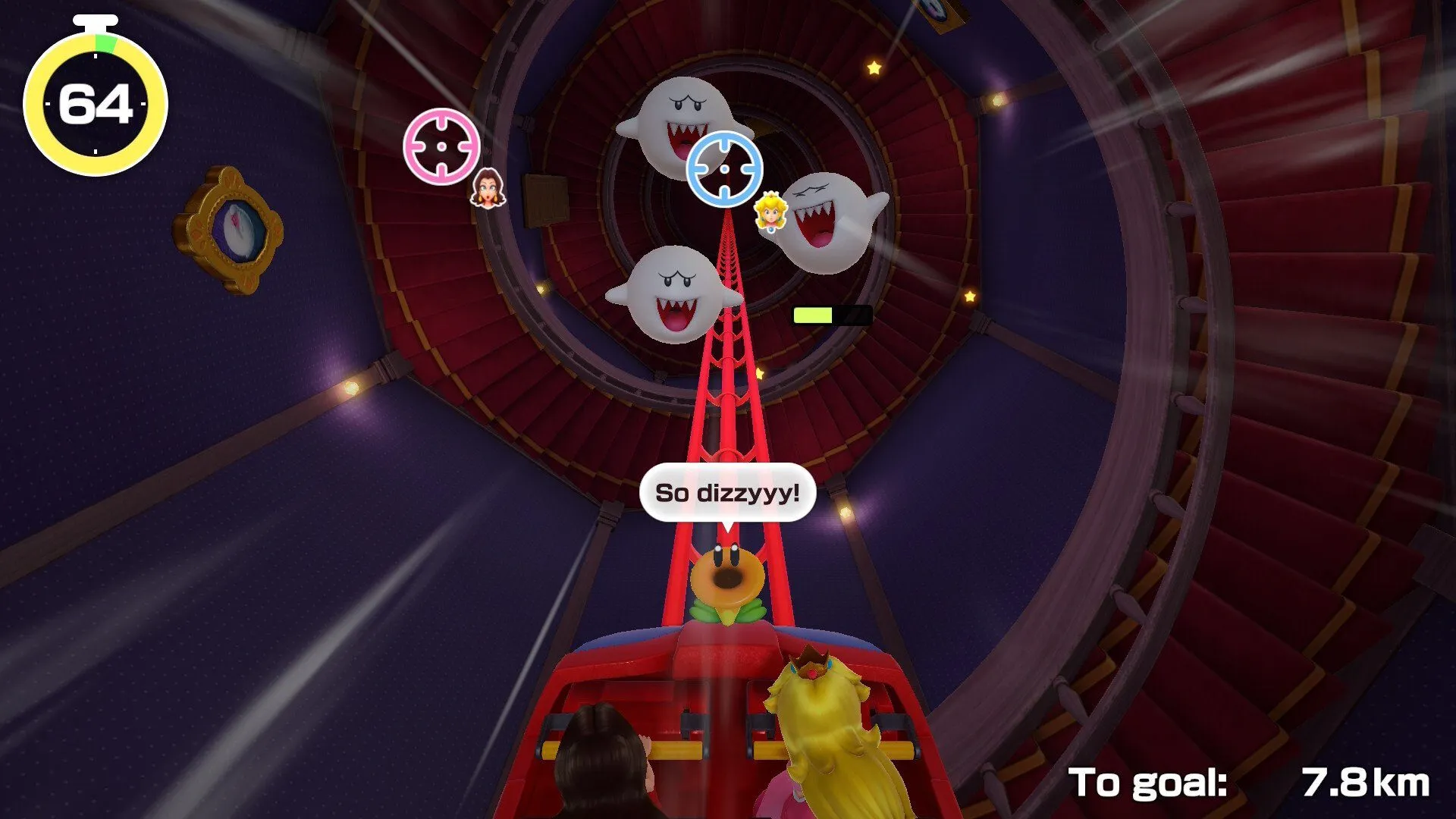
Unfortunately, the new standalone modes included in Jamboree TV are far less impressive. “Carnival Coaster” is a cooperative, on-rails shooter that uses the excellent new mouse controls. While functional, the mode feels tonally out of place. Mario Party’s DNA is competitive; the joy comes from besting your friends. A purely cooperative mode, while a nice idea on paper, lacks the tension and schadenfreude that is central to the series’ enduring appeal.
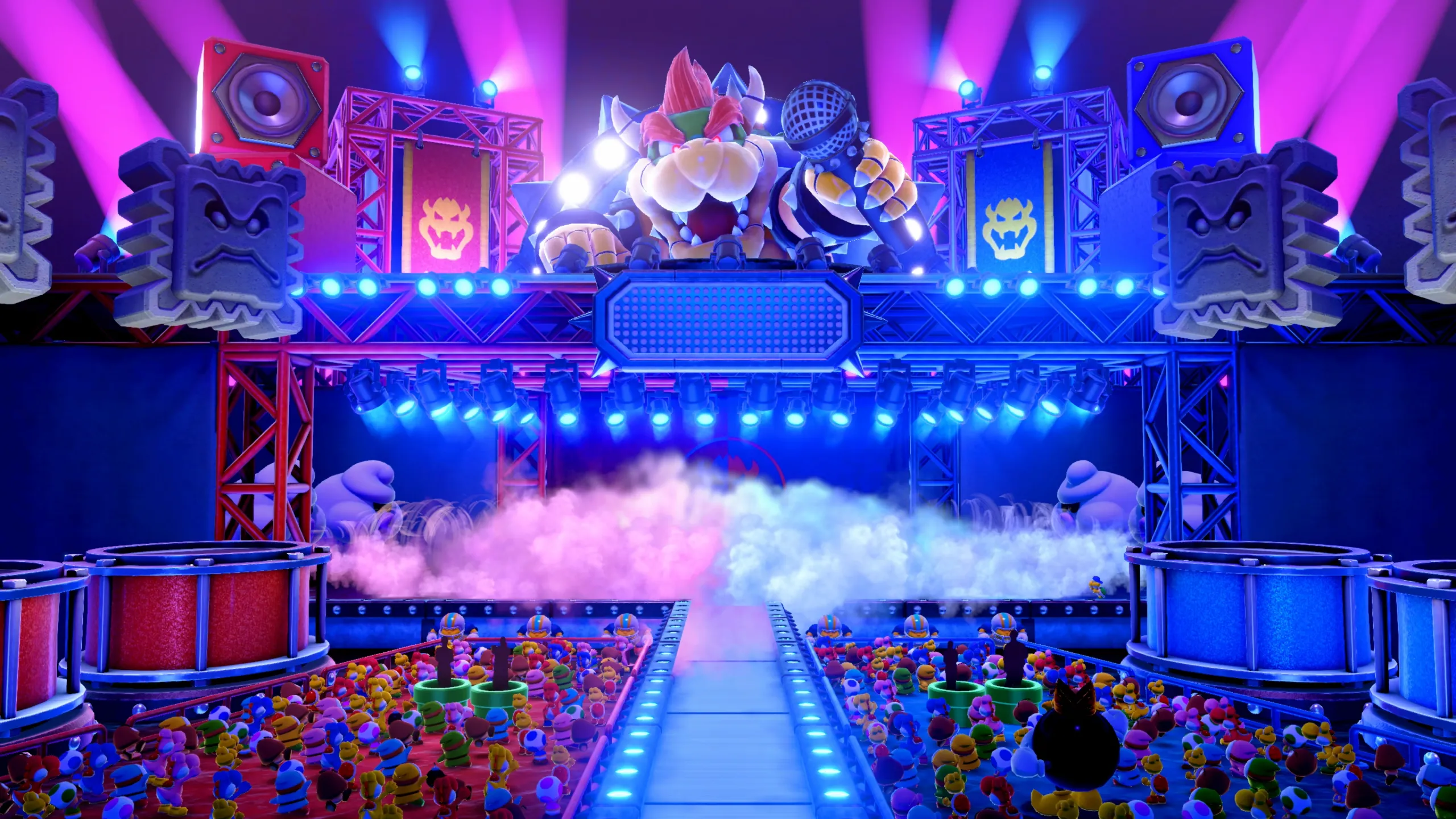
Its repetitive level design and lack of enemy variety mean you’ll have seen everything it has to offer after a single run. “Bowser Live” is even more of a misfire. This mode serves as the primary showcase for the weak camera and microphone games, and it’s painfully short. The framing device of participating in a game show hosted by Bowser is a fun idea, but it’s completely let down by the shallow gameplay.
Worse still, its final round is the exact same disappointing co-op challenge every single time, where players shout at the screen to win over a crowd. This repetition kills any desire to replay the mode, solidifying its status as a tacked-on gimmick designed to sell peripherals rather than provide lasting entertainment.
A Tale of Two Parties: The Great, Frustrating Divide
The single greatest problem with this package isn’t any individual piece of content, but the baffling way it has been structured. This isn’t one unified game. It is, in practice, two separate applications—Jamboree and Jamboree TV—launched from a single menu, and the decision to erect a digital wall between them is a fundamental design failure.
This structure is a stark contrast to other successful game expansions, like Mario Kart 8 Deluxe’s Booster Course Pass, which seamlessly integrated new content into the existing game. Here, the separation feels arbitrary and actively detrimental to the player experience.
The result is a frustrating set of compromises that forces players to choose between features. Imagine being a strategic player who loves the skill-based Pro Rules. You are permanently barred from ever seeing the 14 new mouse minigames or trying the new Tag-Team ruleset in your preferred mode. Imagine being a high-score chaser who loves mastering minigames.
The new Jamboree TV mode offers you no home, as it inexplicably refuses to track your accomplishments, lacking the iconic “New Record!” celebration that is a staple of the series. This digital wall extends to all forms of progression.
Achievements earned in TV mode do not register in the base game. All unlockables, like new boards and stickers, are handed to you from the start in TV mode, removing the satisfying sense of progression that the original game cultivated. The game suffers from a sort of digital amnesia, where one half has no knowledge of what the player has accomplished in the other.
This disconnect is also technical. In an age of performance patches and next-gen upgrades, leaving the base Jamboree section as a direct, un-enhanced port feels inexcusable in an $80 premium package. The visual disparity is jarring, with TV mode’s crisp 1440p image sitting right next to the original’s softer 1080p presentation.
The user experience of switching between the two modes is clunky, requiring a full reload—complete with skippable staff credits—that serves as a constant, jarring reminder that you are not playing one game, but two poorly stitched-together ones.
The Verdict: A Compromised Upgrade
Super Mario Party Jamboree remains the series’ best entry, but this Switch 2 edition is a deeply compromised package. It adds some genuinely great new content, particularly the polished mouse-controlled minigames and the clever Tag-Team and Frenzy rulesets that add significant strategic depth and flexibility. However, the experience is severely hampered by the bizarre and frustrating separation of that content from the core game.
For existing owners, the $20 upgrade is a tough sell. It’s worthwhile only if you frequently host parties with players who would benefit from the intuitive mouse games and you have a burning desire for faster matches via Frenzy Rules. But you must be willing to navigate the clunky divide and accept that this new content will feel like a separate, lesser game rather than a true expansion.
For new players facing an $80 price tag, the recommendation is even more complicated. It is difficult to recommend this version when the original, more cohesive, and cheaper Switch 1 version offers a better first impression of what makes Jamboree great.
Ultimately, this edition feels like a massive missed opportunity, a collection of excellent new ideas hobbled by a bafflingly poor implementation that fractures the experience. The best Mario Party ever is still in here, but you have to dig it out from under the rubble of a clumsy and ill-conceived expansion.
The Review
Super Mario Party Jamboree Nintendo Switch 2 Edition + Jamboree TV
While the foundational game remains the series' best and the new mouse controls are a triumph, this edition is hobbled by its design. The baffling decision to completely separate new and old content creates a frustrating, disjointed experience that undermines progression and polish. Excellent new ideas are chained to a structure that prevents this from being the definitive version it should have been. It’s a bold step forward and two clumsy steps back.
PROS
- The excellent base game, arguably the series' best, is included in its entirety.
- New mouse-controlled minigames are responsive, creative, and genuinely fun.
- Tag-Team and Frenzy rulesets are fantastic additions that add strategic variety and faster-paced options.
- The Jamboree TV portion features a crisp 1440p visual upgrade.
CONS
- Content is inexplicably split into two separate modes that do not communicate with each other.
- No shared progression, achievements, or minigame records between the old and new content.
- Forgettable camera and microphone minigames feel like imprecise gimmicks.
- The base game portion receives no performance or resolution updates.
- New side attractions like Bowser Live and Carnival Coaster are shallow and repetitive.