




























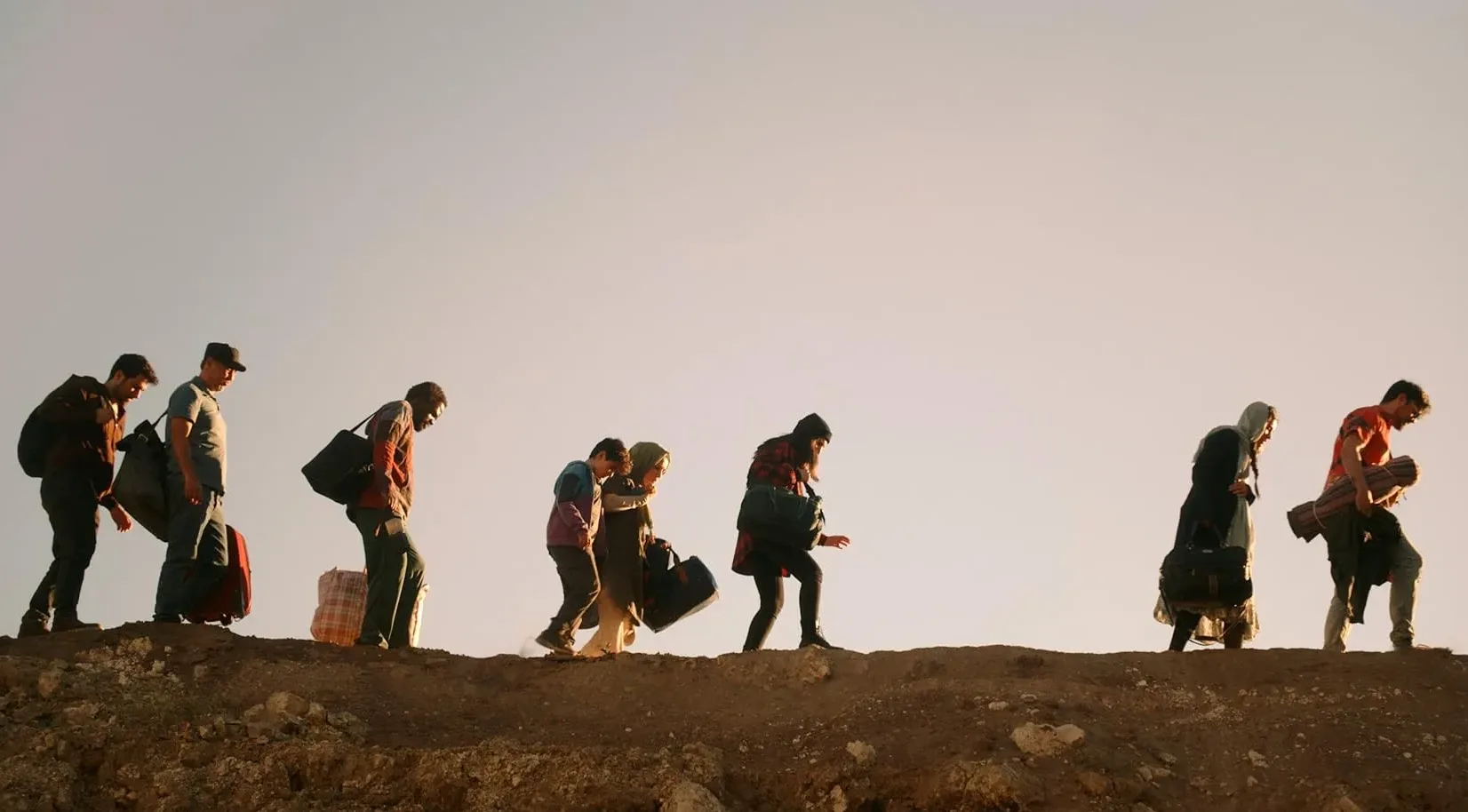

Exodus opens in the fraught atmosphere of Turkey following the 2016 attempted coup, a period when the very fabric of society was being re-written. The film plunges the audience directly into this environment of paranoia and suspicion, where ordinary lives are shattered by state decree.
It chronicles the sudden fall from grace of citizens from all walks of life—academics, journalists, and civil servants who are abruptly branded as traitors. The narrative is driven by an unnerving sense of persecution, capturing the feeling of a world turned upside down overnight.
We follow the intersecting paths of archetypal figures: the intellectual whose lecture on democracy makes him a fugitive, and the police officer whose conscience is tested by the brutal new orders he must enforce. These characters, stripped of their names and histories, become vessels for a story about forced displacement.
The film establishes itself not as a political thriller, but as an intimate, personal examination of the human cost of a widespread political purge, exploring the instinct for survival when one’s own country becomes hostile territory.
The Mosaic of a Modern Exodus
The film employs a fractured, multi-character structure, a technique that recalls the hyperlink cinema of films like Alejandro G. Iñárritu’s Babel or Mani Ratnam’s political drama Yuva. This narrative choice is not merely a stylistic flourish; it is essential to conveying the pervasive nature of the crisis. By weaving together disparate lives, the film argues that no one is insulated from the state’s reach.
The story traces the academic Hakan, whose intellectual idealism is brutally confronted by the reality of state power after his pro-democracy lecture is violently dismantled. His journey is mirrored by that of Mehmet, a police officer whose internal conflict between duty and morality becomes an unbearable weight, leading him to desert his post. Mehmet’s path diverges sharply from that of his former colleague Yilmaz, a man who embraces his role as a vengeful enforcer of the regime.
These divergent paths eventually converge in a single, tense location: a temporary safehouse for migrants and exiles. This shelter becomes a microcosm of a new, displaced Turkey, a melting pot of persecuted individuals—intellectuals, artists, and ethnic minorities like Kurds and Yazidis—all united by their shared status as fugitives. This narrative nexus effectively communicates the staggering scale of the societal purge.
At the same time, this approach invites a critical question, one often aimed at India’s parallel cinema movement: do the characters serve the message more than they serve themselves? At times, they feel less like complex individuals and more like carefully chosen symbols of a larger tragedy, their personal dramas occasionally overshadowed by the film’s urgent political statements.
A Quiet, Polished Terror
The film’s aesthetic presents a fascinating and unsettling contradiction. Its visual language is polished, its cinematography clean and composed, imbuing the frame with a quality that feels at odds with the gritty desperation of its subject matter. This high production value invites scrutiny.

When a supposedly grim migrant hideout is lit with the artful grace of a stage play, it risks creating a sense of detachment from the raw, chaotic reality of displacement. This choice, however, may be a deliberate commentary on the nature of modern authoritarianism, which often presents a sanitized, bureaucratic face while dismantling lives with cold efficiency. The polished surface mirrors the dispassionate cruelty of the system itself.
This visual style is paired with a deliberate and powerful narrative restraint. The storytelling is quiet and understated, refusing to indulge in the sensationalism or graphic violence that a lesser film might employ. Much of its emotional power is generated by what is left unsaid and unseen, building tension through long, observational takes and the careful use of ambient sound. The performances are similarly grounded and deeply authentic.
The actors convey a world of fear and loss through downcast eyes, a hesitant line delivery, or the sudden tensing of a shoulder. This focus on internal states over external action recalls the patient, humanist studies of a director like Satyajit Ray. The film’s quiet intensity and its polished visuals work in concert to create a unique mood of sanitized dread, capturing the modern horror of lives being systematically erased with impersonal precision.
Beyond Borders: A Human Testimony
While Exodus is rooted in a specific Turkish crisis, its message has a resonance that is truly universal, serving as a cautionary tale in an era of rising populism and eroding democratic norms worldwide. The film moves past its immediate political context to explore fundamental questions of loss, identity, and resilience.

It poses a haunting question: What happens when your entire world—your profession, your home, your very sense of belonging—is stripped away? The film’s greatest strength is its function as a testimony. A testimony is more than a story; it is an act of witness, a piece of evidence presented against the act of forgetting. In a world of state-sponsored narratives, the film stands as a crucial counter-narrative, a cinematic effort to reclaim memory, much like films that have documented historical traumas from other cultures.
This is not a simple story of survival, but a deeper exploration of the struggle to retain one’s humanity when the state actively seeks to erase it. The characters fight not just for their lives, but for their very sense of self.
The film’s lasting impression is that of a quiet but unflinching portrait of courage. It is a necessary and moving examination of the fragility of justice, the high cost of defending one’s values, and the profound resilience of the human spirit in the face of overwhelming oppression, making it a vital piece of contemporary world cinema.
“Exodus” premiered on June 20, 2025.
Full Credits
Director: Serkan Nihat
Writers: Erkan Çıplak, Refik Güley
Producers: Ender Zirekoğlu, Murat Kesgin
Cast: Denis Ostier, Umit Ulgen, Dilan Derya Zeynilli, Murat Zeynilli, Selen Cabel, Doga Celik, Azra Ciftci, Barbaros Ogut, Gunce Ates
The Review
Exodus
Exodus is a vital and haunting act of cinematic testimony. Through its restrained direction and powerful, authentic performances, it tells a universal story of displacement and resilience. While its polished aesthetic occasionally feels at odds with its raw subject matter and its characters sometimes lean towards symbolism, the film's quiet intensity and courageous message make it an essential and deeply moving piece of contemporary world cinema.
PROS
- A powerful and universal message about resilience and human rights.
- Quiet, restrained direction that effectively builds tension and emotional weight.
- Grounded and authentic performances that carry the film.
- Serves as a courageous and necessary cinematic testimony for a silenced history.
CONS
- Polished, glossy cinematography can create a sense of detachment from the story's gritty reality.
- Characters sometimes function more as symbols of a collective tragedy than as complex individuals.
- The multi-protagonist structure occasionally prioritizes breadth over deep personal exploration.