
























![Kingdom Hearts Collection [I-III] Review](https://gazettely.com/wp-content/uploads/2026/10/Kingdom-Hearts-Collection-I-III-1-360x180.webp "Kingdom Hearts Collection [I-III] Review: KHII Holds Steady as Newer Entries Fluctuate 37")



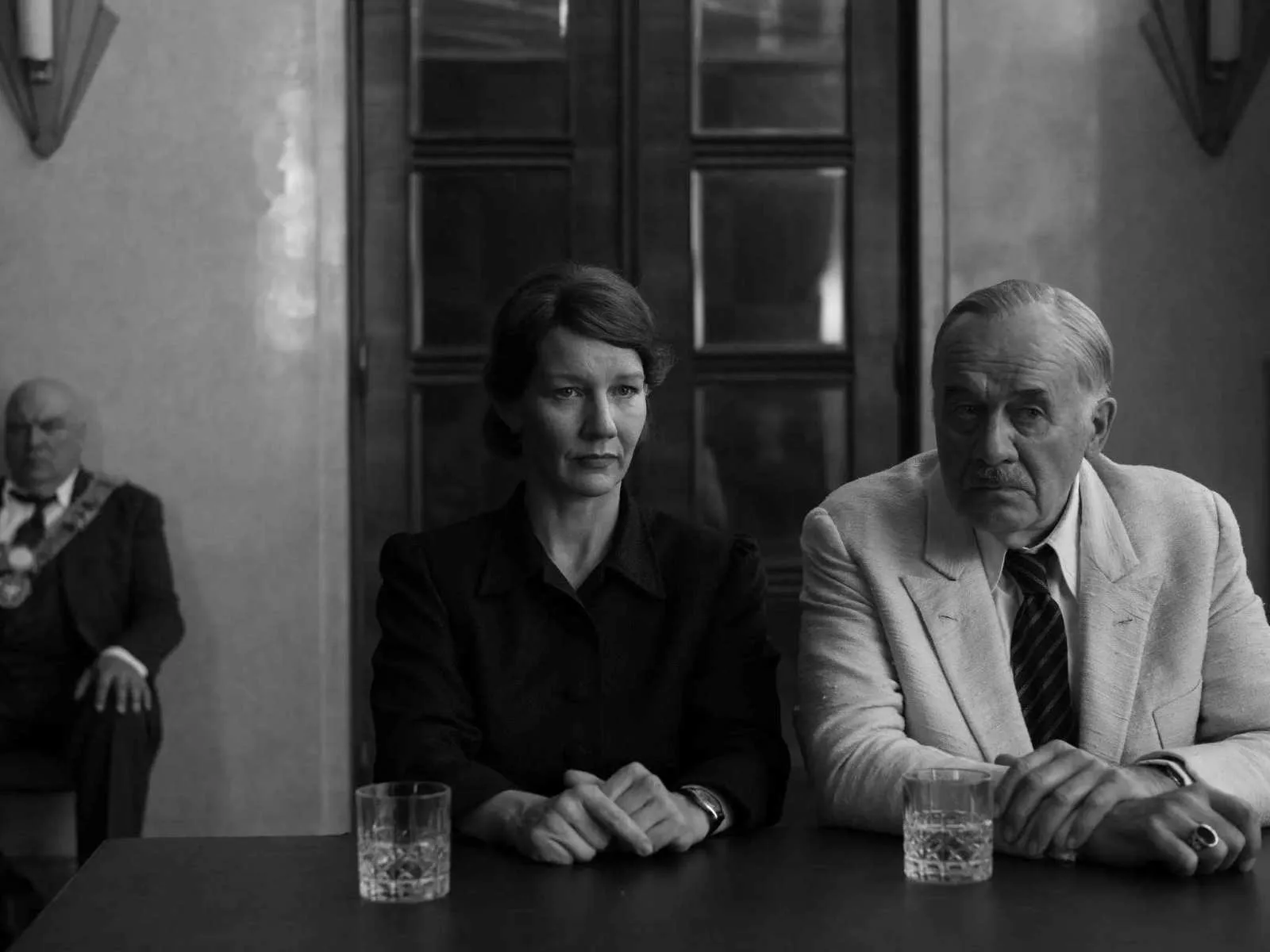

Pawel Pawlikowski has built a career on making small frames hold enormous weight. Fatherland, his 82-minute study of Nobel Prize-winning German novelist Thomas Mann, may be his most compressed and demanding achievement yet. The year is 1949. Mann (Hanns Zischler), returning from 16 years of American exile, travels through a barely recognizable Germany alongside his daughter and assistant Erika (Sandra Hüller), first to Frankfurt in the West to receive the Goethe Prize, then east to Weimar, now under Soviet administration, for Goethe’s 200th birthday.
Shot in black-and-white Academy ratio by Łukasz Żal, the film is formally of a piece with Ida and Cold War, yet distinctly harder to enter. Where those films offered emotional handrails, a love story or a spiritual crisis, Fatherland offers press conferences, eulogistic speeches, and the particular discomfort of watching a great man’s legend slowly audited by his daughter. Two spines hold it upright: a father-daughter relationship under quiet, accumulating strain, and a fractured nation in which two ideological orders compete to claim Mann as cultural property. He floats between them, serene and slightly useless.
Who Stays, Who Sells Out, Who Survives
The film begins in Cannes. Thomas Mann is nowhere to be seen. A long, fixed-camera scene places us with his son Klaus (August Diehl), sprawled in a hotel room, phone to his ear. Diehl’s eyes are hollowed out; a hypodermic sits on the bedside table. Pawlikowski holds the camera on Klaus for the entire call, revealing Erika only at their goodbye. His despair sets the emotional temperature for everything that follows, and Klaus will barely appear again.
Frankfurt comes next: an award ceremony, a press conference, a cocktail party dense with competing agendas. A CIA operative takes up position at the edges. Wagner’s grandchildren lobby for the revival of the Bayreuth festival; Mann tells them the theater should be burned to the ground. The most disquieting presence is Gustaf Gründgens (Joachim Meyerhoff), Erika’s ex-husband, Nazi collaborator, and the real model for Klaus’s novel Mephisto. He arrives with the self-possession of a man who considers his brief Soviet imprisonment a full settling of accounts. It is not.
The trip east to Weimar produces the film’s sharpest comedy. Colonel Tulpanov, a Soviet official who manages to be both sinister and intellectually pompous, attempts to draw Mann into a debate on dialectical materialism. Mann responds with the same cushioned, high-minded evasiveness he deploys everywhere. Dignity or abdication: Pawlikowski refuses to say.
Fatherland asks what a great artist owes the country that formed him. Mann fled in 1933 and survived. The film observes, with characteristic restraint, that survival carries its own complications. The Faust legend runs quietly beneath the surface, in Mann’s speeches, in the moral architecture of Klaus’s novel, in the persistent question of who sold out and to whom. East and West both weaponize Goethe as ideological currency. Receiving prizes from both sides, Mann reads as either literature’s great transcendence or its most elegant act of political evasion. Erika, steadily, begins to push back.
Two Performances, One Father
Sandra Hüller’s work is the film’s load-bearing structure. Erika Mann, as written, risks disappearing into loyal-daughter servitude: sorting mail, managing border guards, selecting ties. Hüller refuses the disappearing act. She plays Erika as someone who has spent years compressing herself into the shape her father requires, and the compression has become its own form of pressure.
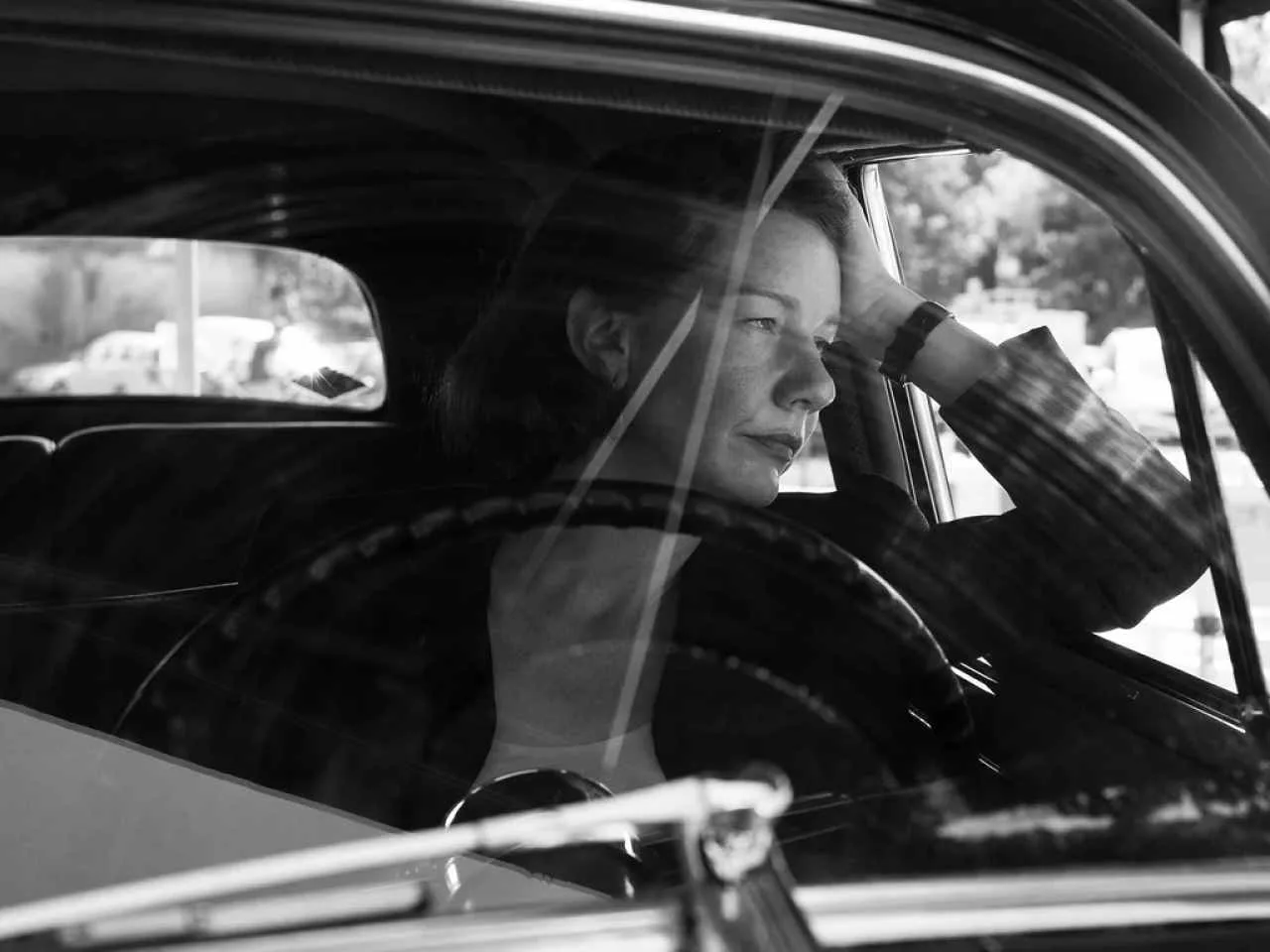
It releases in controlled bursts: a sharp slap across Gründgens’s face (one of the more satisfying acts of justified violence in recent cinema); a charged look exchanged with AP journalist Betty Knox (Anna Madeley), suggesting a romantic history conducted quietly in the margins of Thomas Mann’s biography; escalating confrontations with her father over his treatment of Klaus and his breezy political evasiveness. Hüller grew up in East Germany. The Iron Curtain passages carry, in her performance, the particular authority of lived familiarity.
Hanns Zischler’s Mann operates from a different register entirely. The performance is deliberate, poised, occasionally infuriating. His speeches are grand and frequently hollow, and Zischler plays the hollowness with a tragic self-awareness that keeps Mann from becoming a simple target. The film’s single long-delayed tear lands with genuine force.
August Diehl’s brief appearance as Klaus is a small study in conveyed despair; his haggard presence lingers long after he leaves the film. Joanna Kulig appears as a jazz singer in the Frankfurt scenes, a warm cameo for those who know where to look.
A Frame That Fits Everything
Łukasz Żal shoots Fatherland in the same boxy Academy ratio (1.37:1) he brought to Ida and Cold War, but the visual grammar here feels more architectural in its abstraction. Characters are frequently positioned low in the frame, with wide empty space above them, suggesting diminishment, the crush of history, the presence of unseen forces. Possibly the dead. The film was shot largely in Poland standing in for Germany, a quietly appropriate act of postwar geography, and each location is rendered with the tactile specificity of a period photograph: ruined church facades, moss-covered statues, the cold gleam of hotel marble.
Pawlikowski edits for implication. Scenes end before their emotional weight fully lands. The viewer does the remaining work. At 82 minutes, the film’s confidence in its own restraint borders on the combative.
The music is judicious and pointed: Bach, Mozart, Messiaen, period jazz, and a Socialist anthem written by Hanns Eisler (Brecht’s sometime composer). Bach arrives last and does the most, providing the nearest thing to emotional release the film allows itself.
An honest word of warning: this is Pawlikowski in fully academic mode. Viewers without working knowledge of the Mann family, the Weimar Republic, or postwar German cultural politics will find stretches genuinely opaque. The film rewards attention. It will reward a second viewing more.
Fatherland is a 2026 historical drama directed by Academy Award-winner Paweł Pawlikowski, which recently made its world premiere at the 79th Cannes Film Festival to widespread critical acclaim. Set in 1949 during the height of the Cold War, this striking black-and-white road movie follows the exiled German novelist Thomas Mann and his daughter Erika as they journey from the US-dominated West Germany to Soviet-controlled East Germany, navigating a landscape of ruins and deep moral conflict. Distributed globally by MUBI, the feature film will begin its international theatrical rollout in June 2026 before becoming available to stream exclusively on the MUBI platform.
Where to Watch Fatherland Online
Full Credits
Title: Fatherland (Vaterland)
Distributor: MUBI
Release date: May 2026 (Cannes Film Festival premiere), June 19, 2026 (Poland theatrical release)
Rating: Not Yet Rated
Running time: 82 minutes
Director: Paweł Pawlikowski
Writers: Paweł Pawlikowski, Hendrik Handloegten
Producers and Executive Producers: Dimitri Rassam, Edward Berger, Ewa Puszczyńska, Jeanne Tremsal, Lorenzo Gangarossa, Lorenzo Mieli, Mario Gianani
Cast: Sandra Hüller, Hanns Zischler, August Diehl, Devid Striesow, Anna Madeley, Joanna Kulig, Theo Trebs, Waldemar Kobus
Director of Photography (Cinematographer): Łukasz Żal
Editors: Mapa Pastor, Alejandro Lázaro
Composer: Lucas Vidal
The Review
Fatherland
Fatherland is Pawlikowski's most rigorous and least forgiving film, a portrait of cultural legacy, family guilt, and ideological compromise rendered in 82 immaculate minutes. It asks more of its audience than Ida or Cold War and offers less immediate warmth in return. Hüller is extraordinary. The craft is faultless. Those willing to meet it on its own terms will find a film that deepens with every revisit.
PROS
- Sandra Hüller's technically precise, emotionally layered performance
- Pawlikowski's formal control and visual economy
- Richly textured period recreation
- Intellectually ambitious screenplay
- Perfectly judged musical selections
CONS
- Demands significant historical prior knowledge
- Limited emotional accessibility for general audiences
- Mann's character remains deliberately opaque throughout







