

























![Kingdom Hearts Collection [I-III] Review](https://gazettely.com/wp-content/uploads/2026/10/Kingdom-Hearts-Collection-I-III-1-360x180.webp "Kingdom Hearts Collection [I-III] Review: KHII Holds Steady as Newer Entries Fluctuate 37")




A brothel and a church stand directly across the street from each other in Jacmel, Haiti. That image alone tells you everything about where Gessica Généus is willing to go. In her second narrative feature, Marie Madeleine, the Haitian writer, director, and actress builds her story in that charged space between two institutions that serve the same desperate human need through entirely opposing means. Both offer escape. Both ask for surrender.
Généus follows her acclaimed 2021 debut Freda with a film selected for Cannes Première 2026, and the step up in confidence is audible from the first scene. Haiti here is not a symbol or a setting. It’s a living pressure system, where religion, poverty, superstition, and daily survival press against each other without resolution. Généus wears three hats as writer, director, and lead actress, and the film carries the energy of someone with total creative ownership over her material. She plants her thematic flag early with a quote from Nina Simone: “I’ll tell you what freedom is to me: No Fear.” That line isn’t decoration. It’s a thesis.
Two People Who Shouldn’t Meet, and Why That Matters
The story begins with a collapse. Marie Madeleine, a fiercely independent sex worker, is found unconscious on the street. Joseph, a pastor’s son, brings her to the hospital. She is dismissed by a nurse. He stays. That asymmetry, where one person extends care that the other has no framework for receiving, seeds everything that follows.
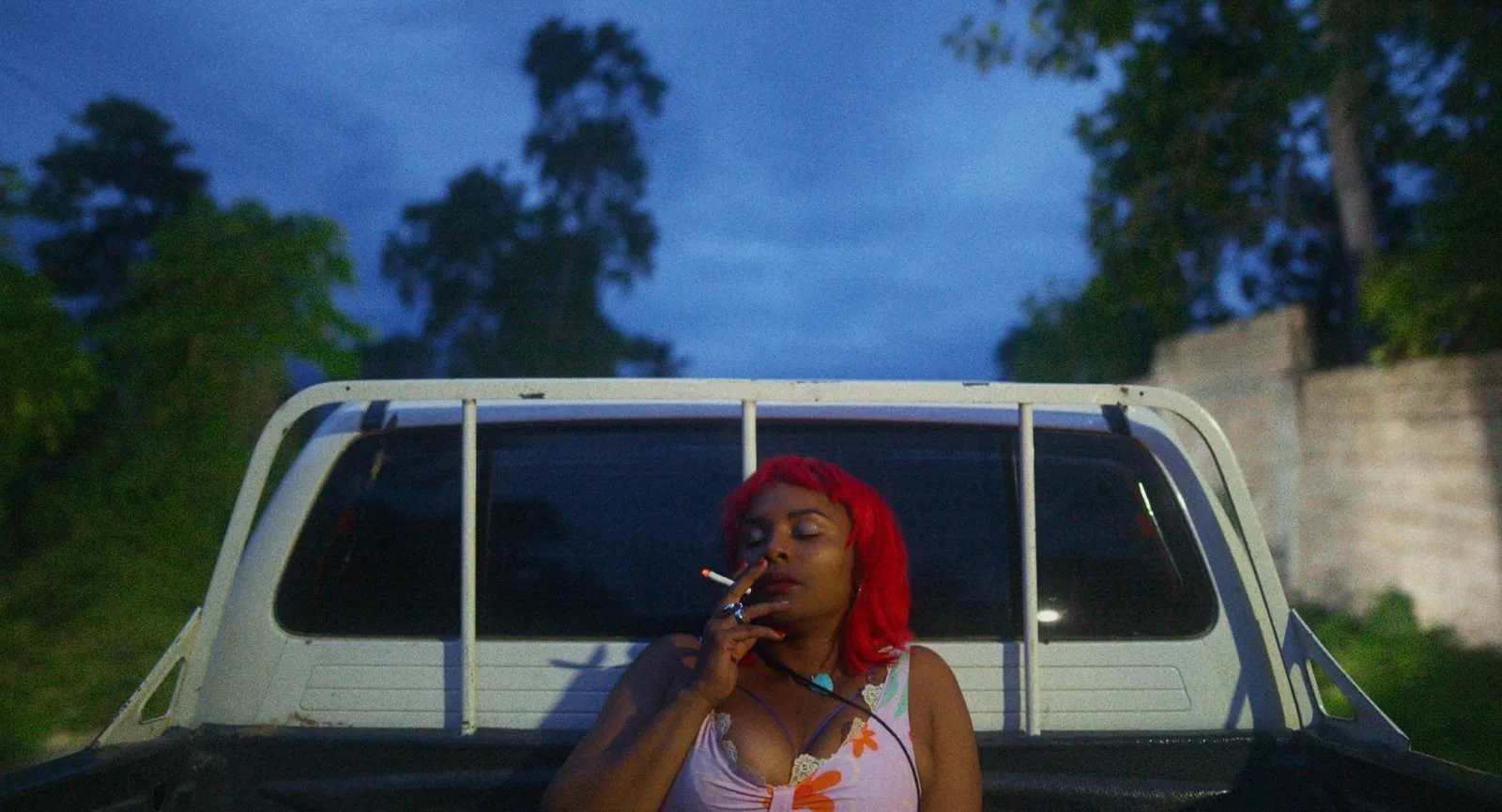
Généus refuses to write Marie Madeleine as a martyr or a cautionary figure. She carries a blade in her mouth when approaching clients. She drinks heavily. She lashes out. She holds herself with the body language of someone perpetually bracing for impact. Yet there is intelligence inside the volatility and emotional instinct beneath the self-destruction. Généus’s own performance is fearless in that specific way that only comes when a director inhabits a character completely. She lets Marie Madeleine look exhausted, impulsive, and raw, without softening any of it for audience comfort. Even her most vulnerable moments carry a trace of guardedness underneath, as though she has learned that emotional safety is a promise no one keeps. Her name carries biblical weight she immediately deflects: she was named after her grandmother, not Mary Magdalene, and religion barely grazes her.
Joseph is her opposite in almost every visible way. Béonard Monteau, a slam poet in real life, plays him with a quietness that initially reads as spiritual devotion. Over time, that quietness starts feeling more like fear. He carries a camera that becomes a kind of emotional shield, letting him observe life at a distance before the film forces him to actually enter it. The friendship with Marie pulls him toward artists, late-night drum circles, and a community his faith has conditioned him to distrust. Monteau tracks Joseph’s internal fracturing with real subtlety, making his slow unraveling feel earned.
The relationship between them works because Généus resists turning it into a forbidden romance. The pull is built on recognition, not heat. Marie is genuinely confused by Joseph’s approach because he treats her as a person before he registers her as a body. That confusion becomes one of the film’s most fascinating dramatic engines. Meanwhile, Edouard Baptiste’s Pastor Jacques is terrifying precisely because he believes every controlling impulse is an act of mercy. Melissa Mildort as Sister Melody brings quiet warmth, and a single hymn sequence she carries reaches the kind of emotional pitch that makes you stop breathing.
Faith as Structure, Freedom as Survival
Marie Madeleine is a film that takes religion seriously enough to be genuinely critical of it. Généus doesn’t flatten faith into villainy. She holds authentic belief and institutional abuse in the same frame, allowing them to coexist without resolving the tension between them. Mass prayer gatherings and candlelit dance halls receive the same attentive camera. Both are shown as places where people lose themselves and, occasionally, find something real.
Jacques represents what happens when certainty is paired with authority. His cruelty is fully persuaded of its own righteousness, which makes it more chilling than simple malevolence. Joseph’s arc runs through the cost of living inside that structure, the emotional silence it requires, the slow suffocation of any desire that falls outside approved parameters.
Marie’s counter-faith is rooted in lineage and memory. The histories of those who came before her are scratched directly onto the walls of her room, visual archaeology that grounds her in something pre-institutional and personal. That rootedness gives her a quiet authority that doesn’t perform itself.
Jacmel itself carries this tension outward. Hospitals are on strike. Misogyny is structural. Pride celebrations exist alongside mass religious rallies. The colonial history that shaped the island surfaces quietly through Marie’s family story. The film holds all of this without reducing Haiti to a backdrop of suffering assembled for international audiences to consume from a safe distance.
The City You Can Almost Smell
Cinematographer Nicolas Canniccioni shoots Jacmel with documentary intimacy and a painter’s eye for color. Deep oxblood reds, steely blue dawns, and the warm glow of candlelit streets during power cuts create an atmosphere that feels tactile rather than composed. Color tracks character throughout: Marie’s hot pinks and body-conscious cuts against Joseph’s neutral, buttoned-down wardrobe. The contrast is obvious but it lands because both costumes feel worn, not chosen for effect.
Sound does as much work as image. Lapping waves, throbbing motorbike engines, and deep-voiced radio preachers build a sonic environment that roots every scene in place before a single line of dialogue arrives. The Creole song selections that form much of the score carry genuine emotional weight, rising at moments where conventional film music would reach for strings and resolution instead.
Généus balances grim realism with fantasy sequences where Marie drifts above her own life, literally untethered from the ground. These sequences avoid feeling disconnected because the film earns them emotionally first. A green-screen flying moment early on asks for some audience patience, and a few scenes stretch slightly past their natural end points. But the pacing is deliberate by design, prioritising emotional accumulation over narrative momentum. This is a film that wants to be felt before it’s understood.
Marie Madeleine is a vibrant, socially grounded drama set in the coastal town of Jacmel, Haiti, exploring the profound friction between faith, moral judgment, and personal liberty. The film officially premiered at the Cannes Film Festival on May 14, 2026, in the prestigious Cannes Première section. Following its festival run, the movie will be distributed internationally by Pyramide Films, where it will be available to watch in select theaters and streaming platforms.
Full Credits
Title: Marie Madeleine
Distributor: Pyramide Films
Release date: May 14, 2026
Rating: Not Rated
Running time: 103 minutes
Director: Géssica Généus
Writers: Géssica Généus
Producers and Executive Producers: Jean-Marie Gigon, Géssica Généus, Anton Iffland Stettner, Lilian Eche, Christel Henon, Sylvain Corbeil
Cast: Géssica Généus, Béonard Monteau, Melissa Mildort, Edouard Baptiste, Ginou Jules, Gaëlle Bien-Aimé, Luchue Mesidor
Director of Photography (Cinematographer): Nicolas Canniccioni
Editors: Martial Salomon
Composer: Thomas Van Pottelberge
The Review
Marie Madeleine
Marie Madeleine is the work of a filmmaker who knows exactly what she's doing and why. Généus builds a film that breathes, aches, and occasionally stumbles, but never loses its pulse. The performances are lived-in, the cinematography is gorgeous without being decorative, and the thematic terrain is handled with genuine intellectual honesty. A few scenes overstay their welcome, and one early sequence tests patience, but the film rewards those who stay with it.
PROS
- Fearless, fully inhabited central performance from Généus
- Canniccioni's cinematography is rich and emotionally precise
- The central relationship avoids every predictable trap
- Haiti is portrayed with authenticity and complexity
- Sound design and Creole score are exceptional
CONS
- Some scenes run past their natural end point
- The early green-screen sequence may lose some viewers
- The finale tips slightly toward melodrama







