

























Punk documentaries have a weakness for canonization, the slow embalming of sweat into legacy. 40 Years of F**in’ Up* has no patience for that ceremony. Its version of NOFX’s farewell tour comes with legal friction, backstage narcotics, bad jokes, bodily indignity, old resentment, and the faint sense that the film itself has been left in a green room with too many open cans.
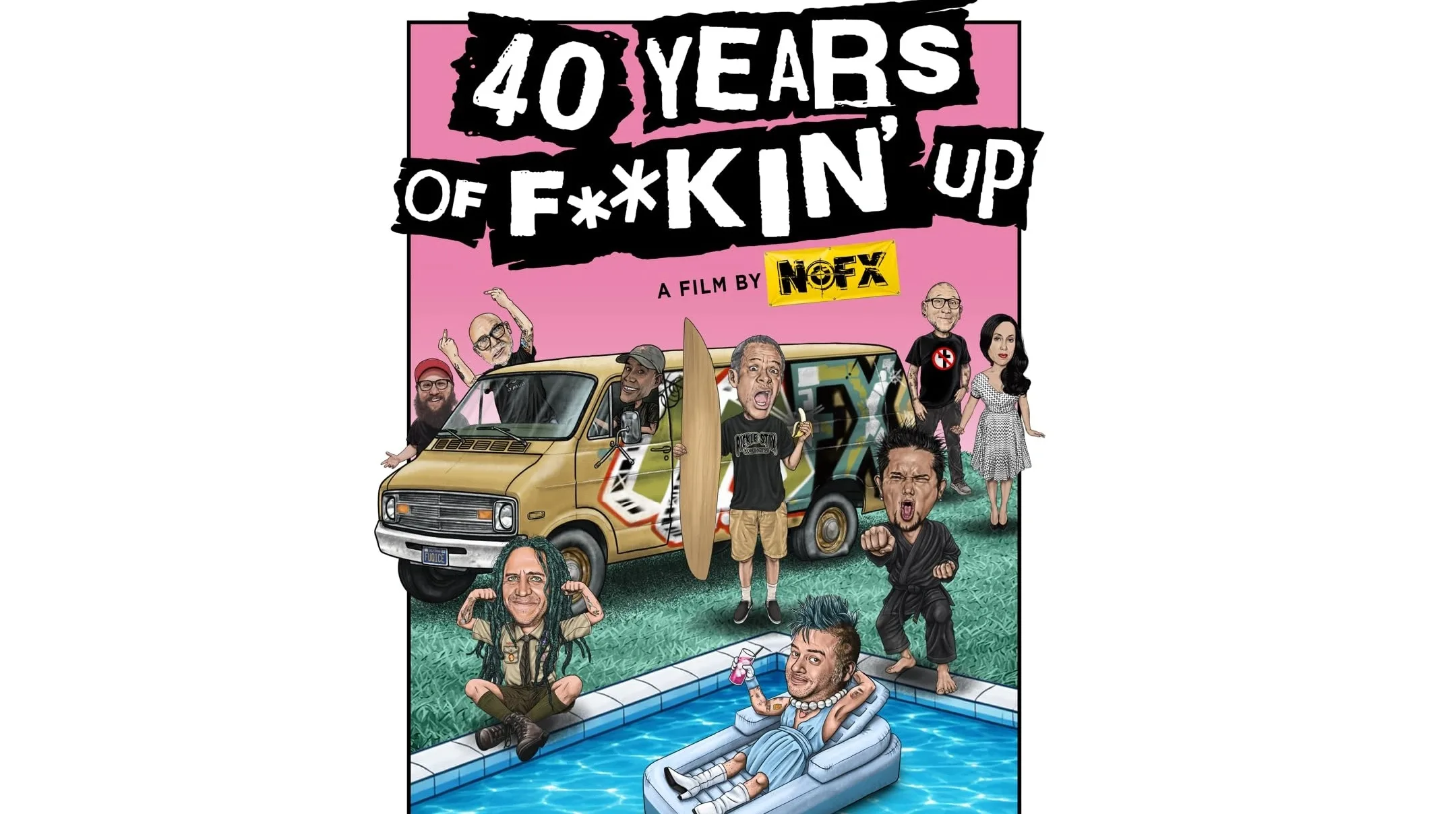
That suits the subject. NOFX was never a band built for dignified archival treatment. The documentary follows Fat Mike, Eric Melvin, Eric “Smelly” Sandin, and Aaron “El Hefe” Abeyta as they move through their final tour, framing the end as real rather than promotional theater.
The early mention that this may be the last time the band appears together, with legal disputes hanging over the farewell, gives the film a tension that keeps buzzing under the laughter. The picture does not need a shadowy alley. It has a tour bus.
Fat Mike Under the Key Light
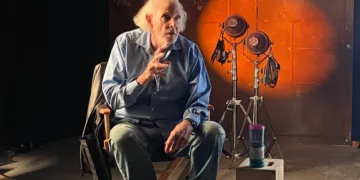
Fat Mike dominates 40 Years of F**in’ Up* so completely that the film sometimes looks less like a NOFX documentary than a character study of a man trying to direct his own exit while standing too close to the lens. The camera catches him explaining the band’s DIY business choices with sharp clarity, then cuts to him doing drugs, drinking, joking through ruin, or appearing so haggard that the rock-doc cliché threatens to swallow the person whole.
The film knows this. Its first half toys with making Mike the antagonist, the self-mythologizing frontman whose appetites could crack the band apart. Scenes of cocaine use, Vicodin, booze, blood, and sexualized backstage absurdity cast him in harsh, almost interrogative light. His bandmates often appear steadier by comparison, especially when the tour machinery requires someone to behave like an adult.
Then the frame shifts.
Mike is not absolved, which is good, since absolution would look ridiculous here. The better choice is that the documentary lets his contradictions remain visible. He can be lucid about Fat Wreck Chords and the music industry, explaining how NOFX preserved independence without turning rebellion into pure branding.
He can be funny in a way that seems reflexive, as if every wound must pass through a punchline before it can enter the room. He can also exhaust the film’s balance. That imbalance is the point and the problem. A cleaner version might give Melvin, Smelly, and El Hefe equal space. A truer version keeps getting dragged back into Mike’s orbit.
The Final Tour as Crime Scene
The structure refuses the neat chronology of the authorized music biography. The film starts near the end, with the final tour already casting its long shadow, then reaches backward into formation, punk origins, touring culture, label economics, and old interpersonal weather. This choice matters. We are not watching young men become legends in a straight line. We are watching older men sift through wreckage while the last show keeps getting closer.
The recurring legal-dispute thread gives the documentary its noir mechanism. It appears early, returns midway, and waits near the ending like a bill nobody wants to open. The film never turns into courtroom drama, but the mere existence of that conflict changes how the farewell reads. Every laugh has paperwork behind it.
The “Spinal Tap, but real” label fits only at a slant. Yes, there are absurd incidents, disgusting backstage images, tour shenanigans, and jokes that seem to arrive with their own hangover. Fat Mike referencing classic cinema while loaded is the sort of detail mockumentary writers would reject for being too pleased with itself. Yet the film’s comedy keeps brushing against pain: addiction, aging, friendship fatigue, the slow corrosion that four decades on the road can leave on people who once treated chaos as fuel.
The editing understands this better than the talking heads sometimes do. By placing performance footage beside backstage collapse, the film keeps asking how much damage can be converted into energy before the exchange rate turns obscene.
Punk History Without Glass Around It
NOFX’s significance has never depended on tidy prestige. The documentary understands their place in punk culture through circulation: burned CDs, copied records, older friends handing over taste like contraband, Punk in Drublic finding listeners far from any official scene.
Before algorithms made discovery feel hygienic, bands like NOFX traveled through bedrooms, cars, skate spots, and small-town boredom. The film catches that legacy in the faces of fans at the final shows, where private adolescence becomes public farewell.
It also locates the band through labor. Mike’s explanations of touring choices, label decisions, and industry resistance give the documentary some of its strongest material. Punk independence is often sold back as attitude, all sneer and font choice. Here it becomes logistics: who owns what, who books what, who takes the risk, who refuses the machine, and who quietly builds another one at smaller scale.
The Punk Rock Museum in Las Vegas enters the story as a strange extension of that impulse. It could have felt like surrender to nostalgia, the old rebel arranging artifacts under museum lights. Instead, the film treats it as one of Mike’s odder attempts to preserve a culture that made preservation suspicious in the first place. There is comedy in that. There is also something tender.
The Exit Wound
The final-show material gives 40 Years of F**in’ Up* the emotional charge its messier passages keep threatening to waste. The crowd does not treat NOFX like a clean legacy act. They respond to the band as something lived with: a soundtrack to suburban escape, queer survival, political irritation, dumb youth, smarter adulthood, and years of jokes that aged better than anyone had reason to expect.
The film’s openness around Mike’s identity, community ties, and refusal to slide into reactionary middle age gives the farewell a sharper texture. Plenty of punk figures have turned aging into grievance. Mike turns it into a spectacle, a business lecture, a confession he keeps interrupting, and a last set played under lights that do nobody any favors. That is the right lighting for NOFX. Too bright would be dishonest. Too dark would be flattering.
The feature-length biographical music documentary 40 Years of F… Up celebrated its world premiere at the SXSW Film Festival in March 2026 before launching its selective theatrical roll-out via Iconic Releasing on April 23, 2026. Audiences can catch the film through ongoing specialized pop-up engagements and fan screenings at participating independent movie theaters nationwide, alongside an official physical and digital double LP soundtrack and score release slated for late August 2026. The candid non-fiction profile chronicles the chaotic, self-destructive, and highly successful 40-year career of the California punk rock icons NOFX, tracing their rise from drug-addled teenage musicians to absolute independent legends while confronting internal legal conflicts, severe health battles, and their final 2024 farewell stadium tour.
Where to Watch 40 Years of F***in’ Up (2026) Online
Full Credits
Title: 40 Years of F… Up (also known as 40 Years of Fuckin’ Up)
Distributor: Iconic Releasing
Release date: March 15, 2026 (SXSW Festival World Premiere), April 23, 2026 (United States Limited Theatrical Release)
Running time: 120 minutes
Director: James Buddy Day
Writers: James Buddy Day
Producers and Executive Producers: Fat Mike, Aaron “El Hefe” Abeyta, Eric Melvin, Erik Sandin, Shawn Cloninger, Gary Ousdahl, Cisco Adler, Jon Nadeau
Cast: Fat Mike, Aaron “El Hefe” Abeyta, Eric Melvin, Erik “Smelly” Sandin, Chris Graue
Director of Photography (Cinematographer): Nathaniel Harper
Editors: Pyramid Productions Editorial Team
Composer: Fat Mike, Matt Nasir
The Review
40 Years of F*in’ Up
40 Years of F**in’ Up* treats NOFX’s farewell tour like a backstage corridor lit by bad fluorescents: ugly, funny, exposed, and hard to look away from. Fat Mike dominates the frame, sometimes to the film’s detriment, yet that imbalance feels true to the band’s own gravitational disorder. The legal tension, final-show footage, drug chaos, and DIY history create a punk obituary that refuses polish. It staggers, laughs, bleeds, and keeps playing.
PROS
- Raw final-tour access
- Fat Mike’s volatile presence
- Strong DIY industry insight
- Funny, bruised backstage texture
- Emotional final-show footage
CONS
- Fat Mike overwhelms the frame
- Familiar rock-doc beats
- Some messiness feels indulgent
- Legal thread could go deeper