








![Kingdom Hearts Collection [I-III] Review](https://gazettely.com/wp-content/uploads/2026/10/Kingdom-Hearts-Collection-I-III-1-360x180.webp "Kingdom Hearts Collection [I-III] Review: KHII Holds Steady as Newer Entries Fluctuate 33")






Dick Wolf has spent decades refining the fictional crime procedural, and viewers know the percussive rhythm of that scripted machinery by now. Wolf Entertainment and Alfred Street Industries carry that energy into unscripted true crime for Netflix, where the second season presents five installments drawn from real investigations inside the Manhattan North and Manhattan South bureaus of the NYPD.
The move from actors in suits to retired detectives in polo shirts feels oddly seamless. Same city, same pressure, fewer network-friendly haircuts. These are the people who walked the beat, entered the rooms, and processed what was left behind.
The season ranges across a grim set of cases. It opens with high profile murders in luxury high rises and closes with a local view of the September 11th attacks. Grizzled retired investigators guide the audience through each chapter, and their voices carry more force than the dramatic narration that clogs weaker true crime series.
Each hour works through a specific archived file, giving the season a clean procedural spine. The strongest episodes find the human story behind the yellow tape, where grief sits beside evidence bags and case folders.
The Manhattan Murder Map
The narrative keeps returning to the grind of police work. The 2016 death of Joey Comunale begins with a disappearance after a night out and leads detectives to a Sutton Place luxury high rise. The search for suspects James Rackover and Larry Dilione depends on hours of security footage and persistent questioning, the kind of work television often compresses into one brisk montage. Here, the tedium matters. It becomes the engine.
The story of 82 year old socialite Irene Silverman brings in Sante and Kenneth Kimes, a mother and son pair with the eerie poise of gothic horror figures who wandered into a police file. Their predatory behavior gives the episode a chill that needs little decoration.
The death of designer Sylvie Cachay at Soho House shifts attention toward her boyfriend, Nicholas Brooks. The detectives also return to the hunt for Matias Reyes in Central Park. These cases stress the shoe leather nature of investigation, where success grows from small details, stubborn effort, and the refusal to treat any lead as too strange.
One episode features a note hidden inside a chicken. Another depends on the analysis of a bathtub crime scene. True crime rarely needs extra seasoning when the facts already arrive like that. The detectives move from the first 911 call to the final courtroom conviction with steady focus.
The pacing mirrors the pressure of an active investigation: methodical, tense, and always pushing toward the next useful detail. Every discovery feels earned through long hours of review, the sort of work that makes justice look less like a lightning bolt and closer to a paper cut repeated a thousand times.
The Grainy Truth
The show’s visual style is crisp and purposeful. Archival snapshots and grainy CCTV footage anchor the storytelling, while modern interviews give the season its procedural frame. The retired officers are seated in stylized lighting that catches every wrinkle, pause, and flash of fatigue. Their memories control the rhythm. Family members enter the conversation, bringing emotional weight that charts and timestamps cannot supply. Pat Comunale, Joey Comunale’s father, appears with pain still visible years later.

The production uses diagrams to clarify complex crime scenes and follows cell phone records to build digital maps of suspect movement. New York City remains in the background as a moody witness, present in architecture, streets, elevators, lobbies, and silences. The editing stays tight, keeping tension high through careful sequencing and clean escalation. The city comes across as a complicated environment that shapes the crimes, and the investigators become carriers of its memory.
Their dark humor surfaces in quick flashes, a protective reflex against the bleakness of the material. That rhythm gives the series a human pulse. The balance between technical detail and emotional testimony keeps the episodes grounded. The show favors a steady, respectful gaze over the glossy excess common to true crime, and that choice suits the material. The cases already carry enough shock; the craft works best when it lets the evidence breathe.
The Longest Shift
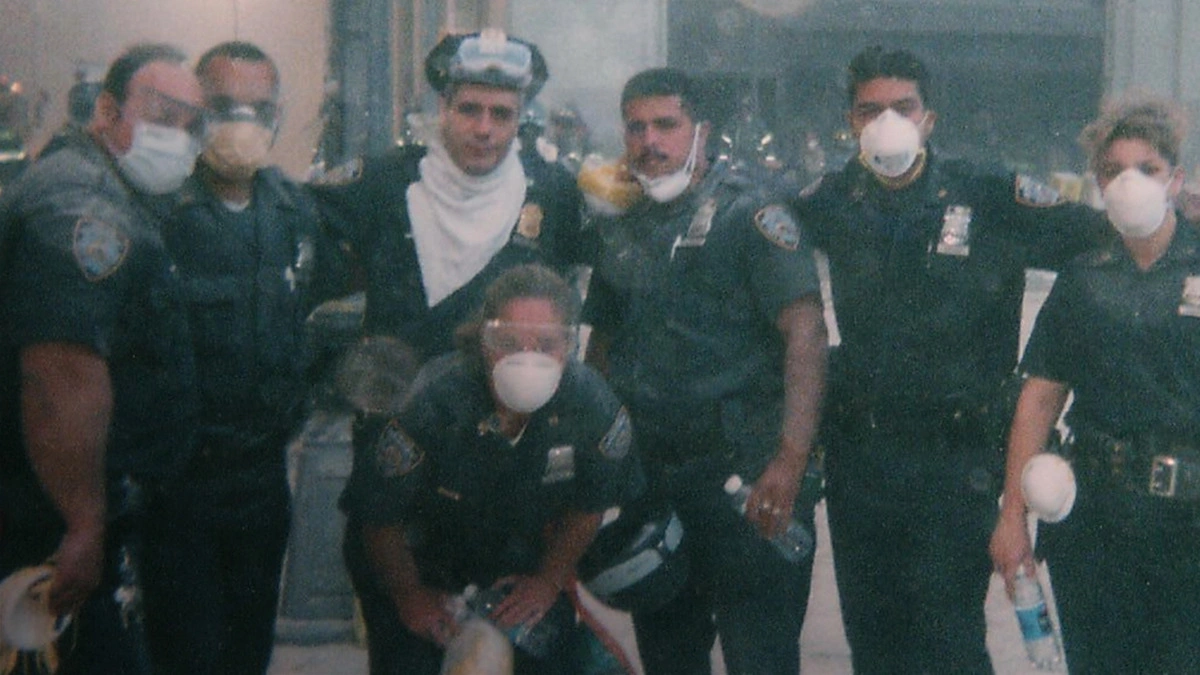
The final episode changes the structure. It leaves the single murder case format and turns to September 11, 2001, focusing on NYPD responders who were on the ground that morning. Ground Zero appears through their memories, shaped by chaos, rescue work, recovery efforts, and quiet gravity. The episode notes that regular crimes still occurred during the citywide crisis, a grim reminder that a city in shock still needed a working police force.
The emotional toll on these men and women is clear. They describe the lasting impact of that day on their lives and careers with restraint, and the episode follows their accounts closely. The finale keeps its attention on personal experience, on the people who stayed behind to pick up the pieces after the towers fell. Its tone is respectful and somber, built around a department facing its hardest day.
The episode highlights the rescue mission through the perspective of first responders and frames the city’s resilience through the people who kept moving inside catastrophe. It also raises the season’s sharpest question: how does a detective focus on one homicide when the world outside is collapsing?
Homicide: New York Season 2 premiered on Netflix on March 25, 2026. This gripping true-crime docuseries, produced by Dick Wolf’s Wolf Entertainment in collaboration with Alfred Street Industries, continues to explore the most notorious homicide cases in Manhattan’s history through the firsthand accounts of the detectives who solved them. Available exclusively for streaming on Netflix, the second season features five new episodes, ranging from high-society disappearances to the department’s sobering perspective on the September 11th attacks. As of May 3, 2026, the entire season is available for subscribers to binge.
Full Credits
Title: Homicide: New York Season 2
Distributor: Netflix
Release date: March 25, 2026
Rating: TV-MA
Running time: 60 minutes
Director: Adam Kassen
Writers: Dick Wolf, Various
Producers and Executive Producers: Dick Wolf, Tom Thayer, Jane Lipsitz, Dan Cutforth, Dan Volpe, Nan Strait, Adam Kassen, Kimberly Greenhut, Liz Finelli, Shannon O’Rourke
Cast: Bill McNeely, Martin Chen, Roger Parrino, Al Titus, Barbara Butcher, Pat Comunale, Lisa Comunale, Sante Kimes, Kenneth Kimes, Matias Reyes, Nicholas Brooks
Director of Photography (Cinematographer): Philipp Friesenbichler, Angel Barroeta, Santiago Benet Mari
Editors: Various
Composer: Various
The Review
Homicide New York Season 2
Dick Wolf succeeds in stripping away the Hollywood gloss to reveal the cold mechanics of justice. The series relies on the faces of people who were actually there. This gives the stories a weight that fiction cannot match. It avoids the sensationalism of modern true crime while maintaining a steady, gripping pace. Some viewers might find the stylized lighting a bit much. The emotional center remains undeniable. This is a respectful, sobering look at the dark side of the city. Does the closure of a file ever truly heal the wound left behind?
PROS
- Authentic interviews with the original investigating detectives.
- Deeply moving accounts from the families of victims.
- Meticulous attention to the procedural details of each case.
- Respectful handling of the September 11th tragedy.
CONS
- Highly formulaic episode rhythm that becomes predictable.
- Heavy-handed production effects that occasionally distract from the reality.