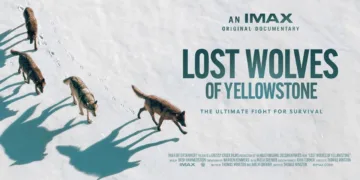































“Lost Wolves of Yellowstone” studies the human urge to repair the damage left by our own hands. In the mid-1990s, a daring effort aimed to return the grey wolf to the American West. The need had become stark. Without its apex predator, the park had turned into a burial ground of overgrazed vegetation.
A swelling elk population moved without the discipline of fear. Director Thomas Winston builds this history through an extraordinary find: archival recordings that had disappeared for many years. These tapes carry the raw pulse of a project that felt like a wager against ecological collapse.
Mollie Beattie holds the film’s central gravity. She was the first woman to lead the U.S. Fish and Wildlife Service, and she moved through legal hostilities to bring wolves from the Canadian wilderness into Yellowstone. The film becomes a rough historical document, a tribute to a moment when humanity ceded room to the dark life of the forest.
The Grain of a Vanishing World
The film’s visual language refuses the sterile beauty of modern nature documentaries. Winston works with found footage that crackles with the static of lived reality. The grain creates an almost physical intimacy, placing the viewer on the frozen ground of the 1990s. On a massive screen, the snowy mountain ranges feel oppressive, sublime, and almost indifferent. The wolves pass through the white expanse like ghosts with teeth.
Their predatory motion carries a frantic handheld intensity. The roughness gives the film a severe realism. We see the project stumble. Cameras catch the true uncertainty of researchers facing a force they could never fully command. This vulnerability breaks the neat myth of heroic intervention.
Winston uses modern interviews to steady these memories. The retrospective conversations serve as anchors, allowing participants to look back on the chaos from a distance of thirty years. The tension between the shivering archival present and the composed recollection of today gives the film a haunted rhythm. We watch the memory of younger people attempting to play God inside a wilderness that has no concern for human names.
The Mortality of the Advocate
Mollie Beattie appears as a figure of quiet, tragic resolve. The film presents her as an advocate who understood the burden of her office. Her story carries a deep sense of personal sacrifice. The shadow of her approaching illness hovers over the legislative victories she helped secure. Her presence gives the environmental fight a human face, fragile, temporary, already touched by time.
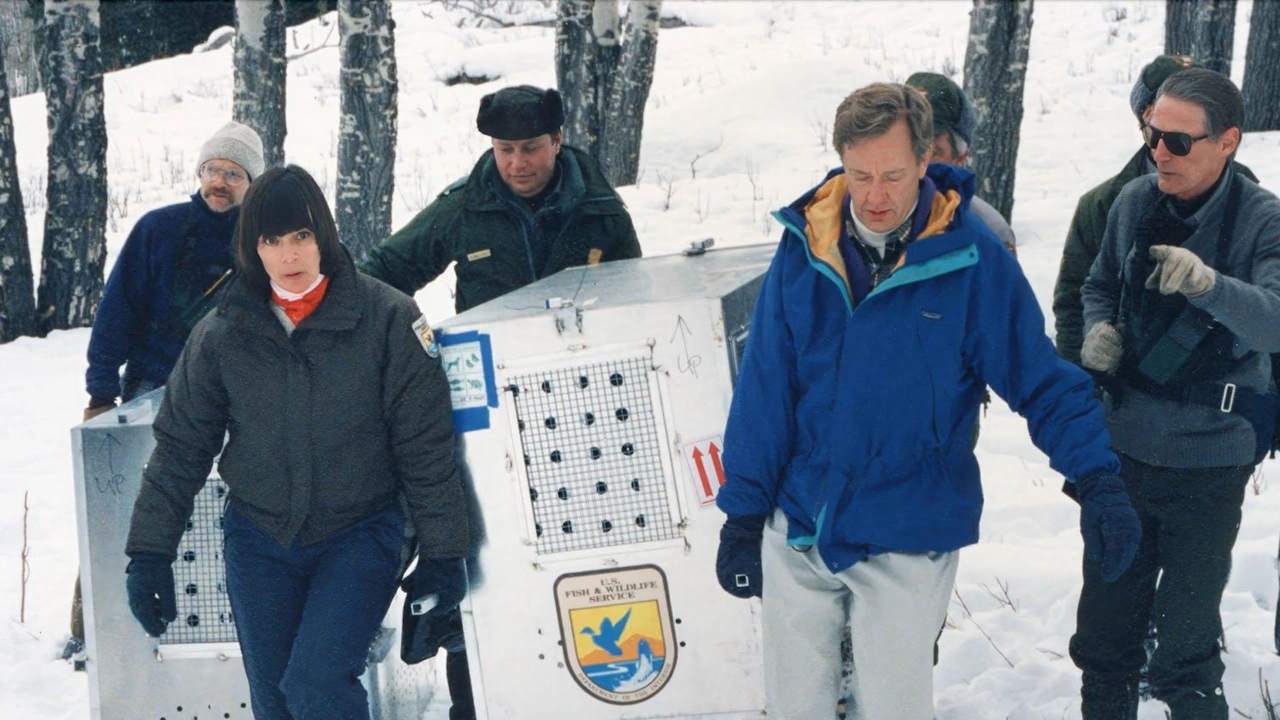
The film studies the friction inside Washington’s halls of power. Regional interest groups and farmers viewed the wolves as threats to their survival. These political fights feel like the impact of two incompatible realities. A visible distance separates the capital’s bureaucratic decisions from the mud of the park.
The narrative suggests that Beattie crossed this distance through sheer will. At times, the film leans on verbal testimony to explain her support for field workers, which creates a slight remove from the physical logistics of her work. Still, the film draws power from its confessions of failure.
Researchers speak with candor about mistakes made during the reintroduction. That honesty gives the scientific process a human pulse. The restoration of Yellowstone appears as a messy, flawed human effort, a policy victory marked by error, patience, and moral risk.
The Silence of the Trophic Cascade
The project’s biological effect becomes a study in restored motion. Once the wolves returned, the elk began moving through the landscape again. That shift allowed willows and cottonwoods to recover. Life came back to the riverbeds. Winston explains the trophic cascade with clarity. The film frames this success through biological language. That focus leaves certain absences in its wake.
Indigenous voices appear briefly near the start, then disappear from the frame. Their historical and spiritual ties to the land remain unexplored. The film favors a Western scientific lens that treats the earth as a system awaiting management. Its interview circle stays small, limited to a narrow group of experts. This restricts the perspective on a project that touched thousands of lives.
The voices of those currently overseeing the park are missing. These gaps matter. The film still stands as a forceful statement on environmental stewardship. It presents reintroduction as a grave responsibility. Nature appears resilient, yet dependent on human humility after human damage. The wolves hold the film’s central image. They become signs of wildness that endures through our long effort to tame it.
“Lost Wolves of Yellowstone” follows the high-stakes 1995 initiative to reintroduce grey wolves to the American West, centering on the leadership of Mollie Beattie, the first female director of the U.S. Fish and Wildlife Service. After a successful festival run through late 2024 and 2025, including premieres at CPH:DOX and the Mill Valley Film Festival, the documentary saw a wide theatrical rollout in IMAX on March 3, 2026. The film is currently available for viewing in select IMAX theaters and can be found on digital platforms such as Apple TV and Amazon.
Where to Watch Lost Wolves of Yellowstone (2025) Online
Full Credits
Title: Lost Wolves of Yellowstone
Distributor: Grizzly Creek Films, MacGillivray Freeman Films, IMAX
Release date: March 3, 2026
Running time: 93 minutes (Feature), 43 minutes (IMAX)
Director: Thomas Winston
Writers: Thomas Winston, Avela Grenier
Producers and Executive Producers: John Turner, Thomas Winston
Cast: Mollie Beattie, Mike Phillips, Doug Smith, Rick Schwolsky, Sierra Rosen, Thomas Winston
Director of Photography (Cinematographer): Ray Paunovich, Bob Landis, Warren Kommers, Jeff Reed, Thomas Winston
Editors: Avela Grenier
Composer: Dash Hammerstein
The Review
Lost Wolves of Yellowstone
Winston captures a restoration that feels like a stay against extinction. The recovered 16mm footage provides a haunted, tactile window into a world where humans tried to fix their own destruction. Mollie Beattie’s life offers a heavy meditation on mortality and legacy. The film remains a somber reflection on the cost of stewardship and the indifference of the wild. It is a work of grit and ghosts.
PROS
- Tactile 16mm archival footage
- Honest admission of scientific errors
- Poignant portrayal of Mollie Beattie
- High-stakes political tension
CONS
- Limited selection of interview subjects
- Exclusion of indigenous voices
- Reliance on verbal claims for administrative details
- Absence of modern park management perspectives







