
























![Kingdom Hearts Collection [I-III] Review](https://gazettely.com/wp-content/uploads/2026/10/Kingdom-Hearts-Collection-I-III-1-360x180.webp "Kingdom Hearts Collection [I-III] Review: KHII Holds Steady as Newer Entries Fluctuate 37")




The shift from a cinematic prologue to a functional death tournament defines the mechanical pulse of this sequel. Simon McQuoid abandons the heavy-handed origin storytelling of the previous entry and embraces the physical requirements of the arcade source material.
The narrative settles into a cycle of one-on-one matches where the survival of humanity stands as a literal prize. This structure prioritizes the visceral impact of supernatural combat, sidelining complex motivations in favor of direct confrontation.
The film operates as a series of physical confrontations staged across multiple dimensions, placing the forces of Earthrealm against the monstrous authority of Shao Kahn in a conflict that values bone-crushing force. This tournament framework offers a clearer focal point, allowing the movie to function as a direct translation of a competitive ladder.
The story moves with a frantic energy as each battle leads toward a more dangerous opponent. The visual scope is expansive, ranging from the shadowed ruins of Outworld to the bright forests of Edenia. These settings serve as backdrops for a collection of high-stakes duels.
The Egotist and the Exile: Reclaiming the Iconography
The decision to move Cole Young to a secondary position represents a significant pivot in the franchise’s identity. The previous film struggled with a lead who possessed little connection to the established lore. This sequel corrects that trajectory by placing Johnny Cage and Kitana in the foreground, providing a direct entry point for those familiar with the history of the series.
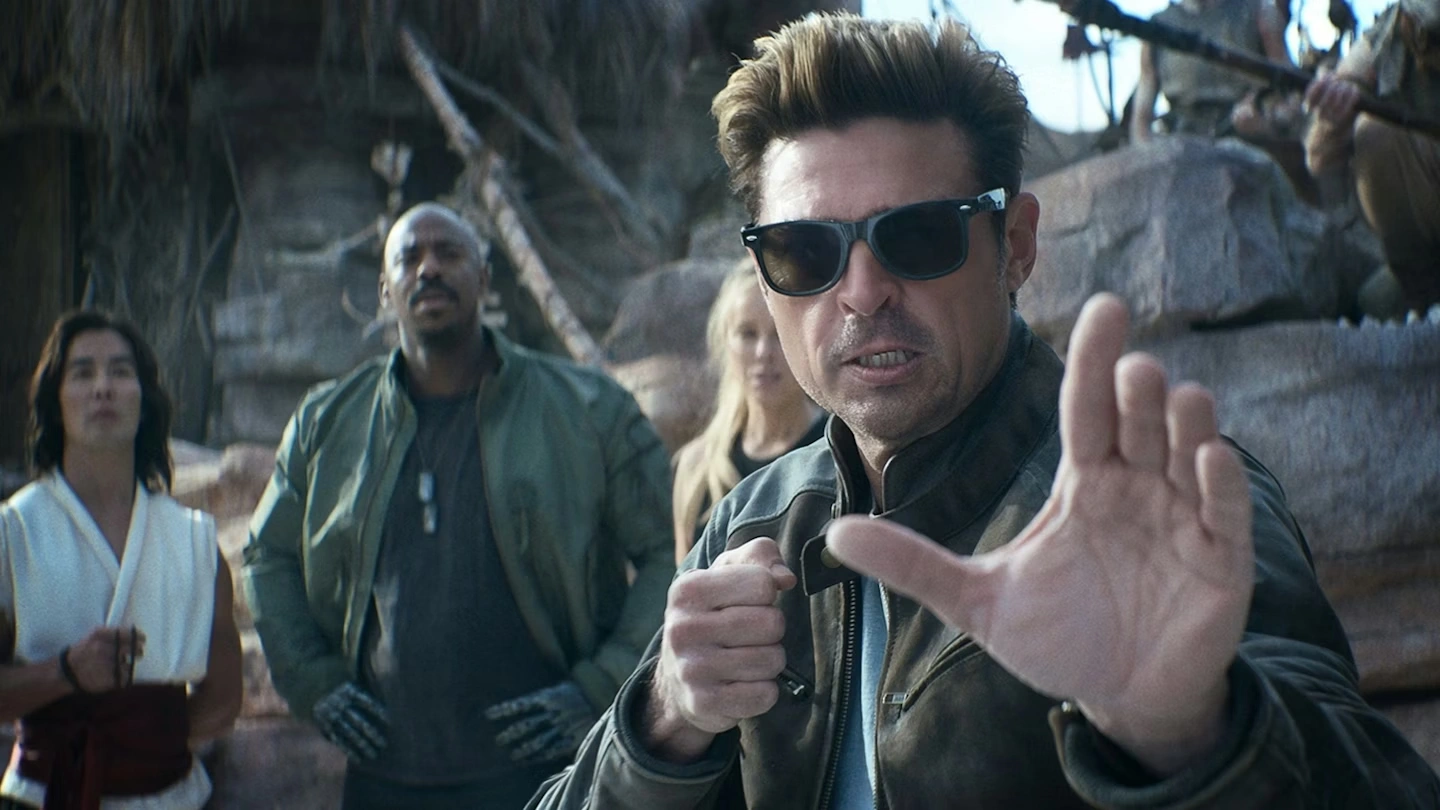
Karl Urban portrays Johnny Cage as a relic of a vanished era, a washed-up action star who wears his skepticism as a shield. Urban captures the essence of a man who has spent too much time on the convention circuit, treating the mystical elements of the tournament with cynical detachment.
This perspective generates a necessary friction against the heavy mysticism of the other fighters. His performance is a study in calculated arrogance. He adjusts his trademark sunglasses with a middle-finger gesture that summarizes his entire worldview. His transition from actor to legitimate protector of Earthrealm is handled with grim humor, mocking the high-stakes nature of the conflict even as he participates in the violence.
Kitana carries an essential emotional weight through the performance of Adeline Rudolph. She bears the burden of a displaced princess whose history is one of loss and forced service. Her personal vendetta against Shao Kahn provides a narrative spine for the film. Her connection to the fall of Edenia is depicted in a somber prologue that establishes her as a figure of quiet determination.
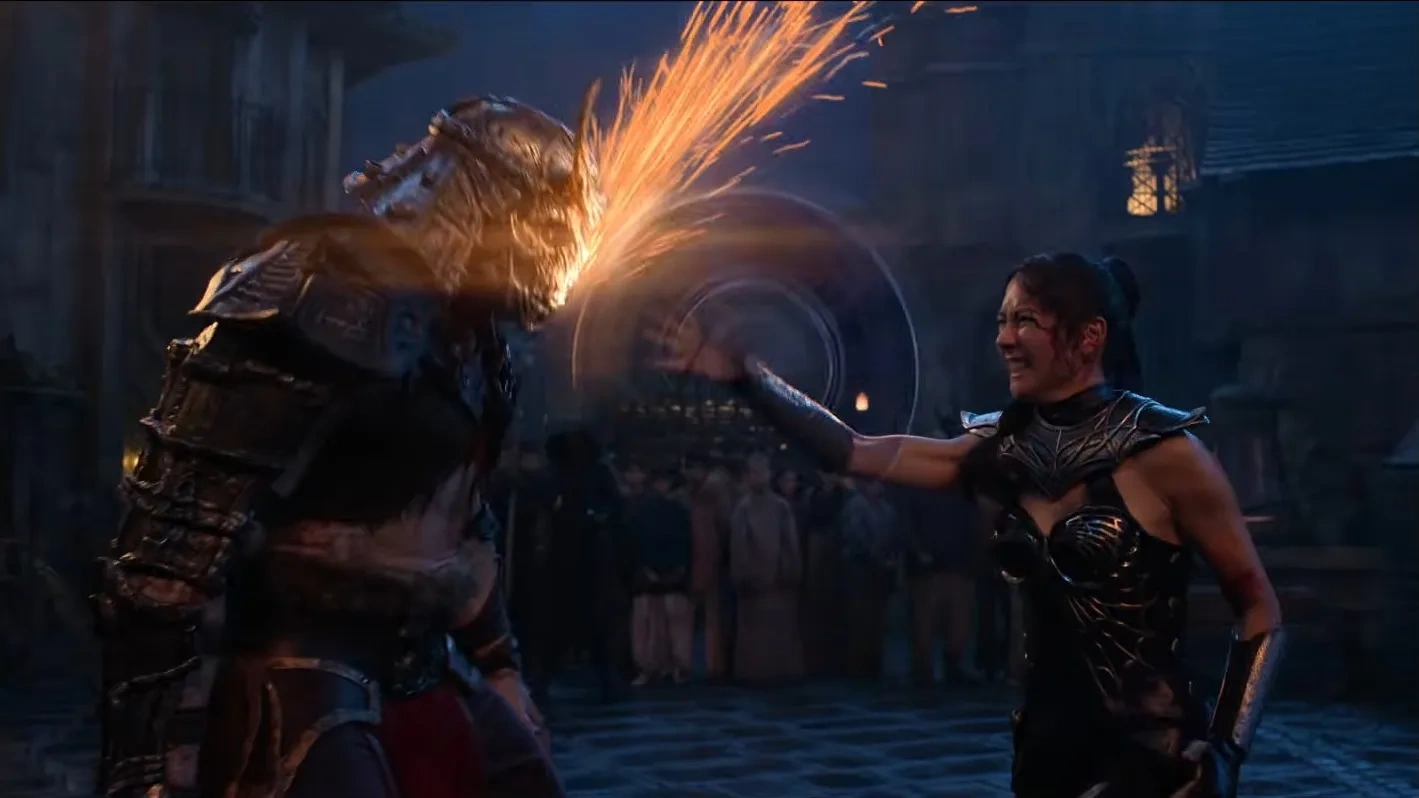
Her relationship with her bodyguard Jade introduces a layer of sincerity, a bond that feels older than the current conflict. This loyalty stands out in a world defined by betrayal. Rudolph brings a lethal grace to the role, deploying her bladed fans with a technical precision that suggests years of training.
Shao Kahn stands as the apex of the antagonistic forces. Martyn Ford brings a massive physical presence to the role, existing as a monstrous figure who defines the tournament’s stakes through pure dominance. The design of the character pays tribute to dark fantasy aesthetics: a metal skull helmet and a heavy spiked hammer swung with the ease of an executioner.
His role is to be an immovable obstacle, the primary threat to Earthrealm’s survival. His brutal introduction establishes the level of carnage awaiting the audience. His presence alone communicates the danger facing the protagonists, rendering extended backstory unnecessary. The focus on these specific icons reshapes the story’s reception, producing a film far more connected to the long-standing legacy of the brand.
The Mechanics of the Finish: Choreography and Carnage
The fight sequences follow the rigid logic of a fighting game ladder. Matches occur with a rhythmic frequency that leaves little room for narrative stalling. Each confrontation carries a specific mechanical identity. A match between Liu Kang and Kung Lao serves as a highlight of technical execution, featuring a satisfying fusion of fire manipulation and the deployment of a lethal razor-rimmed hat.
The choreography is hard-hitting, focused on the specific powers that fans recognize. The film understands its primary concern is the tournament itself and delivers on this promise with a variety of combat styles.
The R-rated violence is a core component of the experience, offering a level of bloody honesty frequently absent from modern blockbusters. Decapitations and impalements occur with a focus on impact. These finishing moves serve as the gory icing on the action cake.
The film registers the consequences of physical trauma without hesitation: fingers are severed and skulls shattered with little fanfare. This level of violence takes the concept of superhero combat to its logical conclusion, stripping away the safety of a lower rating to expose the visceral reality of a death match. The creative deployment of weapons like Kitana’s fan blades provides a series of high points for the audience.
The visual environments present a fluctuation in quality. The Underrealm is a tiered inferno grounded in a specific horror aesthetic, carrying a heavy atmosphere that enhances the tension of the battles. The forests of Edenia evoke a different sensibility, carrying the bright and artificial look of a sword-and-sorcery television production. This variety prevents the settings from becoming repetitive.
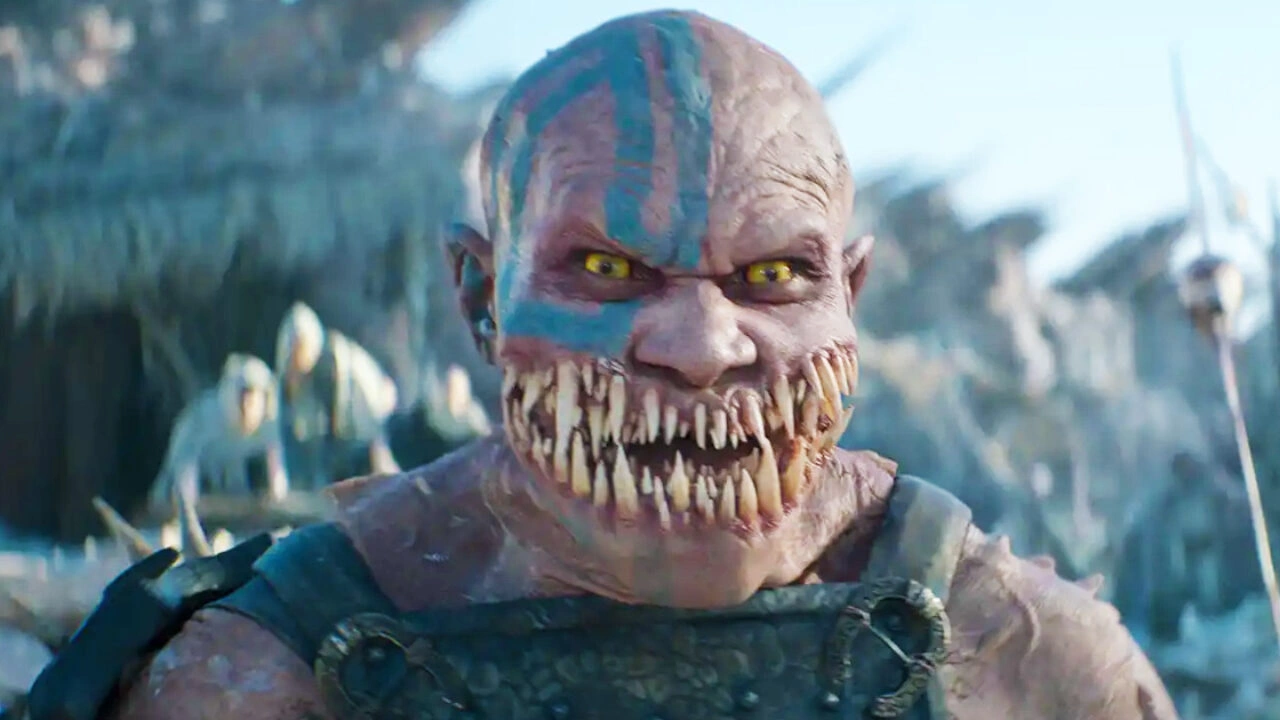
Practical effects for characters like Baraka supply a tactile quality that digital work cannot match. His horror-film jaws and physical build make him a memorable supporting presence. Some backgrounds resemble video game screensavers, creating a visual dissonance in which performers move through environments that feel like generic fantasy soundstages. The gap between high-budget digital flourishes and more basic practical attempts remains visible throughout.
The audio choices shape the film’s energy. The introduction deploys licensed tracks like Scorpions to establish a specific mood, matching the ’90s action movie aesthetic of Johnny Cage. The rest of the film defaults to a standard orchestral score, a shift that drains some of the drive and identity from the audio.
The original games were known for an aggressive and heightened sound, and the movie’s soundtrack grows more anonymous as it progresses. The use of signature sound effects provides occasional reminders of the source material, helping the action land with added force. The choreography remains the strongest element of the technical execution, staying faithful to the kinetic energy of the franchise.
The Cycle of the Netherrealm: Tone and Logic
The film operates with the spirit of a high-budget B-movie, balancing serious fantasy elements with frequently absurd dialogue. This approach allows the movie to sidestep the self-seriousness that often burdens modern blockbusters, favoring a direct-to-video action energy. A seasoning of schlocky bad taste gives the film a distinctive identity.
Josh Lawson returns as Kano, functioning as the primary source of levity, treating the cosmic stakes with dismissive humor. His profane, Australian-accented quips serve as a bridge for the audience, acknowledging the ridiculous nature of the situation and keeping the tone from growing too heavy. He functions as a needed counterpoint to characters like Lord Raiden, who explains the plot with the cadence of a bedtime story. Kano’s presence ensures the film retains its sense of fun.
The concept of death is flexible in this universe. The use of necromancy and the Netherrealm allows characters to return from the dead, mirroring the mechanics of the gaming franchise and affecting the emotional stakes of the tournament. If a fighter can be retrieved from hell to return in a future match, the sacrifice feels less permanent. The arrangement allows favorite villains and heroes to cycle back into the roster, treating death as a temporary setback and prioritizing fan service over narrative finality.
The world-building logic sustains a constant state of combat. The plot is filled with MacGuffins like a glowing amulet, and characters gather in nondescript rooms to discuss these items in scenes that act as brief pauses between fights. The density of the roster requires the story to move quickly.
Simon McQuoid maintains a fast pace across the 116-minute runtime, focusing on the spectacle of the tournament. The film is packed with references and callbacks for long-term followers, attempting to organize the confusing history of the brand into a coherent format. This effort produces a project that caters directly to its devoted audience.
The directorial vision prioritizes the physical reality of the fighters, relying on the established history of the characters to give meaning to the violence. The film uses the arcade cabinet origins as a structural guide, presenting a world where every loss carries potentially devastating consequences for Earthrealm.
The repetitive nature of the one-liners and the characters is a deliberate choice, reflecting the economical recycling found in the source material. This approach creates a lean experience, avoiding exploration of themes that would distract from the action. Each scene exists to justify the next match. The film is a study in dedicated fan service, providing the tournament and the gore that define the brand and serving an audience that knows precisely what it wants from a cinematic fatality.
Mortal Kombat II arrives in theaters and IMAX across North America on May 8, 2026. This sequel picks up after the events of the 2021 reboot, centering on the actual tournament between the champions of Earthrealm and the invading forces of Outworld. The production introduces the fan-favorite character Johnny Cage to the cinematic roster, further expanding the physical scale of the conflict. Audiences can view the film in local cinemas and large-format theaters upon its global release.
Where to Watch Mortal Kombat II (2026) Online








Full Credits
Title: Mortal Kombat II
Distributor: Warner Bros. Pictures
Release date: May 8, 2026
Rating: R
Running time: 116 minutes
Director: Simon McQuoid
Writers: Jeremy Slater
Producers and Executive Producers: Todd Garner, James Wan, Toby Emmerich, E. Bennett Walsh, Simon McQuoid, Michael Clear, Judson Scott, Jeremy Slater, Lawrence Kasanoff
Cast: Karl Urban, Adeline Rudolph, Jessica McNamee, Josh Lawson, Ludi Lin, Mehcad Brooks, Tati Gabrielle, Lewis Tan, Damon Herriman, Chin Han, Tadanobu Asano, Joe Taslim, Hiroyuki Sanada, Martyn Ford, Desmond Chiam, Ana Thu Nguyen, Max Huang, CJ Bloomfield
Director of Photography (Cinematographer): Stephen F. Windon
Editors: Stuart Levy
Composer: Benjamin Wallfisch
The Review
Mortal Kombat II
Mortal Kombat II functions as a relentless, high-budget B-movie that prioritizes physical spectacle over narrative complexity. It satisfies the requirement for visceral, R-rated carnage while offering an engaging lead in Johnny Cage. While the visual quality fluctuates and the emotional stakes remain thin due to the fluid nature of death in this universe, it remains a dedicated translation of its arcade origins. It is a work of pure fan service that understands the kinetic requirements of its genre.
PROS
- Visceral and honest R-rated violence.
- Karl Urban’s cynical and effective portrayal of Johnny Cage.
- Faithful adherence to the tournament structure.
- Strong physical presence from Martyn Ford as Shao Kahn.
CONS
- Inconsistent visual effects and green-screen work.
- Thin emotional stakes due to the Netherrealm resurrection cycle.
- Generic orchestral scoring in the latter half.
- Stilted dialogue in exposition-heavy scenes.







