

























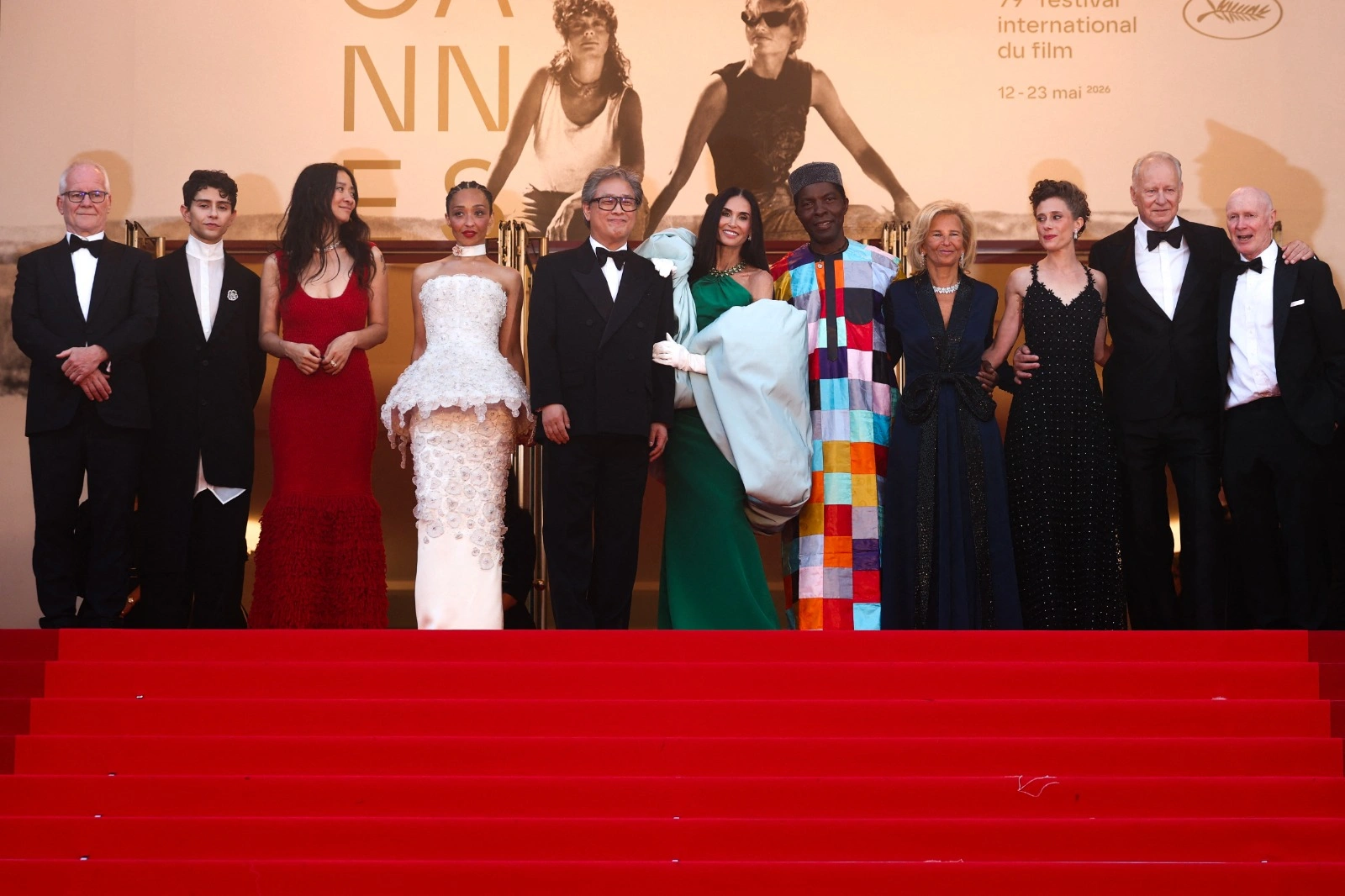

Park Chan-wook opened the closing press conference of the 79th Cannes Film Festival on Saturday with a self-deprecating quip that drew the biggest laugh of the two-week event. Asked about handing out cinema’s most prestigious award, the South Korean director — who has competed at Cannes multiple times but never won the top prize — deadpanned that he had resisted the task entirely. “I didn’t want to award the Palme d’Or to any of the films, because it’s an award that I myself have never gotten,” he told reporters. Then, after a deliberate pause, he landed the punchline: “But I had no other choice” — a wink at his 2025 dark satire of the same name.
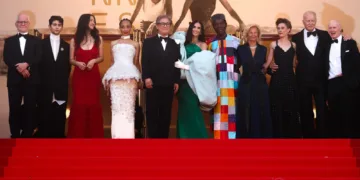
Park made history as the first Korean filmmaker to serve as jury president at Cannes, a role that placed him at the head of a nine-member panel that included actors Demi Moore, Ruth Negga, and Stellan Skarsgård, alongside filmmakers Chloé Zhao and Laura Wandel. aol
The jury’s actual verdict proved equally attention-grabbing. The Palme d’Or went to Cristian Mungiu’s “Fjord,” starring Sebastian Stan and Renate Reinsve as Romanian evangelical Christian parents whose move to a Norwegian village triggers a child abuse investigation — making Mungiu the tenth filmmaker to win the award twice, 19 years after his first victory for “4 Months, 3 Weeks and 2 Days.” Mungiu accepted with characteristic restraint, saying simply, “All awards are contextual.”
The jury distributed a notably high number of shared prizes. Best Actress went jointly to Virginie Efira and Tao Okamoto for Ryusuke Hamaguchi’s “All of a Sudden,” while Best Director was split between Pawel Pawlikowski for “Fatherland” and Spanish duo Javier Calvo and Javier Ambrossi for “The Black Ball.” Park refused to apologize for either tie. “If you have seen the two films that were awarded the acting award, I’m certain you’d have to agree with our choices,” he said, and on the directing split: “Both filmmakers did an amazing job, and we just couldn’t decide if one was better than the other.”
The win extended Neon’s remarkable run — the American indie distributor has now backed seven consecutive Palme d’Or winners. The two U.S. competition entries, James Gray’s “Paper Tiger” and Ira Sachs’ “The Man I Love,” left the Croisette without prizes in a year the jury tilted decisively toward European cinema.
The 79th festival’s official selection included 19 feature films in competition, with critics noting a programme weighted toward auteur-driven work and films engaging with political conflict, displacement, and social fracture. Park’s own career fits that tradition precisely — his films, from “Oldboy” to “The Handmaiden,” have long used genre and formal rigor to probe moral ambiguity. That he presided over a competition that rewarded exactly that kind of filmmaking, then got the room laughing by admitting a personal grudge against the prize he had to give away, was a fitting close to the festival.