














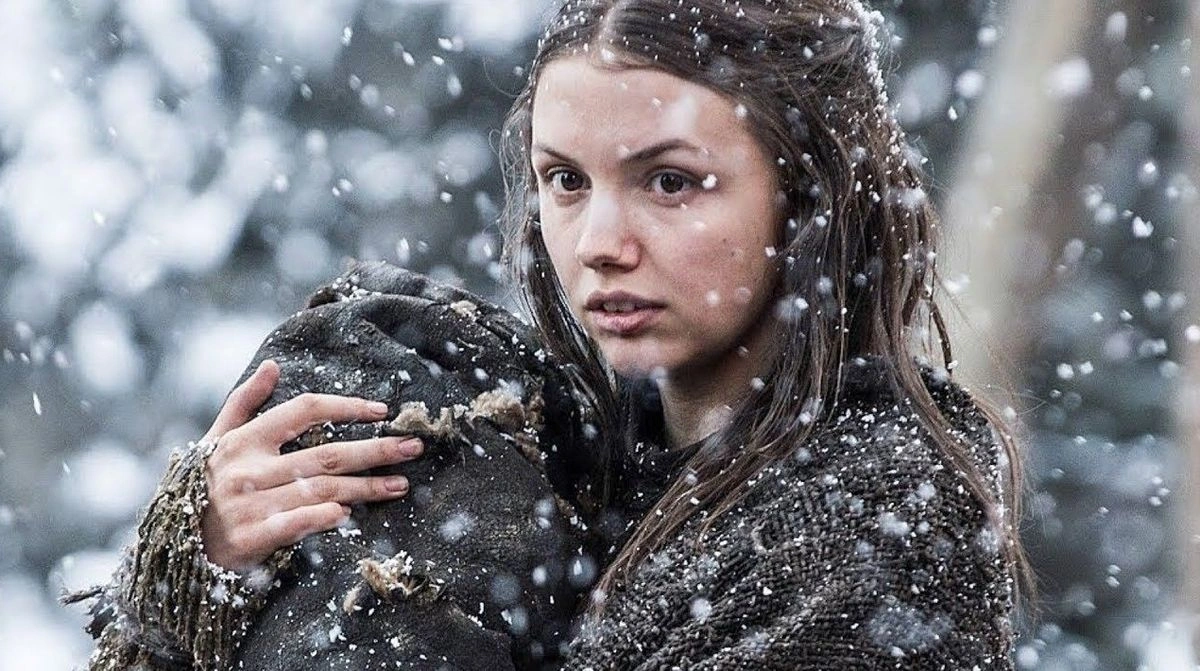

Hannah Murray, the British actress who spent five seasons playing Gilly on Game of Thrones, has revealed she spent years inside a wellness cult that triggered a psychotic break, led to her being detained in a London hospital for 28 days, and ended her acting career. She is telling the story in a debut memoir, The Make-Believe: A Memoir of Magic and Madness, out June 23.
Murray’s path into the group began on the set of Kathryn Bigelow’s 2017 film Detroit, where she paid $150 for a session with a woman she calls Grace, an “energy healer.” That single appointment led to a class, and the class led deeper into the organisation. Murray described her own susceptibility with unusual candour: “I had no idea I was going to go through any of the things in the book. I would’ve assumed I couldn’t, that I was safe. I was well educated, from a middle-class family; everything should have been fine. I thought, ‘I’m smart. I make good choices.’ Well, I made terrible choices.”
As she advanced through the group’s ranks, Murray discovered a pyramid structure with a single man, whom she identifies only as Steve, seated at its apex. “The pyramid was structured to exploit everyone who tried to climb it. Except for one person, one man, who sat at the very top,” she wrote. She describes Steve as radiating a kind of manufactured authority: “He exuded power in a way I had never known anyone to exude it. Magical power. I knew I was in the presence of a magician.”
Murray connects her vulnerability partly to growing up reading Harry Potter. “The most appealing thing was the idea that you might discover this whole magical world just under the surface of our world. As a kid, I desperately wanted that to be true,” she said. During her psychosis, she believed she had a destiny to save the world and that she could fly.
A five-day course at a London hotel ended in crisis. Someone called for help, and Murray was taken to Gordon Hospital in Bloomsbury, where she was held for 28 days under the Mental Health Act and later diagnosed with bipolar disorder.
She also frames the cult experience within the emotional mechanics of acting itself. “Being chosen for a role makes you feel incredibly special,” she said. “But it lasts only for that project. I was on this hamster wheel of, ‘Where’s the thing that’s going to make me feel special forever?'”
Murray, now 36, has retired from acting. She said the public conversation around mental health rarely reaches cases like hers. “I hear so much, ‘We need to talk more about mental health.’ What they mean is, like, anxiety and depression. But there’s such a taboo around the idea of people who are sectioned. They are beyond the pale.” She added: “Lots of people go through this. That doesn’t mean they are bad or f—ed up forever.”