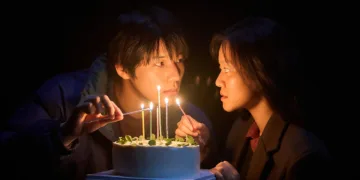









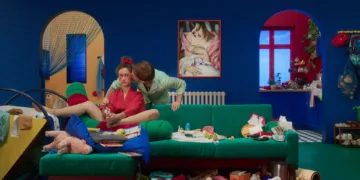




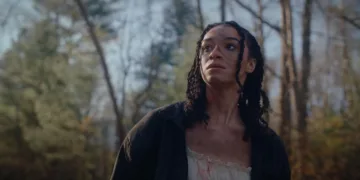
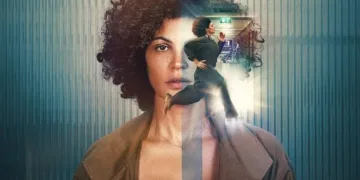
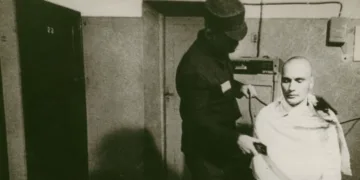









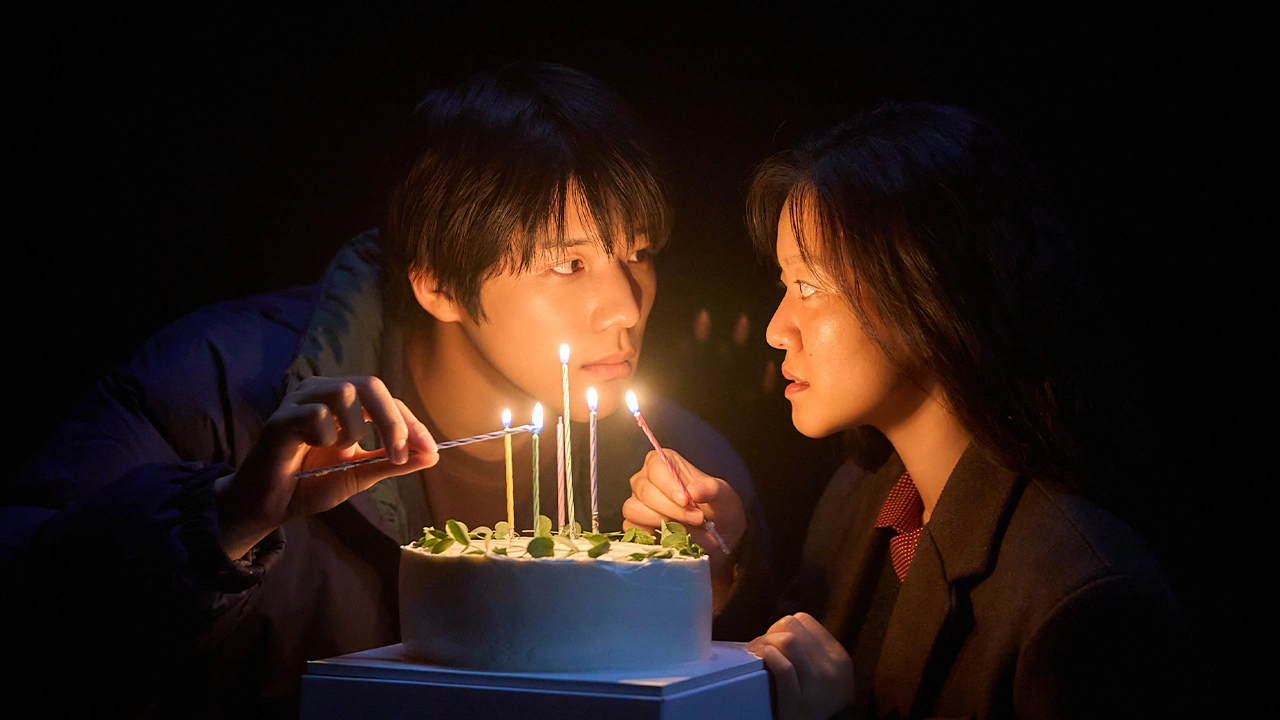

The film places us inside a 1980s Seoul shaped by the Utopia department store, a rigid social microcosm polished to an almost fluorescent shine. Gyeong-rok works there as a parking attendant, a daily routine far removed from the professional dance life he once imagined for himself.
He also carries a secret lineage. He is the son of a famous TV star who kept his family hidden to preserve a public image of bachelorhood. That hidden history gives Gyeong-rok a quiet, displaced quality, as if he has been edited out of his own opening scene. His path crosses with Mi-jeong, a woman assigned to the basement levels. Management keeps her away from customers because her face fails to match the era’s severe aesthetic demands. Their first exchanges have a hesitant friction that slowly warms into a fragile bond.
The period setting feels lived-in and free of caricature. I spent plenty of time in dimly lit mall corners during my youth, and the atmosphere here has a haunting precision I recognized immediately. The mall becomes a sterile, brightly lit prison for people pushed to the margins of a society obsessed with presentation. It makes painfully clear who receives the spotlight and who gets pushed into shadow.
Performative Silence and Shared Loneliness
Moon Sang-min gives the story a still, aching pulse through a performance rooted in passivity. He shapes Gyeong-rok’s emotional distance with subtle physical cues and a hollow gaze, suggesting a man waiting for life to begin. Gyeong-rok remains naive, drifting through his duties with little resistance to the conditions around him. Go Ah-sung supplies the necessary counterpoint as Mi-jeong.
Her defensive posture communicates the psychological scars left by systemic bullying. The performance resists sentimentality, favoring the exhausted vigilance of someone who expects rejection as a default setting. Byun Yo-han enters as a vital catalyst for the central pairing. His Yo-han uses boisterous energy and sharp wit to distract from private internal voids. His gregariousness works like armor for his private sense of outsiderhood.
I often find that the loudest people in a room are trying the hardest to hide. The three actors create a believable ecosystem of shared loneliness. Their collective rhythm grows from their mutual status as societal rejects. Their connection grows through quiet recognition, small shifts in posture, and the patience of people learning to trust.
The chemistry depends on the spaces between words, letting the audience feel the pressure of needs that remain unspoken. This trio becomes a specific form of fellowship, born from the recognition that they have no place in the polished world above the parking garage.
The Visibility of the Hidden
The film studies the punishing force of physical standards inside a culture that prizes uniformity. Through Mi-jeong’s perspective, it tracks the internal damage produced by those expectations. She receives Gyeong-rok’s attention with profound suspicion, afraid his kindness might be an elaborate cruel joke. Her fear of a prank relationship reveals how deeply she has absorbed the idea of her own lack of value.
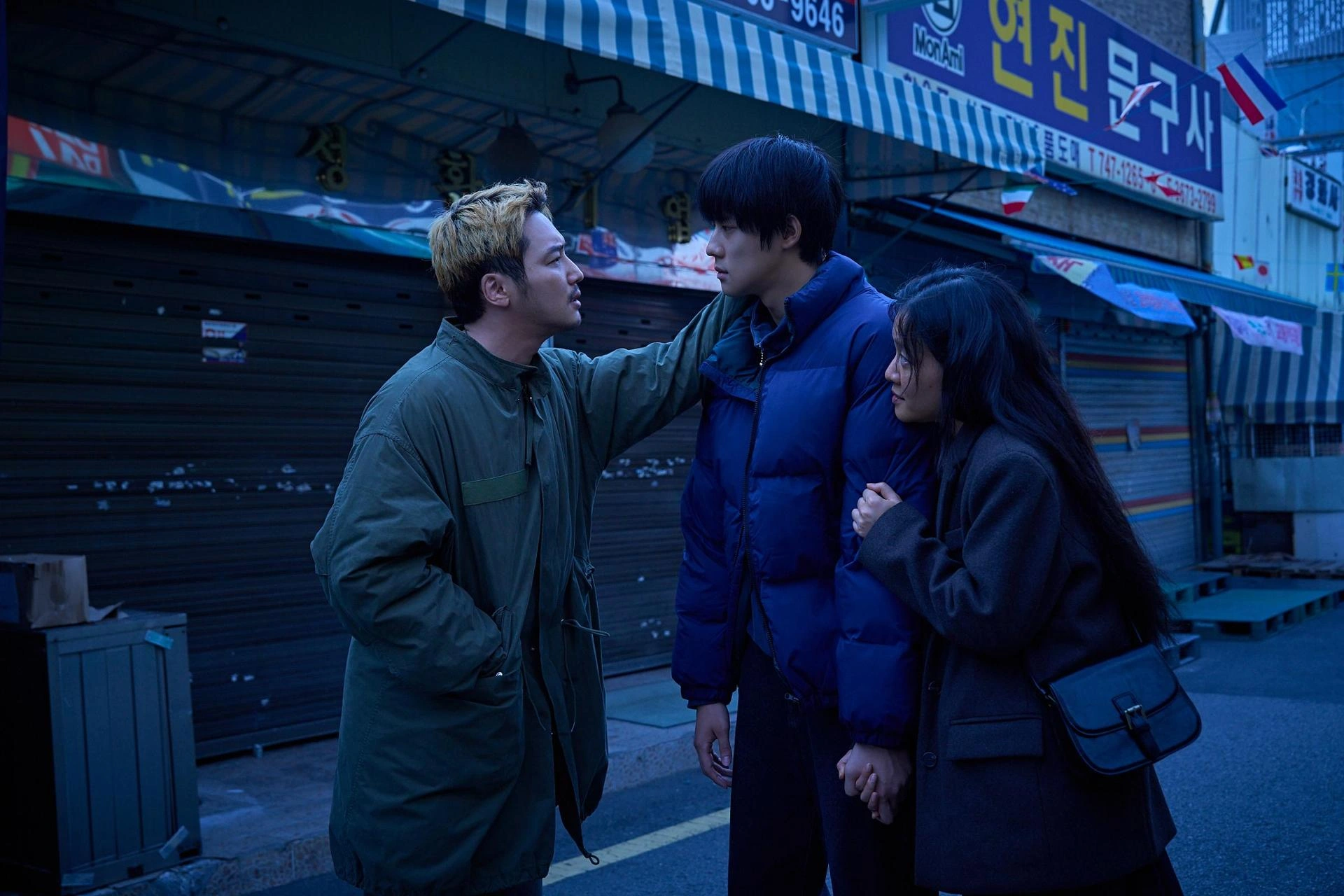
The narrative links this private wound to parental neglect. Gyeong-rok’s search for identity is shaped by a father who treated family as a career liability. A clear parallel emerges between the two characters. Mi-jeong is hidden because of her face. Gyeong-rok is hidden because of his existence. Both seek a form of visibility separate from commercial value or social scoring. The story asks who gets permission to occupy public space.
People deemed unattractive or inconvenient are sent to the basement, which operates as a literal workplace and a metaphor. The characters struggle to accept affection because they have been taught to measure worth through utility and appearance.
They must unlearn the lessons of a consumerist society that treats people as assets. Their search for an authentic self becomes a quiet act of rebellion against a world that prefers shadowed lives to visible truth. This study of alienation feels rooted in the specific anxieties of a society moving into modern capitalism.
Stately Pacing and Period Shadows
Lee Jong-pil chooses a tempo that feels intentional and patient. The title refers to a slow Renaissance dance, and the film follows that stately progression. The romance develops with caution, a choice that may test some viewers; that pacing mirrors the vulnerability of the leads. The director turns the parking garage into a stage for visual storytelling. He uses the contrast between harsh motion-sensor lights and the deep shadows of storage rooms. The lighting sharpens Gyeong-rok’s isolation as he glides through the dark on a borrowed skateboard.
Period markers such as David Bowie t-shirts and visits to vinyl record stores ground the characters in a specific cultural moment. I remember the tactile joy of spinning records in small shops, and these scenes carry a similar nostalgia. The details reveal inner lives through objects, music, gesture, and sparse dialogue. The film occasionally slips into surreal territory, using dreamlike sequences to break the reality of the mundane workplace.
These moments move the project away from the typical structures of a romantic comedy. The visual language favors long takes and wide shots that emphasize the scale of the department store against the smallness of the people inside it. This aesthetic choice reinforces the sensation of being trapped in a system indifferent to personal desire. The color palette carries a vintage grain that gives the proceedings the texture of memory. It captures a lost era while keeping the emotional stakes immediate and relevant.
Pavane premiered on February 20, 2026, as a global release on Netflix. This South Korean production translates the emotional depth of the original novel by Park Min-gyu to the screen. It focuses on the internal lives of its protagonists as they seek connection within the rigid social structures of a department store. The film is currently available for viewing exclusively on the Netflix streaming platform.
Where to Watch Pavane (2026) Online


Full Credits
Title: Pavane
Distributor: Netflix
Release date: February 20, 2026
Rating: TV-14
Running time: 1 hour 53 minutes
Director: Lee Jong-pil
Writers: Lee Jong-pil, Son Mi
Producers and Executive Producers: Park Eun-kyung
Cast: Go Ah-sung, Byun Yo-han, Moon Sang-min, Lee Yi-dam, Han Yu-eun, Seo Yi-ra, Kwon Do-kyun, Jang Yo-hoon
Director of Photography (Cinematographer): Kim Sung-an
Editors: Lee Kang-hee
Composer: Minwhee Lee
The Review
Pavane
Pavane captures a specific frequency of isolation and quiet longing. The deliberate pacing honors the title, allowing the characters to breathe within their 1980s setting. The slow development might frustrate some, but the performances offer a grounded look at how society discards those who do not fit a specific mold. It is a contemplative piece of cinema that prioritizes atmosphere and character interiority over typical genre beats. The film functions as a haunting reminder of the beauty found in the shadows of a sterile, consumerist world.
PROS
- Stellar lead performances from Go Ah-sung and Byun Yo-han.
- Authentic 1980s period detail and atmospheric cinematography.
- Thoughtful rejection of standard romantic comedy tropes.
- Effective use of light and shadow to show loneliness.
CONS
- The slow pacing may alienate viewers seeking traditional momentum.
- Restrained character development leaves some motivations feeling vague.
- Surreal elements occasionally disrupt the grounded narrative tone.







