











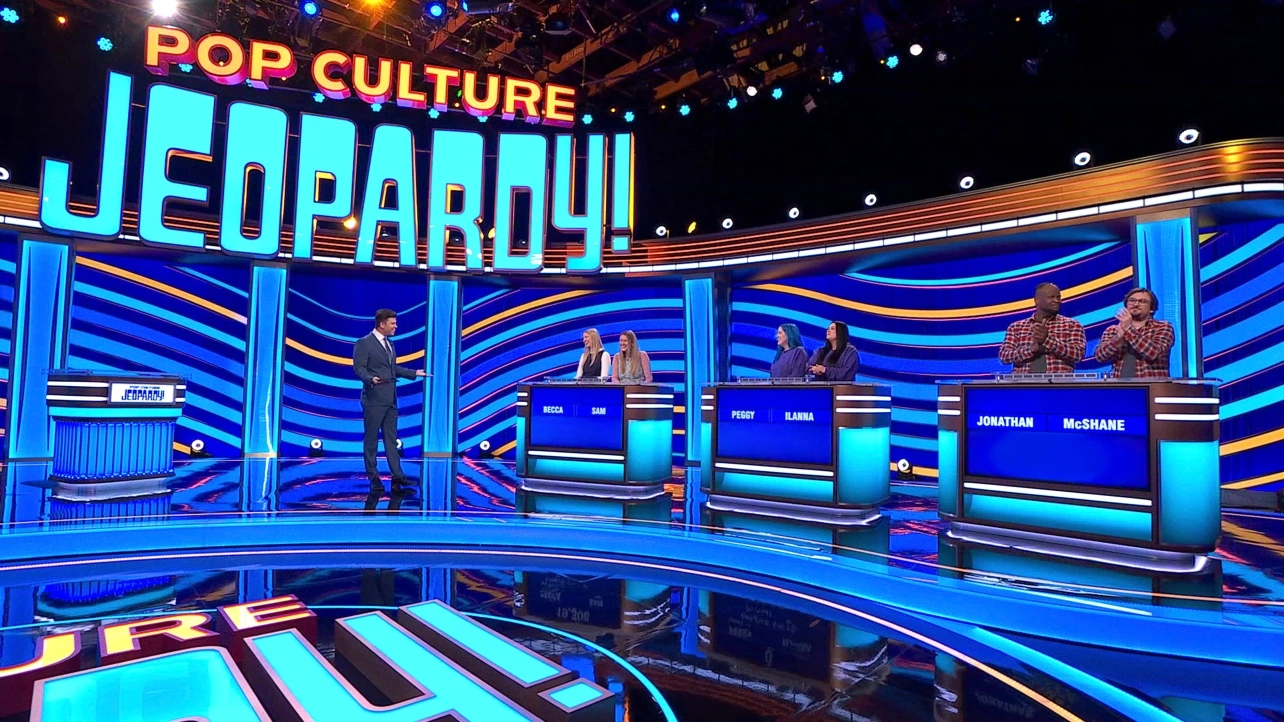

The movement of an established brand often says plenty about the media climate surrounding it. Pop Culture Jeopardy! enters its second season by moving from Prime Video to Netflix, paired with a daily release plan beginning May 11, 2026. Twenty episodes arrive every weekday at 3:00 AM EST across a four-week window. Colin Jost stays at the podium on the Alex Trebek Stage.
This version of the classic quiz show sheds much of the academic weight associated with the parent series and places its attention on internet culture, entertainment history, and modern social trends. The production keeps the franchise’s technical precision and gives it a looser room tone.
Viewers can expect a quick-moving mix of viral references and legacy media facts. New rules around team size and win limits reshape the game’s progression. The Netflix move reads as a calculated effort to reach a digital-first audience, positioning the series as a specialized companion to the general knowledge format of the syndicated original.
Structural Refinement and Competitive Stakes
The season’s main story is built through the mechanics of competition. The most visible change comes from reducing team sizes. Groups of three have become duos, which makes communication inside each team much easier to read. One partner has less room to disappear behind a larger group’s knowledge, giving each response a sharper sense of exposure. The five-game winning cap creates another major shift in the competitive arc. In the previous structure, one win secured a later-round slot. The current rules make teams defend their place day after day.
That design creates compact stories of control, momentum, and sudden collapse across a single broadcast week. The path to the grand prize now depends on sustained performance across several days. Fifteen regular season games form the qualifying field. The top nine teams from those matches move into three semifinal rounds. The winners of those semifinals then play a two-game final.
The prize structure has grown along with the schedule. The final champions can win $300,000. The show still uses points in place of currency values, keeping the emphasis on trivia and decision-making. The format follows the familiar three-round pattern of Single, Double, and Final Jeopardy. The removal of the first season’s Triple Play feature points toward a cleaner version of the game. The leaner structure keeps attention on the rapid exchange of clues, responses, and small strategic risks.
The rules feel fair and push viewers toward the kind of daily habit that helped the original show endure for decades. The new framework gives the season urgency, a quality the previous weekly format lacked. The structure is simple enough to follow and firm enough to make each match matter. That is good quiz-show architecture. No tiny trapdoors. No decorative clutter. Just contestants, categories, pressure, and the possibility of a rough guess aging badly within seconds.
The Lexicon of Modern Fandom
The clues function as a map of contemporary culture. Categories move from the absurdity of AI Slop Gave Me Brain Rot to the specific theatrical drama of Real Housewives Wit & Wisdom. That range captures how fragmented entertainment has become. The writers avoid building the game around one age group by pairing Gen Alpha memes with older media knowledge. Clues tied to the 6-7 hand gesture appear near categories such as Oldies on the Jukebox, which asks players to know radio hits released before 1980.
This balance keeps the game from becoming trapped in the present tense. Its trivia pool feels wide and open to different eras of fandom. Internet sensations receive the same formal treatment as classic cinema, which is both funny and oddly appropriate for a culture where a meme can have the shelf life of a fruit fly and still dominate conversation for a week.
The TV-14 rating supports the show’s playful tone. It allows categories such as Movies That Sound Dirty, But Aren’t, giving the series room for risqué humor that would feel disruptive inside a standard Jeopardy! tournament. The contestants’ team names also carry that informal spirit. Jeopardazed and Confused and One Baddie After Another signal a move away from the parent show’s more formal presentation of individual players.
The effect is closer to a polished pub quiz than a stiff television ritual. Contestants get space to show personality along with their knowledge. The energy recalls Celebrity Jeopardy! and keeps the difficulty of the clues intact. That combination suits the show’s niche. It gives the series an easier point of entry for viewers who might find the original version too dry or too academic, while still respecting the basic pleasure of watching people know things under pressure.
The Comedy and Heritage of the Stage
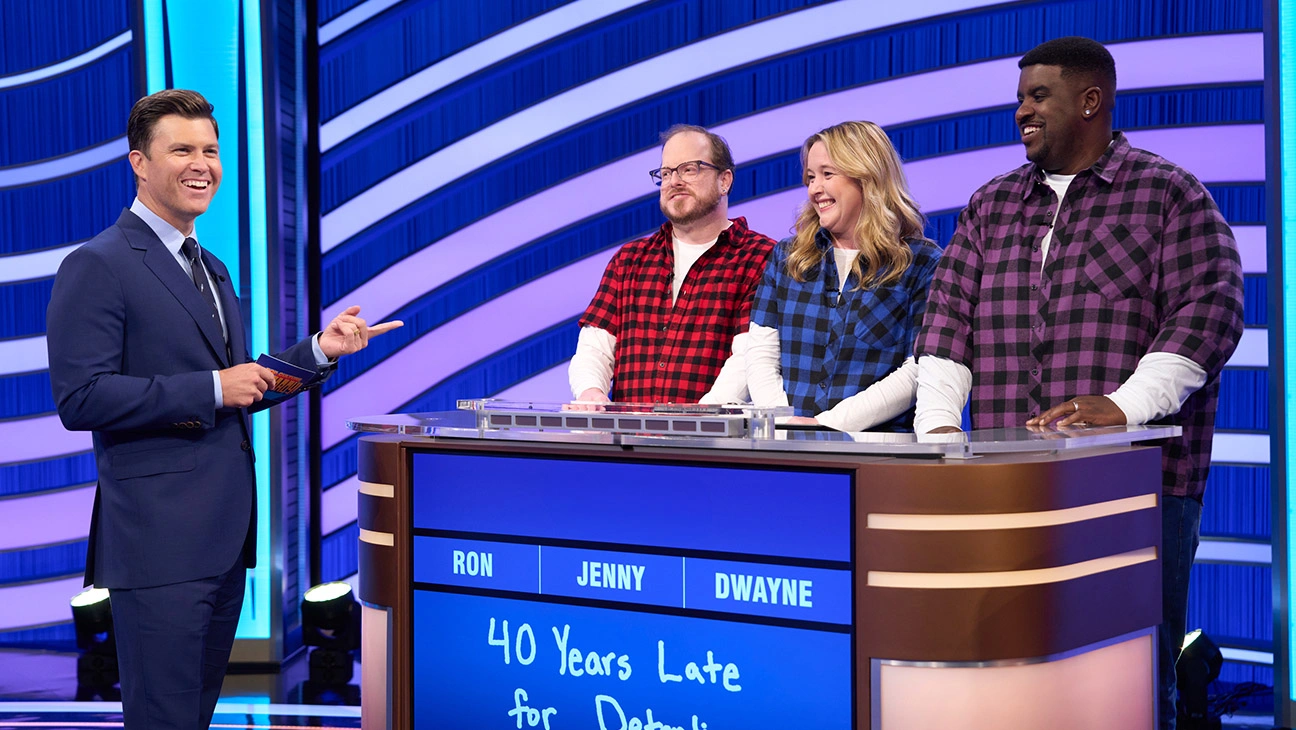
Colin Jost anchors the production through a hosting style shaped by live satire. He keeps a light touch and still manages the technical demands of the game. His banter often lands on the contestants or on his own public image. The new opening animation extends that self-aware tone by showing Jost taking the Staten Island Ferry toward the Alex Trebek Stage. The sequence ends with a salute to Ken Jennings. That detail acknowledges the franchise’s legacy and gives Jost a clear lane as his own presence within it.
Johnny Gilbert remains the announcer at 98 years old. His presence gives the spinoff a direct link to the franchise’s history. His voice during team introductions supplies a level of authority the format needs, especially with so much of the show leaning into a younger and looser cultural register.
The choice to identify contestants by first names alone marks a clear break from tradition. It fits the informal aim of the Netflix version and removes one layer of ceremony that defines the parent show. The players’ skill level remains strong. The season includes people with deep professional trivia backgrounds, and that expertise gives the competition real weight. The jokes have something solid to bounce against.
The interaction between Jost and these high-level players gives the show one of its better tensions. He handles incorrect responses with dry wit, keeping the mood sharp without turning the room sour. The production design holds onto the familiar blue glow of the Jeopardy!
set, which reassures viewers that the franchise’s foundation remains in place. The daily format demands a host who can move quickly between clues, scores, and small comic beats. Jost meets that demand and still finds room for humor, which is no small thing on a stage built to punish hesitation.
Pop Culture Jeopardy! Season 2 premiered on May 11, 2026. This new season moved to Netflix after originally appearing on Prime Video. The series adopted a daily release schedule where new episodes appear every weekday at 3:00 AM EST. Viewers can watch the entire competition exclusively on the Netflix streaming platform.
Where to Watch Pop Culture Jeopardy! Season 2 Online




Full Credits
Title: Pop Culture Jeopardy! Season 2
Distributor: Netflix
Release date: May 11, 2026
Rating: TV-14
Running time: 25 minutes
Director: Alex Van Wagner
Writers: Michele Loud, Billy Wisse
Producers and Executive Producers: Michael Davies, Sarah Foss, Rocky Schmidt
Cast: Colin Jost, Johnny Gilbert
Director of Photography (Cinematographer): L. David Sledge
Editors: Ed Brown
Composer: Steve Kaplan, Merv Griffin
The Review
Pop Culture Jeopardy! Season 2
Pop Culture Jeopardy! Season 2 finds its rhythm on Netflix through a faster daily pace and a focus on digital era knowledge. The transition to a two member team dynamic creates a more personal atmosphere on the historic Alex Trebek Stage. Colin Jost provides a lighthearted contrast to the high stakes trivia. While the show leans into modern memes, it maintains enough respect for legacy media to remain broadly accessible. It functions as a sharp, contemporary expansion of the franchise that rewards specific fandoms.
PROS
- The daily release schedule builds consistent viewing habits.
- Two member teams increase individual accountability and interaction.
- The $300,000 prize pool adds significant competitive weight.
- Colin Jost offers a relaxed and humorous hosting style.
- Questions span from vintage radio hits to current internet memes.
CONS
- Identifying contestants by first names only can feel slightly too informal for the brand.
- The removal of the Triple Play feature reduces the variety of gameplay mechanics.
- The presence of trivia professionals might intimidate casual participants.