






















![Kingdom Hearts Collection [I-III] Review](https://gazettely.com/wp-content/uploads/2026/10/Kingdom-Hearts-Collection-I-III-1-360x180.webp "Kingdom Hearts Collection [I-III] Review: KHII Holds Steady as Newer Entries Fluctuate 40")
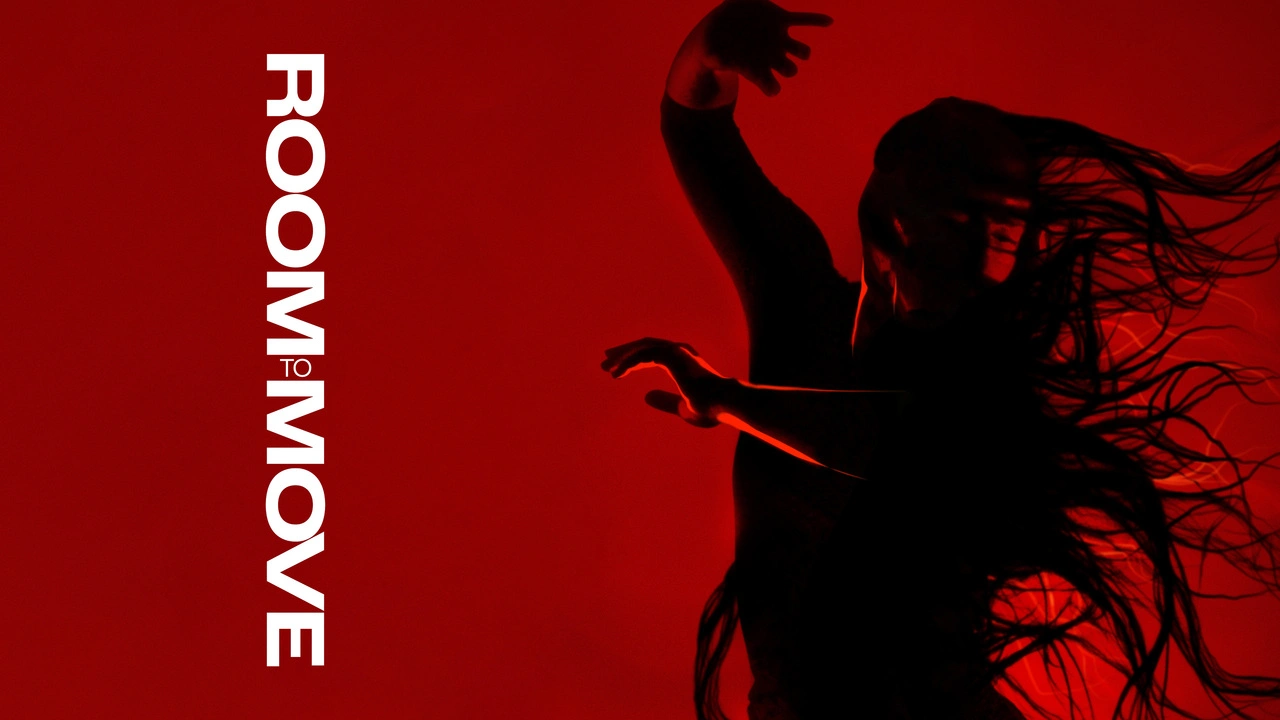

Alexander Hammer’s Room to Move follows dancer and choreographer Jenn Freeman at a moment when her life begins to reorganize itself around a new understanding. Diagnosed with autism spectrum disorder at 33, Freeman is forced to look back at childhood, career, pain, movement, and exhaustion through a different lens. The film observes her during the creation of Is It Thursday Yet?, her solo performance at La Jolla Playhouse, where personal history becomes choreography and choreography becomes a form of self-study.
What makes the documentary immediately striking is how closely it ties storytelling to physical expression. Freeman’s body is never treated as decoration or spectacle. It is memory, defense, communication, and sometimes a warning system.
Hammer follows therapy recordings, home videos, rehearsals, interviews, and performance footage with the same attention a good game designer gives to player input: every movement means something, every repeated gesture carries emotional information. Dance becomes the film’s central mechanic, the system through which Freeman processes a life she is still learning how to read.
Diagnosis as Reframing, Not Explanation
Freeman is a fascinating subject because she resists easy shaping. She is funny, guarded, open, tired, sharp, and deeply committed to the work, often within the same scene. Her diagnosis offers clarity, yet the film understands that clarity can hurt. Naming an experience does not erase the years spent surviving without that name. It can make old memories louder.
The home video footage gives Room to Move some of its strongest emotional texture. We see young Freeman spinning, moving, repeating, expressing herself in ways that adults around her understood as a love of dance. Seen from the present, those movements hold another meaning.
The line about disguising stimming as dancing lands with force because it does not reduce her talent. It complicates it. Freeman’s artistry and neurodivergence are tangled together, not as a neat origin story, but as a lived reality.
This is where the film shares DNA with intimate creative documentaries like Pina or Mr. Gaga, while moving into a far more personal register. Those films study movement as artistic philosophy. Room to Move studies movement as survival. Freeman’s physical discipline is awe-inspiring, but Hammer stays alert to the cost of that discipline: sensory overload, burnout, anxiety, chronic pain, medical uncertainty, and the quiet grief of realizing how much energy has gone into appearing fine.
Sensory Filmmaking That Moves With Its Subject
Hammer’s direction is most effective when it lets form follow Freeman’s nervous system. Room to Move does not settle into a tidy talking-head structure. It shifts between childhood footage, therapy audio, rehearsal rooms, theatrical images, couch interviews, text on screen, close-ups of hands and muscles, and stark moments of stillness. The film has rhythm without feeling overly polished. It breathes, stutters, repeats, and tightens.
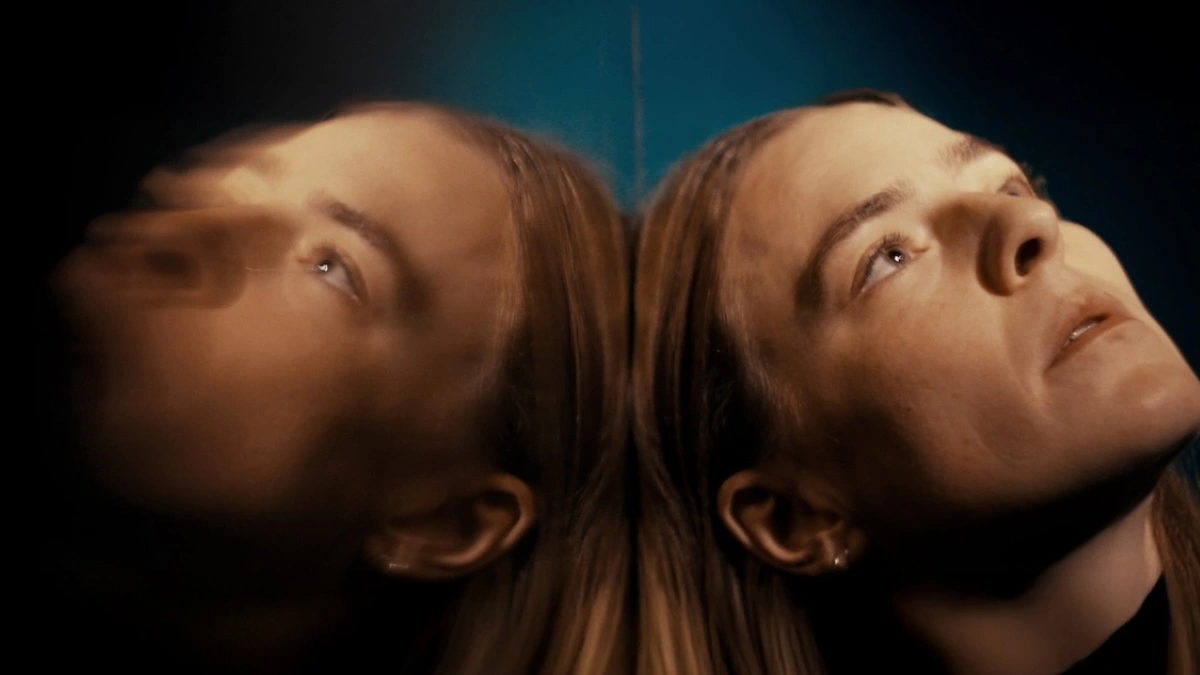
The sensory sequences are especially important. Public spaces become visually aggressive. A cupboard becomes shelter from a wall of overwhelming images. A bathtub sequence turns grounding into something almost ritualistic, with words connected to routine and sameness appearing across the frame. These scenes could have felt heavy-handed in a weaker film. Here, they help translate internal pressure into cinema.
Hammer edits with a clear understanding of movement. Repetition is not filler. Spinning returns. Gestures return. Rehearsal patterns return. The effect feels close to how certain games use repeated actions to build emotional meaning. Think of how Celeste turns climbing into anxiety, recovery, and persistence, or how Journey turns travel into wordless connection. Room to Move uses dance in a similar way. The repeated action becomes the story.
The film’s intimacy deepens through Hammer’s own connection to the material, including his mental health struggles and diagnosis-related discoveries. That reflexive element could have pulled attention away from Freeman. Instead, it gives the documentary a sense of shared vulnerability. The camera is not looking down at its subject. It is learning beside her.
Performance, Collaboration, and the Cost of Making Art
The creation of Is It Thursday Yet? gives the documentary its spine. Freeman’s solo show becomes a container for everything the film has been gathering: childhood footage, therapy sessions, family history, sensory overwhelm, pain, humor, fear, and the desire to be understood without being simplified. The performance is not presented as a magical cure. It is work. Hard work. Expensive work. Work that asks the body for things the body may not always be ready to give.
Sonya Tayeh’s presence adds friction and warmth to the process. As collaborator and close friend, she helps Freeman shape emotional chaos into performance without smoothing away its rough edges. Their creative bond has the charge of a demanding co-op game where trust matters because failure is always close. There are tears, disagreements, pressure, and care. The film values that messiness.
What I appreciate most is the way Room to Move avoids pity. It does not turn autism into tragedy, and it does not turn Freeman into a saintly figure of endurance. It lets her be a working artist with needs, limits, talent, contradictions, and a wickedly human sense of humor. The documentary makes space for shutdowns, panic, chronic pain, friendship, love, artistic ambition, and the strange relief of being seen accurately.
By the time Freeman reaches the stage, the performance carries the weight of everything around it. The film’s emotional pull comes from that alignment between subject and style. Room to Move moves because Freeman moves. It pauses because she needs space. It repeats because repetition can soothe, explain, and reveal. Hammer has made a tender, formally alive documentary about an artist discovering that the body has been telling the truth all along.
Room to Move is a documentary directed by Alexander Hammer that follows choreographer, dancer, and educator Jenn Freeman after she receives an autism spectrum disorder diagnosis at age 33. The film had its world premiere at the 2025 Tribeca Film Festival and was later released on Netflix on May 27, 2026. Through childhood footage, rehearsal material, interviews, and Freeman’s preparation for her solo performance Is It Thursday Yet?, the documentary explores neurodivergence, movement, memory, and artistic self-recognition. As of today, May 30, 2026, Room to Move is available to watch on Netflix.
Where to Watch Room to Move (2025) Online


Full Credits
- Title: Room to Move
- Distributor: Netflix
- Release date: June 10, 2025, Tribeca Film Festival world premiere, May 27, 2026, Netflix streaming release
- Rating: 13+ on Netflix
- Running time: 1 hour 50 minutes
- Director: Alexander Hammer
- Producers: Jonathan Lia, Alexander Hammer, Ian Stuart, Jenn Freeman, Ryan Heiferman, Ralph Miccio, Jenna Mack
- Executive Producers: Amy Schumer, Chris Fischer, Sonya Tayeh, Miguel Blanco, Deborah Van Eck, Pamela Ryckman
- Cast: Jenn Freeman, Ian Stuart, Sonya Tayeh, Barry Gans, Alexander Hammer, Amy Schumer
- Director of Photography: Alexander Hammer, Ian Stuart
- Editors: Alexander Hammer
- Composer: Holland Andrews
The Review
Room to Move
Room to Move is a tender, formally expressive documentary that understands movement as memory, survival, and self-recognition. Alexander Hammer’s sensitive direction gives Jenn Freeman’s story the space it needs, using dance, repetition, home footage, and sensory imagery to shape an intimate portrait of late diagnosis and artistic renewal. It is deeply felt, carefully paced, and emotionally clear without turning Freeman’s life into a simple lesson.
PROS
- Emotionally honest portrait of Jenn Freeman
- Strong use of dance as storytelling
- Beautiful sensory-driven filmmaking
- Thoughtful treatment of autism and late diagnosis
- Intimate editing and rich visual rhythm
CONS
- Some impressionistic sequences may feel abstract for viewers wanting a conventional documentary
- The personal scope may leave certain production details underexplored
- Its slow, reflective pacing may not appeal to every viewer