





























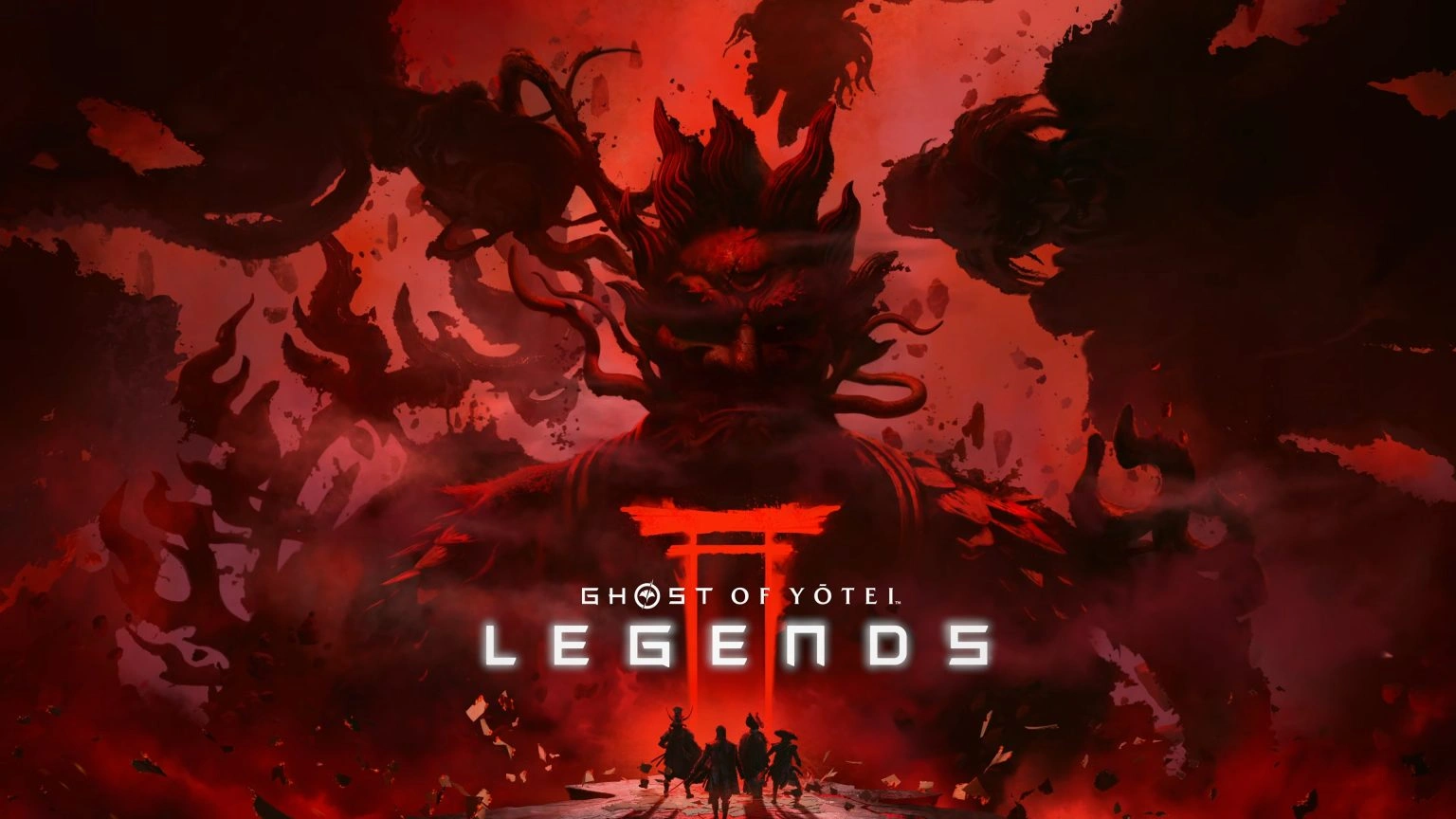

Ghost of Yōtei: Legends arrives as a free cooperative multiplayer expansion that reworks the game’s dramatic engine around group combat and supernatural pressure. Historical realism recedes as Sucker Punch frames the story through a dark afterlife shaped by myth. The player inhabits fallen warriors reborn as vengeful spirits called Ghosts, sent on a violent campaign against Lord Saito and the monstrous Yōtei Six.
The quiet introspection and emotional weight of Atsu’s solitary trek through northern Japan recede. Here, the narrative framework serves action, spectral skill use, and fast tactical decision-making. The meditative wilderness becomes a charged combat space filled with stylized violence and folklore threat. The expansion builds its identity around cooperative execution, where story meaning comes from the hunt, the roles players take, and the pressure created by shared survival.
The Loops of Spectral Warfare
The expansion compresses the open-world cadence of the base game into focused, session-based combat loops that run between 10 and 15 minutes. That structure supports one to four players across a set of connected activity types, each using narrative goals to justify mechanical escalation. Two-player Story Chapters handle the cooperative storytelling, sending partners after individual members of the Yōtei Six.
These missions add local supernatural systems, including the Spider campaign’s Jubokko Trees. These corrupted growths attack through dangerous tendrils, explosive pods, and arena-wide hazardous terrain. One player needs to attack distant weak points as another keeps aggressive enemy hordes contained, turning story progression into a test of role clarity.
Four-player Incursions function as the mechanical payoffs to those hunts. These encounters place teams against enhanced versions of the main bosses, now armed with punishing area-of-effect attacks. The Oni Incursion gives a clear example of how the expansion links spectacle with pressure. A giant demon with a bludgeon floods the arena with fire, and lesser minions complicate movement by dropping blinding flash bombs when they die. The fight asks players to read space, control adds, and survive boss patterns at the same time.
Survival Mode extends that combat language into a longer endurance structure. A four-player team must defend three tactical zones through 12 rising waves of enemies. Success depends on coordinated positioning, with some players anchoring zones and others acting as mobile reinforcements for collapsing lanes. Away from combat, the social lobby gives players space to decompress through non-lethal activities, including bamboo strikes and the coin-tossing minigame Zeni Hajiki.
Stances, Specializations, and Sectarian Warfare
The expansion carries the base game’s technical combat foundation into co-op play, keeping perfect parries, dodges, stealth, and thrown weapons in active use. Its mechanical depth grows through four playable classes: Samurai, Archer, Mercenary, and Shinobi. Each class has specialized progression paths that encourage players to think about identity, utility, and team coverage.
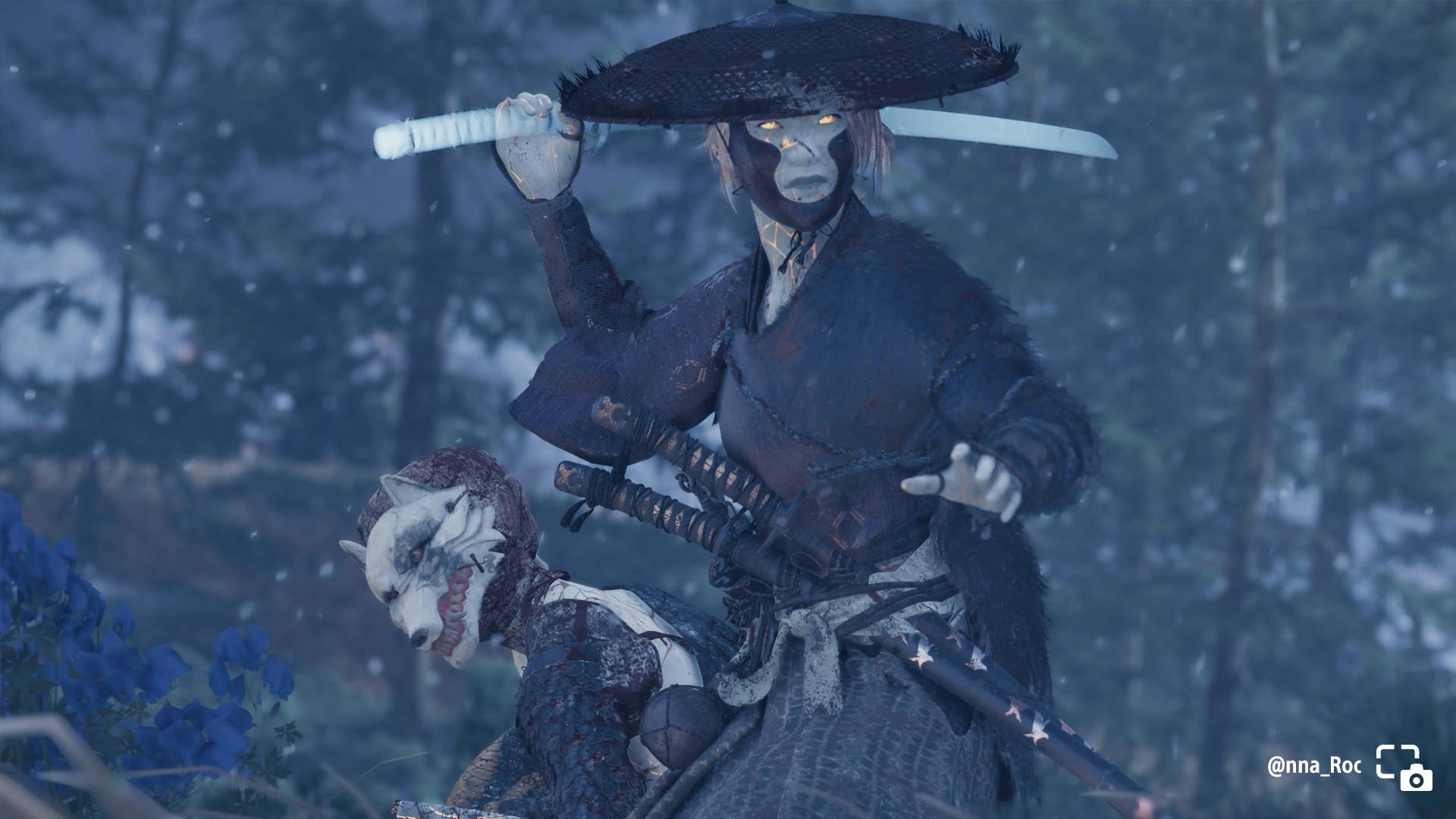
The Shinobi shows how these systems can stack into expressive play. Vanish enables sudden invisibility and stealth assassinations. A passive perk can create an illusionary decoy clone after a successful kill. Higher mastery can chain multiple vanishes together, filling open skirmishes with distracting decoys and giving the player a clear fantasy of manipulation and disruption.
Class limits give those choices sharper consequence. The Mercenary performs strongly with katanas, dual katanas, and the heavy Odachi. Its kit excludes the Yari spear and the Kusarigama sickle. That gap makes shielded and sickle-wielding enemies harder to stagger or break.
The Archer can use traditional blades and gains no innate close-range answer to shields before unlocking the Kusarigama at Rank 5. The Samurai serves as the flexible exception, gaining access to every weapon archetype by Rank 20. These restrictions create meaningful team dependence. Every class carries gaps, making team composition part of the story the mission tells through play.
The Mathematics of Retribution and the Scaling Wall
Progression uses a light-RPG structure built around total Ki gear score across seven equipment slots. Mission completion grants randomized drops scaled to current power level, feeding a tight optimization loop. Players spend earned currencies to raise raw item levels, push gear through rarity tiers, and reroll passive properties while chasing better perk combinations.
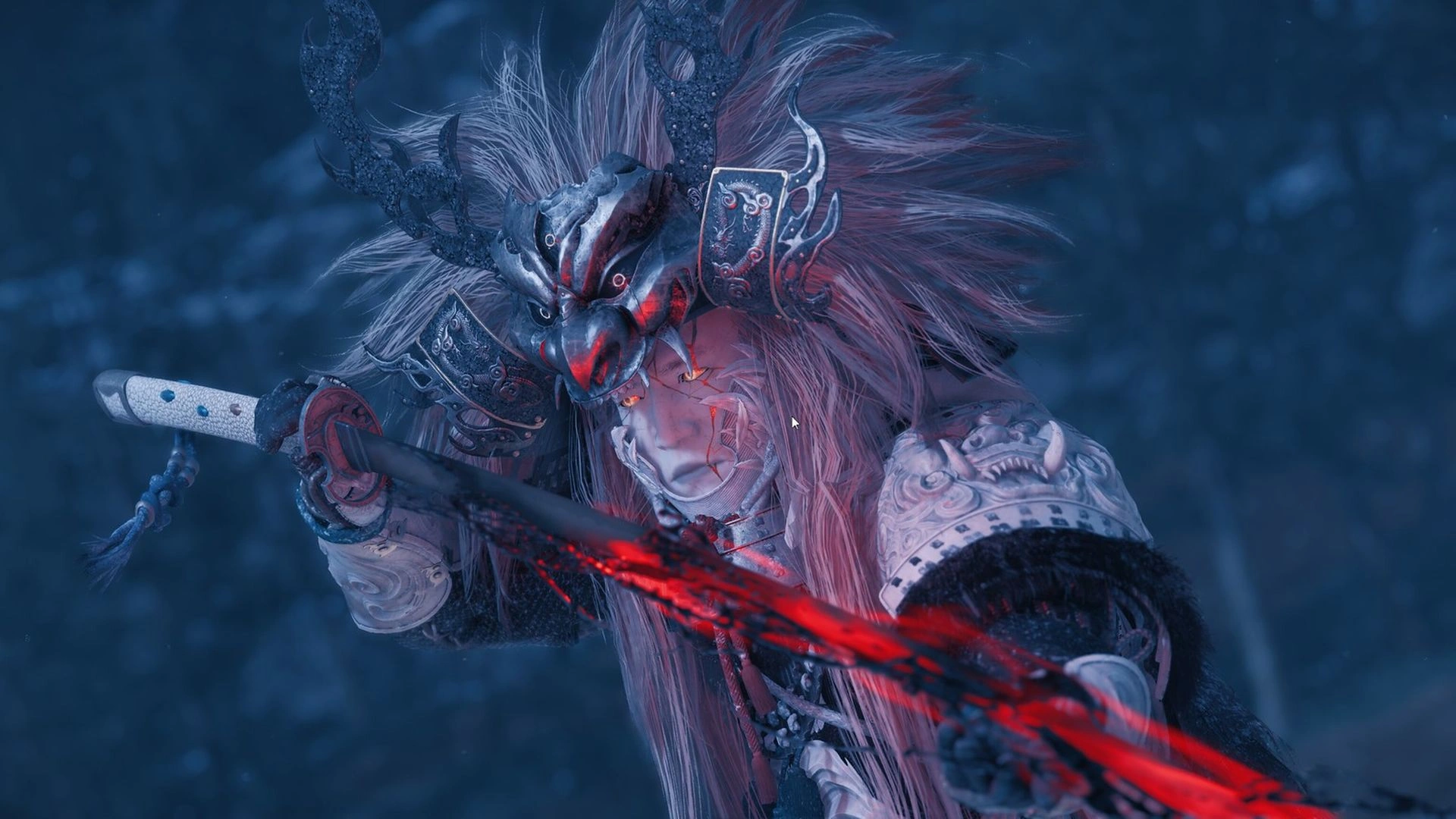
Sucker Punch uses Challenge Cards to keep that grind active and replace traditional secondary objectives. Players choose these modifiers before a match, changing encounter rules for higher currency payouts. Some cards demand specific mechanical behavior, such as reaching a required number of ranged weapon kills. Others impose systemic handicaps, including slower ally revives or a flat enemy damage multiplier. The system gives players control over risk and reward, tying progression to chosen pressure.
That flexibility meets a severe difficulty curve across Bronze, Silver, Gold, and Platinum tiers. The balance has sharp spikes that can punish players early. Even Bronze characters feel fragile, with basic attacks from high-tier enemies such as the Yuki-Onna or explosive bombardiers often causing instant defeat.
These bombardiers can coat entire zones in fire, turning positioning errors into immediate collapse. Late-game enemies bring huge health pools and flawless blocks against standard attacks. The result is a power wall where mechanical skill loses value until teams secure highly optimized, min-maxed end-game gear builds.
The Review
Ghost of Yōtei: Legends
Ghost of Yōtei: Legends succeeds as a mechanically dense, highly rewarding cooperative expansion that brilliantly reframes the base game’s stellar combat within a supernatural, folklore-driven setting. While it lacks the emotional weight and narrative depth of the single-player campaign, it makes up for it with rich build variety, deep class customization, and engaging session-based missions. Severe balancing flaws and punishing difficulty spikes on lower tiers can hinder early progression, but the addictive gear optimization loop ensures a great experience for cooperative play.
PROS
- Exceptional, fluid combat foundation adapted beautifully for cooperative tactics.
- Deep build variety with four distinct classes and creative perk progression paths.
- Highly rewarding RPG gear loop with flexible customization through Challenge Cards.
- Exceptional visual presentation and atmospheric, mythological boss design.
CONS
- Brutal early difficulty spikes and harsh player fragility even on Bronze tier.
- Severe endgame enemy scaling with massive health pools and perfect blocking.
- Shallow narrative execution lacking emotional weight or character depth.
- Rigid weapon restrictions can leave certain classes feeling mechanically helpless against specific enemy types.