

























![Kingdom Hearts Collection [I-III] Review](https://gazettely.com/wp-content/uploads/2026/10/Kingdom-Hearts-Collection-I-III-1-360x180.webp "Kingdom Hearts Collection [I-III] Review: KHII Holds Steady as Newer Entries Fluctuate 37")





Whirlight – No Time To Trip is a traditional point-and-click adventure from imaginarylab, the studio behind Willy Morgan and the Curse of Bone Town. Its setup follows Hector May, an eccentric inventor with little money and a head full of unstable ideas, living in 1962.
After a surreal, dreamlike vision, Hector tries to create a machine that can liquefy light. The experiment fails in spectacular fashion, causing an accidental disruption in the timeline and sending him into the future. From there, the game opens into locations such as Verice Bay, a quiet fishing town, and brings in Margaret, a practical sculptor, her motorcycle-minded temperament, and her parrot companion Apocalypse.
The PC Steam version runs for about 12 to 15 hours, built around item gathering, environmental interaction, and shifts across historical eras. Its clearest design ancestor is Monkey Island, with the same demand for patience, close observation, and puzzle logic from an older school of adventure design.
Temporal Architecture and Character Dynamics
The story starts from Hector’s difficult position in 1962. He is a brilliant physicist with a clumsy streak, and his rival Theodore has found success by stealing his patent. That professional humiliation feeds directly into the opening dream sequence, which plays like an acid trip and gives the game a strange first step into graphic-adventure territory.
Hector then begins collecting odd components for a machine whose purpose he barely understands. The accident that follows sends him to 1990, where Margaret enters the structure. Her grounded personality and love of motorcycles give the writing a useful counterweight to Hector’s scattered intellect.
The script organizes its playable perspectives through a clear three-chapter shape. Chapter One keeps the player with Hector and teaches the basic logic of item interaction inside his 1962 surroundings. Chapter Two shifts control to Margaret, builds out the 1990 setting, and introduces the time-of-day system. Chapter Three joins their efforts and asks the player to move between both protagonists, solving connected puzzles across separate timelines.
The tone stays friendly, family-safe, and comedic, drawing clear energy from Back to the Future and Day of the Tentacle. Dialogue gags, visual jokes, and scattered Easter eggs gesture toward genre touchstones such as Syberia and Runaway. The first hours move slowly through the fishing-town setup, giving the player space to learn the cast and layout. The second half gains speed, sending the adventure toward stranger sci-fi locations that pay off the oddball promise of its time-travel premise.
Mechanical Framework and Chronological Friction
The control layout follows a firm mouse-driven format modeled on nineties adventure games. Left-click handles direct interaction with the environment. Right-click reveals interactive hotspots and screen-exit arrows. A quick double-click moves between areas without waiting through full transition animations. The mouse wheel opens the inventory at once, so the basic handling remains clean and easy to read.
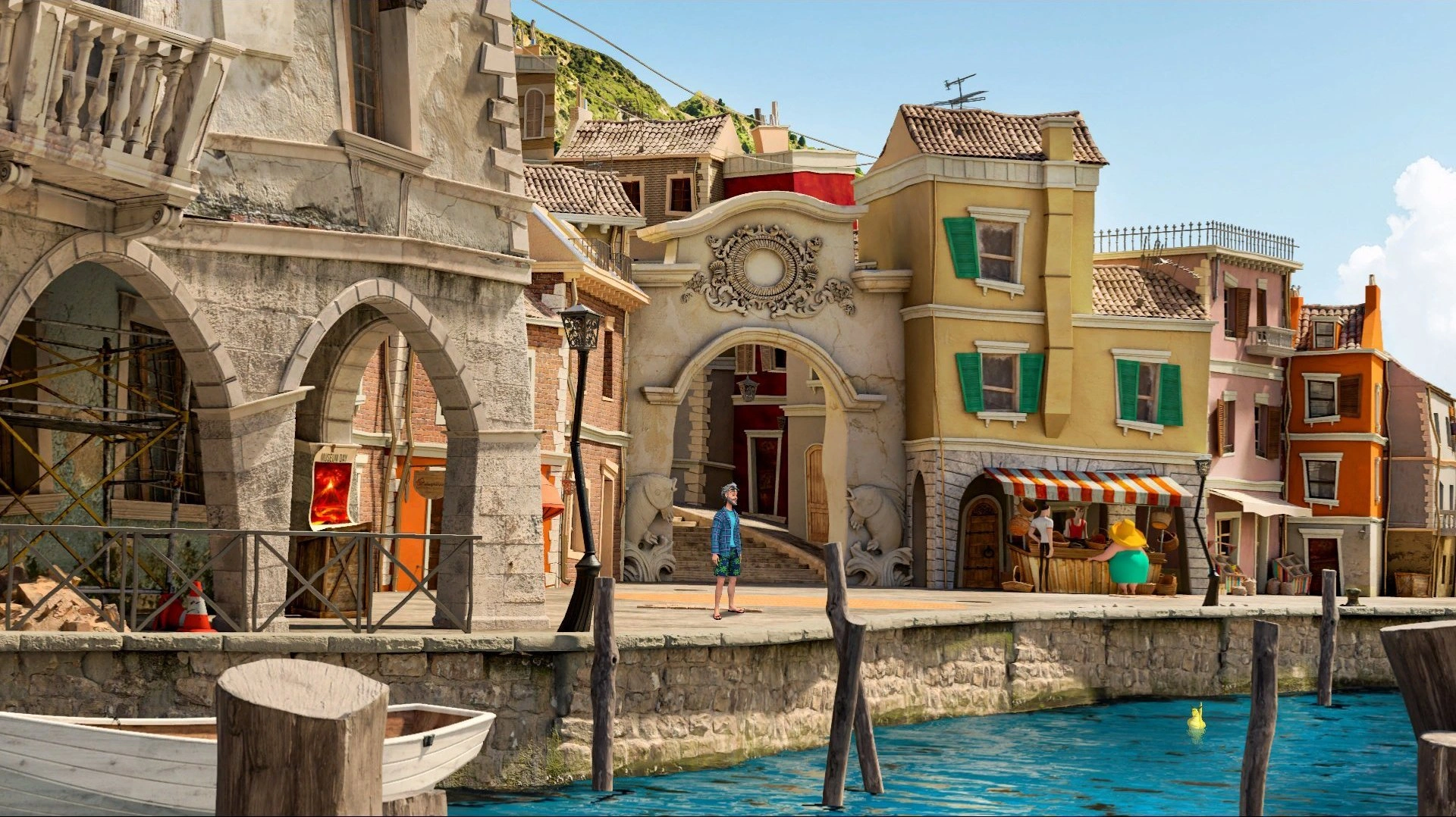
The puzzle design leans heavily on classic inventory work. Much of the play cycle involves collecting objects, combining them into stranger tools, and testing them against scenery. Smaller puzzle beats add variety, asking the player to solve padlock codes or reconstruct torn newspaper cuttings. It is familiar territory for anyone raised on older graphic adventures, and the game treats that familiarity as part of its appeal.
The main mechanical twist is the time-shifting system. At specific places, including the local cinema, players can move the time of day between morning, afternoon, and night. Each shift changes non-player character routines. A local vendor sleeps outside a closed buffet in the morning, cleans tables in the afternoon, and serves customers at night.
That system creates the game’s most persistent friction. Repeated temporal shifts lead to backtracking through the same locations to check small changes. Some solutions depend on obscure video game logic, pushing players into brute-force testing with every inventory item on whatever scenery seems vaguely possible. The inventory also creates mixed signals: certain used objects vanish after their purpose is complete, and useless junk stays available and muddies the decision space.
The in-game journal compounds the irritation. It records basic objectives through drawings and sketches, yet offers no dialogue transcript. Since vital hints often sit inside casual conversations, the player may need to question characters again to recover forgotten clues. That extra step turns memory work into a barrier to progress.
Aesthetic Production and Technical Performance
The strongest visual work comes from the hand-crafted 2D backgrounds. Verice Bay and its surrounding townscapes carry careful architectural detail, precise brickwork, and a polished scenic quality that later shifts into surreal sci-fi imagery. The backgrounds easily outshine the character presentation.
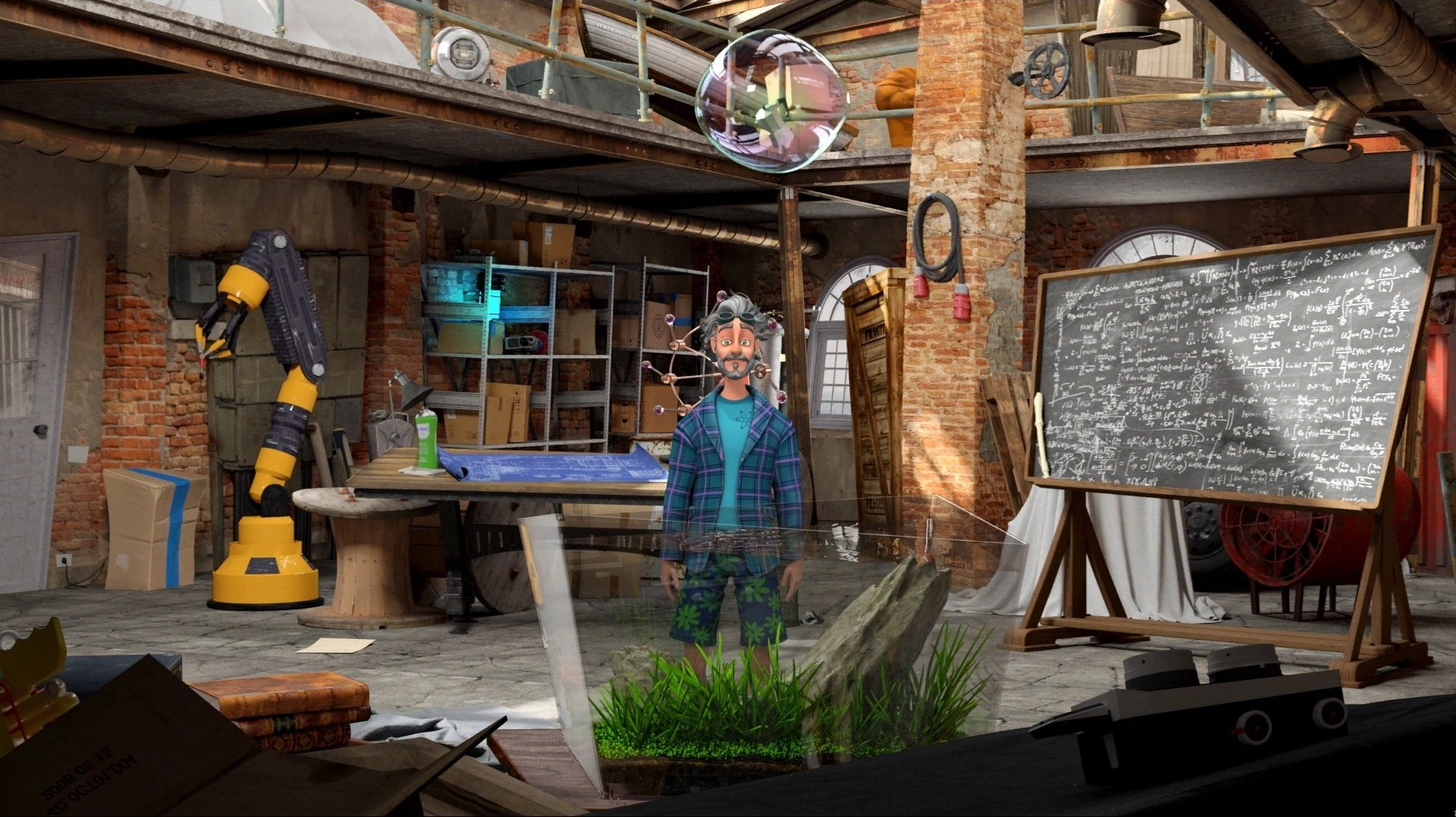
Stylized 3D models are placed over flat 2D spaces, and that combination exposes the technical limits of the animation. Movement looks stiff, facial animation lacks fluidity, and conversations suffer from mouths opening and closing without clean synchronization to the spoken text.
The sound work fares far better. The voice acting is polished and expressive, giving the stranger side characters clear identities, including Klein the poet. The music keeps a playful and light mood across the adventure, helping preserve a relaxed atmosphere during puzzle stalls.
The PC Steam release performs well on the technical side. It runs smoothly and shows strong stability, with no crashes or scripting glitches noted across a game filled with interactable objects. Controller support exists. The strongest setup remains keyboard and mouse, which fits this style of point-and-click design. For a game so committed to classic adventure structure, that control choice matches the mechanical identity of the whole experience.
The Review
Whirlight - No Time To Trip
Whirlight - No Time To Trip successfully revives the traditional graphic adventure style through stunning background art and lighthearted humor. Genre purists will appreciate the multi-character dynamics and complex timeline shifts. However, archaic puzzle logic, tedious backtracking, and poor character animations introduce significant mechanical friction that tests player patience. It remains a worthwhile experience for dedicated adventure fans, though less patient players may find the vintage hurdles tiring.
PROS
- Beautiful, hand-crafted 2D environments.
- Professional, expressive voice acting.
- Entertaining, family-friendly humor and sci-fi tone.
- Engaging multi-character cooperative puzzles in later chapters.
CONS
- Frustrating backtracking caused by the time-of-day mechanics.
- Stiff 3D character animations and un-synchronized mouth movements.
- Obscure puzzle solutions that require trial-and-error brute-forcing.
- Flawed journal system lacking dialogue logs for tracking hints.







