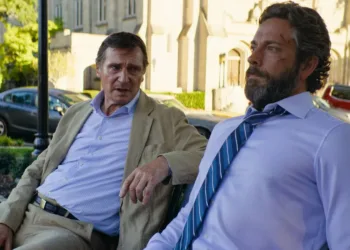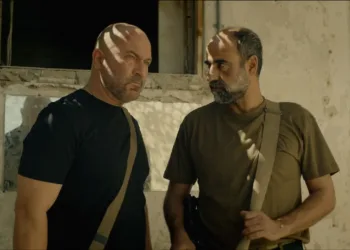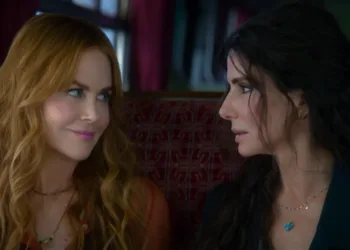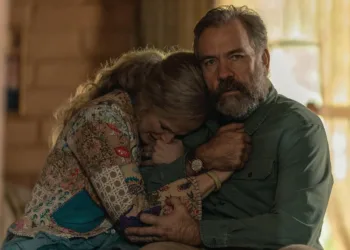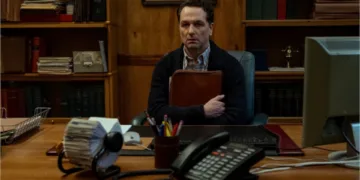






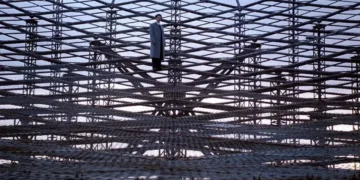








Widow’s Bay begins with a location that sounds designed to frustrate every modern executive, influencer, and city planner who has ever mistaken remoteness for untapped luxury potential. Forty miles off the Massachusetts coast, the island is cut off from the digital bloodstream. No wifi. No reliable cell service. No easy way to soften its rough edges into marketable charm. For Mayor Tom Loftis, that isolation is a problem to be solved. For the locals, it is part of the island’s identity, possibly even part of its defense system.
The show builds its central tension from that clash between development and memory. Loftis wants to rebrand Widow’s Bay as a destination for the wealthy, which places him squarely in a recognizable modern tradition: the local official who sees history as an obstacle, folklore as a branding inconvenience, and community anxiety as bad optics. His vision runs straight into a population that treats superstition as civic infrastructure. Residents speak with straight-faced certainty about sea hags, killer clowns, ancient plagues, and curses that refuse to die politely.
That setup gives the series its richest cultural charge. Widow’s Bay understands that “progress” often arrives wearing expensive linen and carrying a feasibility study. The island’s resistance is not framed as simple backwardness. The locals may be eccentric, sometimes ridiculous, and occasionally alarming, yet their attachment to folklore carries the weight of historical memory. Their stories are messy archives. They preserve what official records prefer to sand down.
The arrival of a high-profile travel reporter turns that buried conflict into open crisis. A figure from the outside world appears, ready to translate Widow’s Bay into content, commerce, and maybe a glowing recommendation for affluent weekenders. The island responds with horror. That response gives the series its sharpest metaphor: some places cannot be repackaged without consequence.
Subverting the Gothic with Absurdity
Katie Dippold’s writing gives Widow’s Bay a distinctive comedic rhythm, far removed from the neat setup-and-payoff machinery of traditional sitcoms. The humor here arrives sideways. It interrupts dread, warps it, then leaves the audience wondering why the laugh caught in the throat. A bizarre exchange can derail a tense scene. A deadpan observation can make a supernatural threat feel even stranger. The joke does not release pressure. It tightens the room.
That tonal instability becomes one of the show’s strongest storytelling tools. Dippold treats absurdity as a companion to fear rather than its escape hatch. Modern anxiety rarely behaves with genre discipline, and Widow’s Bay reflects that disorder. A moment can be funny, grotesque, and emotionally revealing within the same breath. The series understands that communal panic often looks absurd from the outside, especially once town meetings, tourism plans, and cursed folklore occupy the same agenda.
The horror itself is broad in range. Demonic possession, slasher imagery, sea creatures, haunted hotels, and other genre fixtures move through the season with a controlled looseness. Early episodes rely on subtler images, letting the island feel slightly wrong before the series grows more explicit. That restraint matters. By the time the show reveals its heavier terrors, the viewer has already been trained to mistrust ordinary rooms, foggy roads, and casual town gossip.
Dippold’s satire lands hardest when aimed at New England’s relationship with its own violent past. One character’s unsettling pride in colonial witch trials captures the show’s talent for turning historical tourism into a punchline with teeth. Widow’s Bay mocks the way communities commodify trauma once enough time has passed for the gift shop to open. The joke is funny because it is barely an exaggeration.
The show also exposes a contradiction within prestige-era genre television. Streaming platforms often advertise risk while quietly nudging stories toward algorithmic familiarity. Widow’s Bay resists that smoothing process. It refuses to behave like a clean horror comedy, a strict mystery, or a quirky civic satire. Its genre identity keeps shifting, which may irritate viewers looking for tidy classification. That slipperiness is part of its argument. A cursed town with a gentrification problem should not feel neatly packaged.
Loftis, in this structure, becomes a useful proxy for coastal redevelopment and the arrogance that can trail behind it. His skepticism toward the island’s legends is not simple rationalism. It carries embarrassment, class anxiety, and fear of seeming provincial before outsiders. His dismissal of the sea hag becomes a dismissal of local history. In Widow’s Bay, ignored history does not stay symbolic. It develops claws.
Performance and the Weight of History
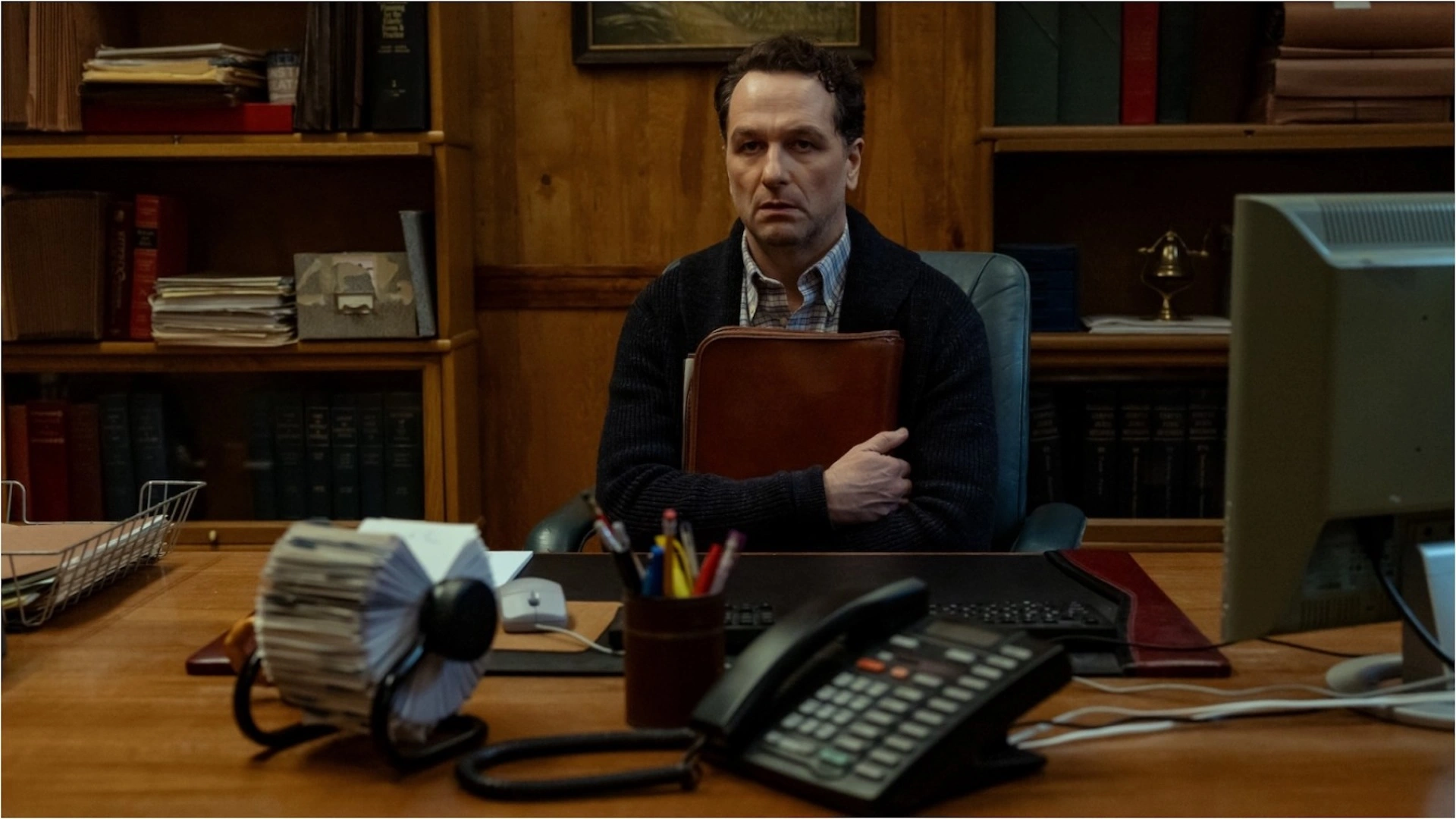
Matthew Rhys plays Tom Loftis with the frazzled intensity of a man who has accidentally become responsible for a community he barely understands. His mayor is anxious, performative, and deeply invested in appearing competent. Rhys finds comedy in that performance without flattening the character into a fool. Loftis is cowardly at times, yes, yet his cowardice has texture. He fears failure, ridicule, and the possibility that the supposedly irrational townspeople may be right.
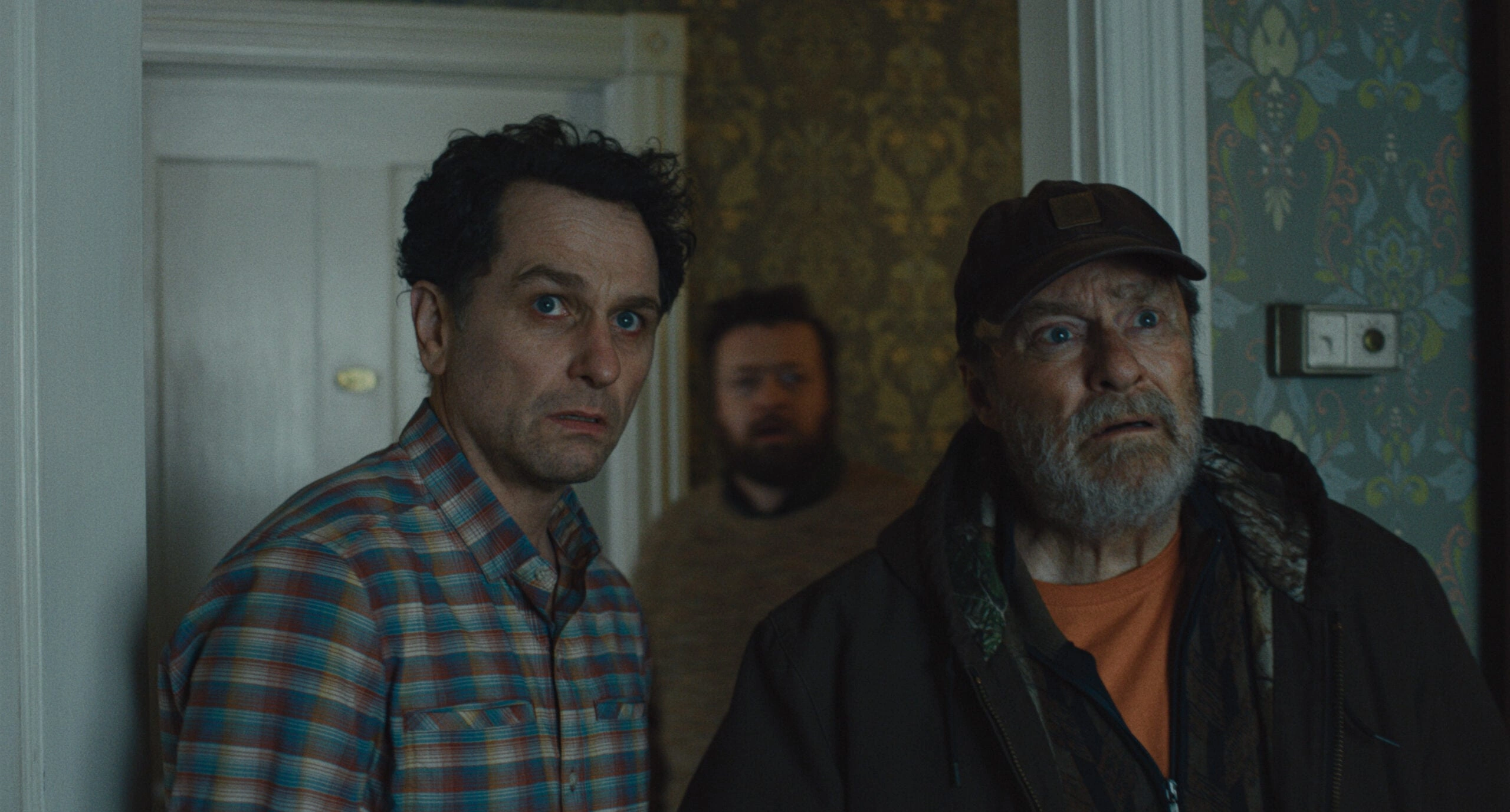
Rhys is especially effective in reaction. His face becomes a small weather system of panic, disbelief, exhaustion, and political calculation. Around the eccentric citizens of Widow’s Bay, Loftis often seems like a man trapped in a municipal nightmare where every resident has read a different cursed pamphlet. The humor works because Rhys never overplays the absurdity. He lets Loftis cling to bureaucratic normalcy long after the island has made normalcy impossible.
Kate O’Flynn gives the series its emotional center as Patricia Moyer, a survivor of a serial killer whose past has made her both visible and isolated. Patricia is known by her trauma before she is fully known as a person, which gives O’Flynn a difficult task. She has to show the fatigue of being misread without reducing Patricia to wounded silence. Her performance is restrained, sensitive, and alert to the small humiliations of communal life.
O’Flynn’s casting also carries industry significance. As her first major role in a United States production, Patricia gives her space to disrupt familiar American horror patterns. She is not shaped as a conventional final girl whose worth depends on endurance alone. She is a woman negotiating what survival means after the spectacle of violence has passed and the town has turned her pain into identity. That distinction gives the character a welcome sense of agency.
Stephen Root brings warmth and rough humor to Wyck, the weathered fisherman who understands the island’s truth with the ease of someone who stopped needing outsiders to believe him. His scenes with Rhys give the show a grounded human rhythm. The two men represent clashing instincts in crisis. Loftis looks toward image, revenue, and future-facing reinvention. Wyck carries the past like weathered rope, frayed yet useful.
The supporting cast strengthens the island’s social ecosystem. Dale Dickey and Jeff Hiller give the Town Hall scenes a tart, lived-in edge, grounding supernatural escalation in workplace irritation and civic fatigue. Their characters feel like people who have survived bad budgets, worse storms, and too many conversations about curses to be easily impressed.
Through its ensemble, Widow’s Bay treats eccentricity as a form of adaptation. The townspeople’s quirks are not decorative weirdness. They are social armor. They suggest what happens when a community is cut off, judged, mythologized, and left to build meaning from its own wounds. The show’s respect for local knowledge becomes one of its subtler social critiques. Modern culture often celebrates expertise once it arrives with credentials, funding, and a polished presentation. Widow’s Bay has knowledge too. It simply smells like fish, mildew, and old grudges.
Atmospheric Construction and Visual Storytelling
The first half of Widow’s Bay uses a structure that recalls traditional investigative television. Each episode introduces a new threat, widening the viewer’s understanding of the island’s mythology. This episodic shape is important because it lets the geography breathe. The island becomes familiar through repetition: its roads, diners, museums, shorelines, and civic spaces slowly accumulate meaning.
As the season progresses, the series shifts toward a serialized mystery. The isolated threats begin to look less isolated. The curse grows from local legend into systemic inheritance. That structural pivot mirrors the characters’ own awakening. At first, Widow’s Bay seems haunted by incidents. Later, it appears haunted by its foundations.
The flashback to 1702 is a key piece of that design. It uses colonial horror to draw a line between origin and consequence. The past is not treated as a decorative insert or atmospheric garnish. It explains why the present feels infected. The sequence frames the curse as a legacy born from settlement, violence, fear, and denial. In a television climate increasingly drawn to historical excavation, Widow’s Bay uses genre to ask what communities inherit when they build myths over harm.
The directors, including Hiro Murai and Ti West, give the series a strong visual identity. The Massachusetts coastline is filmed with oppressive beauty. Rocky shores, bare diners, weathered interiors, and old civic spaces carry a texture that keeps the supernatural from floating away into abstraction. The setting feels cold to the touch. Even daylight has a suspicious quality.
The island’s visual language changes during moments of psychological stress. A drug-induced hallucination sequence bends the frame into instability, allowing form to echo panic. These moments do not feel like empty stylistic flourishes. They suggest the collapse of rational control, especially for characters who have spent the season insisting that everything can be managed, explained, or rebranded.
Erik Yates’ score avoids the obvious jump-scare vocabulary. It lingers beneath comic scenes, creating a sense that danger has refused to leave the room. That musical restraint helps the show maintain its unusual tonal balance. A scene can play as absurd bureaucracy while the score quietly reminds us that the wallpaper may be hiding something ancient and hungry.
The production design deepens that feeling. Museums, old houses, civic rooms, and local gathering spots appear burdened by memory. Decay is present, yet it is never purely aesthetic. It speaks to neglect, endurance, and the strange pride communities take in surviving their own decline. The choice to film on location in Massachusetts gives the series a crucial physical grounding. The supernatural elements gain force because the world around them feels tangible.
The sea becomes one of the show’s most potent images. It feeds the island, isolates it, threatens it, and stores its dead. That duality gives Widow’s Bay a visual and thematic spine. The water is beautiful, yet beauty here never promises safety. The fog moves with similar purpose, slowing the pace and forcing viewers to sit inside uncertainty.
As streaming television continues to reward high-concept premises, Widow’s Bay stands out for tying its concept to place, history, and social unease. Its horror grows from civic identity. Its comedy grows from denial. Its mystery grows from the stories people preserve because official culture refuses to listen. The result is a strange, prickly, culturally alert series that sees haunting as a community record, one written in salt air, bad jokes, and things nobody wanted to admit were true.
Widow’s Bay premieres on Apple TV+ on Wednesday, April 29, 2026. It features a ten episode season that will release new chapters weekly following a two episode debut. Viewers can watch the show exclusively on the Apple TV+ streaming service. The story focuses on a skeptical mayor who tries to modernize his island community while facing resistance from residents who believe the town is cursed.
Where to Watch Widow’s Bay Online


Full Credits
Title: Widow’s Bay
Distributor: Apple TV+, Apple Studios
Release date: April 29, 2026
Rating: TV-MA
Running time: 40 minutes
Director: Hiro Murai, Ti West, Sam Donovan, Andrew DeYoung
Writers: Katie Dippold, Kelly Galuska, Neil Casey, Mackenzie Dohr, Alberto Roldán
Producers and Executive Producers: Katie Dippold, Matthew Rhys, Hiro Murai, Claudia Shin, Carver Karaszewski
Cast: Matthew Rhys, Kate O’Flynn, Stephen Root, Kingston Rumi Southwick, Kevin Carroll, Dale Dickey, Jeff Hiller, K Callan, Nancy Lenehan
Director of Photography (Cinematographer): Toby Leary
Editors: Isaac Hagy, Kyle Reiter
Composer: Erik Yates
The Review
Widow’s Bay
Widow’s Bay succeeds by refusing to play by the rules of traditional genre television. It offers a sharp look at how history and modern ambition collide on a landscape defined by isolation. While the middle chapters occasionally lose focus under the weight of their own mythology, the performances of Rhys and O’Flynn provide a steady pulse. This is a bold experiment in tonal discomfort that marks a shift for its platform. It proves that the most effective horror often hides in the gaps between a joke and a scream.
PROS
- Exceptional lead performances from Matthew Rhys and Kate O’Flynn provide depth to the absurdist script.
- A distinct atmosphere turns the Massachusetts coast into a haunting presence.
- Successful integration of sharp humor and visceral horror elements keeps the audience off balance.
CONS
- A narrative dip in the middle episodes occurs as the plot becomes convoluted.
- Flashback sequences occasionally disrupt the established emotional rhythm of the primary story.
- The relentless focus on discomfort could alienate viewers seeking a traditional scare.