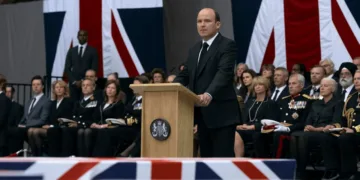








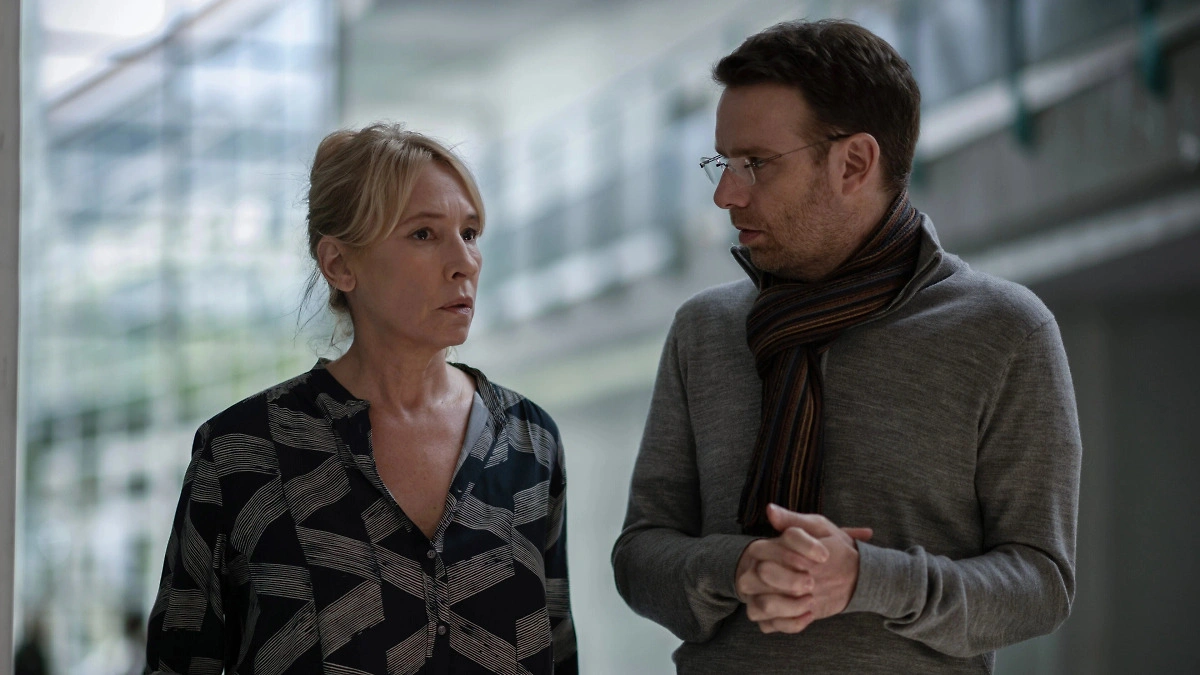

Cinema can struggle with recent history, especially when grief still feels warm to the touch. In Forsaken, director Vincent Garenq takes a measured route through a volatile subject. Co-written with Alexis Kebbas and Tanguy Viel, developed with direct input from Mickaëlle Paty, and based on a text by Stéphane Simon, the film follows the final eleven days of middle school history and geography teacher Samuel Paty in October 2020, in a Paris suburb.
Garenq opens with a sharp structural choice: Paty walks down a quiet suburban street while a voiceover speaks from beyond the grave. The device echoes the bleak irony of classical noir, especially Sunset Boulevard, and it gives the film a chilly, fatalistic rhythm from its first moments.
Through that narration, Paty presents himself in simple terms. He wants to be a good, ordinary teacher. He never sought life as a public symbol or political martyr. The event that sets the story moving begins in a classroom, during a lesson on freedom of expression featuring satirical caricatures from Charlie Hebdo.
The Anatomy of a Digital Wildfire
The script traces a frightening chain reaction, moving from a routine classroom moment to a national security crisis. During the lesson, Paty gives students the chance to look away or leave the room for a moment if the material makes them uncomfortable. The gesture is meant as tolerance, handled with care. The rupture begins with Bashira, a troubled student with a record of frequent absences, who tells a grave lie to her father, Kadir.
She claims her suspension came from objecting to the lesson and being aggressively removed from class. Kadir sends an angry voice message about the false accusation to a large digital group chat. Tahar Amara, an extremist figure, then seizes the online post and turns a local school disciplinary issue into a political attack on state secularism.
I remember watching this digital escalation unfold online in 2020, and the sensation was unnerving in a way that still feels familiar. A small spark became a firestorm before many people understood what had even happened. The film treats the internet as a mutation chamber, a place where misinformation changes shape and gains speed while official corrections move at the pace of exhausted institutions. That gives the narrative the tightening structure of a countdown thriller.
The screenplay has a major historical blind spot. It leaves out the reality of the 2020 pandemic lockdown. That absence weakens the film’s sense of the year it portrays. Months of isolation had left the public especially open to online distortion, suspicion, and emotional contagion. Removing that domestic confinement strips away a key part of the cultural atmosphere surrounding the case.
Quiet Integrity and Flawed Caricatures
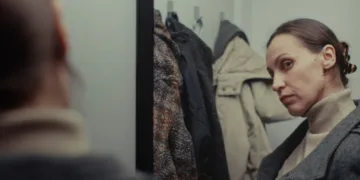
The film’s strongest element is Antoine Reinartz’s exceptional lead performance. He gives Paty quiet decency, mildness, and gentle humanity. His Paty is an ordinary public servant, calm and devoted, with none of the posture of a crusader. Emma Boumali brings similar grounded force to Bashira, playing her as an unhappy adolescent trapped on the runaway train of her own lie, unable to stop her father from escalating the situation.

That realism makes the writing of the main antagonists feel especially blunt. Kadir and Tahar Amara are drawn as flat figures of anger and fanaticism. The approach gives the film a rhetorical heaviness closer to mainstream, message-driven Hollywood drama than to the nuance associated with independent cinema. The family dynamics lean into a rigid opposition: Paty appears as a loving father, while Amara appears as a domestic tyrant condemned by his own daughter. That simplification drains psychological texture from the story.
The same issue affects the dialogue. Characters often enter a scene and declare their political positions with startling directness. Human motivation gets reduced to talking points, and the conversations lose the messiness that makes people feel real. I have a soft spot for naturalistic dialogue, the kind that lets meaning leak out through hesitation, behavior, and unfinished thought. Here, several scenes feel jarring because the writing trades lived interaction for easy ideological clarity.
Thriller Conventions and Bureaucratic Silence
Formally, Forsaken gradually moves away from objective docudrama and toward mainstream thriller grammar. Nicolas Errèra’s unsettling music and the paranoid visual framing create an atmosphere of creeping surveillance. The treatment of the assassin makes that shift especially clear.
Garenq presents the killer as a wordless silhouette buried in shadow and chiaroscuro lighting, borrowing directly from the visual language of a classic giallo horror villain. As someone with a long affection for mid-century Italian thrillers, I found the image striking, though it places pressure on the film’s journalistic tone.
Alongside those genre choices, the film builds a forceful critique of institutional failure. It shows the administrative state failing to protect Paty, with the school principal, played by Emmanuelle Bercot, struggling through confusing protocols and endless paperwork while trying to secure help.
The story also follows Paty’s gradual abandonment by fearful colleagues, who pull away as the online threats intensify. That institutional paralysis speaks to a deep social anxiety about systems that can name danger yet fail to act with speed or courage.
The ending becomes very literal. A legal investigator delivers a blunt explanatory monologue, followed by a final memorial speech from a student named Alma. These choices favor raw emotional processing over cool analysis. The final stretch leans into heavy melodrama, and the film loses some of the distance needed to understand the national tragedy it depicts. What remains is grief, direct and heavy, with clarity still out of reach.
The biographical drama Forsaken made its official world premiere Out of Competition at the Cannes Film Festival on May 13, 2026, which occurred simultaneously with its wide theatrical rollout across France. Viewers can currently watch this production in French cinemas via UGC Distribution, while international audiences can look forward to upcoming theatrical and digital platform releases handled globally by TF1 Studio.
Full Credits
Title: Forsaken
Distributor: UGC Distribution
Release date: May 13, 2026
Running time: 100 minutes
Director: Vincent Garenq
Writers: Vincent Garenq, Alexis Kebbas
Producers and Executive Producers: François Kraus, Denis Pineau-Valencienne, Stéphane Simon, Marion de Blaÿ, Cloé Garbay, Bastien Sirodot
Cast: Antoine Reinartz, Emmanuelle Bercot, Nedjim Bouizzoul, Emma Boumali, Azize Kabouche, Mounira Barbouch, Marie-Sohna Condé, Diamadoua Sissoko
Director of Photography (Cinematographer): Renaud Chassaing
Editors: Aurique Delannoy
Composer: Nicolas Errèra
The Review
Forsaken
Forsaken succeeds as a tense, deeply affecting portrait of systemic failure and personal integrity, anchored by a superb lead performance. It stumbles when adapting complex socio-political realities into flat, black-and-white thriller archetypes. The film chooses melodrama over detached analysis, flattening its antagonists into caricatures. It remains an essential, flawed piece of historical filmmaking that captures the terrifying acceleration of modern misinformation.
PROS
- Antoine Reinartz delivers a quiet, deeply human lead performance.
- Nicolas Errèra creates an effective, tense musical score.
- The narrative clearly shows the terrifying velocity of online misinformation.
- The script highlights important systemic and bureaucratic failures.
CONS
- The screenwriters reduce complex antagonists to one-dimensional caricatures.
- The dialogue feels unnatural and relies heavily on political talking points.
- The production completely omits the historical reality of the 2020 pandemic isolation.
- The final scenes rely heavily on blunt melodrama instead of analytical detachment.