



















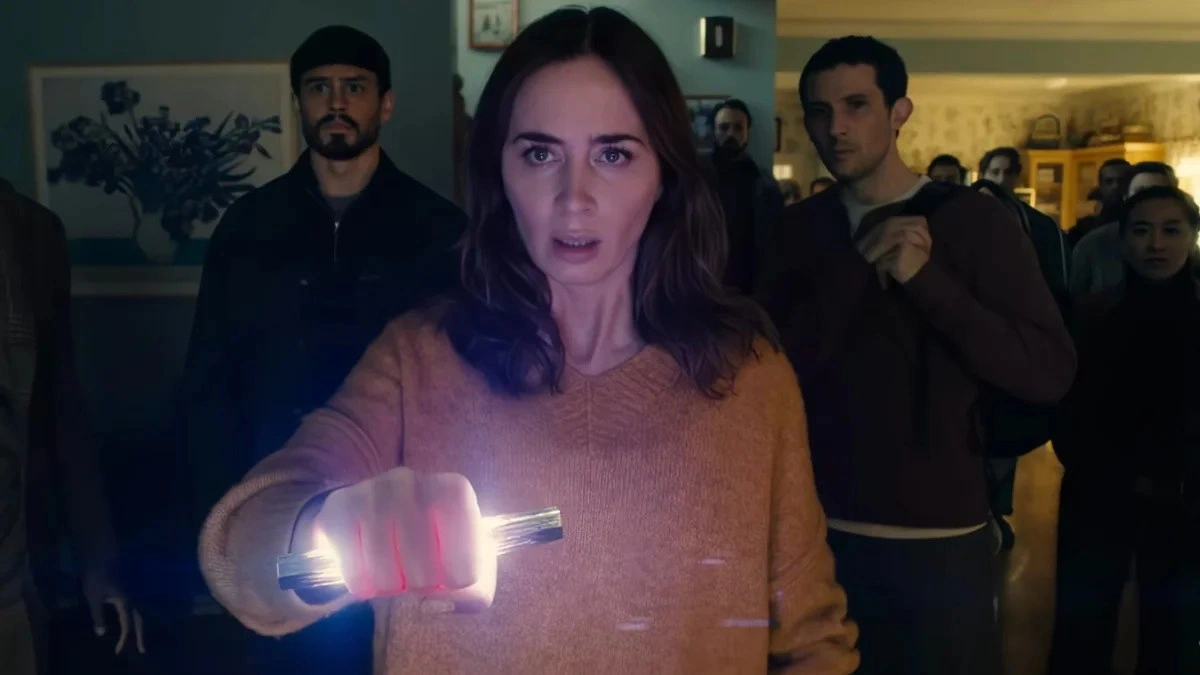

Disclosure Day finds Steven Spielberg returning to alien-contact cinema with the conviction of an artist revisiting an old dream and finding fresh anxiety inside it. The film begins as a paranoid chase thriller, slides into whistleblower drama, then reveals itself as a sentimental science-fiction fable about truth, memory, and the dangerous luxury of wonder.
Daniel Kellner, a cybersecurity expert and former Wardex insider, has stolen evidence proving decades of alien visitation. Wardex, led by Noah Scanlon, wants the evidence buried. Margaret Fairchild, a Kansas City meteorologist, becomes entangled in the conspiracy after a red bird, a psychic rupture, and an alien-language broadcast turn her body into a cosmic radio tower. It is a lot. Sometimes too much. The plot occasionally behaves like a filing cabinet that has been thrown down a staircase.
Yet Spielberg’s hand steadies the chaos. The film is polished, energetic, sincere, and often thrilling. It is also messy, over-explained, and burdened by a screenplay that cannot always keep up with the images Spielberg plainly wants to chase.
Story, Structure, and the Paranoid Thriller Engine
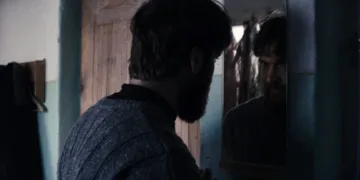
For much of its running time, Disclosure Day is a chase movie in cosmic clothing. Daniel runs with stolen files, a mysterious alien device, and the ethical burden of knowing that history has been edited by powerful men in expensive rooms.
Margaret, whose life once revolved around weather maps and cheerful broadcast patter, is dragged into the same conspiracy after her on-air collapse. Hugo Wakefield guides the plan from a strange constructed space that resembles a studio, a chapel, and a memory trap. Noah Scanlon pursues them under the old authoritarian excuse: secrecy preserves order.
That argument gives the film its sharpest political charge. In an era shaped by institutional mistrust, classified leaks, surveillance culture, and conspiracy folklore that now spreads faster than reason can put on shoes, Disclosure Day imagines disclosure as both liberation and contamination. Daniel believes truth belongs to the public. Noah believes the public may turn truth into panic, profit, war, or content. Depressingly, both men have a point.
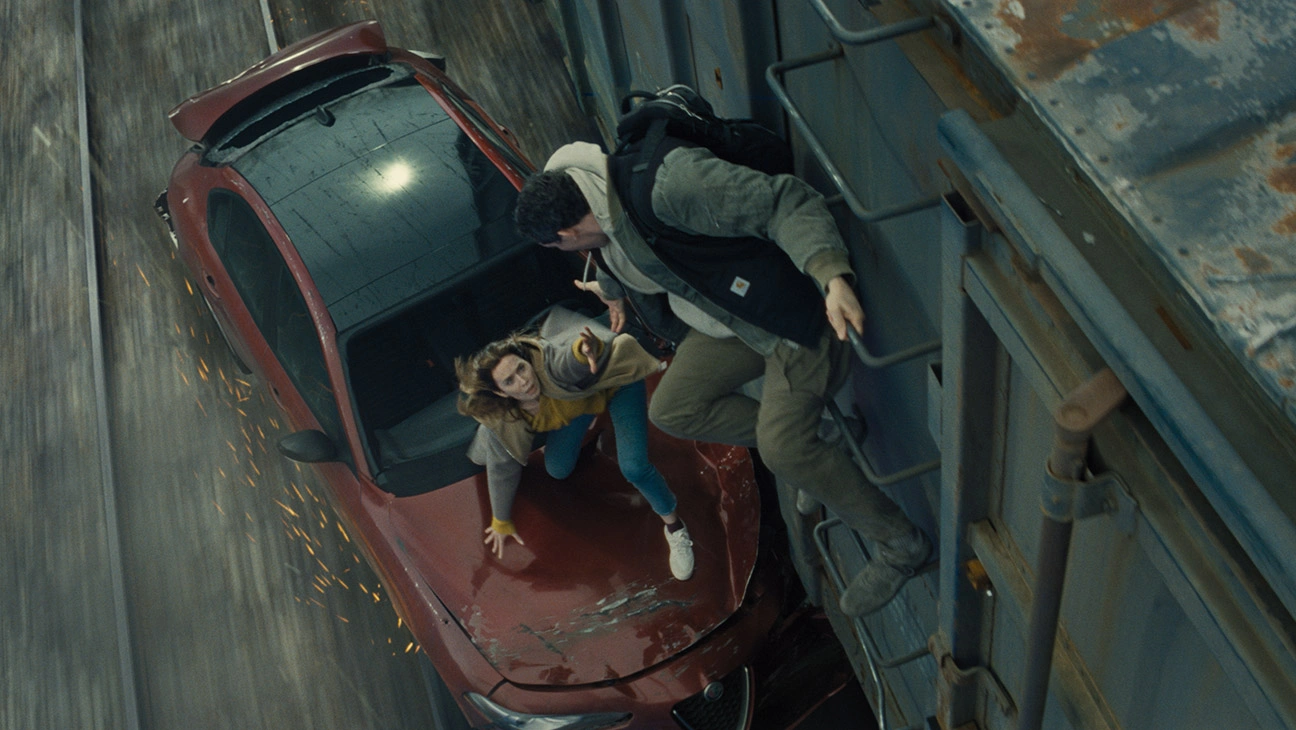
David Koepp’s script moves with admirable speed. The film uses familiar thriller machinery: stolen evidence, hostage exchanges, government-linked agents, convent hideouts, safe houses, train escapes, car stunts, betrayal beats. Spielberg treats exposition as physical motion, which helps. People explain things while fleeing, climbing, hiding, driving, broadcasting. The movie rarely sits still long enough for its weaker logic to fully catch up.
That logic is not shy about causing trouble. The alien device is a MacGuffin with a gym membership. It projects, manipulates, protects, disrupts, and solves problems whenever the plot begins sweating. Its convenience sometimes drains tension from scenes that should feel dangerous.
The plan to reveal world-changing evidence through a local television broadcast also feels charmingly antique, like using a fax machine to announce the Second Coming. Wardex itself appears too large and organized to be plausible as a secret institution, unless its real superpower is human resources.
The film’s tonal shift is bumpy too. It starts in the shadow of 1970s paranoia, with institutions hiding cosmic facts from a volatile public. Then it reaches toward Spielberg’s radiant mode, where light, music, faces, and awe become moral forces. That turn works best when dialogue steps aside. When Disclosure Day trusts movement, sound, and expression, it becomes grand and strange. When it explains empathy in polished speeches, it starts to sound like a very expensive seminar.
Chosen People, Reluctant Messengers
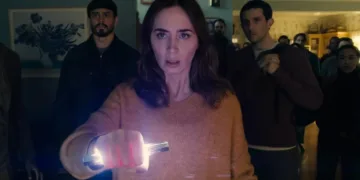
Emily Blunt gives the film its pulse. As Margaret Fairchild, she turns panic into performance and performance into revelation. Margaret is funny, anxious, kinetic, and vulnerable, a woman whose professional mask cracks in public while something ancient and incomprehensible speaks through her.
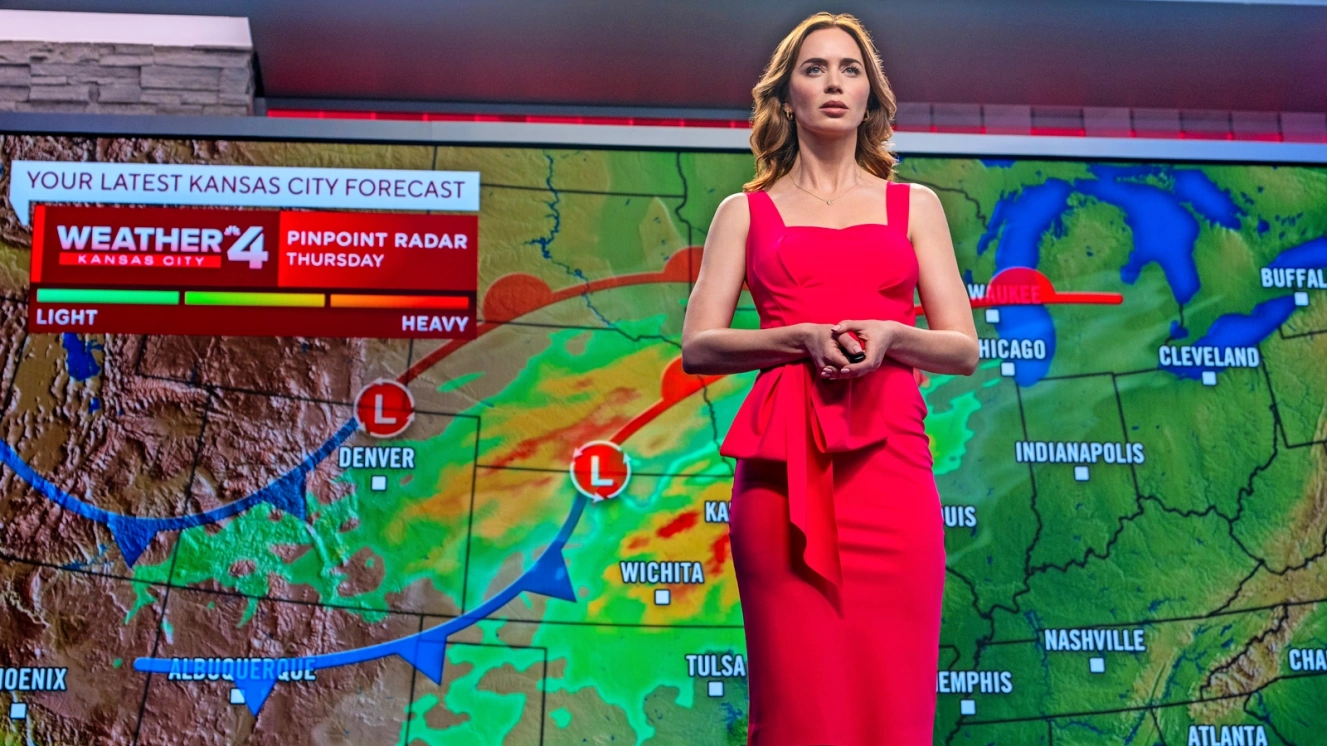
Her first transformation feels almost comic: the red bird, the sudden linguistic ability, the mind-reading, the cop whose private misery she can sense before he says a word. Then the comedy curdles into terror. Her body becomes a broadcast system without consent.
Blunt makes that violation feel personal. She plays Margaret big, sometimes almost too big, yet the largeness suits a character whose nervous system has been hijacked by the universe. Her silent scenes are strongest. When Margaret looks into another person’s eyes and seems to absorb their grief, the film’s philosophy becomes physical. Empathy stops being a slogan. It becomes invasion, grace, and burden at once.
Josh O’Connor’s Daniel is a quieter creation, all unease and moral strain. He is brilliant, isolated, frightened, and stubborn enough to risk death for evidence most people might refuse to believe. O’Connor avoids turning him into a slick techno-hero. Daniel seems brave because he is scared and acts anyway. His connection with Margaret gradually forms the film’s emotional hinge: two damaged, socially displaced people drawn together by a message neither fully understands.
Colman Domingo brings calm authority to Hugo Wakefield, a guide whose warmth keeps some of the heavier exposition from sinking the room. Hugo’s constructed space is one of the film’s most curious images: a set, a shrine, a therapeutic machine. Disclosure becomes staging. Truth needs lighting, architecture, timing. Spielberg, with a wink visible from orbit, appears to be thinking about cinema itself.
Colin Firth’s Noah Scanlon is less layered, though he has an effective tiredness. He represents control, secrecy, and the bureaucratic exhaustion of lying for decades. His polished British severity is slightly odd for the head of an American deep-state apparatus, but his slumped physicality tells its own story. Suppression has posture. It curves the spine.
Eve Hewson’s Jane introduces the film’s religious anxiety through her former life as a novitiate. The idea is rich: what happens to faith once the universe grows teeth, wings, languages, and classified video files? The film gestures toward that question, then moves on too quickly. Wyatt Russell gives Margaret’s domestic life needed texture, grounding her cosmic rupture in ordinary intimacy.
Craft, Spectacle, and the Return to Wonder
Spielberg’s control remains the film’s strongest argument for itself. He knows how to build suspense from geography, motion, and attention. A train sequence has the clean force of classical adventure filmmaking. A car escape finds danger in timing rather than digital clutter. The control room climax turns an ordinary broadcast space into a secular cathedral, with screens replacing stained glass and live television standing in for prophecy.
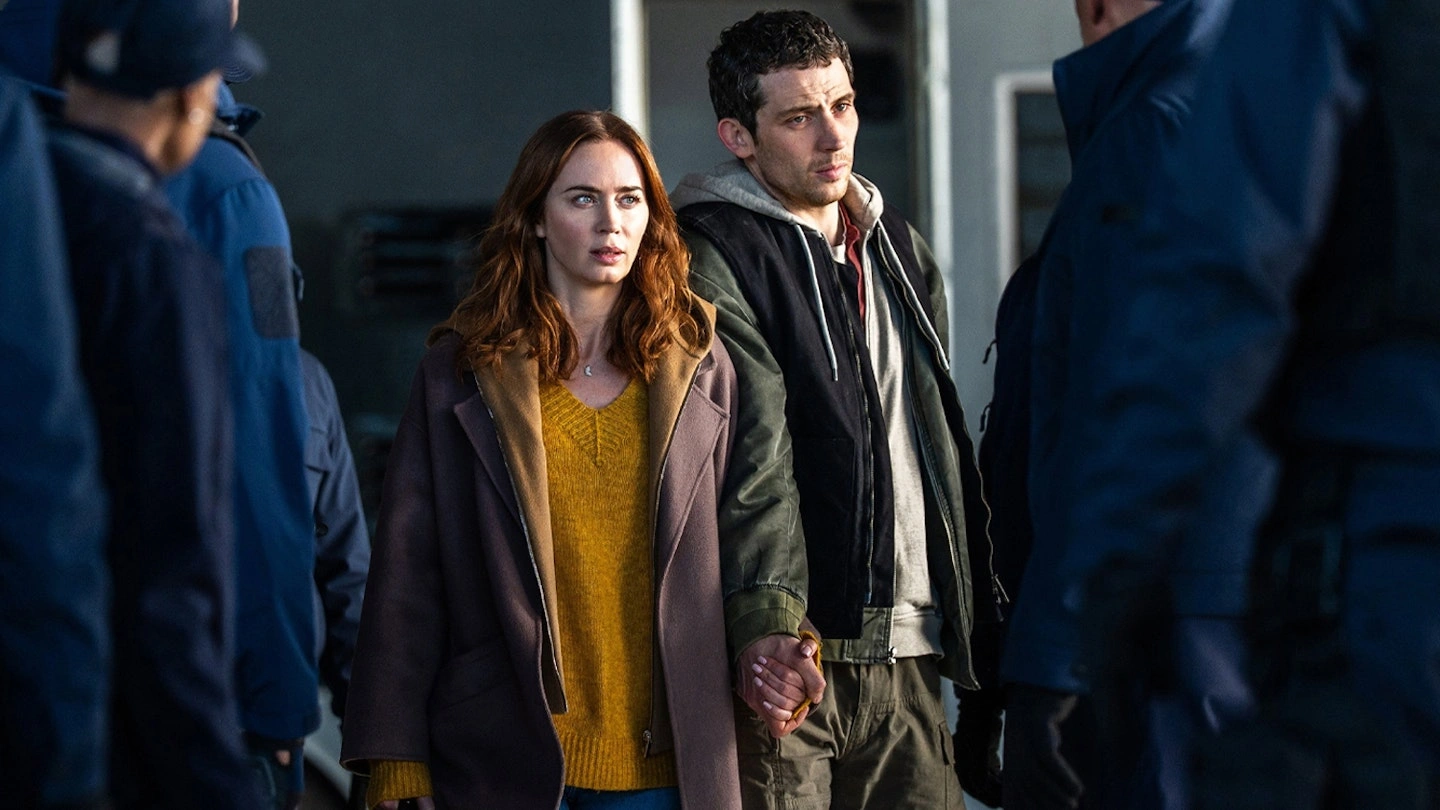
Janusz Kaminski’s cinematography supplies the expected glow: strong backlights, beams cutting through darkness, faces lit by monitors and unseen forces. Some of these images carry the comfort of familiar technique, perhaps too familiar. The Spielberg-Kaminski light beam has become its own species by now, probably eligible for habitat protection. Still, the visual language fits the subject. The film is about revelation, and revelation needs light.
The production design creates an effective split between institutional coldness and performative intimacy. Wardex headquarters, with its monitors and command-room severity, feels like secrecy made architectural. The local news control room, by comparison, becomes wonderfully absurd and sacred. This is where humanity may learn it is not alone: amid headsets, switchboards, weather graphics, and people asking if they are still live. The banal and the cosmic shake hands. Awkwardly. Beautifully.
John Williams’ score is restrained by his standards, which serves the film well. It does not smother the emotional beats. It nudges suspense, softens fear, and lets tenderness rise without blaring the thesis. The sound design is equally important: alien clicks, broadcast static, glottal vocalizations, overlapping control room chatter. Communication becomes unstable, then miraculous. Language breaks before meaning arrives.
The effects are uneven. Large-scale moments near the finale carry grandeur, while some smaller digital animal imagery looks oddly weightless. The film lacks the “how did they do that?” shock that once accompanied Spielberg’s grand spectacles. Its power lies elsewhere, in orchestration. Camera, score, editing, performance, and belief move together like parts of an old machine that still knows how to run.
Disclosure, Empathy, Faith, and Childhood Memory
The central question in Disclosure Day is not whether aliens exist. The sharper question is what truth does once released into a frightened civilization. Daniel treats evidence as a democratic right. Noah treats secrecy as disaster management. The film clearly favors disclosure, yet it does not make panic seem imaginary. Human beings have turned smaller revelations into wars, markets, cults, and comment sections. A cosmic revelation would probably get a sponsorship deal by noon.
Spielberg’s answer is empathy, which sounds simple until the film makes it unsettling. Margaret’s ability to see other people’s emotional histories turns compassion into psychic exposure. She does not merely sympathize. She receives. That distinction matters.
The movie suggests that humanity’s crisis is not ignorance alone, but emotional dishonesty: the lies told by governments, lovers, institutions, and frightened selves. Alien contact becomes a mirror held up to a species that keeps mistaking control for wisdom.
Faith enters through Jane, though the film never develops the idea with the depth it deserves. The existence of extraterrestrial intelligence need not destroy religious belief; it could expand the scale of mystery. Still, human certainty becomes fragile once the universe grows larger. The film is most persuasive when it treats revelation less as an answer than as an enlargement. The sky opens, and the old questions survive.
The most personal current is childhood memory. Disclosure Day returns Spielberg to night skies, suburban fear, and the belief that awe can puncture adult cynicism. Hugo’s recreated set and the final control room sequence imply that cinema can recover buried feeling through artificial means. A set can become a memory chamber. A broadcast can become confession. A spectacle can become emotional archaeology, a phrase that sounds pretentious until Spielberg makes it literal.
As conspiracy plotting, Disclosure Day is clumsy. As late-career self-interrogation, it is far stronger. Spielberg uses aliens here as he often has: symbols of fear, longing, innocence, and moral possibility. The film lets spectacle and hope occupy the same frame with dread. That may be naïve. It may also be necessary.
Disclosure Day is an American science fiction event film directed by Steven Spielberg that celebrated its glamorous world premiere in Paris on June 2, 2026, ahead of its wide theatrical rollout across the United States on June 12, 2026. The high-budget blockbuster tracks a targeted cybersecurity whistleblower and a local TV meteorologist who find themselves caught in a high-stakes race against time to bring about an extraordinary event that will permanently expose deep government archives detailing alien contact to the public. Audiences can look for local theatrical showtimes to experience the thriller on the big screen, with premium premium format engagements showing in IMAX auditoriums globally before the production transitions to standard subscription streaming networks later in the theatrical window.
Where to Watch Disclosure Day (2026) Online







Full Credits
Title: Disclosure Day
Distributor: Universal Pictures
Release date: June 2, 2026 (World Premiere), June 12, 2026 (United States)
Rating: PG-13
Running time: 145 minutes
Director: Steven Spielberg
Writers: David Koepp, Steven Spielberg
Producers and Executive Producers: Kristie Macosko Krieger, Steven Spielberg, Adam Somner, Chris Brigham
Cast: Emily Blunt, Josh O’Connor, Colin Firth, Eve Hewson, Colman Domingo, Wyatt Russell, Henry Lloyd-Hughes, Elizabeth Marvel, Hettienne Park, Tommy Martinez
Director of Photography (Cinematographer): Janusz Kamiński
Editors: Sarah Broshar, Michael Kahn
Composer: John Williams
The Review
Disclosure Day
Disclosure Day is Spielberg in reflective blockbuster mode: sincere, thrilling, visually graceful, and occasionally tangled in its own mythology. Its conspiracy plotting can feel too convenient, and some themes arrive through speeches rather than discovery, yet the film finds power in Emily Blunt’s charged performance, John Williams’ tender score, and a finale that turns alien contact into an act of memory and belief. It is uneven, but its sense of wonder still cuts through the static.
PROS
- Emily Blunt gives the film its strongest emotional charge.
- Spielberg’s direction keeps the chase structure lively and elegant.
- The finale carries real awe and emotional force.
- John Williams’ score supports tension without overwhelming the drama.
- Strong visual symbolism around memory, disclosure, and staged truth.
CONS
- The alien device feels too convenient.
- Some dialogue explains themes too plainly.
- Wardex lacks believable secrecy for such a massive operation.
- Jane’s religious subplot feels underused.
- Some digital animal effects weaken the spell.