



















![Kingdom Hearts Collection [I-III] Review](https://gazettely.com/wp-content/uploads/2026/10/Kingdom-Hearts-Collection-I-III-1-360x180.webp "Kingdom Hearts Collection [I-III] Review: KHII Holds Steady as Newer Entries Fluctuate 40")


There is a terrible irony in the title Photophobia. In medical language, it suggests an aversion to light. In Ivan Ostrochovský and Pavol Pekarčík’s 72-minute fiction-documentary hybrid, it becomes a wound, a diagnosis, a spiritual condition forced upon people who still long for the sun.
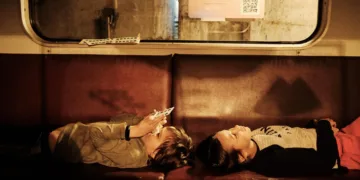
The film takes place in the Kharkiv metro during Russia’s assault on Ukraine, where Heroiv Pratsi station has been transformed into a refuge for displaced civilians. A public transport system becomes a dormitory, a clinic, a waiting room, a cave of interrupted lives.
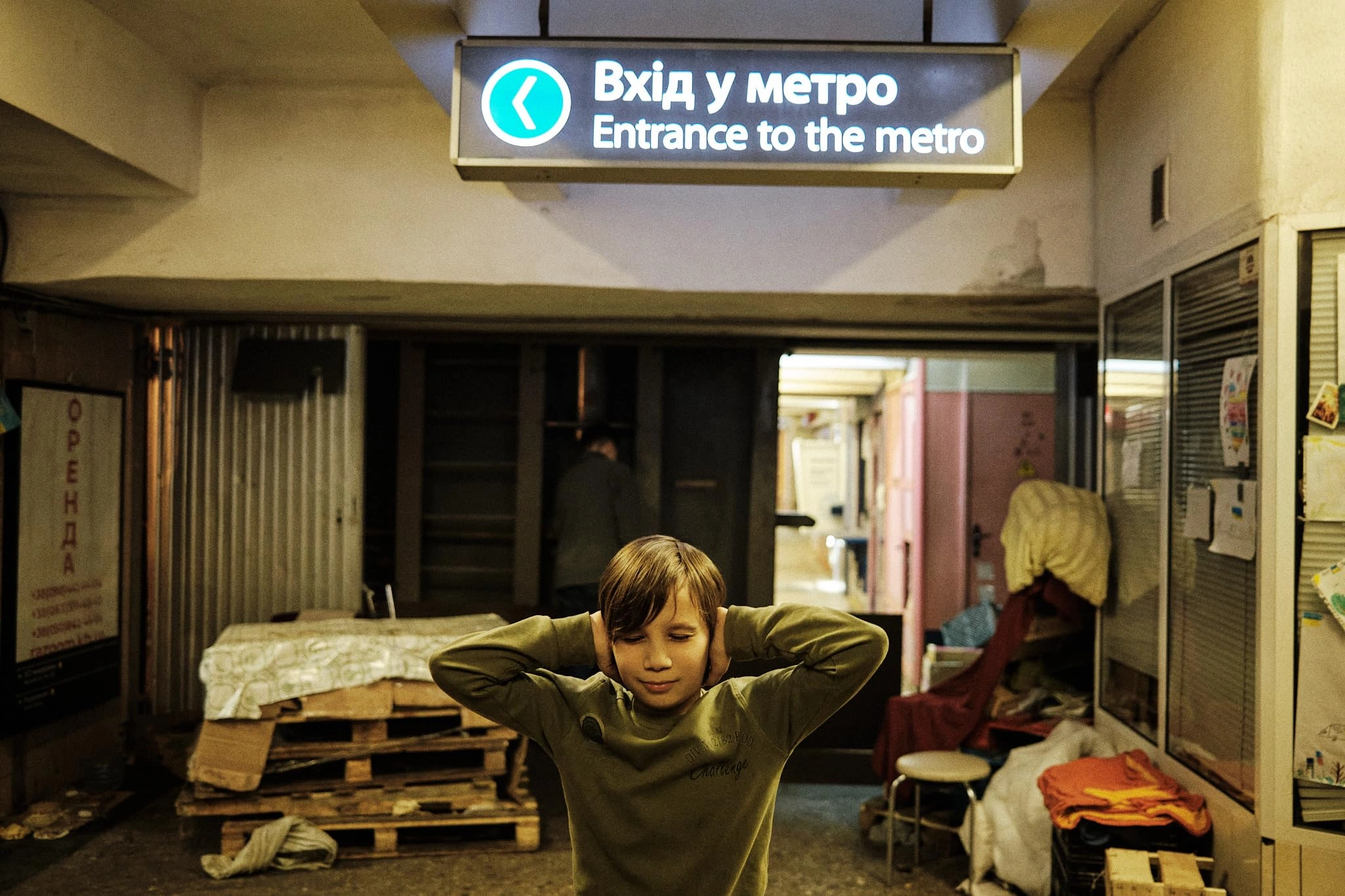
At the film’s fragile emotional axis is Nikita, or Niki, a 12-year-old boy living below ground with his family. The surface has become a zone of risk, so childhood is pushed into tunnels, platforms, fluorescent corridors, and half-lit corners.
His body needs sunlight, Vitamin D, and fresh air. His soul needs something less easily prescribed: movement, play, mystery, a reason to imagine tomorrow. Photophobia watches war from below, where survival is practical and metaphysical at once. To stay alive, these people must hide from the sky.
The Metro as Shelter, Prison, and World
The film’s strongest image is its setting, because the metro slowly stops feeling like a location and begins to feel like an entire civilization under pressure. Fluorescent lights flatten faces. Announcements echo through tunnels. Abandoned platforms hold mattresses, bags, blankets, pets, children, the elderly, the ill, the exhausted. Ticket machines and train tracks remain as relics of normal use, absurdly intact inside a world that has lost normal meaning.
Ostrochovský and Pekarčík understand that catastrophe is often made of logistics. A doctor checks ears and throats. People discuss food. Someone remembers the first day of the war. Others speak of missing relatives, illness, scarce supplies, and the dangerous compromise of returning above ground during the day before descending again at night. No speech is required to turn the film political. The politics are already present in every bed laid out on the platform, every ration shared, every child told to stay underground.
The opening image above ground lingers near a hatch, accompanied by the sounds of explosions and passing cars. It is a view of a city trying to continue while being hunted. Then the film descends, and the station seals itself around us. From that point, the metro resembles science fiction, yet the horror lies in its documentary plainness. This is no imagined dystopia. It is the architecture of fear repurposed into the architecture of endurance.
What makes the film quietly devastating is its refusal to inflate suffering into spectacle. The camera observes with patience, sometimes with the eerie calm of someone listening outside a closed door. Life goes on, which may be the most disturbing fact of all. People joke, complain, flirt, wait, sleep, argue, remember. The human creature adapts, then fears what adaptation is doing to the soul.
Nikita, Vika, and the Ethics of Play
Nikita’s face gives the film its moral scale. Adults speak of war in fragments, but he registers it as atmosphere: warnings, limits, lowered voices, medical advice, blocked exits. His mother Yana keeps him close, and her protectiveness carries the terror of a parent who knows obedience may be the only available form of safety. A doctor tells him he needs vitamins, sunlight, fresh air, and a diary. The diary becomes a small defense against formlessness, a way to make days count when the difference between morning and night has been nearly erased.
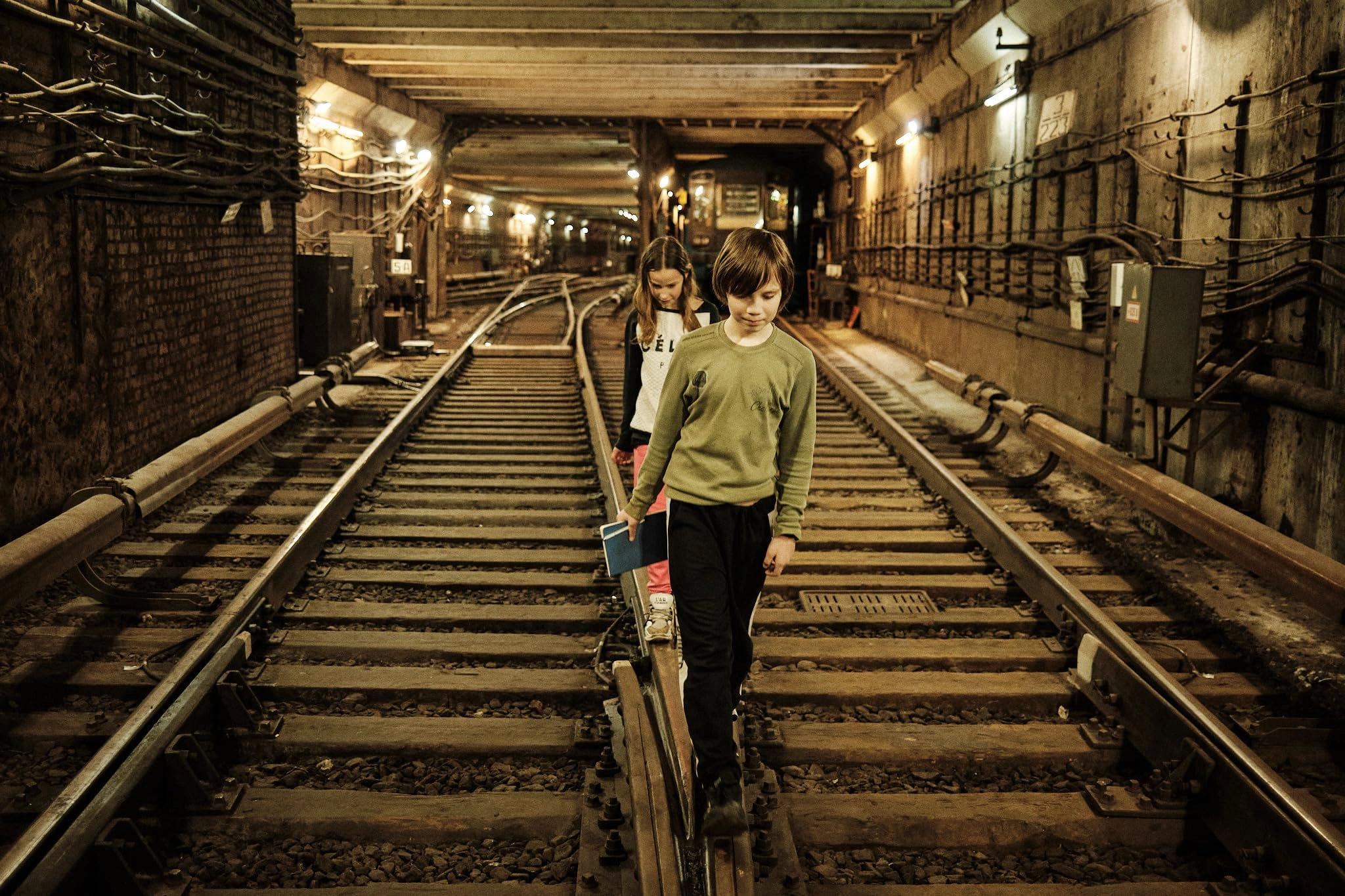
Then Vika appears, and the film’s emotional temperature shifts. She is bolder than Nikita, more mischievous, more willing to treat the station as terrain rather than confinement. Her touch-responsive bunny ears hat gives her a strange, luminous comic-book presence, as if some tiny relic of childhood consumer culture has survived the blast and now blinks in the dark. Through her, Nikita begins to move differently. He runs through tunnels, plays with ticket machines, balances near tracks, follows animals, tests the edges of the world his mother has drawn for him.
The beauty of these scenes lies in their unease. The children’s games are never innocent in a pure sense, because danger breathes around them. Yet the film refuses to turn them into symbols polished smooth by pity. They are children, curious and reckless, awkward and alive. Their play is a metaphysical revolt, small enough to seem ordinary, profound enough to hurt. In a place built around waiting, they create motion.
Nikita’s attraction to Vika is gentle, almost wordless. It feels less like romance than awakening, though perhaps those are closer in childhood than adults remember. She draws him toward the forbidden border of the station, toward the idea that life cannot be reduced to safety. The final movement beyond that boundary feels earned because it is filled with fear. It is not escape in any clean sense. It is a gesture toward light by someone who has learned too early that light can kill and heal in the same breath.
Songs in the Dark
Formally, Photophobia occupies a tense and fruitful space between observation and shaping. It has the rawness of documentary, the careful rhythm of fiction, and flashes of magical realism that rise naturally from the children’s perception. War has already made reality surreal; the filmmakers do not need to exaggerate it. They only need to follow the logic of underground life until the ordinary begins to look uncanny.
The camera often stays close to Nikita’s height, which changes the station’s proportions. Corridors become vast. Adults become looming presences or passing voices. Platforms stretch like dream architecture. This perspective matters because the film is less interested in explaining war than in sensing what war does to scale, time, and memory. For a child, the metro is a shelter, playground, maze, and moral border.
The animated or slide-like images of the world above ground deepen that feeling. They resemble fragments from a damaged memory: city, countryside, before and after, beauty and ruin held in the same fragile visual breath. They suggest a life still visible, yet increasingly unreachable.
Vitaly, the elderly guitarist, brings warmth into this underground chamber. He plays, jokes, flirts, gives advice, and turns folk memory into a communal pulse. His music does not redeem the darkness. It makes the darkness inhabited. That distinction is vital. The film’s power comes from restraint: a song echoing down a platform, a child looking toward an exit, a station full of people waiting for the day when sunlight no longer feels like a threat.
The European docudrama Photophobia made its global world premiere at the 80th Venice International Film Festival on September 1, 2023, where it secured the prestigious Europa Cinemas Label Award before serving as the official Slovak entry for the 96th Academy Awards. This unique hybrid cinematic production follows a twelve-year-old Ukrainian boy and his family as they seek refuge from continuous external military bombings by living deep inside the tunnels of a Kharkiv metro station. Stuck underground where the natural sun represents mortal peril, he builds an unexpected friendship with an eleven-year-old girl, helping them discover moments of childhood resilience and warmth amidst their bleak surroundings. Film enthusiasts can check international festival calendars to see where it travels next, or find it available for online streaming via the independent cinema platform True Story.
Where to Watch Photophobia (2023) Online


Full Credits
Title: Photophobia
Distributor: Filmotor, CinemArt
Release date: September 1, 2023
Running time: 71 minutes
Director: Ivan Ostrochovský, Pavol Pekarčík
Writers: Ivan Ostrochovský, Marek Leščák, Pavol Pekarčík
Producers and Executive Producers: Ivan Ostrochovský, Katarína Tomková, Albert Malinovský, Tomáš Michálek, Kristýna Michálek Květová, Denis Ivanov, Helena Osvaldová, Jakub Mahler, Pavol Pekarčík
Cast: Nikita Tyshchenko, Viktoriia Mats, Yana Yevdokymova, Yevhenii Borshch, Anna Tyshchenko, Vitaly Pavlovitch, Tatiana Valentynovna
Director of Photography (Cinematographer): Ivan Ostrochovský, Pavol Pekarčík
Editors: Ivan Ostrochovský, Pavol Pekarčík, Martin Piga
Composer: Roman Kurhan, Michal Novinski
The Review
Photophobia
Photophobia is a haunting, humane portrait of childhood and community under siege. Its hybrid form turns the Kharkiv metro into a place of fear, memory, play, and fragile resistance. Patient, lyrical, and quietly devastating, it finds light without forcing comfort onto darkness.
PROS
- Powerful child-centered perspective
- Striking underground atmosphere
- Sensitive mix of documentary and poetic fiction
- Vitaly’s music gives the film warmth
- Short runtime keeps the focus sharp
CONS
- Some viewers may want wider political scope
- Slow observational style may feel too restrained
- Hybrid form can seem slightly opaque