






















![Kingdom Hearts Collection [I-III] Review](https://gazettely.com/wp-content/uploads/2026/10/Kingdom-Hearts-Collection-I-III-1-360x180.webp "Kingdom Hearts Collection [I-III] Review: KHII Holds Steady as Newer Entries Fluctuate 37")



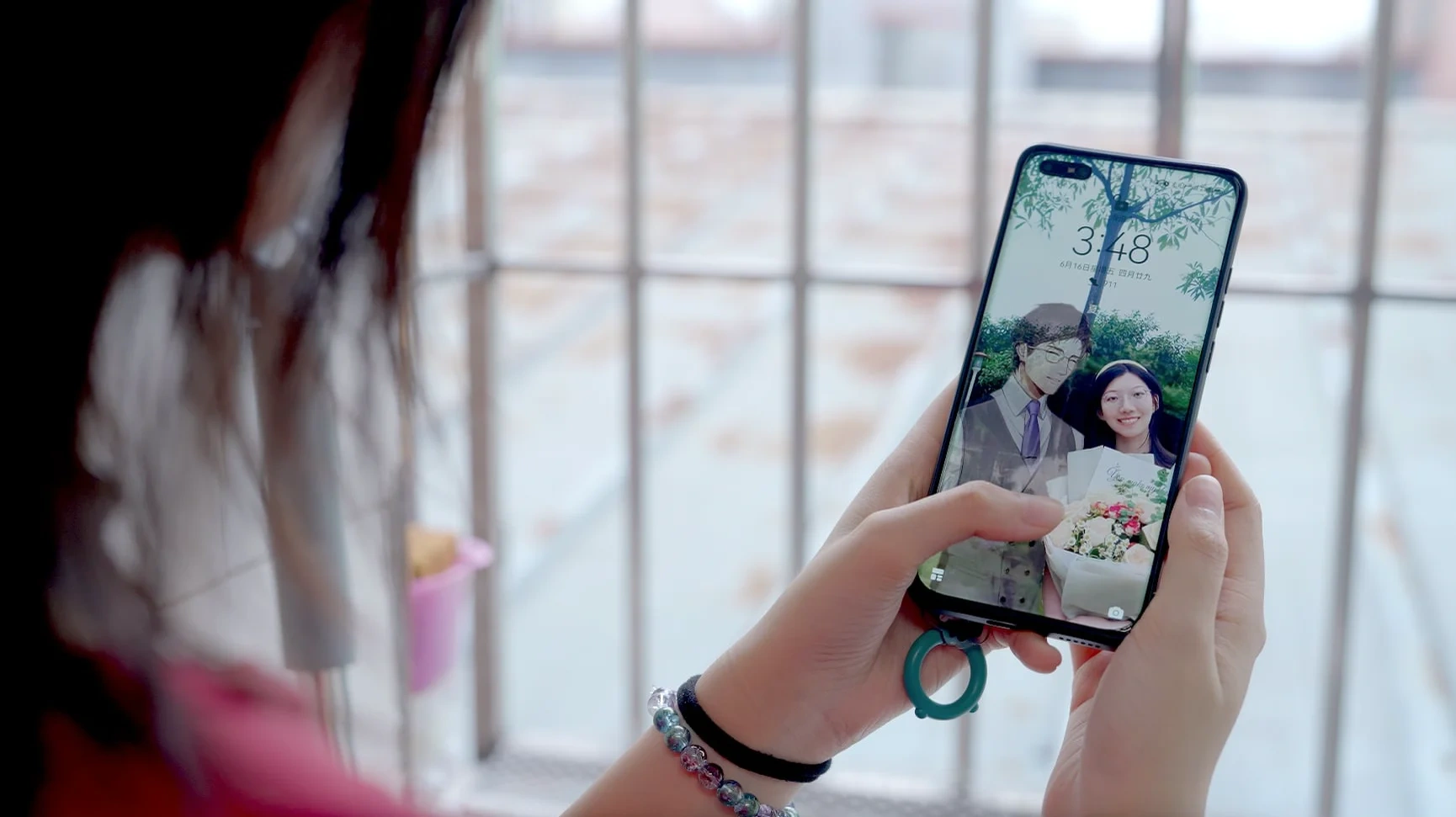

Replica looks at artificial intelligence through one of its softest and strangest entry points: romance. Chouwa Liang’s documentary follows Chinese women who form emotional relationships with AI companions, yet the film has little interest in treating them as curiosities. Its subject may sound like an easy target for irony, especially in a media culture still processing the real-world arrival of ideas once confined to Her, dating sims, and speculative fiction. Liang chooses another path. She listens.
The film centers on three women: Qin, Sonya, and Muna. Qin, a factory worker in Dongguan, has built her AI boyfriend around a character from an otome game, turning digital fantasy into a daily source of tenderness. Sonya, based in Kunming, customizes her English-speaking virtual partner Stephen with precise care, shaping his look, voice, and personality to match a private ideal. Muna, a married mother, finds in her AI companion the poetic attention and emotional safety absent from her domestic life.
What makes Replica quietly affecting is its refusal to laugh from a distance. It begins as a film about technology, then keeps revealing itself as a film about neglected needs.
Three Women, Three Versions of Need
Liang structures Replica like an observational character study, and the three women give the film its emotional rhythm. Qin’s story carries the strongest sense of fantasy made fragile. Her AI boyfriend offers praise, affection, and a relationship without the risk of ordinary rejection.
Since he is modeled after a dating-sim character, the connection has a clear interactive logic: she creates the conditions, the system responds, and emotional reward follows. Anyone familiar with narrative games will recognize that loop. The difference is that Qin is not chasing a route ending. She is looking for a feeling that can survive outside the screen.
That desire becomes most visible when she hires a cosplayer to act as her AI partner for a platonic date. The scene could have turned absurd in less careful hands. Here, it feels strange, tender, and revealing. The hugs and hand-holding are innocent, yet they carry the charge of someone rehearsing love in a world that has made love feel inaccessible.
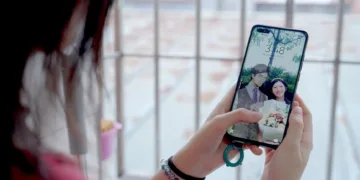
Sonya’s story is built around control. Stephen is designed down to physical traits and behavioral cues, then brought into real spaces through her phone. Her dinner with her parents gives the film a welcome burst of humor, especially as her father dismisses the AI as a flatterer before trying similar tools himself. Muna’s strand is harsher. Her AI gives her respect and softness while her husband voices a weary, patriarchal resentment toward feminism. Her digital romance becomes a quiet protest against emotional neglect.
None of these women mistake code for flesh. The film’s point is sharper: knowing something is artificial does not prevent it from hurting, helping, or becoming part of a person’s inner life.
Love, Labor, Gender, and the Social Machine
The most interesting idea in Replica is that AI romance does not emerge from nowhere. Liang links these relationships to pressure systems already shaping the women’s lives: marriage expectations, gender hierarchy, family duty, overwork, and the long emotional shadow of the one-child policy. If a person has grown up feeling unwanted, replaceable, or insufficient, an always-available companion can feel less like a gimmick and closer to emergency shelter.
That is where the film’s social critique lands hardest. The AI boyfriend is frictionless. He listens. He remembers. He praises. He does not demand dinner, laundry, childbirth, obedience, or emotional labor in return. In a culture where women are often asked to absorb everyone else’s needs, this fantasy has a practical architecture. It is not merely romantic. It is logistical.
The film also understands the danger of such comfort. A partner programmed to validate can soothe pain without challenging its source. Real intimacy asks for negotiation, bad timing, disappointment, awkward repair, and growth. AI offers a cleaner loop: input, response, reassurance. That loop can be healing in the short term and narrowing over time.
Liang’s smartest move is refusing an easy moral verdict. Is an AI boyfriend sadder than loneliness? Is it safer than a cruel marriage? Is artificial affection automatically inferior if the pain it eases is real? Replica lets those questions sit in the room. It trusts the viewer to feel the discomfort without needing a lecture attached.
Form, Tone, and the Fragility of the Illusion
Liang’s direction is intimate and lightly playful, with a visual approach that keeps digital romance grounded in ordinary life. Apartments, cafés, workplaces, family dinners, car rides, and phone screens become the film’s main environments. The camera does not exaggerate the strangeness of the premise. Instead, it shows how easily the strange slips into routine. A woman talks to an avatar. A parent comments on it. A chatbot answers with tenderness. Life continues.
The muted colors and soft, slightly blurred lighting give the film a faint artificial haze, which suits the subject without overdecorating it. The world looks real, yet gently filtered, as if the documentary itself is caught between observation and simulation. The music has a whimsical, ringtone-like quality, adding a touch of uncanniness without turning the women into punchlines.
The editing moves between testimony, AI conversations, family exchanges, cosplay dates, and wider social context. This gives the film a fluid, accessible pace, though the structure can feel loose. Some psychological background remains underexplored, and the focus on heterosexual female users gives the film a clear frame while narrowing its field of inquiry. A broader range of users might have deepened the picture.
Still, Replica finds its emotional force in specific ruptures. Qin losing her AI partner after a technical failure is devastating because the system’s promise of permanence collapses instantly. Servers fail. Apps glitch. Code disappears. The relationship may be artificial, yet the grief is unmistakably human.
The feature-length documentary film Replica premiered at international film festivals in March 2026 and has since been showcased globally at events like the Sydney Film Festival, where audiences can catch its limited theatrical and festival runs. The premise follows three young Chinese women navigating modern social pressures and isolation by turning to artificial intelligence companions for romance and emotional support.
Full Credits
Title: Replica
Distributor: CAT&Docs, Axel Rise Films
Release date: March 2026
Rating: Unclassified 15+
Running time: 91 minutes
Director: Chouwa Liang, Shannon Owen
Writers: Chouwa Liang
Producers and Executive Producers: Andy Huang, Christilla Huillard-Kann, Chouwa Liang, Stephen Luby
Cast: Qin, Sonya, Muna
Director of Photography (Cinematographer): Xiaoguan Shi
Editors: I-chu Lin, Chouwa Liang
Composer: Songhao Shi
The Review
Replica
Replica is a sensitive, quietly unsettling documentary that treats AI romance with empathy rather than cheap disbelief. Chouwa Liang finds the human ache behind digital companionship, linking fantasy, loneliness, gender pressure, and emotional neglect with real care. Its structure can feel loose, and some psychological threads deserve deeper attention, yet its best moments are piercing. The film understands that artificial affection can still leave real bruises.
PROS
- Humane treatment of a strange modern subject
- Strong focus on women’s emotional lives
- Tender, memorable character moments
- Smart social commentary on gender and loneliness
- Playful, faintly uncanny tone
CONS
- Some sections feel loosely structured
- Limited range of perspectives
- Could dig deeper into the psychology of AI dependency
- Certain social background details feel underdeveloped