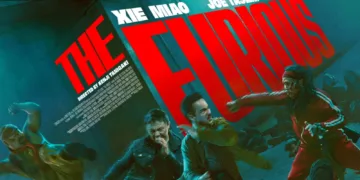


















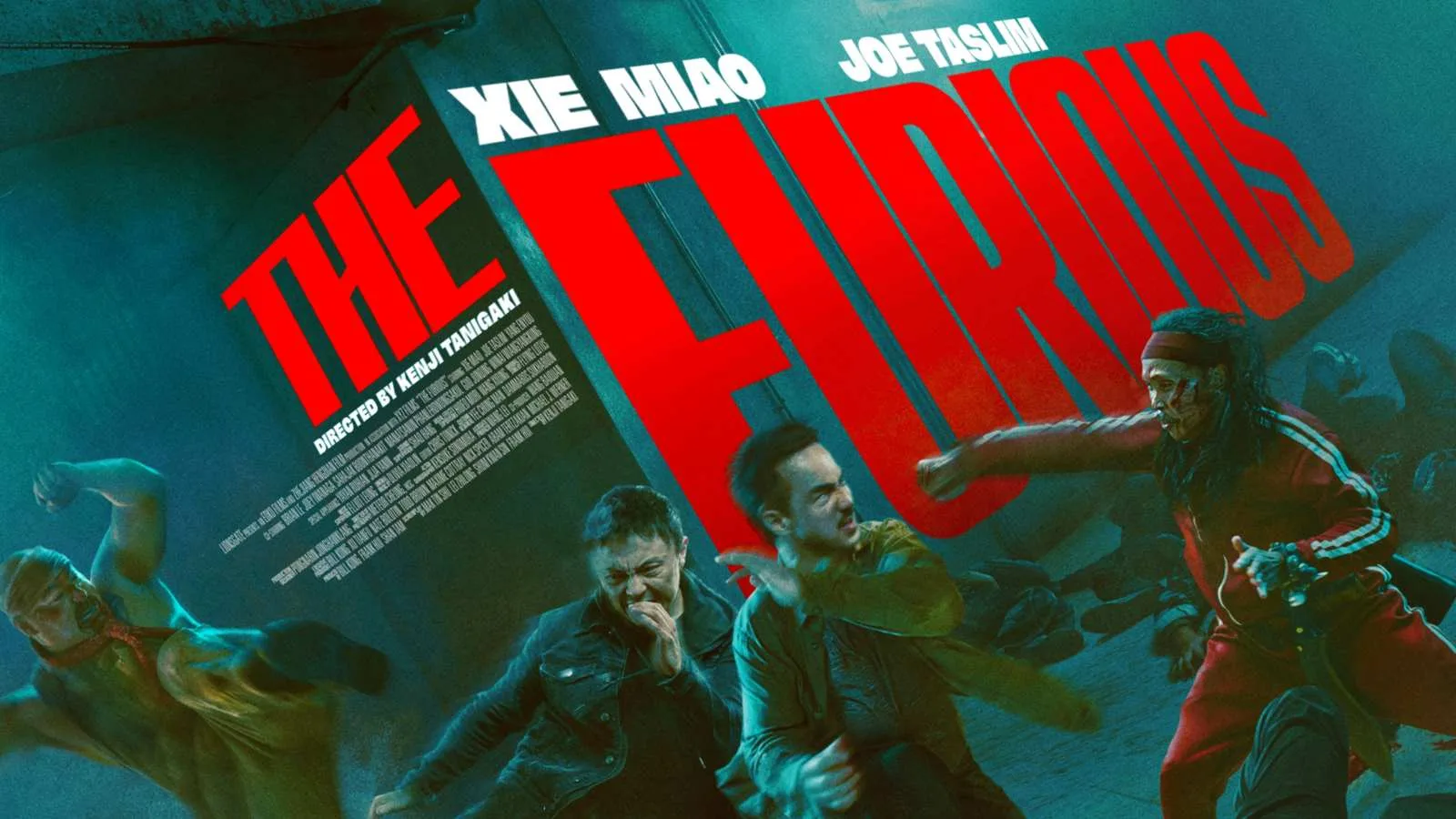
The Furious begins “somewhere in Southeast Asia,” which sounds evasive until the film starts moving and the choice begins to feel deliberate. Kenji Tanigaki’s martial arts thriller is less interested in geography as a pin on a map than geography as a collision point: Chinese wushu, Indonesian screen combat, Thai action cinema, Hong Kong stunt craft, Japanese choreography, and the global afterlife of The Raid all thrown into one bruised arena. The city remains unnamed because the bodies name it for us.
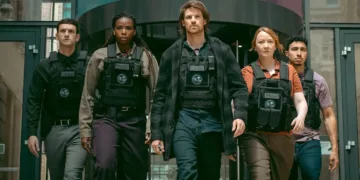
The story is brutally simple. Wang Wei, a mute handyman played by Xie Miao, loses his daughter Rainy to a child trafficking ring. The police offer nothing. The streets offer clues. A man named Navin, played by Joe Taslim, is hunting the same network after his journalist wife Matia disappears while investigating it. Their first meeting is naturally a fight, because action cinema has its own diplomatic protocols. After that, they become allies through pain, exhaustion, and shared purpose.
There is barely enough plot here to fill a crime pamphlet, and the film seems perfectly aware of that. Its real writing happens in movement: how Wei signs to Rainy before the kidnapping, how he sprints after a truck with no hesitation, how Navin sizes up a room before deciding which man needs to hit the floor first. Dialogue travels across languages with uneven grace, but fists translate cleanly. Unfortunate for the furniture.
Wei, Navin, and the Shape of Desperation
Xie Miao’s performance depends on silence, which gives Wei an unusual gravity for this kind of action hero. He does not get the standard grief monologue. He cannot announce his rage in a clipped line before cracking a skull. He has to carry everything through the body: the stiffness in his shoulders when Rainy resists training, the panic in his sprint when she vanishes, the animal focus that takes over once the first thug gets close enough to touch.
The early father-daughter scenes are modest, but they matter. Rainy wants to be pretty, not a fighter. Wei wants her to practice kung fu because he understands the world as a place where softness gets punished. The film does not complicate this belief very much, yet the kidnapping makes the scene land with cruel efficiency. What looked like overprotectiveness becomes prophecy. That simplicity has a blunt force of its own.
Joe Taslim’s Navin gives the film a second rhythm. Where Wei is spring-loaded and acrobatic, Navin is heavier, more tactical, often using throws and holds that make his opponents seem briefly surprised by gravity. Their styles complement each other in the freezer fight, where movement is squeezed between frozen bodies and slick surfaces. Wei darts through openings. Navin closes them. The scene becomes a cross-cultural duet of combat grammar: Chinese screen agility meeting Indonesian-inflected brutality, filtered through Japanese staging discipline.
JeeJa Yanin’s Matia is less present than the film’s opening suggests she might be, which is a missed opportunity. Her prologue sequence gives the film its first jolt of martial arts authority, then the narrative turns her into motivation for Navin. The choice works mechanically, but it leaves a slight imbalance. In a film already rich with action talent, giving her a longer investigative thread or later comeback would have sharpened the emotional web around the trafficking ring.
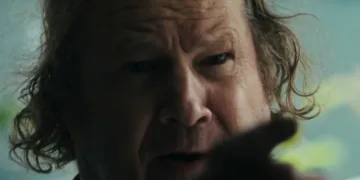
The villains function best as bodies, costumes, and combat problems. Mr. Song, with his grinning crime-boss theatricality, brings sleaze into the casino stretch. Yayan Ruhian’s bow-wielding killer has a calm precision that cuts through the chaos. Joey Iwanaga’s Paklung is the film’s most entertaining genre reveal: a polished businessman whose glasses come off and suddenly the room has a kangaroo in a suit. That sounds ridiculous. It is. It also works.
Choreography as Cultural Exchange
The great pleasure of The Furious is watching action traditions crash into one another without being sanded into a generic international style. The fight choreography by Kensuke Sonomura favors pile-ons, reversals, interrupted attacks, and bodies used as temporary architecture. A punch rarely stays a punch. It becomes a counter, then a trip, then a collision with another attacker, then a fall through some object that was minding its own business ten seconds earlier.
The truck-bed fight after Rainy’s abduction is the film’s first major declaration. Wei chases the kidnappers on foot, launches himself into a moving fight, and keeps trying to reach his daughter while attackers swarm him. The sequence has the raw chase logic of silent-era physical cinema: a parent runs, a vehicle escapes, bodies become obstacles, the frame keeps discovering new ways to hurt him. It also has the modern density of Southeast Asian screen combat, where space is crowded and no opponent waits politely for his cue.
Tanigaki’s camera respects the performers. That may sound basic, but many modern action films treat choreography like a rumor to be confirmed in the edit. Here, wider frames and longer takes allow the viewer to see balance, timing, and risk. The camera moves with the fighters, tracking and tilting to keep the flow alive, but it rarely chops the body into meaningless fragments. When the cutting tightens, it usually lands after a move has been completed, adding impact rather than disguising the work.
This is where the film separates itself from many post-John Wick imitators. It does not build a mythology around assassins, coins, hotels, or rules. It builds momentum around objects. A hammer matters because Wei is a handyman. A screwdriver matters because it is available. A ladder matters because Yayan Ruhian and Joe Taslim can turn it into a vertical argument. The film’s prop logic reaches its funniest, most savage form in the bicycle duel, where two combatants use bikes as blunt instruments. Not riding them. Swinging them. Somewhere, a traffic safety instructor just fainted.
The freezer sequence may be the strongest expression of the film’s personality. Frozen corpses become cover, barriers, and grotesque set dressing. The floor makes every step unstable. The characters slip, grab, shove, and recover with a desperation that keeps the violence from becoming too polished. It is a fight built out of mistakes that become tactics. That messy intelligence is the film’s signature.
Blood, Class, and the Fantasy of Punishment
For all its bruising spectacle, The Furious carries a clear class current. Wei lives in a modest, cluttered apartment and works with his hands. The children taken by the trafficking ring are treated like disposable goods. Criminal power is tied to money, police corruption, and men who hide monstrous appetites behind business respectability. The film does not develop this into a layered social argument, yet the imagery is hard to miss: poor children bagged like trash, workers forced into vigilantism, institutions either absent or bought.
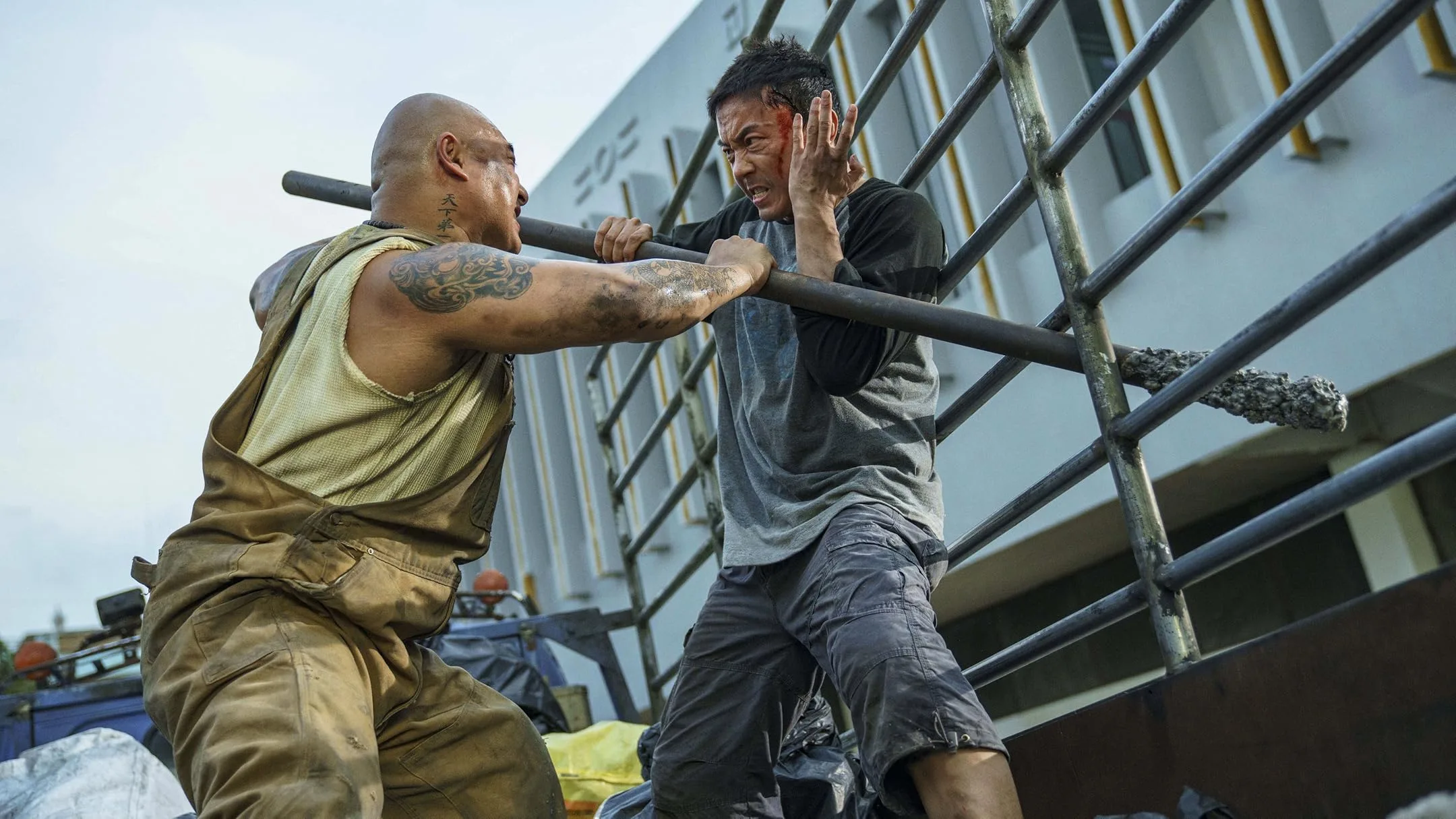
This gives the violence a specific political charge, even when the writing stays blunt. Wei’s tool-based fighting feels like a worker turning his labor instruments against the machinery that preys on him. Hammers, screwdrivers, pallets, and industrial spaces become part of the revenge fantasy. The handyman is not transformed into a sleek assassin. He becomes a more terrifying version of what he already was: precise, practical, and very good with his hands.
The trafficking plot is lurid by design. The film makes its criminals so vile that mercy never enters the room. That can flatten the moral field, yet it also clarifies the film’s old-school action contract. This is a punishment fantasy, and it is honest about that. The corrupt police chief, the criminal clients, the respectable businessman behind the horror, every one of them exists so the audience can experience institutional failure being answered by physical consequence.
A smaller emotional thread appears through Rainy’s bond with another captive child, one who has survived in ways that have damaged his sense of innocence. Those scenes give the film a trace of sorrow beyond rescue mechanics. They suggest that survival can leave a child feeling guilty for still being alive, a thought far darker than the film’s dialogue can fully carry. The movie touches that pain, then returns to its main language. Kick. Block. Crack. Repeat.
The Craft of Impact
Meteor Cheung’s cinematography gives The Furious an industrial sheen: sweat on skin, blood against concrete, metal under harsh light, ice glowing with sickly beauty. The casino and cage-fight spaces feel sticky and corrupt. The freezer has a dead blue chill. The rainstorm fight turns water into punctuation, each strike splashing through the frame like the weather has joined the brawl.
The sound design is equally unsubtle, in the best sense. Bodies hit surfaces with ridiculous force. Bones and joints announce themselves. Guitars grind under the combat, pushing the film toward crowd sport rather than grim procedural. This is not realism. No human body in The Furious seems bound by ordinary medical law. After the fifth brain-liquefying blow, everyone should be applying for a quiet desk job in the afterlife. Instead, they get up and keep fighting, because genre cinema has its own healthcare system.
The pacing is almost all escalation. Story beats exist to move Wei and Navin from one arena to the next: truck, casino, cage, freezer, tenement, hallway, rain-soaked final confrontation. The second half begins to feel like a chain of boss fights, each opponent defined by a different weapon, movement style, or visual gimmick. That structure can make the non-action scenes feel thin, especially when dialogue arrives in awkward English dubbing or stiff exposition. Yet the film’s rhythm rarely stalls for long enough to make the weakness fatal.
What lingers is the physical imagination. A man is not simply punched; he is folded, braced, launched, dragged, used as leverage, or turned into scenery. A room is not a room; it is a combat system waiting to be solved. This is where The Furious earns its place in modern action cinema. It treats the human body as the first special effect and the built environment as the second.
A Brutal Export With Local Bones
The film’s cross-cultural identity is not decorative. It is the point of its texture. A Chinese star associated with childhood martial arts fame plays a mute father in a Southeast Asian underworld. An Indonesian action icon brings The Raid lineage into a Hong Kong-backed production. Thai action cinema enters through JeeJa Yanin and the Bangkok-shot spaces. Japanese stunt craft shapes the whole machine. The result is not seamless, and that roughness gives it character.
The Furious can be clumsy whenever it has to speak. It can be thrilling whenever it moves. Its script leaves questions hanging, especially around Wei’s past and the source of his near-superhuman ability. Its villains are often cartoons with knives. Its moral universe has the complexity of a clenched fist.
Then the ladder comes out. Or the hammer. Or the bicycle.
Tanigaki understands that action cinema is one of the few global forms where cultural exchange can happen through rhythm, pressure, and timing rather than explanation. The Furious does not need to tell us what each national tradition contributes. It lets us feel the difference between a leap, a grapple, a kick, a fall, a weapon improvised from trash. The film’s story may be thin, but its body is dense with history. Every bruise has a lineage.
The Furious made its initial festival splash at the Toronto International Film Festival and premiered wide in theaters on June 12, 2026. Directed by veteran stunt coordinator Kenji Tanigaki, this relentless martial arts feature centers on a devastated father who tears through a corrupt criminal network alongside a tenacious journalist to rescue his kidnapped daughter. Action fans can experience the bone-crushing choreography in standard theatrical distribution globally via Lionsgate and Edko Films, with subsequent digital and streaming windows to follow.
Where to Watch The Furious (2025) Online










Full Credits
Title: The Furious
Distributor: Lionsgate Films, Edko Films, Metropolitan FilmExport
Release date: June 12, 2026
Rating: Not Rated
Running time: 113 minutes
Director: Kenji Tanigaki
Writers: Mak Tin-shu, Lei Zhilong, Shum Kwan-sin, Frank Hui
Producers and Executive Producers: Bill Kong, Frank Hui, Shan Tam, Todd Brown, Nick Spicer, Maxime Cottray, Aram Tertzakian, Nate Bolotin
Cast: Xie Miao, Joe Taslim, Yang Enyou, Jeeja Yanin, Brian Le, Joey Iwanaga, Yayan Ruhian, Sahajak Boonthanakit, Manatsanun Phanlerdwongsakul, Guo Junqing, Winai Wiangyangkung, Kittiphoom Wongpentak
Director of Photography (Cinematographer): Meteor Cheung
Editors: Chris Tonick
Composer: Elliot Leung, Olivia Xiaolin, Flying Lotus
The Review
The Furious
The Furious is blunt, bloody, and occasionally clumsy whenever words enter the room, yet its action has the clarity of a shared physical language. Kenji Tanigaki turns a thin rescue story into a pan-Asian combat showcase where every hammer, ladder, freezer slab, and bicycle carries its own vicious grammar. The film speaks best through bodies in motion, and those bodies speak loudly enough to rattle the seats.
PROS
- Extraordinary fight choreography
- Strong physical performances
- Inventive prop combat
- Clear spatial action direction
- Fierce cross-cultural action identity
CONS
- Thin story
- Awkward dialogue
- Underused JeeJa Yanin
- Limited villain depth