
















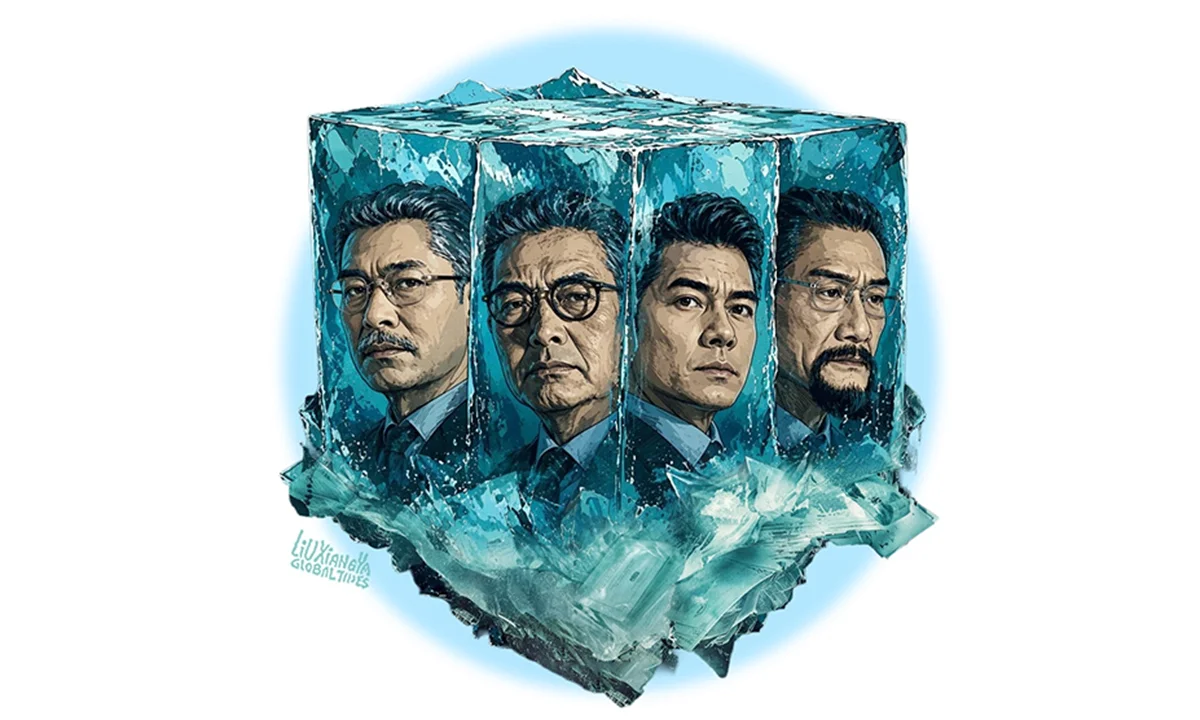

The Cold War franchise has always been fascinated by institutions under pressure. Its earlier chapters built tension from a police force fighting itself, where every conversation carried the weight of a political chess move. Cold War 1994 changes the question. Instead of asking how powerful men became compromised, it asks who they were before the compromises began.
The prequel structure gives the series a new emotional route. Returning characters like M.B. Lee and Peter Choi are no longer defined by the conflicts we already know. They are younger, less certain, and still searching for their place inside Hong Kong’s complicated power structure. The result is a crime thriller that works best when it slows down and lets these relationships develop.
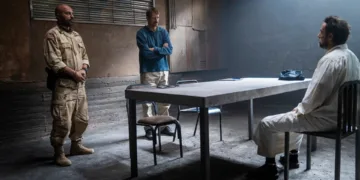
The story begins in 2017, as Commissioner Sean Lau (Aaron Kwok) and lawyer Oswald Kan (Chow Yun-fat) investigate the disappearance of former deputy commissioner M.B. Lee. Their search leads them to a classified 1994 kidnapping case involving K.F. Wong, a wealthy businessman connected to the influential Poon family.
From there, the film moves back to a Hong Kong approaching the 1997 handover. Young M.B. Lee (Terrance Lau) works as the head of the Organised Crime and Triad Bureau, where his aggressive methods create problems inside the police force. A failed drug operation leaves one of his officers dead, placing him under investigation just as he discovers a much larger conspiracy surrounding Wong’s kidnapping.
The setup is familiar territory for the franchise, yet the change in perspective gives it new energy. Previous Cold War films were built around watching established figures manipulate systems. Here, the audience watches those systems shape the people trapped inside them.
Terrance Lau’s version of M.B. Lee carries the uncertainty that defines this period of his life. He is capable but reckless, a police officer who believes action can solve problems before learning how many problems exist beyond the reach of a badge. His mistakes matter because the film allows him to fail. Each setback forces him to adapt.
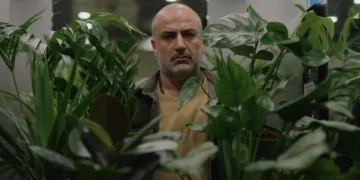
Daniel Wu’s Peter Choi provides the perfect counterbalance. He understands the game better than Lee does. His calm presence hides someone constantly calculating his next move, and Wu gives every conversation an extra layer of suspicion. The character’s appeal comes from the uncertainty surrounding his intentions. Is he protecting Lee, using him, or doing both at once?
The strongest emotional connection comes from Louise Wong’s Jodie Yuen, the new leader of the Lo Yuen triad. Her introduction is one of the film’s best sequences. Lee arrives demanding answers about the kidnapping, only for violence to erupt around them. Their alliance forms through survival, creating a relationship built on necessity before trust. The film briefly feels like it could become a different kind of Hong Kong story, one about two people escaping the worlds that created them. That possibility never fully takes over, but it gives the political thriller a human centre.
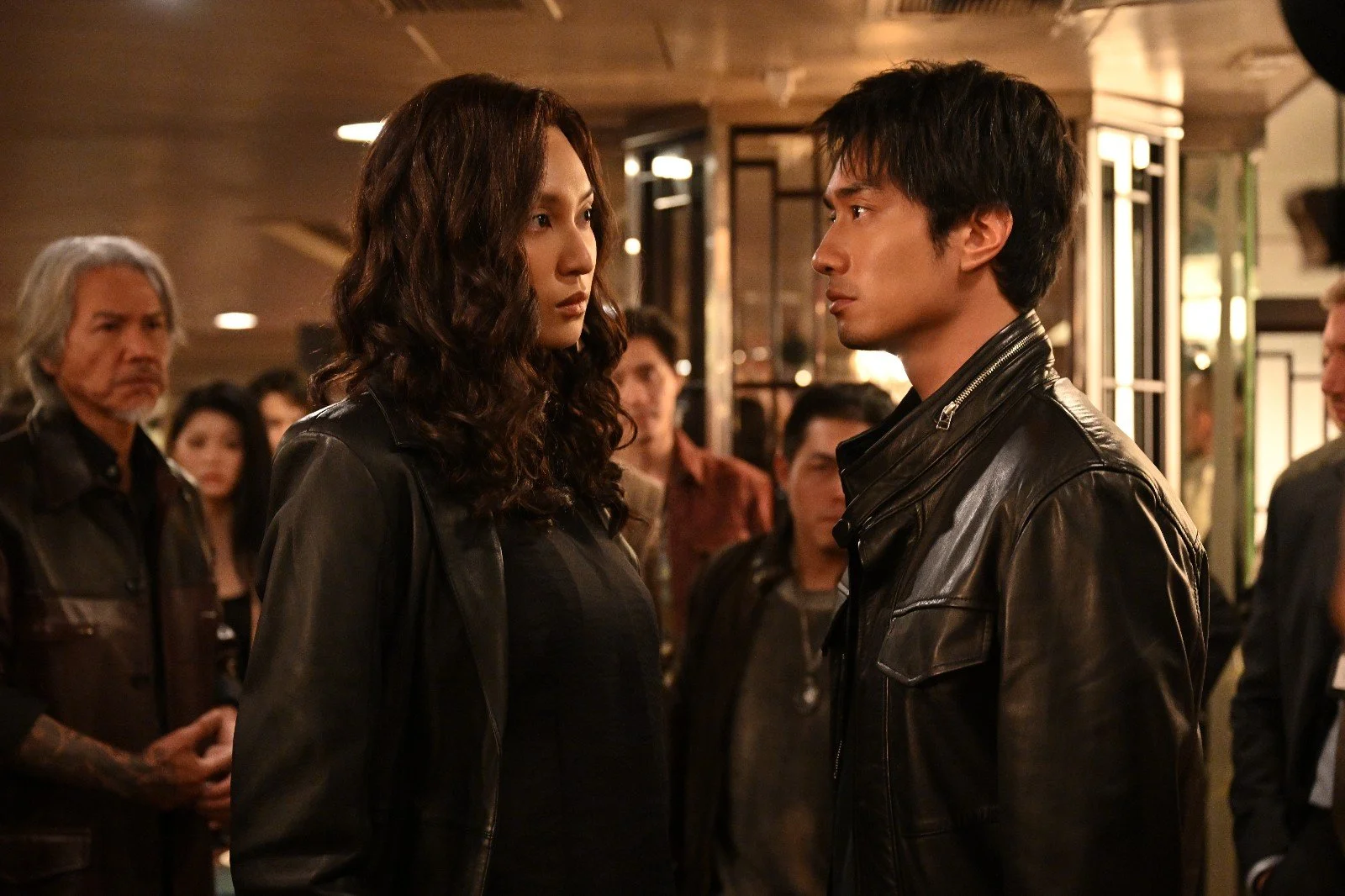
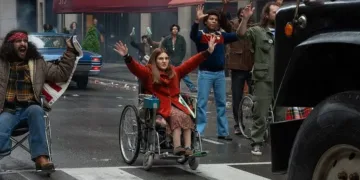
The film’s recreation of 1994 Hong Kong is another major strength. Leung Lok-man uses the period setting to capture a city caught between identities. The streets, interiors, and costumes create a version of Hong Kong where old traditions, corporate ambition, and criminal networks exist side by side.
The production design becomes part of the storytelling. The Poon family’s luxurious spaces represent inherited power, while the police offices reflect an institution struggling to maintain control. The contrast between these environments helps explain the different worlds competing for influence.
The action sequences provide the release valve for the film’s heavy political discussions. The restaurant shootout involving Jodie stands out because it turns a crowded space into a chaotic battlefield. The climactic sequence at Kai Tak Airport pushes the scale further, combining gunfire, vehicles, and the iconic location into a finale that understands the spectacle expected from Hong Kong crime cinema.
That balance between conversation and action has always defined the franchise. Cold War 1994 still enjoys watching powerful people argue across conference tables, but it gives those arguments consequences that can be felt outside the room.
The film does carry the burden of its own ambition. There are many factions competing for attention: police leadership, triads, wealthy families, and British officials attempting to preserve influence before the handover. Some characters become pieces on the board rather than fully developed figures. The conspiracy requires patience, especially for viewers unfamiliar with the previous films.
Still, the prequel approach works because it understands what returning audiences actually want from a franchise entry. It does not simply repeat old conflicts with younger actors. It shows how those conflicts were created.
Cold War 1994 feels like a bridge between eras. It looks backward at a changing Hong Kong while reflecting the anxieties that shaped the franchise from the beginning. The film’s greatest achievement comes from making familiar characters feel like people again, before history decided what they would become.
Cold War 1994 premiered theatrically on May 1, 2026, with distribution handled by Edko Films. Directed by Longman Leung, the crime thriller serves as a prequel to the popular Cold War franchise, exploring a high-stakes power struggle among local elites, triads, and the British government in Hong Kong just three years prior to the 1997 handover.
Where to Watch Cold War 1994 (2026) Online
Full Credits
Title: Cold War 1994
Distributor: Edko Films
Release date: May 1, 2026
Running time: 1 hour 57 minutes
Director: Longman Leung
Writers: Longman Leung, Jolyon Cheung, Fei-Fan Cheung, Liangyu He
Producers and Executive Producers: Bill Kong, Ivy Ho, Longman Leung
Cast: Daniel Wu, Terrance Lau, Wu Kang-ren, Tse Kwan-ho, Chow Yun-fat, Aaron Kwok, Louis Koo, Tony Leung Ka-fai, Louise Wong, Fish Liew, Aidan Gillen, Hugh Bonneville
Director of Photography (Cinematographer): Anthony Pun
Editors: David Richardson
Composer: Iris Liu, Hanz Au, Jolyon Cheung
The Review
Cold War 1994
Cold War 1994 finds fresh emotional weight in a familiar franchise by shifting attention to younger versions of its conflicted figures. The bond between M.B. Lee and Jodie gives the political intrigue a human pulse, while the 1994 setting creates a strong sense of place. Its dense conspiracy can overwhelm, yet the action, performances, and nostalgic craft keep the film moving.
PROS
- Strong young cast
- Lee and Jodie’s dynamic
- Kai Tak airport finale
- Rich period recreation
CONS
- Overcrowded plot threads
- Uneven action sequences
- Some characters underused