



























“The biggest cost is to family,” Eamon Ryan says of his life in politics. The admission accompanies something quieter than the work that has kept him away: picking raspberries with his adult son Tommy, walking the dog, being available to another person without a public audience to persuade.
Tommy is autistic and requires full-time care. These shared activities give Ryan’s regret a tangible measure. Time spent together cannot be banked against the good a minister hopes to accomplish elsewhere. The allotment asks for his presence, even as his public responsibilities make claims upon it.
Spending additional time with Tommy becomes one of Ryan’s reasons for leaving office. Neasa Ni Chianain’s Forever Is Now allows that decision to retain its personal weight without opening the whole household to inspection. Ryan’s wife, Victoria, appears briefly; much of the family’s life remains private.
Tommy’s repeated “forever” supplies the title, a word whose expansiveness sits beside the ordinary activities father and son share. There is tenderness in that proximity. The film gives us enough to understand what Ryan wishes to return to, while leaving the relationship room to exist beyond its usefulness to his political portrait.
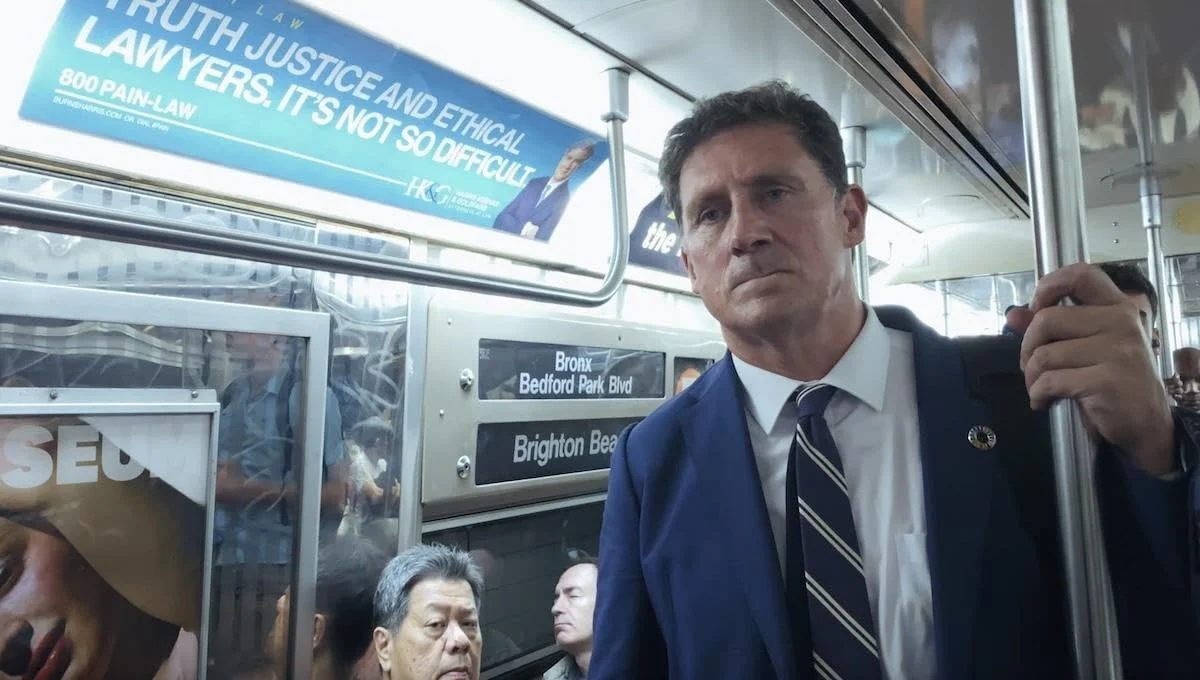
Beginning in July 2023, the documentary follows approximately eighteen months of Ryan’s final period in Ireland’s coalition government, where the Green Party leader holds responsibilities for environment, climate and communications, and transport.
Its observational access takes us from domestic confrontations to international climate conferences and into the small team sustaining his public life. The patience visible with Tommy offers one way of understanding his persistence at work. Yet the demands differ. Caring for a person permits an immediate response; caring for an environment requires action through institutions, negotiations, and people who may resist the language in which that care is expressed.
A team member’s advice to replace “biodiversity” with “nature” catches this difficulty at the scale of a single word. Ryan reflects on using simpler language, and the exchange reveals the small estrangement that expertise can produce. Something familiar becomes remote when its name sounds as though it belongs to somebody else.
At the COP conferences, wording carries a different burden: “transitioning away from” becomes acceptable where “phasing out” encounters resistance. Here the sentence must accommodate the parties expected to act upon it. The film lets us feel the distance between environmental urgency and a formulation that can survive agreement, although it leaves the practical consequences of that formulation insufficiently explored.
That distance contracts painfully when Ryan meets residents of a flooded town. Their anger has an immediate setting, a place already damaged, and the encounter gives his environmental work a pressure that conference language can soften.
The residents deserve to be heard as people seeking answers about what has happened to them, rather than absorbed into a portrait of a politician patiently enduring hostility. Ni Chianain’s closeness to Ryan encourages sympathy for the person receiving their protest. The scene remains valuable because the protest itself makes demands upon that sympathy.
Preparation for The Late Late Show exposes another kind of waiting: the nervous interval between an answer rehearsed and an answer received. Ryan practises with his advisers, who later watch him face questions beyond those anticipated. Their attention makes the broadcast feel like a collective exposure.
Clear communication requires preparation, but the team’s frustration with unrehearsed questions reveals a wish to contain the encounter as well. The uncertainty is uncomfortable and productive. We see the effort required to make a public argument, alongside the anxiety that the public conversation might proceed on somebody else’s terms.
Media adviser Edel Hackett gives that effort its most forceful supporting presence. Her work includes sorting through online abuse, among it a message encouraging Ryan to jump from a cliff. Such hostility enters the working day as something another person must read and handle. Hackett’s commitment shows how the cost of remaining publicly available spreads through a team.
Ni Chianain emphasizes their solidarity, with friction only intermittently visible, and this emphasis supplies warmth while narrowing the inquiry. We become familiar with people protecting a shared undertaking; the film spends less time testing the assumptions that bind them.
Philippe Ravoet’s editing helps us move through this busy world without allowing its activity to scatter the portrait. Brief assemblies of news material mark the issues around which the encounters gather. They offer bearings, though their economy sometimes substitutes recognition of a topic for understanding its stakes.
Alex Simu’s clarinet-and-strings score similarly keeps the film close to the scale of daily activity, avoiding the swelling insistence that would turn every act of persistence into a heroic declaration. The emotional register has room for concentration and spontaneous response. Ryan emerges as someone continually attending to things, with very little certainty that attention will be reciprocated.
The documentary is less satisfying when that intimate knowledge becomes the principal means of understanding his political record. Ryan’s climate legislation receives limited explanation, as do the negotiations through which we accompany him. The Greens’ heavy losses in the November 2024 election also need firmer treatment if the audience is to understand the conditions of his departure. These gaps matter because commitment and effectiveness remain separate questions. The film makes his commitment credible through behavior; it supplies fewer means of assessing what that commitment achieved. Additional context could have sharpened the portrait without disturbing its intimacy.
In January 2025, Ryan packs up his ministerial office while Donald Trump’s inauguration plays on television. His dejected expression brings a different scale of political time into the room: one man’s period of service is ending as another presidency begins, carrying discouragement into the act of departure. The scene gives neither his hope nor his exhaustion the last word. Leaving office offers the prospect of hours reclaimed for Tommy, while the televised ceremony keeps events beyond Ryan’s control present beside him. Even here, preparing to leave, he is still watching.
Forever Is Now premiered at the Dublin International Film Festival and expanded to cinemas. The feature documentary follows Irish Green Party leader Eamon Ryan through his final years in government as he balances high-stakes international climate negotiations with his personal life and relationship with his son.
Full Credits
Title: Forever Is Now
Distributor: Soilsiú Films, Docmakers, Clin d’Oeil Films
Release date: February 2025 (Dublin International Film Festival), October 16, 2026 (Theatrical release)
Rating: 12A
Running time: 1 hour 38 minutes (98 minutes)
Director: Neasa Ní Chianáin
Writers: Neasa Ní Chianáin
Producers and Executive Producers: David Rane, Hanne Phlypo, Ilja Roomans, Niamh Fagan
Cast: Eamon Ryan, Tommy Ryan
Director of Photography (Cinematographer): Gregor Meerman, Victor Horstink
Editors: Philippe Ravoet
Composer: Alex Simu
The Review
Forever Is Now
Forever Is Now makes political commitment felt through the time it consumes: hours with Tommy, rehearsed answers, abuse another person must absorb. Its intimacy gives Ryan’s persistence emotional weight, though the limited account of policy and electoral defeat leaves his achievements harder to judge. The tenderness earns our attention. The sympathy sometimes needs sharper scrutiny. Ryan packing his office while Trump’s inauguration plays nearby leaves public responsibility lingering beyond the job.
PROS
- Tender family scenes that respect privacy.
- Revealing access to political preparation and persuasion.
- Edel Hackett’s presence makes the team’s burden visible.
- Economical news editing and restrained musical scoring.
CONS
- Limited explanation of climate policy and negotiations.
- Insufficient context for the Greens’ electoral defeat.
- Team solidarity leaves shared assumptions lightly examined.







