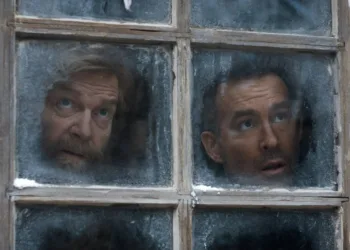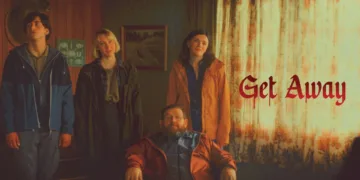



























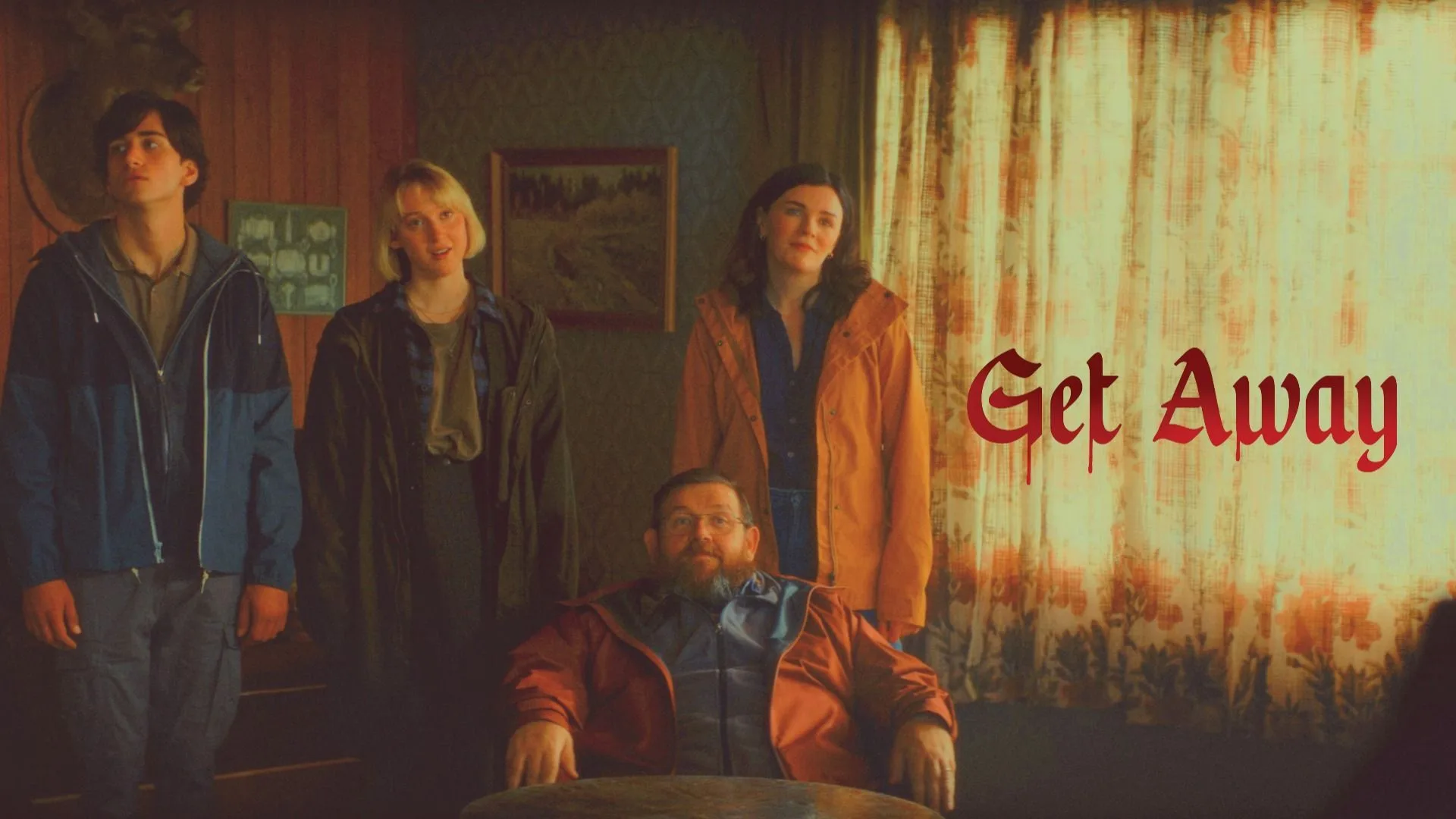

It’s called a “horror comedy,” but “Get Away,” Nick Frost’s latest movie, is much more than that. Frost is a comedy legend in British film. Frost and the lively Aisling Bea play lead roles in a narrative that follows the Smith family as they travel to the remote Swedish island of Svälta for a vacation that seems harmless.
Their vacation quickly turns into a nightmare exploration of cultural insensitivity and familial dysfunction due to the island’s dark history, which is steeped in cannibalism and colonial guilt.
The absurdity of privileged tourists intruding on a community still traumatized by past crimes is exposed by this film as it expertly navigates the waters of cultural clash. With their messy sincerity, the Smiths represent a British sense of entitlement that reflects larger societal problems.
Consider it an example of “tourist privilege” (a term I might make up). Their arrival on the island, marked by their obliviousness to the islanders’ warnings, serves as a microcosm of colonial attitudes that still exist in contemporary travel.
Uneasy Holidays: The Smiths’ Misadventure on Svälta
“Get Away” is about a family called the Smiths. Richard (Nick Frost), Susan (Aisling Bea), and their two teenage kids, Sam and Jessie, are vacationing on the remote Swedish island of Svälta. Their reasons might seem good: a chance to get back together and escape the boring parts of everyday life.
The underlying tensions in their dynamics, however, are impossible to ignore. Richard’s awkwardness and Susan’s overzealous enthusiasm create a family scene that oscillates between comic relief and impending disaster (a standard setup for a horror comedy, isn’t it?).
Svälta serves as more than just a backdrop; it’s a character in its own right, foreboding and unwelcoming, thanks to its ominous landscape and tragic history. The people there seem to dislike outsiders, making the island feel even scarier. The yearly Karantan festival, which remembers a dark period in the island’s history—a British quarantine that resulted in starvation and cannibalism—honors this cultural isolation in a powerful way.
The Smiths’ obliviousness is funny and disturbing as they get to know the locals for the first time. Despite the threats and abuse they receive, the family insists on participating in the festival, which highlights a larger issue with colonial attitudes.
The Smiths represent the ideal tourist, oblivious but somehow entitled, eager to engage with a culture they barely understand. The ethics of such cultural exchanges are called into question. Are they trying to learn or just looking for entertainment in tragedies?
A profound study of societal issues, such as the consequences of historical amnesia and the lingering effects of colonialism, is made possible by juxtaposing their lighthearted holiday spirit with the sad realities of Svälta. For the Smiths, the event, a celebration for the locals, turns into a gross show that highlights the absurdities of cultural voyeurism.
Complex Characters in a Folkloric Nightmare
In “Get Away,” Nick Frost’s character Richard stands out as an interesting example of the modern patriarch: clumsy but well-meaning, he is stuck between what his family wants and the island’s growing hostility. Richard’s awkwardness frequently serves as a comedic foil, and his attempts to keep the vacation under control turn into a farce.
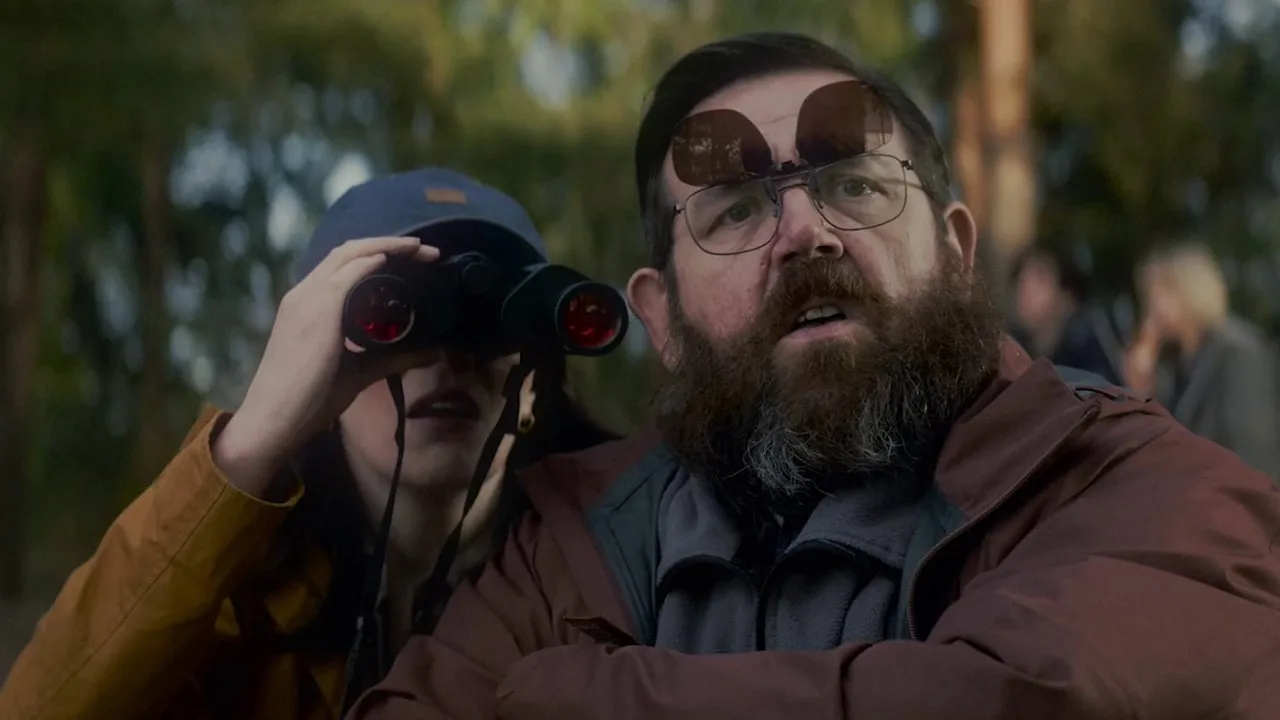
His character could represent the archetype of the oblivious tourist, blissfully unaware of the dangerous undercurrents surrounding him. But there’s more to his character than meets the eye. His sincerity highlights the fragility of family ties when tested by outside forces, making him both a lighthearted figure and a target for mockery.
Susan (Aisling Bea) changes the way the family works in another way. She is eager to make this vacation unforgettable and escape her problems. Richard’s reluctance contrasts sharply with her enthusiasm for the island’s culture despite its dark history.
This creates a push-and-pull that not only drives the narrative but also reflects larger societal themes: how often do we put our wants ahead of the uncomfortable truths of others? Her willingness to disregard local warnings amplifies the film’s criticism of cultural insensitivity. Susan’s character is a study in contrasts; she is the link between family members and the cause of family conflict.
Sam (Sebastian Croft) and Jessie (Maisie Ayres) represent a microcosm of adolescent rebellion and indifference. Their rivalry is marked by typical teenage angst, but it also serves as a commentary on generational views toward parental or cultural authority. Sam’s snarky, vegan personality contrasts with the family’s obliviousness, and Jessie’s lack of interest in the strange customs of the island adds a dark layer of humor. Together, they capture the stresses of a family on the edge, showing a relatable—and frequently humorous—fight against the backdrop of horror.
Klara, the island’s matriarchal bad guy, takes on the role of the island’s dark history. The bad guy in the story isn’t just a character; she also represents the community’s deep-seated anger toward outsiders. The locals, depicted with a mixture of menace and sadness, shed light on the complexities of victimhood and survival.
They are not just enemies; they are guardians of their history, embodying the wounds that colonial violence left behind. In today’s discussions about cultural appropriation and the ethics of tourism, Klara’s spooky presence serves as a warning that beneath the surface of cute traditions is a history of suffering. This theme resonates all too well.
With the help of these characters, “Get Away” examines the complex web of human relationships against a backdrop of historical trauma, posing issues of identity, privilege, and the consequences of our actions that are frequently overlooked. While each character is grounded in a horror narrative, they all reflect larger societal problems long after the movie ends.
Themes and Motifs: A Tapestry of Folly and Reflection
A rich cultural critique that examines the folly of tourists who try to change local customs is woven throughout “Get Away,” which works on several thematic levels. The Smith family is the archetype of the clueless traveler because of their good aims but lack of knowledge.
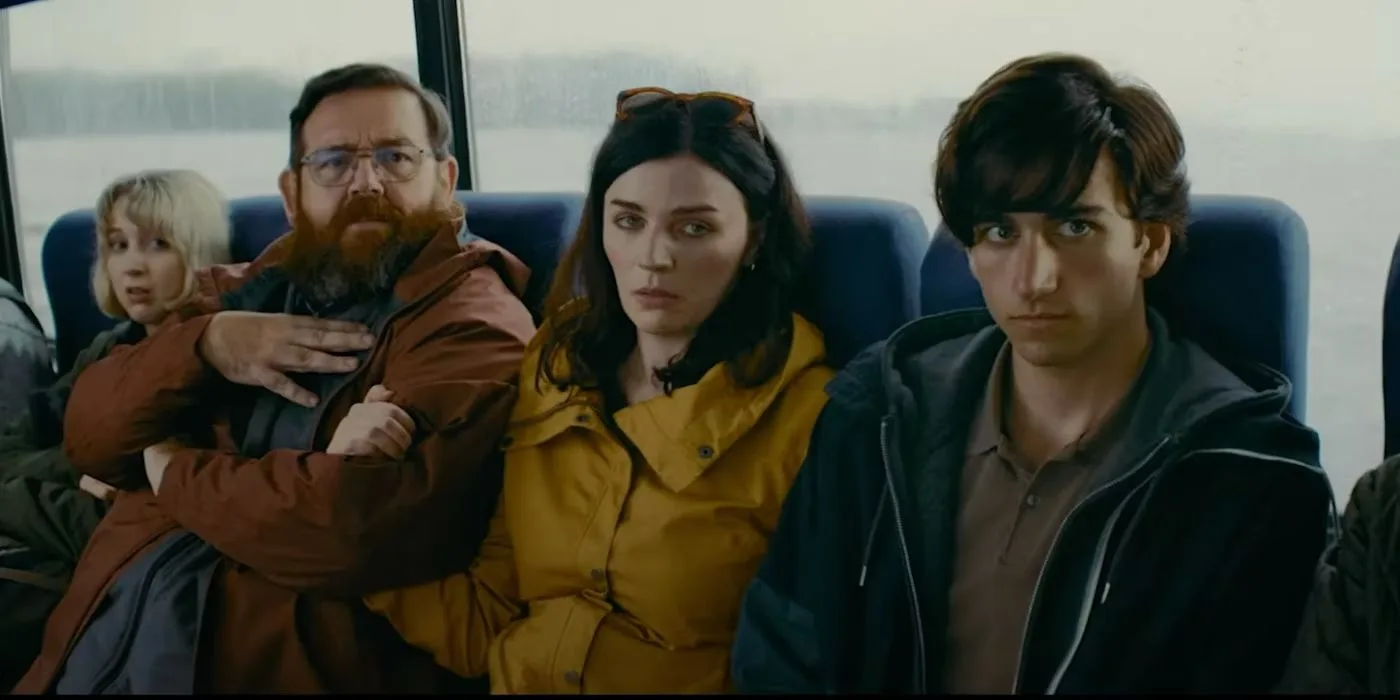
The fact that they insisted on participating in the Karantan festival despite the islanders’ obvious discomfort serves as a biting commentary on how modern tourists tend to consume culture as a spectacle (think of it as “cultural voyeurism” in action). This brings up important questions, like when research turns into exploitation. And at what point do the oppressed’s tales become entertainment?
Another important theme is family dynamics, which provides a framework for the Smith family’s relationships. The vacation is like a furnace that reveals the flaws in their seemingly perfect family unit. Every family member struggles with their identity and place in the family as emotions rise due to threats from outside and disagreements within the family.
Richard’s failure as a father figure, Susan’s desperate need for approval, and the sibling rivalry shed light on the fragility of family ties when put under pressure. As the film skillfully shows, vacations, like relationships, can either get stronger or weaker based on the stresses they face.
The theme of history versus modernity runs parallel to these dynamics. The island of Svälta, marked by colonial violence and survival, is a stark warning that history is more than just a list of dates and events; it is a living thing that affects the present. The Smiths’ unintentional participation in the customs on the island contrasts their modern, carefree attitudes with the backdrop of a community that has been deeply hurt.
How do we deal with the legacies of our past, especially when they relate to cultural interactions? This dynamic encourages viewers to reflect on the relevance of history today. The film argues that ignoring these legacies is not an option; rather, real understanding necessitates addressing the complexities of history and its ongoing effects on individual and collective identities.
In this way, “Get Away” entertains and makes the audience think by asking them how family, history, and culture frequently come together in uncomfortable ways.
Humor and Horror Balance: A Delicate Dance
“Get Away” skillfully distinguishes between horror and humor, creating a narrative oscillating between heart-wrenching tension and hilarious moments. The audience can breathe in the middle of the chaos thanks to the film’s comedic elements, which often act as a balm for the growing dread.
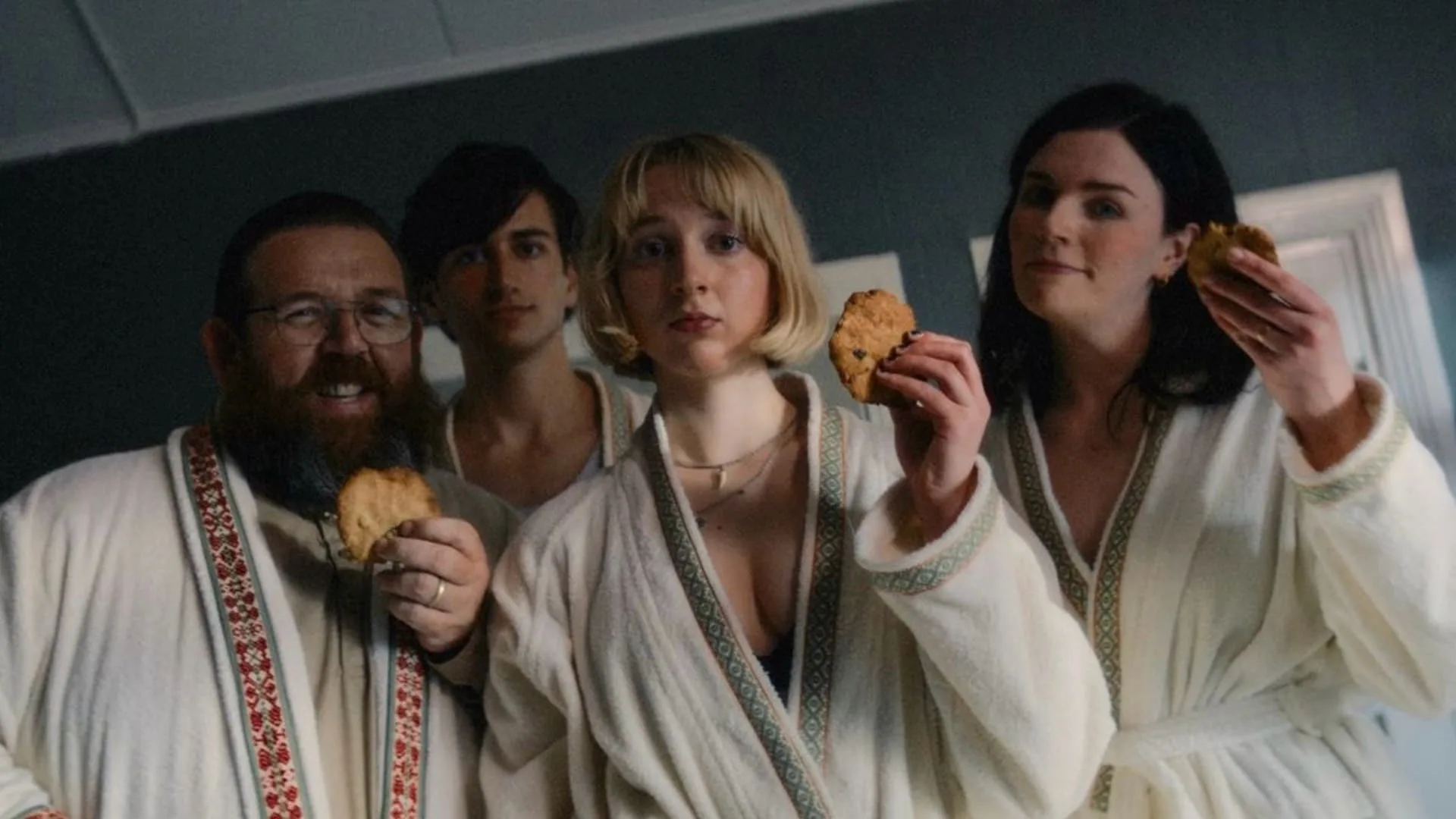
For example, Richard’s awkward interactions with the locals, especially when he attempts to engage with their customs, are full of cringe-worthy humor that feels relatable and ridiculous. Richard’s social faux pas are a textbook example of “awkward dad humor,” providing levity that contrasts strongly with the horror that lurks beneath the surface.
But the horror parts are just as strong, and the way they’re framed amplifies the tension in the film. From the creepy looks of the islanders to the ominous themes of the Karantan festival, the atmosphere of Svälta is permeated with menace. There are more than just jump scares in this horror movie.
There is a constant feeling of dread that permeates everything. The audience can feel the Smiths’ increasing unease as, for instance, the revelation of the locals’ true intentions develops over time. The psychological effect of the film is increased by the slow buildup, making the violence that occurs at the end even more shocking.
However, there are some problems with how well this blend works. At times, the changes in tone can be shocking. For example, humor that used to make people laugh out loud could quickly turn into pure horror, leaving viewers stunned.
The film’s general cohesion is questioned by its jumps between genres. Does the humor detract from the horror, or does it add to it? While some audience members may feel lost after watching this delicate dance, others will be impressed by the daring juxtaposition.
In the end, “Get Away” stands as a testament to the complexities of genre blending. It forces viewers to confront their own reactions to humor and horror and makes them reflect on how they deal with discomfort in storytelling. The film’s expert handling of these elements provides entertainment and a deeper commentary on the nature of fear and laughter.
Direction and Cinematography: Crafting Unease
Stephen Haars’s direction in “Get Away” is a nuanced look at mixing genres, skillfully combining horror and comedy. His method is marked by a willingness to go against what people expect. One minute, the audience is laughing at Richard’s social faux pas, and the next, they’re holding their breath as the islanders’ evil plans become clear.
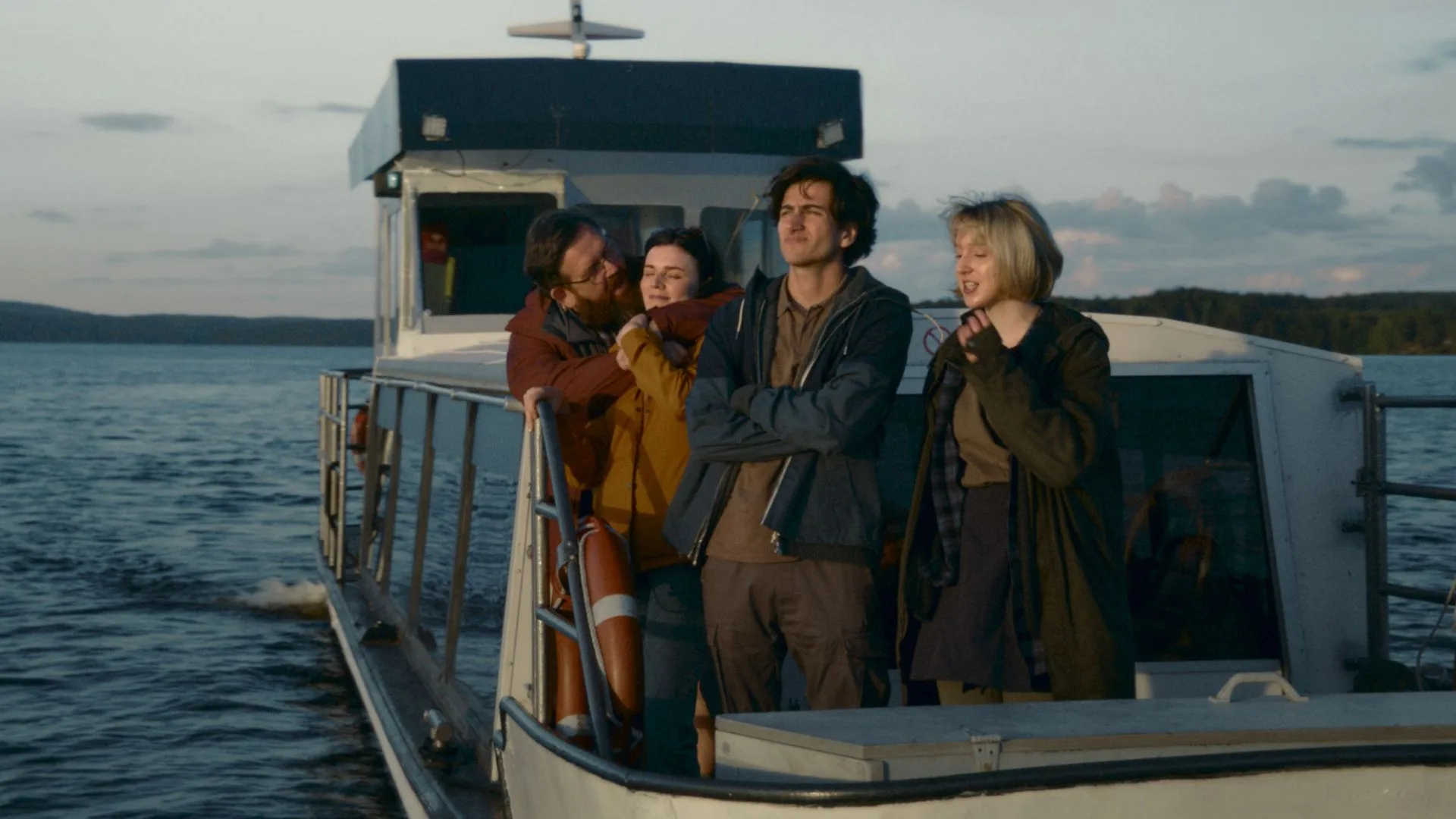
Haars uses a style that accepts the situation’s absurdity and gives it a real sense of dread. This duality is part of a bigger narrative strategy that makes people laugh at their discomfort—a phenomenon I might term “ironic horror comedy” (though I doubt I’m the first).
The film’s narrative and mood are greatly influenced by the cinematography, which is visually important. It was a great idea to film on the foggy island of Svälta, which makes it seem like a character in the Smith family’s trip.
The islanders are often shown as shadowy shadows in the frames, adding to their ominous presence and emphasizing the unknown theme. The interplay of light and dark within scenes also amplifies the tension. Moments of levity are often broken up by sudden drops in lighting, creating an unsettling atmosphere that keeps the audience on edge.
Despite Haars’ expertise crafting a visually appealing narrative, the tonal shifts can occasionally feel disjointed. Viewers might wonder if the film makes sense overall because of the interplay between funny and scary parts. This ambiguity, however, highlights the film’s examination of cultural clashes and family conflict.
Haars’ ability to make us laugh and feel fear in such quick order is a testament to his vision and a challenge to us to accept the complexities of both art forms. With its rich symbolism and evocative imagery, the visual storytelling eventually deepens the viewer’s engagement with the film’s themes, making “Get Away” an interesting contrast study.
The Final Act: A Twisting Path to Revelation
The conclusion of “Get Away” contains a twist that completely changes the narrative and changes the viewer’s point of view boldly and unsettlingly. The film has been mostly funny until now, but the tone changes dramatically as we learn what the islanders want.
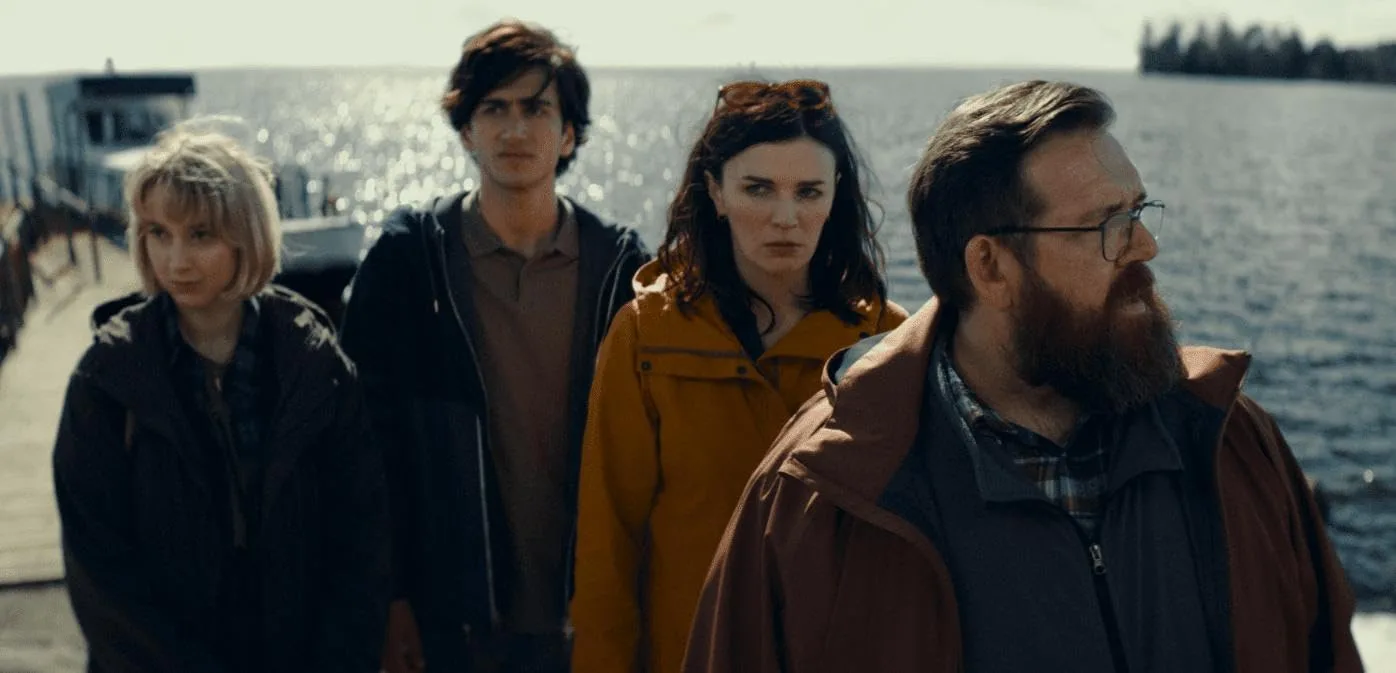
This turn of events shows that the Smiths’ vacation was a setup for something much darker—they went from being unaware tourists to unwilling participants in a dark cultural ritual. In light of the revelation, the audience has to rethink everything they’ve seen. The humor, the hints, and even the interactions that seemed harmless take on new, darker meanings.
This abrupt change from horror to levity amplifies the film’s tension. It serves as a commentary on the consequences of personal and cultural ignorance. The Smiths, who at first appear to be helpless victims, are ultimately caught by their naivety, embodying the dangers of cultural appropriation and the perils of participating in unfamiliar customs without fully understanding their meaning. A theme that resonates with modern talks about cultural sensitivity is the way that outsiders frequently misunderstand or make fun of other people’s customs.
In the end, this twist has an effect that lasts long after the movie ends. It makes people reflect on their roles as viewers in a world full of historical baggage. The film’s ending isn’t just a conclusion; it’s also a reflection of society, forcing us to confront how we contribute to continuing cycles of miscommunication and abuse. As the dust settles, “Get Away” forces us to face the uncomfortable truth that the worst horrors are sometimes not magical but in our lack of knowledge.
The Review
Get Away
"Get Away" deftly combines humor and horror to create a fascinating narrative that criticizes cultural insensitivity while delving into the complexities of family dynamics. Steffen Haars' direction captures the creepy atmosphere of Svälta well, and the twist changes the whole thing, making the audience reflect on the consequences of ignorance. The film's audacity and thematic depth make it a fascinating addition to the genre, even if it does get lost at times.
PROS
- Successfully merges comedy and horror, creating a unique viewing experience.
- Notable performances from Nick Frost and Aisling Bea enhance character dynamics.
- Explores cultural insensitivity and the complexities of family relationships.
- Effectively captures the eerie and foreboding nature of the island.
- The narrative's twist reframes the story, prompting deeper reflection.
CONS
- Some shifts between humor and horror may feel jarring to viewers.
- The buildup can be slow, potentially testing audience patience.
- Some supporting characters may lack sufficient development.
- Occasional contradictions in thematic execution can confuse the overall message.
- Its specific cultural critique might not resonate with all audiences.