




























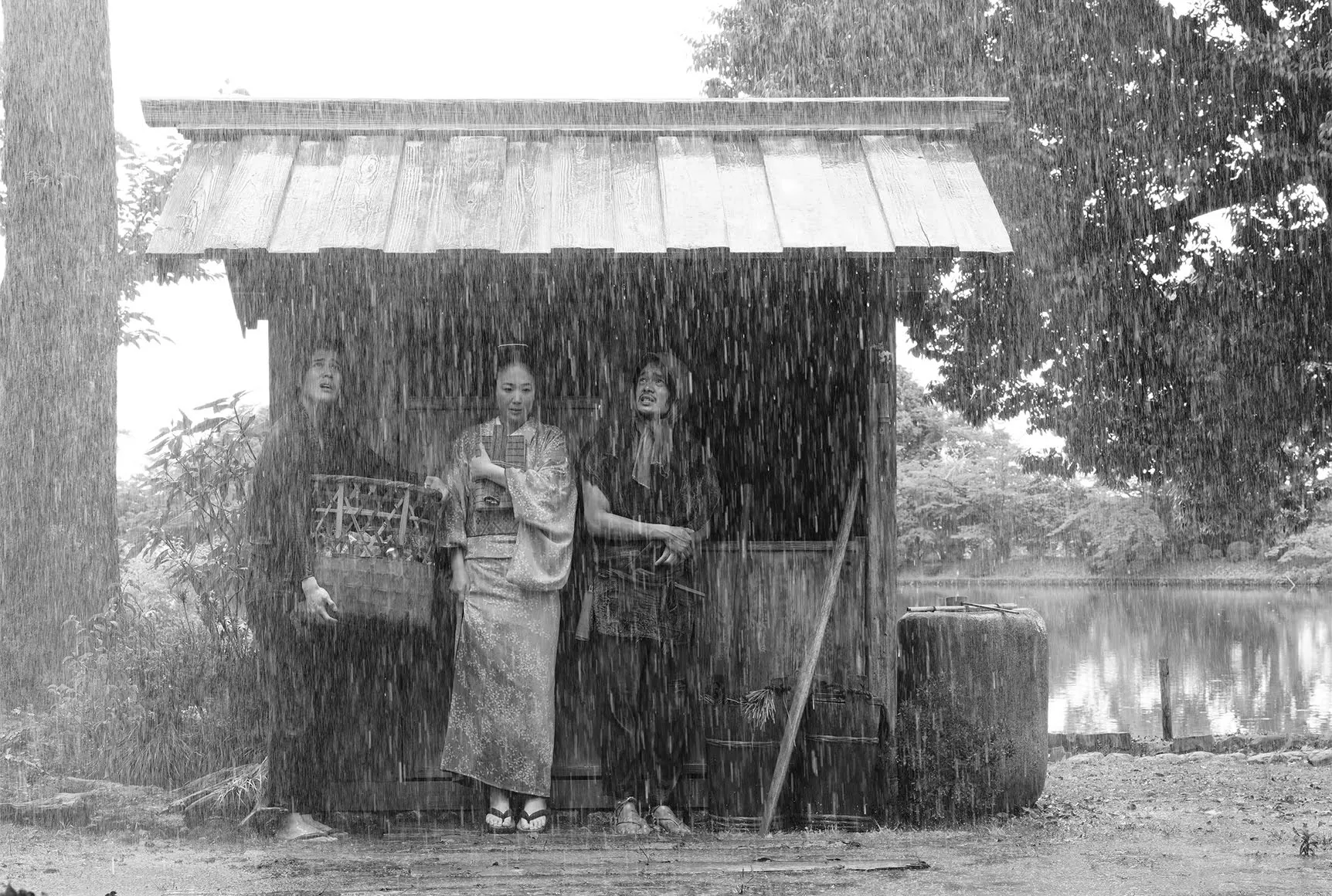

In the damp sprawl of late Edo, rain drums a steady rhythm on wooden eaves, turning mud into a reminder of life’s basic demands. In this world without flush toilets, shared latrines become crucibles of dignity and shame. Okiku, once sheltered by samurai privilege, stands at the threshold of that shared humanity, teaching children by day and confronting her own vulnerability when an act of violence steals her voice.
Across the narrow alley, Chuji and his mentor Yasuke treat human waste as treasure, hauling buckets of excrement to farmers who prize its promise of renewed soil. Their labor speaks to a cosmic irony: what we discard as vile sustains the world we cultivate. Class lines crumble when every body yields the very substance that feeds bodies.
Silent longing blooms between Okiku and Chuji in fleeting glances and hesitant gestures. Speech has its limits; sometimes the weight of absence carries the deepest meaning. Their unspoken bond raises a question that ripples through the film like water pooling in a gutter: can compassion take root in soil soiled by neglect? The film invites us to confront the gravity of human need, where even the humblest substance becomes a vessel of connection.
Mud, Manure, and the Metaphor of Existence
In the waning years before a new era dawns, Edo’s tenement district offers a stark mirror to human fragility. Single-room wooden houses press shoulder to shoulder around a single outhouse whose boards bear stains of use and neglect.
Absence of running water turns each morning into a ritual of humiliation: buckets pass from hand to hand like sacred vessels, their contents both curse and currency. Here, class is etched into faces: the daughter of a fallen samurai walks these alleys in refined robes that brush the damp earth, her posture betraying private sorrow.
Across the dirt lane, Chuji and Yasuke shoulder their buckets with a kind of grim dignity, offering refuse to farmers who crave its life-giving promise. Their trade reminds us that society deems some tasks vile while forgetting that all bodies yield what they purge.
The landlord’s curt dismissals inflame tenant resentment: banners of discontent appear on doorposts and whispered plans flicker in shadowed corners. Among these residents, an old coffin maker chisels solitude into wood, his shop a sanctuary from the stink outside.
In the hush between every downpour, murmurs of revolt drift from courtyard to courtyard. This world pulses with contradictions: filth becomes fertilizer, shame turns to solidarity, and the musty tenement holds the seeds of a small uprising. By naming excrement as its catalyst, the film asks a silent question: if our waste shapes the earth, might our overlooked labors remake society itself? Each raindrop seems to echo the tenement’s heartbeat, pulsing with restless hope.
Chromatic Silences and Textured Frames
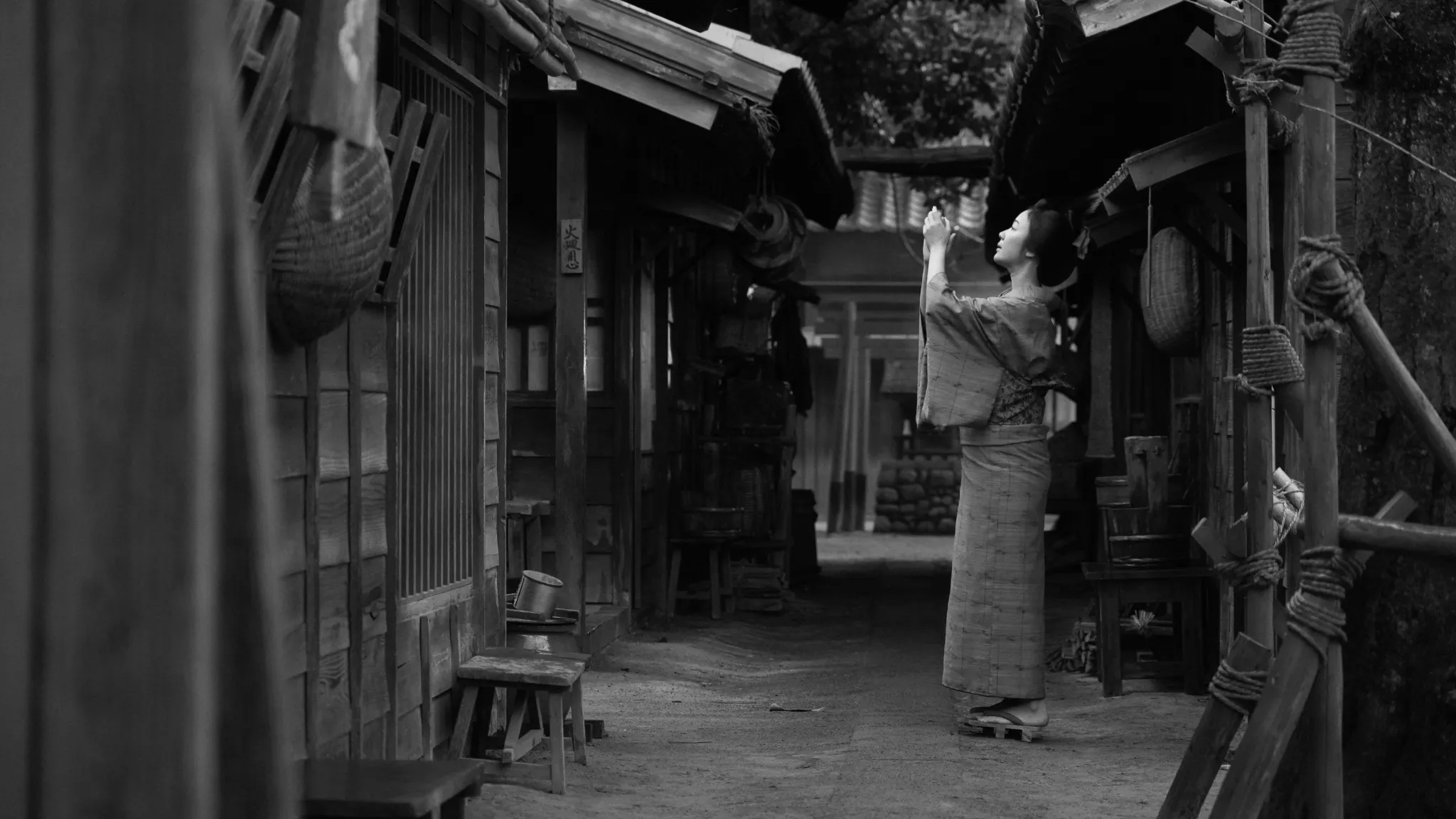
The film speaks in shades of gray, each frame sculpted by stark contrasts that evoke both old scrolls and razor-sharp modern clarity. When color seeps in—on a single blossom, a crimson cloth—it feels less like decoration and more like a sudden pulse of feeling amid measured restraint.
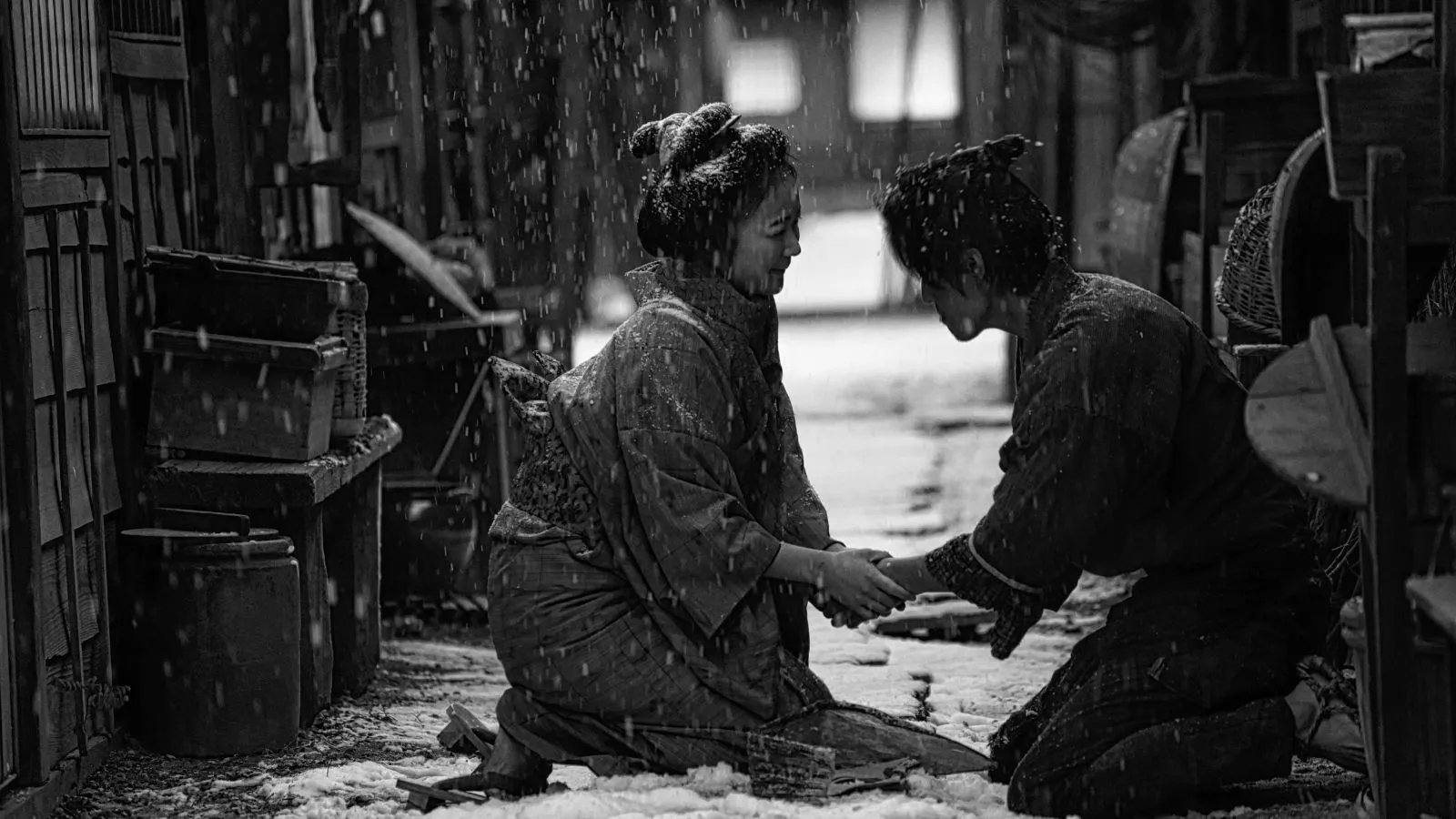
Shot in the intimate 4:3 ratio, compositions carry a quiet tension: doorways frame silent exchanges, and faces hover at the edge of light and shadow. Some moments linger like lacquered still lifes, recalling Ozu’s reverence for everyday geometry. Then the camera drifts, as if caught by a restless breeze, and time loosens its grip.
Close-ups of brimming buckets may unsettle, yet their details—glints of wet wood, the soft echo of liquid hitting metal—become almost lyrical. Sound design turns the humble barnacle of routine into its own meditation; the absence of Okiku’s voice echoes through hallways, punctuated by distant footsteps or the creak of floorboards.
Sets cradle cracking plaster and tilted beams, and costumes bear the dust of labor. These textures, pressed between charcoal walls and flashes of hue, remind us that every surface holds memory. In this visual grammar, decay holds its dignity, and color arrives as a whispered confession.
Carnal Justice and Quiet Revolt
A single word whispered beneath the eaves—“Okiku”—carries weight when spoken beside a bucket of human waste. In that stained courtyard, dignity fractures along class lines: the fallen samurai’s daughter bows her head, her name tainted by proximity to toil deemed unworthy. Above the tenement, the landlord’s decree—“poor people’s fault”—rings like a moral indictment, drawing hisses of dissent from cramped doorways. Those walls become a stage for rage born of neglect.
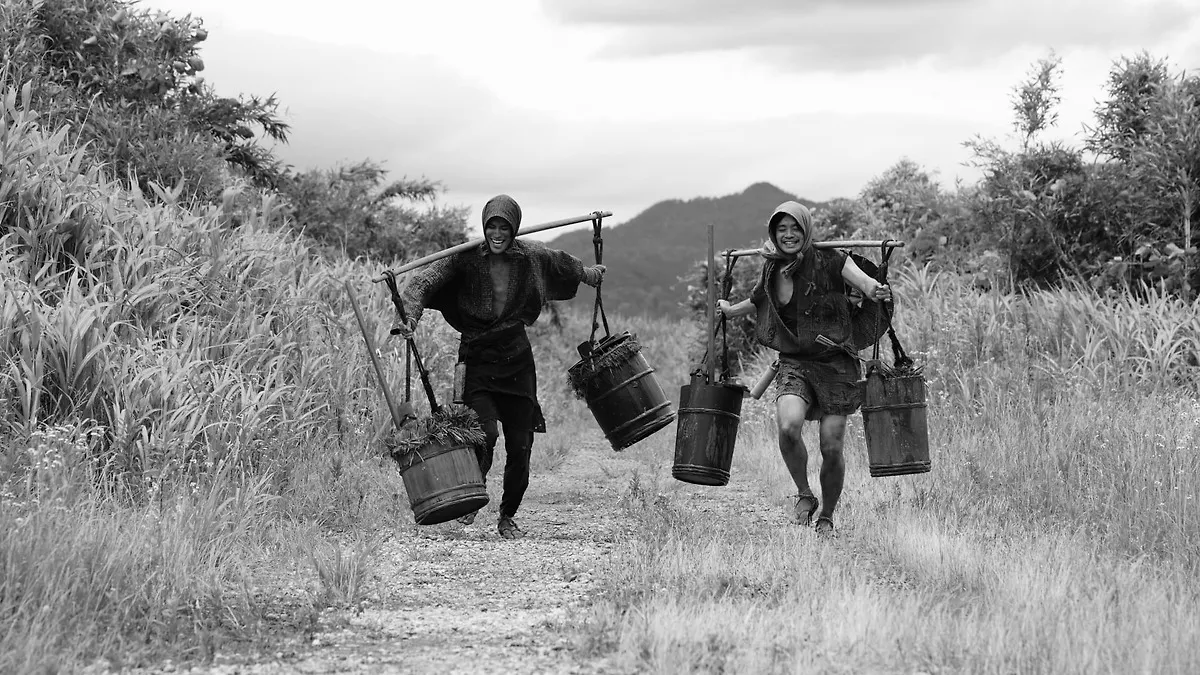
Yet excrement proves an unlikely equalizer. Each body yields the same residue, reminding us that rank cannot shield us from mortality’s most basic transaction. When Chuji and Yasuke transform refuse into fertilizer, hierarchy bends to necessity: the lowliest task gains new value. In those mud‐splashed streets, the lowest becomes indispensable, planting seeds in earth that has no memory of privilege.
Okiku’s forced silence questions the power of speech itself. Her glances and trembling hands speak volumes when words fail her. A written note, a shared glance, a fleeting touch—these unspoken acts bear witness to emotion more potent than any declaration. Through absence of voice, she claims agency in subtle rebellion.
Survival here wears many faces. Chuji’s grit is born of need, not greed; his labor emerges from hunger for life, not hunger for wealth. Beneath every transaction lies a critique of systems that feed on desperation—predatory rents, aristocratic pride, the cynical calculus of worth. These realities press upon bodies like shadows at dusk.
Still, warmth blooms in hidden corners. A shared loaf of rice, a hushed laugh among neighbors, the coffin maker’s silent blessing—these moments are fragile acts of compassion. In a world steeped in grime, kindness becomes sharp relief, a reminder that humanity can endure even when everything else feels sullied.
Echoes in Silence and Soil
Haru Kuroki inhabits Okiku with a still intensity that feels almost ritualistic. As a teacher, she carries compassion like a hidden talisman, her posture always poised between grace and guarded strength. When words desert her, her hands become eloquent—the brush of a sleeve, the tilt of a head, the hesitant reach toward a bucket. In those moments, her silences speak of shattered privilege and nascent empathy, charting an inner voyage from sheltered samurai daughter to co‐conspirator in the manure trade’s strange alchemy.
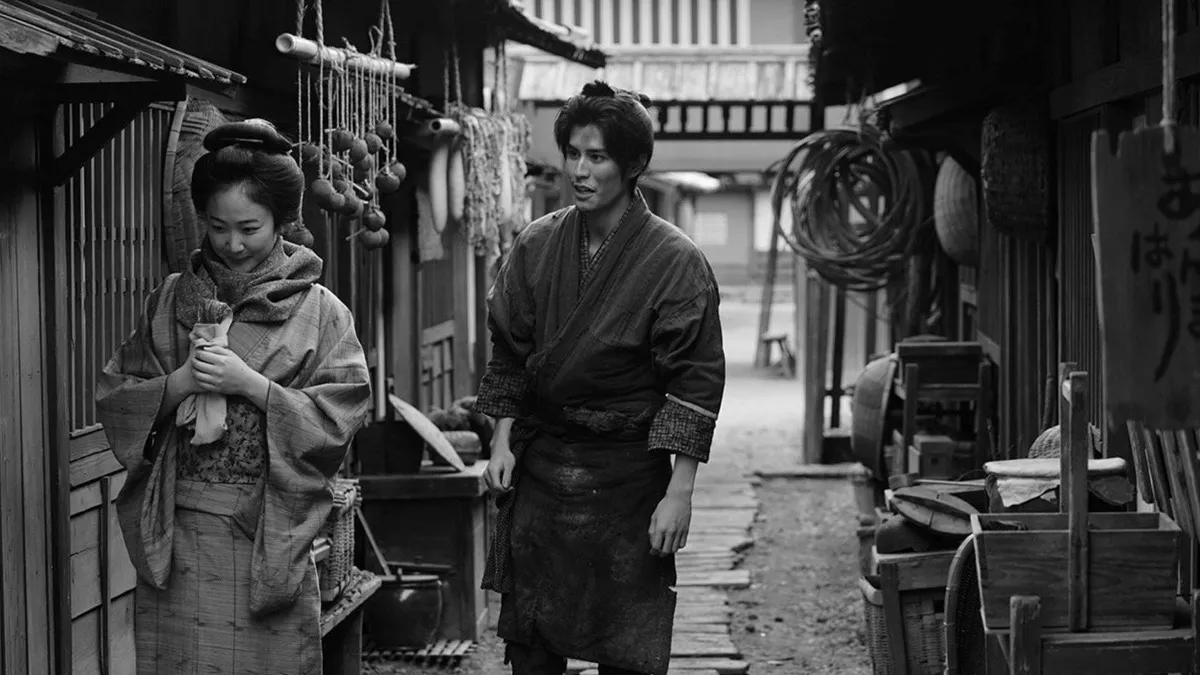
Opposite her, Kan’ichirô Satô’s Chuji stands rooted in pragmatic hope. His broad shoulders bear buckets and burdens alike, yet his gaze holds an unshakable warmth. Small fractures of heartbreak appear when social fault lines bar his path to Okiku’s world. He does not rail against fate; instead, he tends to it—offering half-smiles and earnest nods that confess longing without melodrama. Their chemistry unfolds in fleeting glances and suspended seconds, as if each look were a petition for shared humanity.
Sôsuke Ikematsu, as Yasuke, moves with world-worn pragmatism and a dry wit that surfaces in his half-smiles. He mentors Chuji with knowing patience, an earthly Socrates trading life lessons under dripping eaves. His humor is a wisp of smoke in the stifling tenement air, reminding us that resilience often wears a crooked grin.
Supporting players anchor this fragile ecosystem. The disgraced samurai father carries ancestral pride and paternal protectiveness like a rusted sword—he grips tradition even as it corrodes beneath him. In his shop, the aging coffin maker chisels finality into wood with stoic acceptance, whispering that mortality can be shaped as tenderly as a final embrace. Meanwhile, the tenants—each a vessel of discontent—form a murmuring chorus. Their restless whispers and sharpened glances cast the tenement as a living being, its heartbeat quickening toward revolt.
Collectively, these performances breathe an existential charge into the murk. Each character becomes a vessel for questions of agency, worth, and the unspoken bonds that tether us to both filth and grace.
Chapters of Silt and Silence
The film arranges its tale in chapters, opening with a prologue that whispers, “Where does Edo’s excrement flow?”—a question that seeps beneath skin. Each subsequent title—“The Invincible Okiku,” “Foolish Okiku,” “And So Goes the Boat”—marks a shift in feeling, as if each label were a silent bell tolling for her evolving self.
Scenes unfold in a deliberate meter, pausing for small absurdities—an unexpected plop, a tenant’s ironic laugh—then tightening into charged confrontations. Words fall softly in some frames, rallying in others to expose unsaid grudges. Moments of quiet reflection wash into sudden bursts of fury, mimicking breath caught between hope and despair.
Midway, violence steals Okiku’s voice, and the structure fractures: her silence becomes a chasm, casting fresh light on hidden strengths and shifting power between those who wield language and those who endure without it. The rhythm tilts, and we sense that nothing will align as before.
The final chapter slips away without sealing loose ends. It leaves an echo, an open stanza that clings to memory. This open-ended close feels less an ending than a breathing space—an invitation to linger in the mud’s final whisper.
Tender Filth and Quiet Laughter
In moments of low comedy—plops and squelches echoing in tight courtyards—the film reminds us that laughter can bloom from the basest of materials. Toilet humor cuts through the grime, offering brief release from weighty toil. Monochrome frames soften every splash, transforming the visceral into a strangely poetic cadence.

Silent longing pulses beneath these comic interludes. Okiku’s unspoken gaze and Chuji’s tentative offering of a rain-soaked cloak sketch a romance that feels both fragile and fierce. Each hesitant look carries the risk of rejection, lending intimacy a sharp edge. Voice may falter, yet desire finds its shape in the spaces between gestures.
Compassion emerges in small rites: shelter shared under a leaky eave, a loaf broken in half by trembling hands. These acts carry warmth without slipping into saccharine territory. Human connection resists neat categorization, and the film honors that messiness. Empathy is earned when characters choose kindness in a world that treats them as refuse.
Here, social critique wears no banner. Class wounds pulse beneath each interaction, yet the core plea endures: every soul seeks dignity. In this tenement of soil and silence, the echoes of our own inequalities circle back, asking whether we can reclaim worth from what we discard.
Full Credits
Director: Junji Sakamoto
Writer: Junji Sakamoto
Producer: Mitsuo Harada
Cast: Haru Kuroki (as Okiku), Kan’ichirô Satô (as Chūji), Sôsuke Ikematsu (as Yasuke), Kōichi Satō (as Matsumura Genbei), Renji Ishibashi (as Magoshichi), Claude Maki (as Kyojun)
Director of Photography (Cinematographer): Norimichi Kasamatsu
Editor: Ryô Hayano
Composer: Gorô Yasukawa
The Review
Okiku and the World
Okiku and the World transfigures the humblest labor into an intimate study of resilience. Its stark monochrome frames and strategic color shifts evoke both period authenticity and raw emotion. Silent exchanges and earthy humor unravel class divides with unexpected grace, while each chapter deepens existential reflection. This modest period drama lingers in memory through its compassionate portrayals and poetic visuals—a rare film that finds beauty in the most grounded of human experiences.
PROS
- Poetic visuals that transform mundane labor into art
- Nuanced nonverbal performances that deepen emotional impact
- Thought‐provoking use of monochrome with sudden color highlights
- Dark humor that punctures tension with genuine laughter
- Existential themes woven into everyday struggles
CONS
- Graphic depictions of waste may unsettle some viewers
- Measured pacing can feel slow in quieter stretches
- Open‐ended finale may leave expectations unmet