





























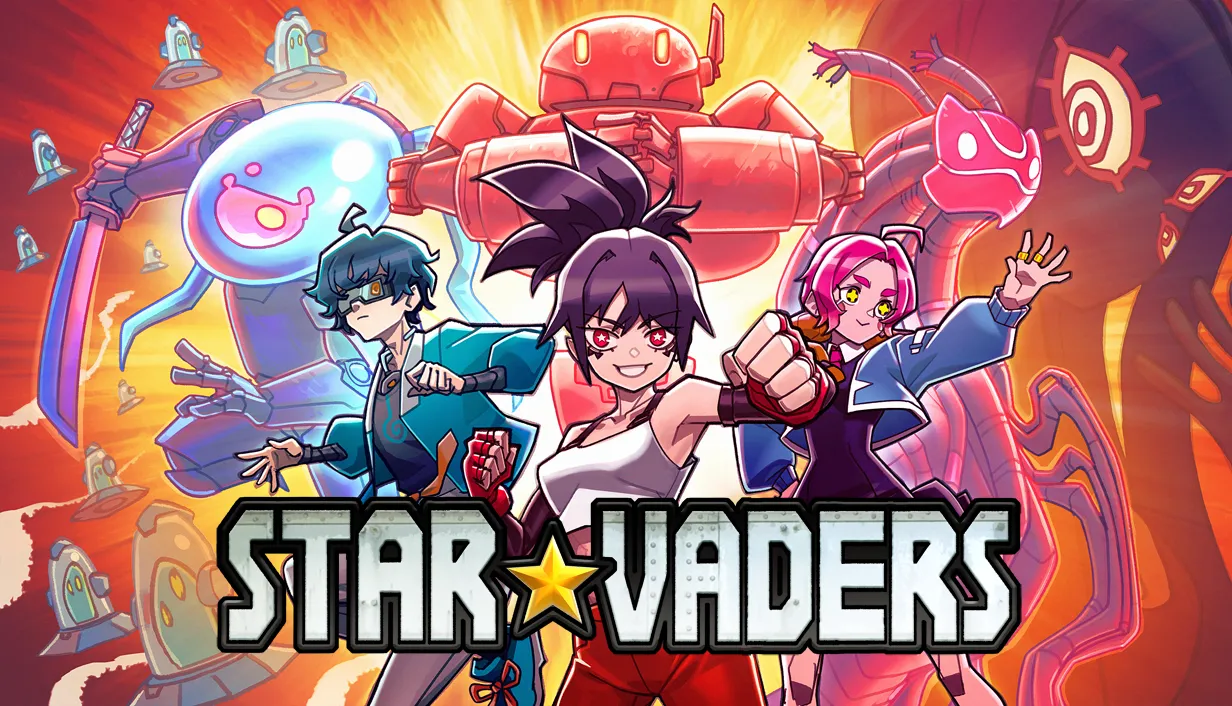

StarVaders arrived on Steam on April 30, 2025, from indie developer Pengonauts and publishers Playworks and Joystick Ventures. It combines three familiar elements—roguelike deckbuilding, grid-based tactics, and classic Space Invaders action—into a cohesive experience built around high-stakes decision making. You step into the cockpit of one of several customizable mechs, each powered by its own energy—or “Heat”—system, and guided by pilots whose personalities unfold between runs.
The goal is deceptively simple: repel descending alien forces before they overwhelm your last three defense rows and fill your Doom meter. Doom replaces a traditional health bar, and each hit injects unwanted “Junk” cards into your deck, forcing you to balance aggression with damage control. Chrono Tokens let you rewind time, redraw hands, or reroll shop offerings, adding a strategic safety net.
Where StarVaders really stands out is in how its systems interlock. Shaping your deck through card rewards and artifacts influences both how you move on the grid and how you manage risk. Enemy design keeps you adapting—shielded drones demand precise positioning, swarms test area-of-effect blasts, and bosses often counter popular builds. For players who enjoy Slay the Spire’s deck synergies or Into the Breach’s tactical puzzles, StarVaders offers an engaging fusion that rewards both instinctive plays and careful planning.
Forged by Doom: Character and Conflict in StarVaders
At its core, StarVaders frames a classic “Earth under alien siege” scenario, yet the Doom meter elevates each skirmish into a tale of desperation. Instead of hit points, every alien breach inches the Doom gauge forward, forcing immediate choices about risk and survival. That tension mirrors narrative stakes: each Junk card drawn after damage isn’t just a mechanical penalty, but a reminder of how close humanity is to collapse.
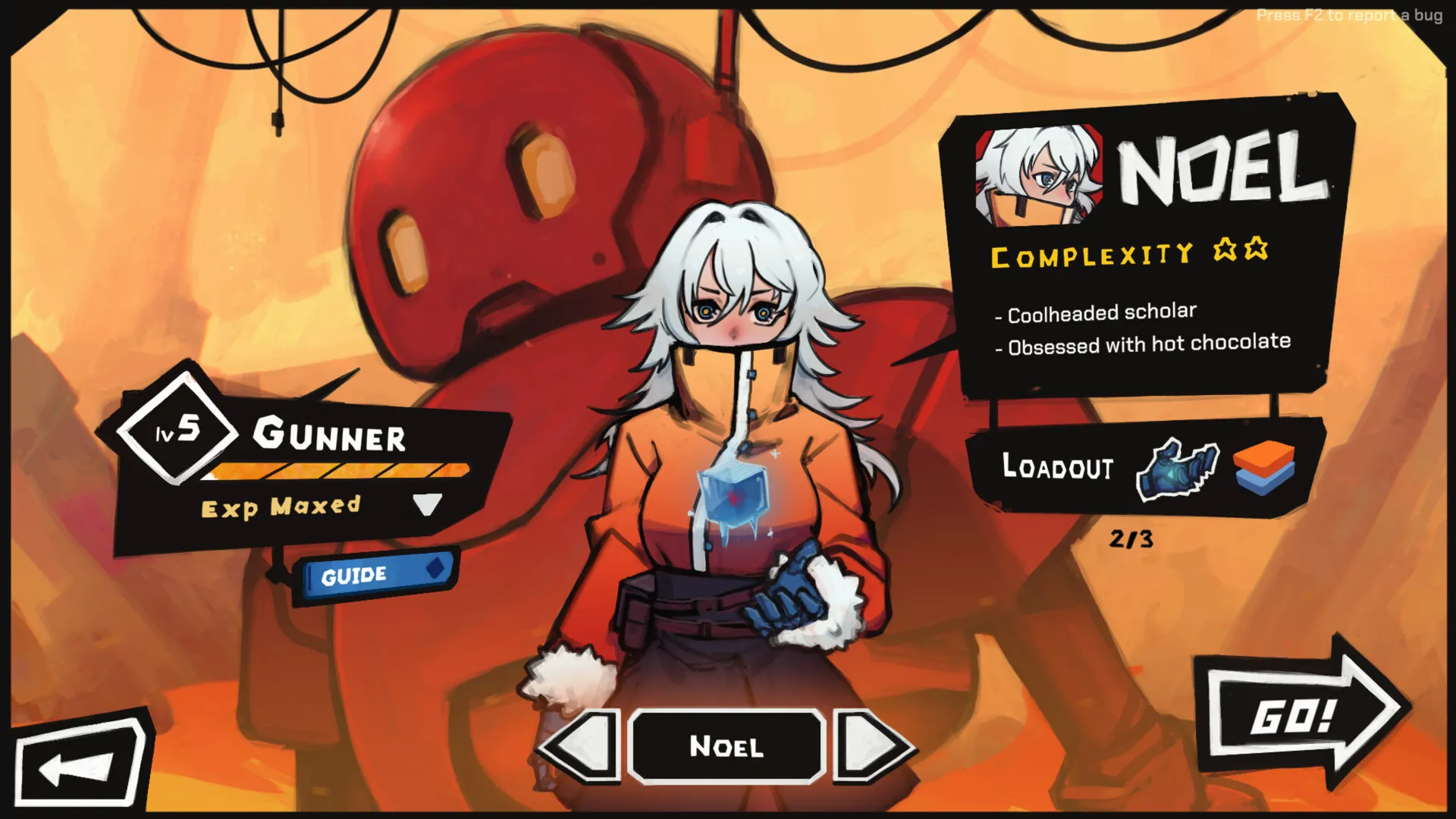
Players choose from three distinct mech chassis—each with its own Heat management system—and a roster of pilot subclasses. The Gunner’s balanced Energy pool encourages steady, reliable plays, while the Stinger’s Heat spikes reward bold combos at the risk of overheating. Each pilot brings a specialized starting deck and a personal quirk—one might prioritize crowd control, another thrives on high-heat pushes—so your strategy reflects not only playstyle but the pilot’s attitude toward crisis.
Between runs, brief dialogue snippets deepen these personalities. A pilot’s wry comment after a narrow victory or self-doubt following failure gives weight to progress beyond mere unlocks. The hand-drawn portraits, with expressive eyes and battle-worn details, reinforce those moments, tying every card play back to a character’s struggle. In blending these systems, StarVaders makes each mechanical decision feel part of a larger story of sacrifice–and one that shifts as your chosen pilot fights for humanity.
Tactical Threads: Weaving Cards into Combat
StarVaders drops you onto a vertical grid where every move and attack is dictated by the cards in your hand. The battlefield spans several rows, but only the bottom three stand between you and a fully charged Doom meter. Positioning yourself correctly is crucial—slide your mech into the right spot to intercept descending aliens or dodge a cluster of projectiles. Movement cards function like controlled gambits: play them for a safe reposition or to bait enemies into overextending.
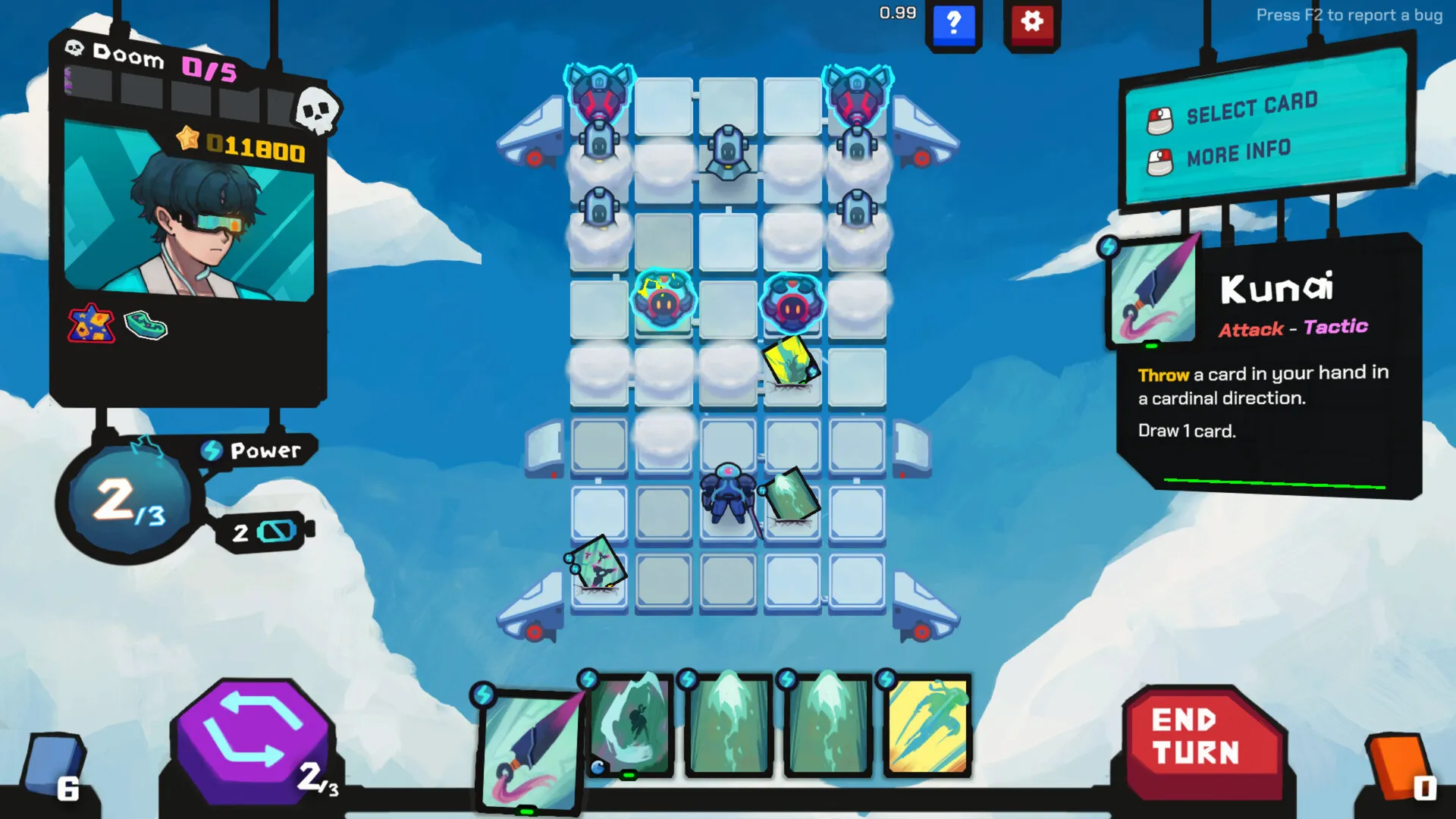
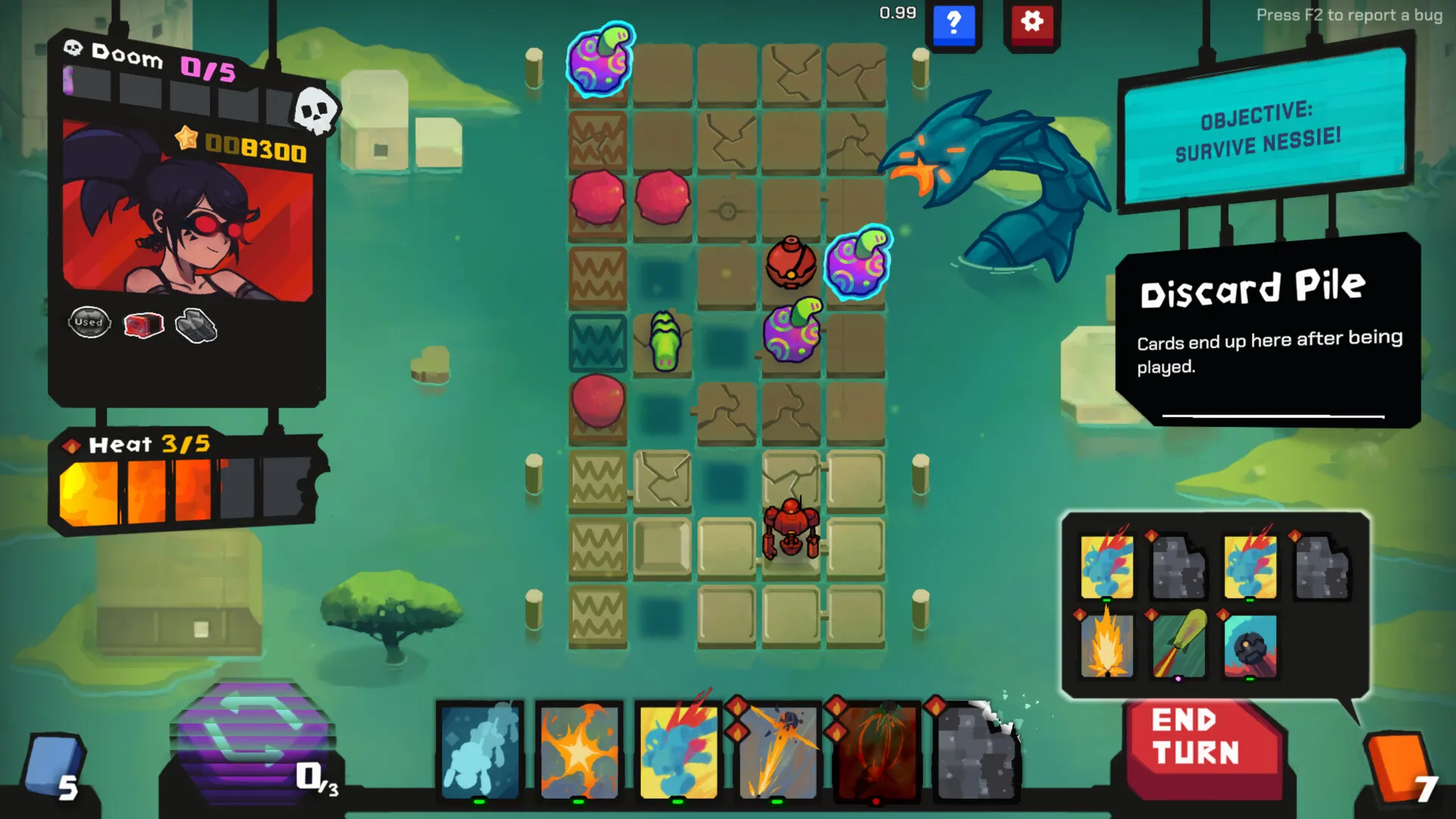
Cards fall into clear categories. Some push your mech forward or pull foes into hazardous zones. Others deliver pinpoint laser shots, area-of-effect bombs, flamethrowers that clear swarms, or ricocheting projectiles that can hit hidden targets. Each card carries a Heat—or energy—cost, and overspend that resource and the final card burns up, denying you its effect. That risk–reward dynamic encourages you to weigh whether a big play is worth the chance of overheating.
Before committing, StarVaders shows a visual preview of each card’s path and impact. That transparency strips away guesswork common in deckbuilders, shifting the challenge from calculation to creativity. It recalls the clarity of Into the Breach’s threat indicators while retaining deckbuilding depth akin to Slay the Spire.
Alien variety keeps fights fresh. Shielded drones force careful tile placement to bypass defenses, swarming bugs demand well-timed blasts, and ranged attackers can corrupt your deck with Junk cards if left unchecked. Enemies advance row by row after each turn, tightening the pressure on the Doom gauge. That forward momentum echoes the tension of wave-based shooters, yet the turn-based framework lets you pause and strategize.
Doom itself doubles as a narrative device. Every time an enemy breaches your lines, the meter inches upward and you receive Junk cards—dead weight that clutters future hands. Those junk draws hurt your efficiency and remind you of each failure’s narrative weight: humanity’s defenses are literally filling with debris. It’s a mechanical nudge to play carefully, but also a storytelling tool that heightens every mistake.
Then there are Chrono Tokens, the game’s time-rewind resource. Use one to redraw an unhelpful hand, reroll a shop’s offerings before a boss, or reset a single turn. You start each run with only a handful, so each rewind choice becomes a story beat: Will you cling to a struggling deck or gamble on fresh possibilities? The limited supply ensures that time travel feels meaningful, rather than a reliable escape hatch.
By interlocking these systems—card-driven tactics, emergent enemy behavior, Doom tension, and scarce rewinds—StarVaders crafts battles that demand both split-second adaptability and long-term strategy. Each run feels like a puzzle where every card choice reverberates through the narrative of an alien invasion teetering on the edge.
Forging Your Arsenal: Progression and Build Crafting
StarVaders structures each run into three core Acts, with a fourth “true ending” stretch reserved for those who clear the first three. Before every boss fight, you navigate a branching map filled with encounters, shops, and narrative events. Choosing a longer route might yield more card rewards but also stacks tougher foes, turning each path into a story of calculated risk.
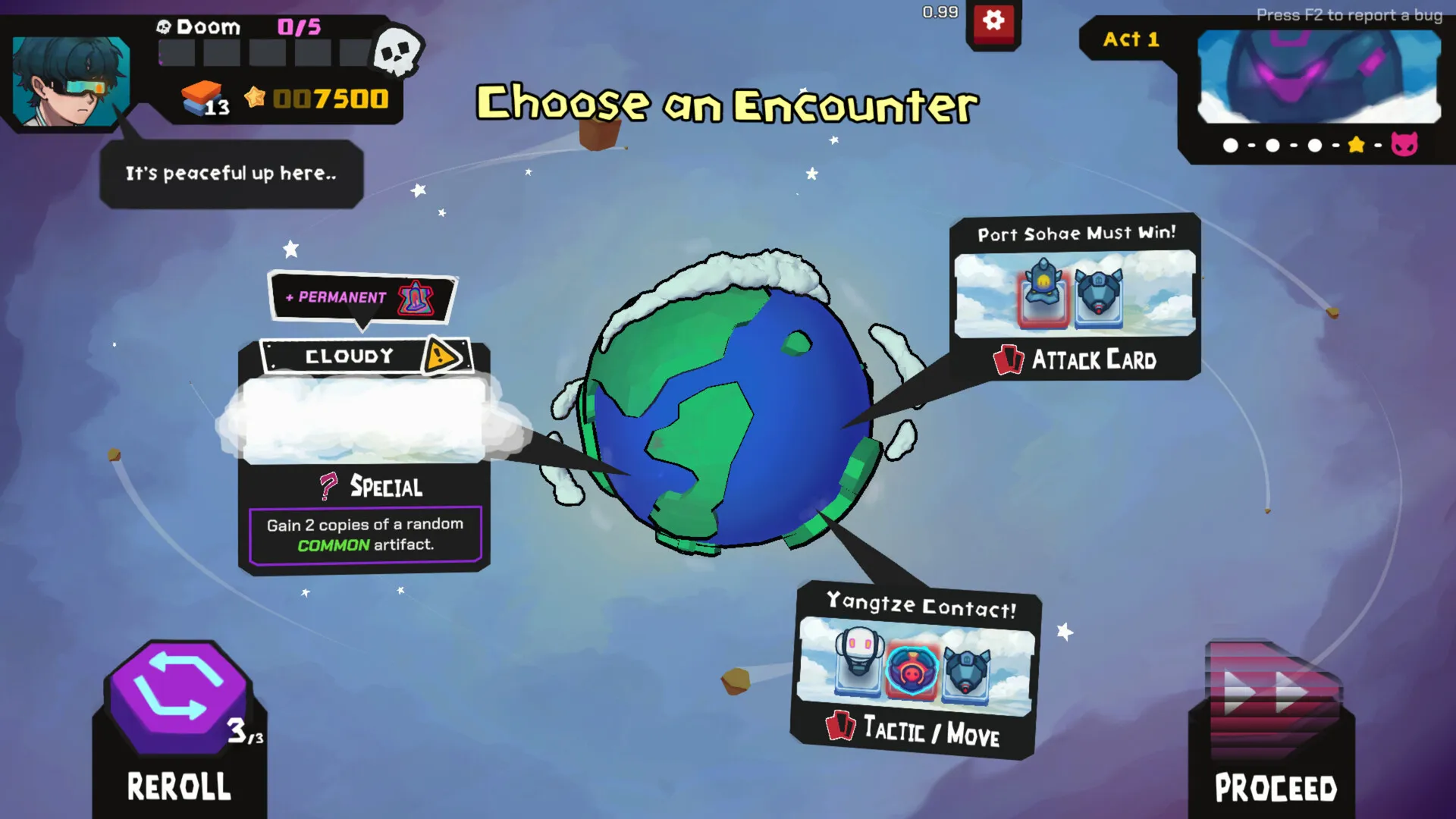
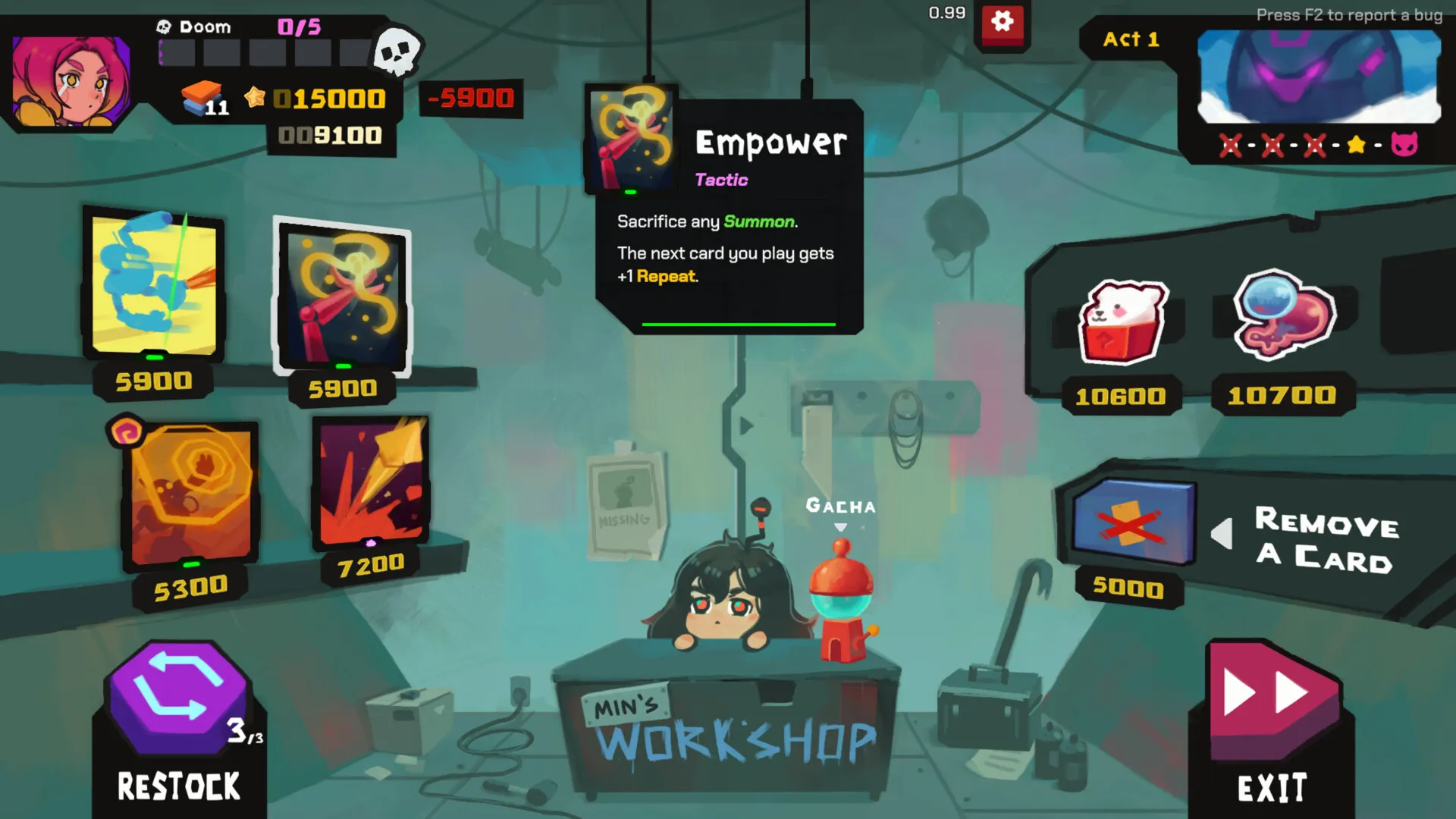
Between battles, the deckbuilding loop feels immediate. After clearing an encounter, you pick from three rewards—new cards, card upgrades, or artifacts—each choice nudging your strategy in a distinct direction. Visiting the shop before each boss adds another layer: spend scrap to acquire powerful cards or strip out weaker ones, trimming deck bloat. It echoes Slay the Spire’s tension between adding and removing cards, yet here the stakes carry narrative weight—each new ability represents fresh hope in the fight to stave off Doom.
Artifacts grant passive bonuses that can redefine a build. Some boost your Heat pool for one explosive turn, others increase the blast radius of bombs, or let key cards stay in hand for multiple plays. Aligning these relics with your card suite unlocks synergy moments where a single turn can decimate lines of invaders. That interplay feels as rewarding as piecing together skills in indie RPGs like Children of Morta, but with the streamlined immediacy of a deckbuilder.
High-risk nodes spice things up: accept a permanent debuff—such as random Junk draws or reduced Heat capacity—for the chance at premium rewards. Chrono Tokens let you sway these decisions, rerolling nodes or resetting a turn when the gamble goes sideways. Those tokens serve as narrative punctuation, reminding you that in the face of near-certain loss, you still wield the power to rewrite fate.
Meta-progression threads through every run. Mech and pilot XP unlock new cards, relics, and characters, but many pilots remain locked behind higher difficulties. This gating can feel like a narrative barrier—your chance to shape the ongoing struggle is paced by your mastery, turning each new unlock into a milestone in humanity’s resistance.
Polish and Precision: Visuals, Sound & Usability
StarVaders wears its hand-drawn aesthetic like a badge of honor. Character portraits brim with personality—battle scars, expressive eyes, and pilot-specific flair—while mech and alien sprites boast clean lines and bold silhouettes. On the grid, tiles sport crisp iconography and smooth animations: missiles trace clear arcs, explosions ripple across multiple squares, and camera shakes punctuate critical hits. This level of detail recalls indie peers such as Children of Morta, where every frame tells part of the story.
Sound design drives momentum. A driving chiptune score underscores each encounter, pacing tension during waves and swelling to meet boss encounters. Subtle audio cues—cards snapping into play, shields clanging, Doom-metre ticks—signal both opportunity and threat. These layers work together to keep players emotionally keyed in, transforming every card drop into a moment of weight.
StarVaders’ interface balances information density with approachability. Card previews appear instantly when hovering, and artifact tooltips offer concise breakdowns of passive effects. A skip-duplicate-reward option prevents repetitive menus, while streamlined navigation ensures you’re never more than a click away from shops, the map, or pilot stats. Tutorials introduce core systems without hand-holding, inviting experimentation while still covering essentials. In blending clarity with flair, the presentation makes deep tactics feel accessible—even when those tactics carry the fate of Earth.
Endless Skirmishes: Replayability & Challenges
StarVaders layers its core loop with difficulty tiers and special modes that keep each run feeling distinct. Standard play offers three escalating difficulties, but Challenge modes crank up modifiers—think faster alien descent, limited Chrono Tokens, or restricted card pools—to force you into fresh tactical approaches. For focused play, daily and weekly challenges introduce tailored win conditions or strict loadouts, similar to Hades’ Heat system, granting short-term goals that test both new and veteran pilots.
Enemy variety plays a central role in sustaining momentum. Over dozens of types across Acts, foes evolve from simple shielded drones to agile swarmers that punish static defense, demanding you rethink positioning and card synergy. Boss encounters double down: many are designed to counter the most common builds, while the Act 4 final boss requires exceptionally pointed strategies, highlighting when a deck’s narrow focus can become its downfall.
Beyond in-run obstacles, StarVaders uses unlock-driven progression to fuel repeat sessions. Earning XP for mechs and pilots gradually opens new cards, artifacts, and subclasses, mirroring the sense of unlocks in indie RPGs like Children of Morta. Difficulty gating means some pilots only emerge once you’ve mastered earlier tiers, turning each victory into a narrative milestone in humanity’s resistance.
Runs typically span 20–40 minutes, offering a bite-sized session for casual players while still rewarding deeper planning. Community-driven updates promise fresh pilots and card sets down the line, hinting at expanding strategic horizons. In marrying varied threats, meaningful unlocks, and time-boxed challenges, StarVaders delivers a loop that welcomes spontaneous dives and marathon campaigns alike.
Systems Check: Performance and Accessibility
StarVaders runs smoothly on modest hardware—any dual-core CPU at 2.0 GHz paired with 4 GB RAM and a 1 GB GPU handles the action without stutter. On Steam Deck, controller input feels intuitive, though keyboard and mouse deliver crisper card targeting for those who favor precision.
Optimized for quick reloads, load times between runs rarely exceed a few seconds, and frame-rates hold steady even amid chaotic boss encounters. Occasional hitches in particle-heavy grid effects have surfaced, but no crashes or hard bugs have undermined tension.
Accessibility settings cover essential bases: color-blind palettes clarify enemy telegraphs, UI scaling adapts to both large screens and handhelds, and full input remapping lets you bind cards to preferred keys or buttons.
To ease newcomers through its difficulty peaks, StarVaders leans on generous rerolls via Chrono Tokens and lower-tier unlocks that widen deck options early on. Those tools help temper sudden spikes—so technical polish and thoughtful options keep the struggle feeling fair rather than frustrating.
The Review
StarVaders
All told, StarVaders marries tactical grid combat with deckbuilding in a way that keeps every run feeling fresh, underpinned by a poignant Doom system and engaging pilot narratives. Its hand-drawn art and chiptune score sustain atmosphere, while solid UI and accessibility options welcome new players. Minor hitches in unlock pacing and occasional frame spikes seldom dim the core experience.
PROS
- Engaging fusion of grid-based tactics and deckbuilding
- Doom meter and Junk cards add meaningful narrative stakes
- Variety of mechs and pilot subclasses for replay depth
- Chrono Tokens offer strategic second chances
- Hand-drawn art and energetic chiptune soundtrack
- Clear UI, hover previews, and robust accessibility options
CONS
- Unlock gating can stall new-pilot access
- Act 4 boss often requires a very specific build
- Occasional frame-rate dips during intense sequences
- High-risk nodes may feel overly punishing