


























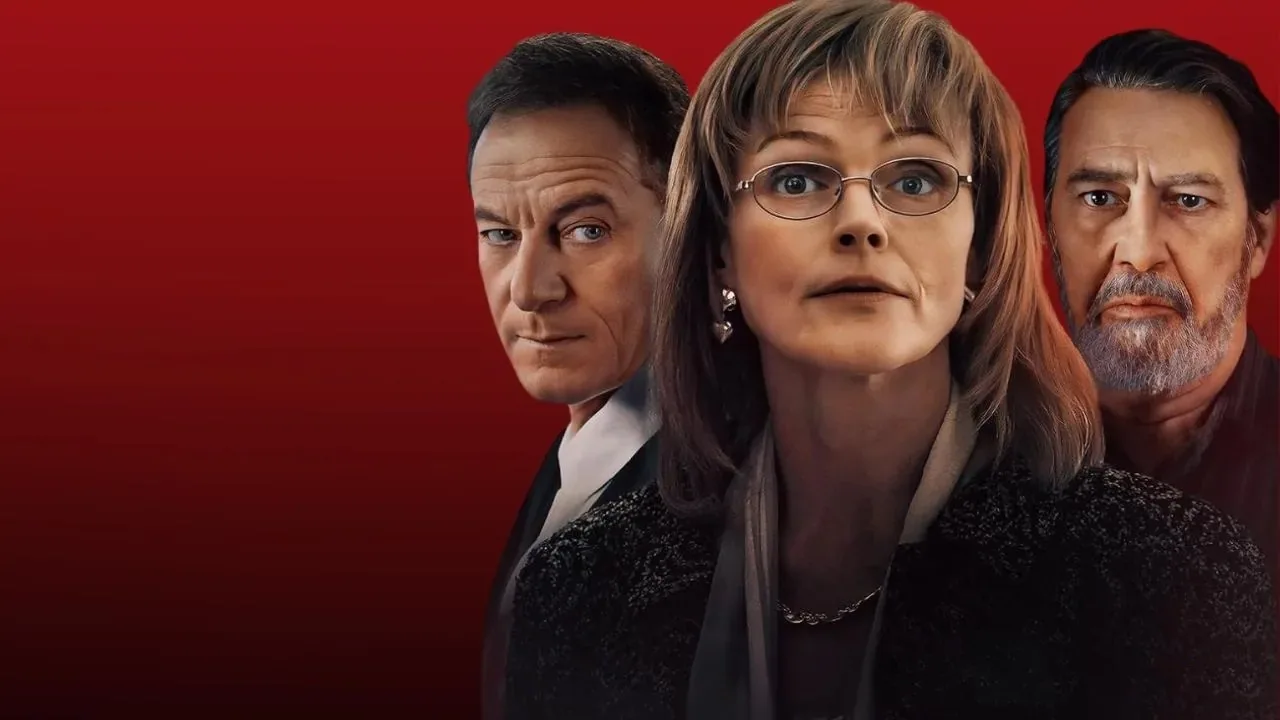
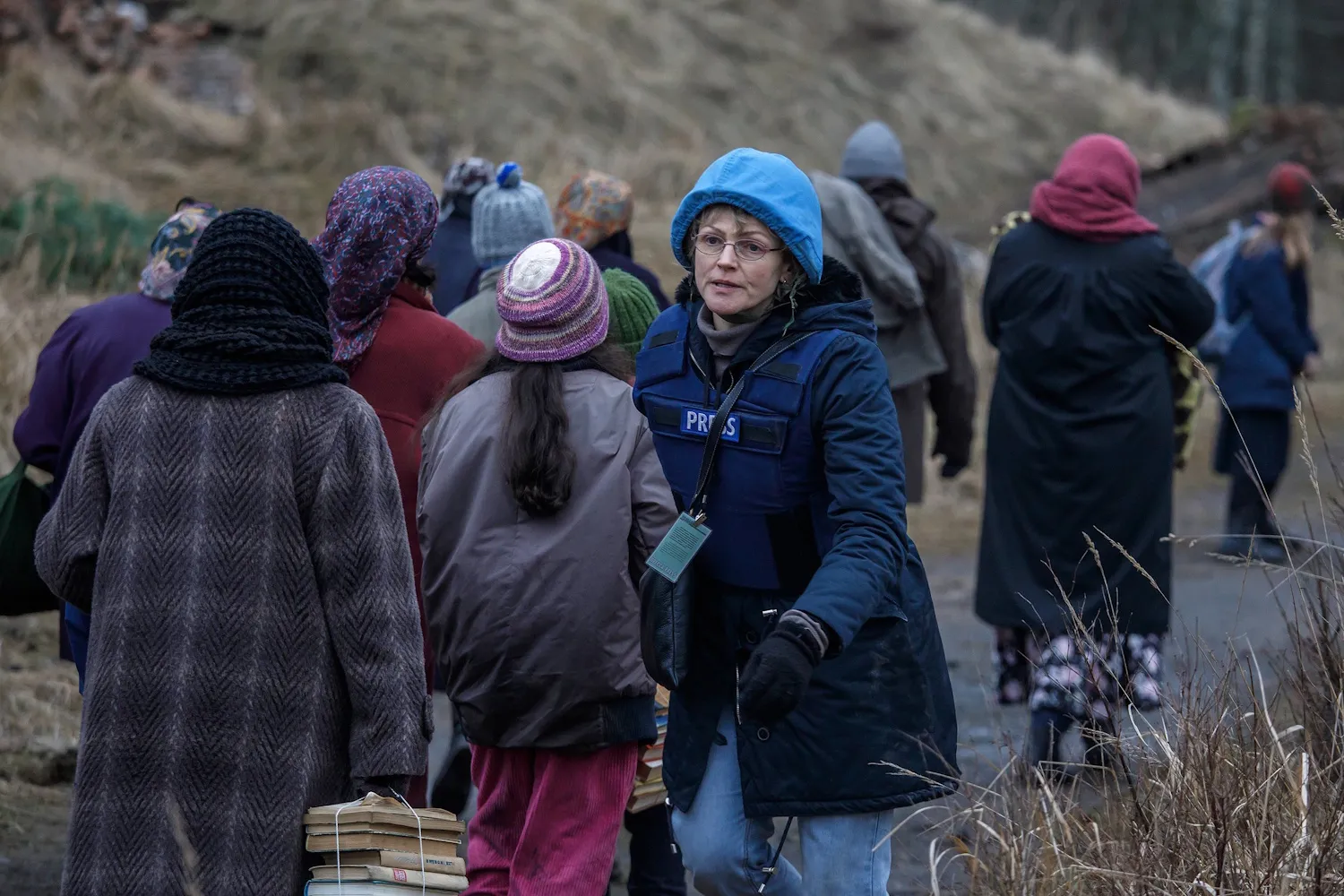
Anna Politkovskaya emerges in Words of War as a reporter defined less by front‑line spectacle than by the faces she meets. Tasked by Novaya Gazeta to serve as a “people correspondent,” she trades bullet‑ridden press tents for small Chechen villages, where whispered testimonies carry the weight of unspoken horrors. The film follows her path from Grozny in 1999 through that fatal October day in 2006, when her pursuit of truth met a bullet.
Against a backdrop of escalating state control, Politkovskaya’s dispatches confront the Russian military’s tactics in Chechnya—torture cells, mass graves, burned‑out homes—while her editor pushes back when she veers toward despair. Tension tightens in Moscow, at the Dubrovka theater and Beslan school hostage crises, where her empathy becomes both shield and vulnerability.
Scenes shift between war‑scarred streets and sterile newsrooms, underlining the gap between battlefield suffering and editorial deadlines. Every frame hums with moral urgency, reminding us that stories from distant conflicts can arrive at our doorsteps far sooner than we imagine.
From Glasnost’s Promise to Chechnya’s Ashes
When Words of War opens its chronology in 1999, the Second Chechen War has just reignited—a clash born of separatist aspirations and Moscow’s determination to reclaim its breakaway republic. The film traces two distinct phases: the initial Russian push to seize Grozny in late 1999 and the grinding counterinsurgency that stretched toward 2006. Between those dates lie stories of villages razed, detainees beaten in makeshift camps and mass graves concealed beneath scorched earth.
Scenes of civilian testimonies, filmed with unflinching clarity, underscore the brutality inflicted on ordinary Chechens. Torture methods detailed in Politkovskaya’s dispatches take on an almost documentary weight here, reminding viewers that each frame is rooted in real witness accounts.
Parallel to the battlefield, the narrative spotlights Novaya Gazeta, born in the early ’90s when Mikhail Gorbachev used his Nobel Peace Prize funds to launch a paper free from state editors. That experiment in press autonomy faces its gravest test under Vladimir Putin, who moved from KGB lieutenant to prime minister in 1999 and soon tightened the screws on dissent.
The film captures how Soviet‑era disinformation tactics—airbrushing opponents from photographs, spreading rumors through controlled outlets—persist into Russia’s new millennium. Politkovskaya’s work embodies the struggle against those shadows, insisting that independent reporting remains the lone beacon of accountability in a system designed to obscure.
Although set two decades ago, Words of War feels urgent today. Its depiction of shrinking safe spaces for journalists echoes conflicts beyond Chechnya: modern battles over truth and lies, when digital echo chambers deepen divisions. This carryover of “truth decay” serves as a stark warning that any society, however advanced, can slip back into silence if those telling hard facts fall silent themselves.
Character & Performance Analysis
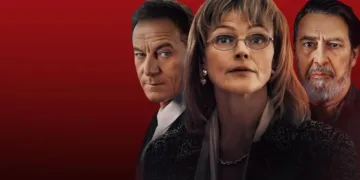
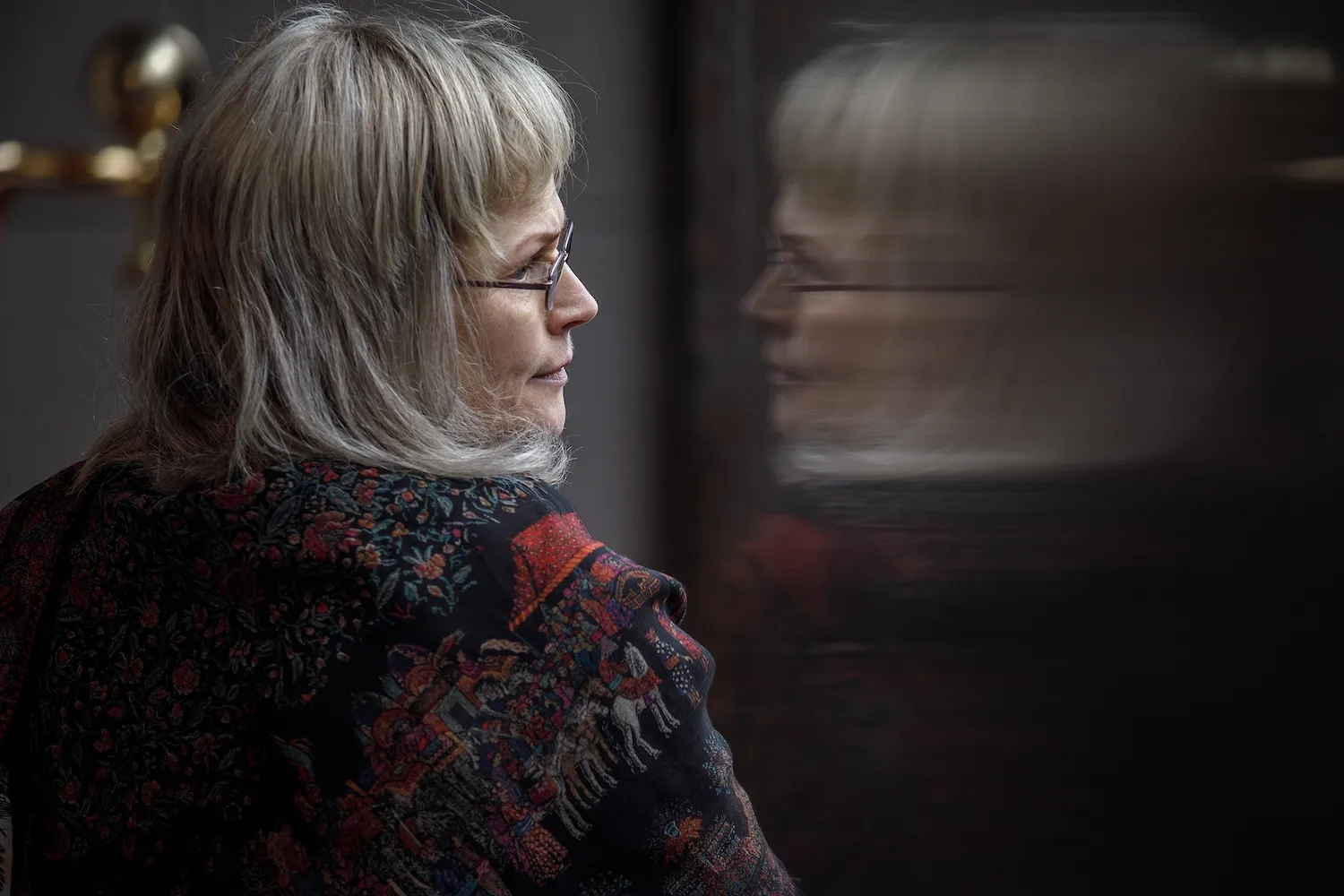
Maxine Peake anchors Words of War with a portrayal that moves from quiet observation to steely determination. Her posture and subtle shifts in expression—what one might call “listening‑face” moments—convey both compassion and mounting urgency. In scenes with Chechen civilians, Peake’s measured restraint heightens the impact of each spoken testimony. When she straightens her back to deliver a scathing report on mass graves, the resolve behind her eyes signals a shift from chronicler to crusader.
Jason Isaacs brings warmth and tension to Alexander Politkovsky, Anna’s husband. He inhabits the role with a careful balance of protective instinct and professional pride. Late‑night arguments over safety feel lived‑in, not scripted; his fear for her life rings truer than any melodrama. At the same time, his portrayal of a journalist under his own pressures—facing newsroom compromises and on‑air scrutiny—offers a parallel story of domestic sacrifice.
Ciarán Hinds as editor Dmitry Muratov provides the film’s moral compass. His support of Anna’s investigations is tempered by moments of frank challenge. When he urges caution, Hinds’s careful choice of tone underscores the cost of hard truth in a tightening media environment. He never fades into the background; instead, he embodies the weighty responsibility of stewardship in an independent press.
Among the Chechen contacts, Fady Elsayed’s Anzor stands out for the slow build of trust. Their initial exchanges are stiff, wary—Elsayed carries that uncertainty in every gesture—until shared danger forges genuine camaraderie. Lujza Richter’s Fatima and other civilians offer brief, heartbreaking glimpses into ordinary lives shattered by violence, grounding larger geopolitical themes in human detail.
Ian Hart’s portrayal of a Russian intimidator introduces an almost playful menace. His quips land with dry wit, even as they chill the blood. Other agents drift through the story with functional menace, their uniforms and clipped speech reminding us that state power often moves through impersonal channels. Together, these performances create a network of relationships that drive the narrative, each role reinforcing the idea that storytelling—like journalism—depends on trust, risk and unflinching attention.
Narrative Mechanics & Screenplay Flow
The film opens with a sudden flash‑forward: Politkovskaya in a hospital bed, medical staff poring over missing records. That jolt into crisis hooks attention before the story resets to 1999. From there, the screenplay unfolds in largely chronological order, mapping Anna’s major assignments—Grozny dispatches, investigative trips to Dagestan—without significant detours. Pacing remains deliberate: scenes linger on interviews with survivors, then accelerate when deadlines loom or threats arrive. This rhythm mirrors journalistic pressure, where deep listening and urgent deadlines coexist.
Among the standout set pieces are the Dubrovka Theater and Beslan school sequences. Each hostage negotiation carries its own tension arc. In Dubrovka, the script balances cold procedural detail—radio chatter, tactical planning—with Anna’s solitary walk into a siege zone. Beslan strips back that formality, grounding us in frightened voices and frantic parents. The earlier poisoning scene serves as a narrative fulcrum: a near‑fatal warning that reshapes everything that follows.
Dialogue often revolves around the “people correspondent” mantra. Anna’s editor repeats it like a mantra, reminding her—and viewers—why this work matters. Moments of editorial debate contrast sharply with frontline reportage: in the newsroom, arguments over angle and phraseology feel almost bureaucratic; in Chechnya, every word can cost lives. These tonal shifts underscore the gulf between theory and reality.
Subplots thread through the main narrative, adding texture without derailing focus. Domestic scenes with Alexander layer in genuine marital strain: bedtime arguments over safety, guilt‑tinged apologies. Hostage mediation plots twist trust into a dangerous weapon when those Anna has earned confidence from deploy her as a go‑between.
Emotional high points hinge on quiet empathy. A Chechen mother describing her son’s last words. Anna’s own voice cracking as she types the headline. Confrontations with state operatives land hard—no need for raised guns; a whispered threat suffices. By structuring these beats with precision, the screenplay turns personal encounters into a broader study of courage under fire.
Crafting Tension Through Sight and Sound
James Strong’s direction employs a handheld camera to pull viewers into Politkovskaya’s world. Early sequences in Chechnya feel uncomfortably close, the frame trembling as if catching every whispered plea and idle threat. When Anna steps into a bombed‑out street, the lens lingers on her silhouette against crumbling walls, underlining her isolation. Strong chooses tight close‑ups in moments of danger, then shifts to wider angles in the newsroom, signaling how the stakes expand beyond a single byline.
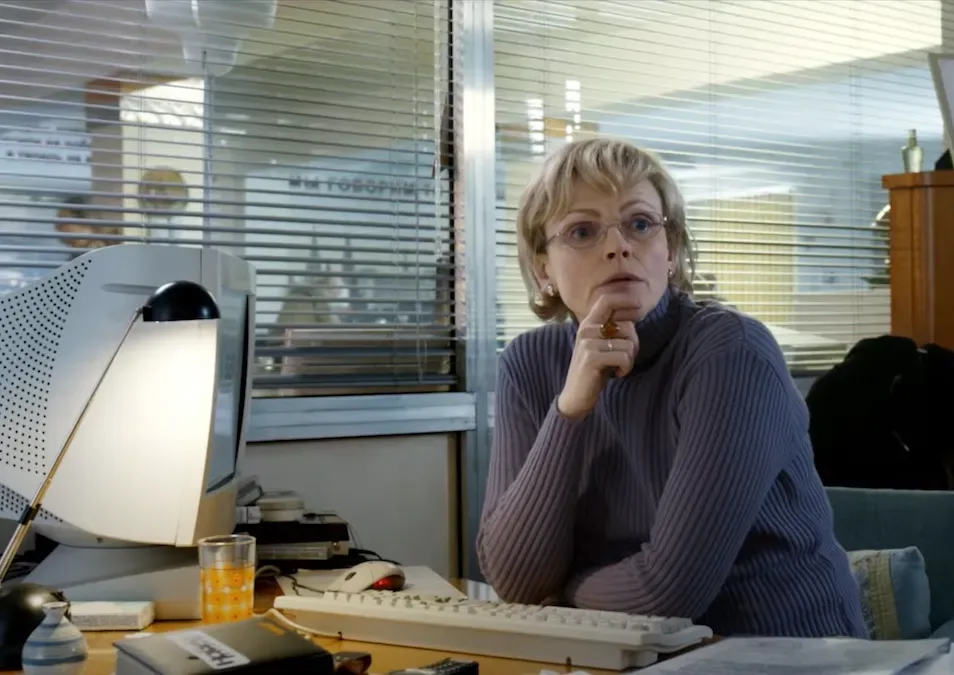
Cinematographer Ben Smithard applies a muted palette to the Chechen landscapes—ash‑gray skies and dust‑coated buildings—while scenes in Moscow adopt colder hues, with steel‑blue interiors and sterile corridors. This contrast registers on a subconscious level: war zones bleed warmth from the world, while official spaces feel clinical. Lighting follows suit. Candlelit interviews with civilians glow softly, suggesting fragile hope, but interrogation rooms wield harsh fluorescents that cast long shadows across actors’ faces.
Sound designer Oliver Davies layers ambient war noises—distant mortar fire, the clatter of boots across broken pavement—under dialogue without swallowing it. Pauses in conversation allow a single rifle crack to puncture the soundtrack, reminding us that violence can erupt at any moment. Composer Martin Phipps underscores tense scenes with low strings and subtle pulses rather than anthemic themes, giving the score a documentary‑style restraint that fits the material’s gravity.
Editor Yorgos Mavropsaridis balances cross‑cutting between Politkovskaya’s home life and her field assignments, maintaining narrative momentum. Just as a family dinner brims with domestic strain, the cut snaps to a hostage negotiation, reinforcing how Anna juggles personal risk and professional duty. In the theater and school sequences, rapid intercuts heighten suspense: hostage lines, tactical briefings, Anna’s footstep on cracked marble—all collide in a rhythmic crescendo.
Production design by Martyn Proud nails authenticity. The Novaya Gazeta newsroom feels lived‑in, with scatterings of telex printouts and half‑drunk coffee mugs. Chechen villages rise from piles of rubble with careful detail—torn posters, rusted carts, makeshift graves—rooting the story in a tangible reality. Each element combines to shape an immersive experience, where journalistic rigor meets cinematic craft.
Humanity Under Fire
Words of War stages a stark contest between free speech and state coercion. Reporting on atrocities in Chechnya brings immediate peril; every dispatch risks provocation from an apparatus that silences dissent through surveillance, smear campaigns and outright violence. Politkovskaya’s resolve underscores the price of exposing inconvenient facts in an environment intolerant of scrutiny.
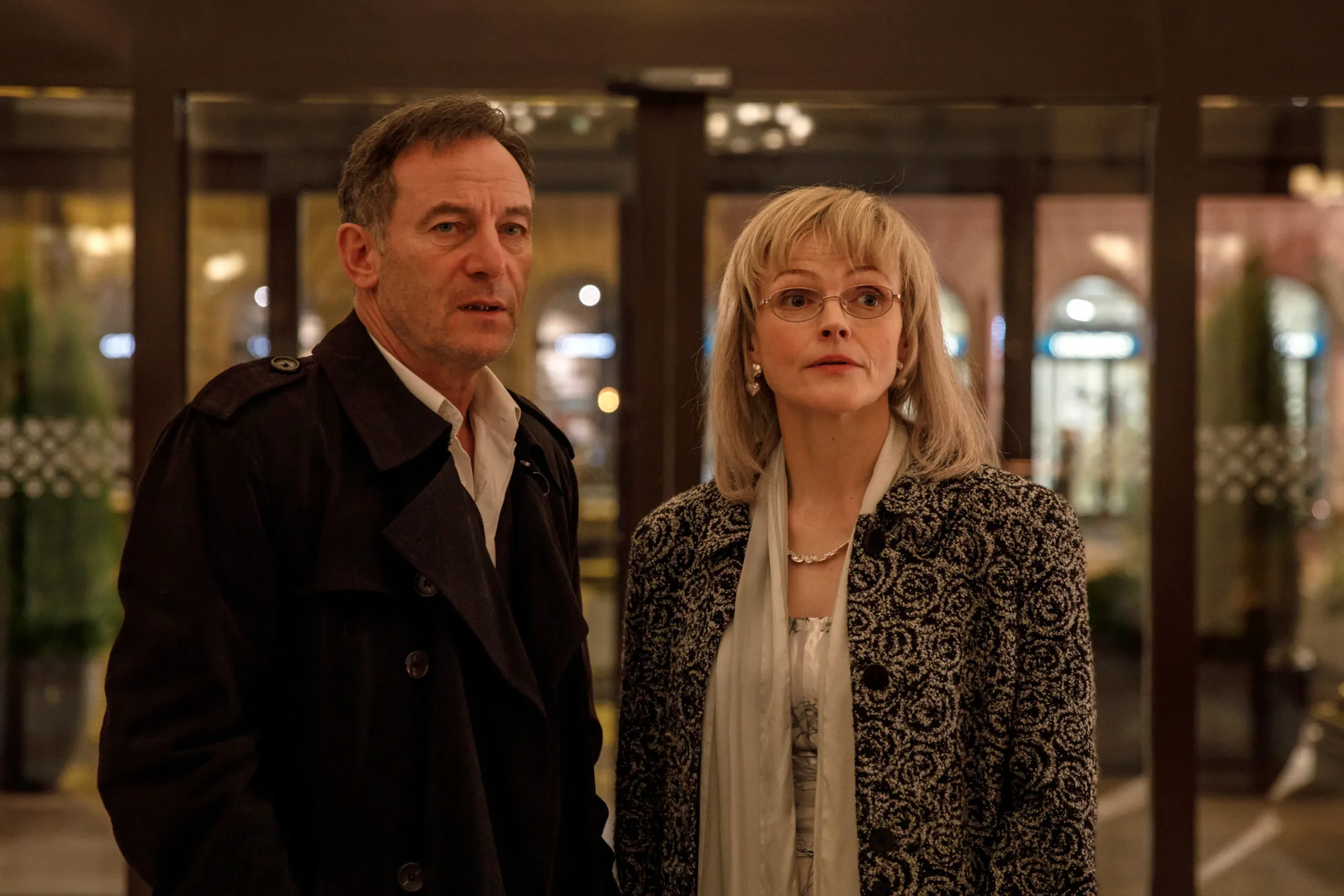
Empathy emerges as her most potent instrument. Scenes in cramped village homes hinge on small gestures—steady eye contact, patient silence—that coax out testimonies scarred by torture. That same trust becomes a double‑edged sword during hostage negotiations, when her reputation for listening makes her a reluctant intermediary between Chechen captors and Russian forces. The emotional stakes spike as compassion collides with political ends.
Moral courage threads through personal sacrifice. Domestic moments reveal her family’s mounting fear—a husband torn between pride and panic, children haunted by absent evenings. Threats to loved ones loom as constant shadows. The credits tribute to fallen reporters drives home a legacy of lives risked for unvarnished truth.
Finally, the film casts a broad warning about our era’s fractured information landscape. Conflicts once distant now ripple outward, carried on digital currents. As state actors deploy misinformation in cyberspace much like old‑school propaganda, Words of War serves as a timely call to defend the channels that let real voices be heard.
Full Credits
Director: James Strong
Writer: Eric Poppen
Producers: Miriam Segal, Mark Maxey, Kia Jam, Paul Brennan
Executive Producers: Sean Penn, Stefanie Scott, Rick Crumly, Eric Swalwell, Paul S. Mandell, Alexandra Bell, David J. Bell, Simon Fawcett, Jonathan Taylor, Brian Crist, Andrew Wing, Grant Miles Johnson, Brett W. Nemeroff, Ashley Akridge, William Akridge, John Pettit, Norman Merry, Peter Hampden
Cast: Maxine Peake, Jason Isaacs, Ciarán Hinds, Naomi Battrick, Harry Lawtey, Ellie Bamber, Ian Hart, Agni Scott, Ben Miles, Sophie Simnett, Alec Newman, Lorne MacFadyen, Lujza Richter, Moe Bar-El, Tomi May, Oliver Maltman, Elee Nova, Anton Valensi, Nathalie Armin
Director of Photography (Cinematographer): Mike Eley
Editor: David Charap
Composer: Snorri Hallgrímsson
The Review
Words of War
Words of War offers a gripping mix of rigorous journalism and intimate portraiture, anchored by Maxine Peake’s nuanced performance and James Strong’s immersive direction. Some family scenes feel underwritten, but the film’s stark portrayal of press under siege carries urgent resonance.
PROS
- Nuanced lead performance by Maxine Peake
- Immersive, documentary‑style cinematography
- Stark depiction of civilian suffering
- Precise editing in hostage sequences
- Resonant thematic relevance
CONS
- Domestic subplots veer into melodrama
- Occasional pacing lulls in home scenes
- Family dynamics feel underwritten
- Dialogue sometimes heavy‑handed