
























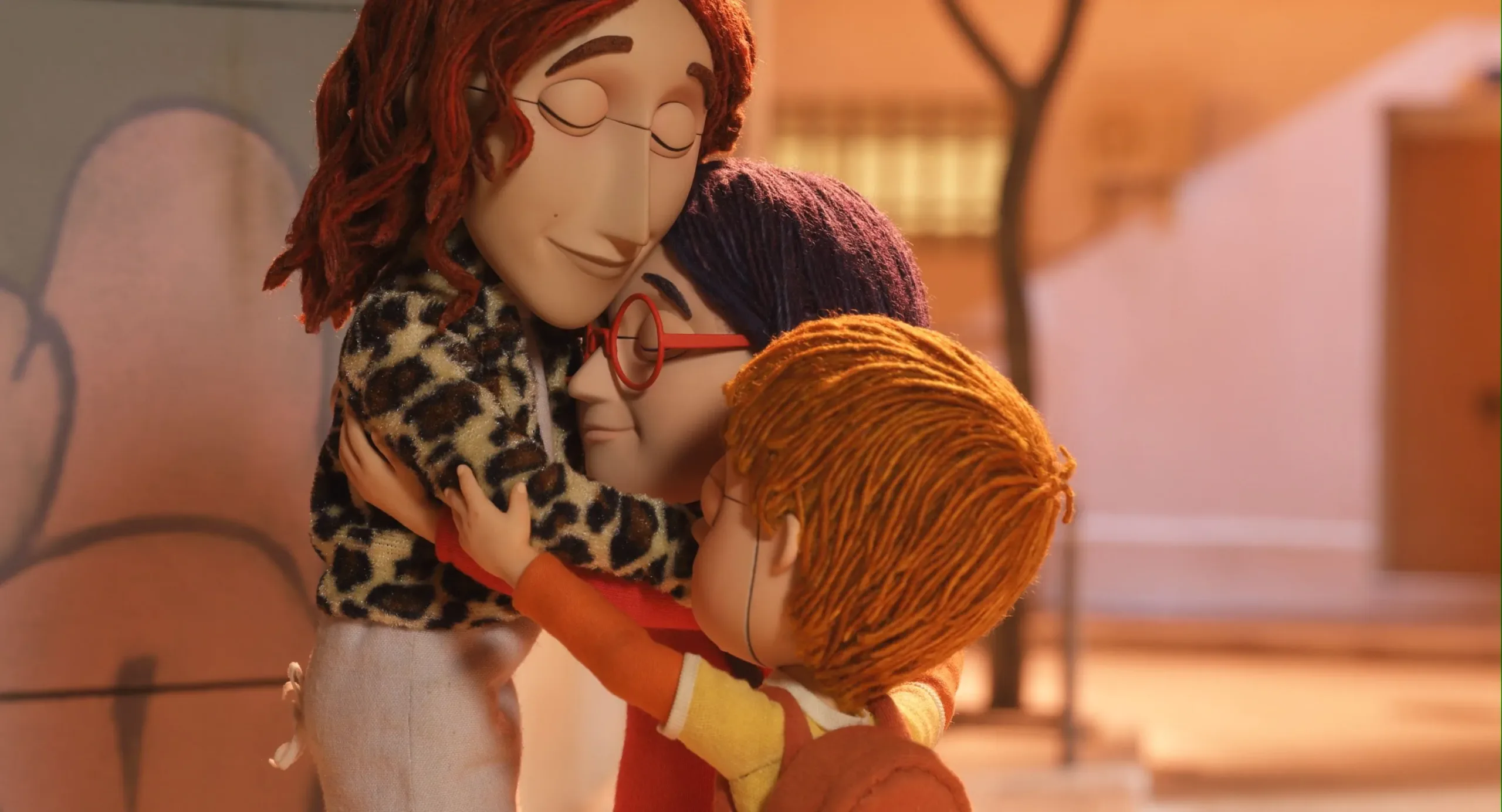

Meet twelve-year-old Olivia. She, her younger brother Tim, and their mother Ingrid, a performer between roles, are a tight-knit unit. Their world is upended when an eviction notice appears, forcing them from their home and into a squat in an unfamiliar, run-down Barcelona neighborhood.
To shield her brother from the terrifying uncertainty, Olivia devises a brilliant defense: she pretends their life is a film shoot and Tim is the lead actor. This premise is the foundation of Olivia And The Invisible Earthquake, a film that looks at the heavy realities of housing insecurity and parental depression through the inventive, resilient lens of childhood.
It walks a fine line, mixing the sincerity of their predicament with the imaginative spirit needed to survive it. The story immediately establishes a world where make-believe is not just a game, but a necessary shield against a difficult reality.
The Texture of Survival
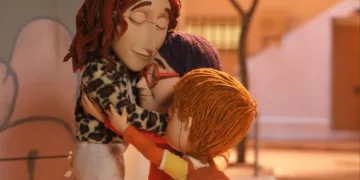
The film’s stop-motion animation gives its world a tangible, lived-in quality that glossy CGI often misses. In an age of digitally perfected surfaces, this handcrafted approach feels like a necessary return to form. You can almost feel the texture of the puppets; their wool hair has a pleasing frizz, and their clothing shows tiny, imperfect folds that signal real wear.
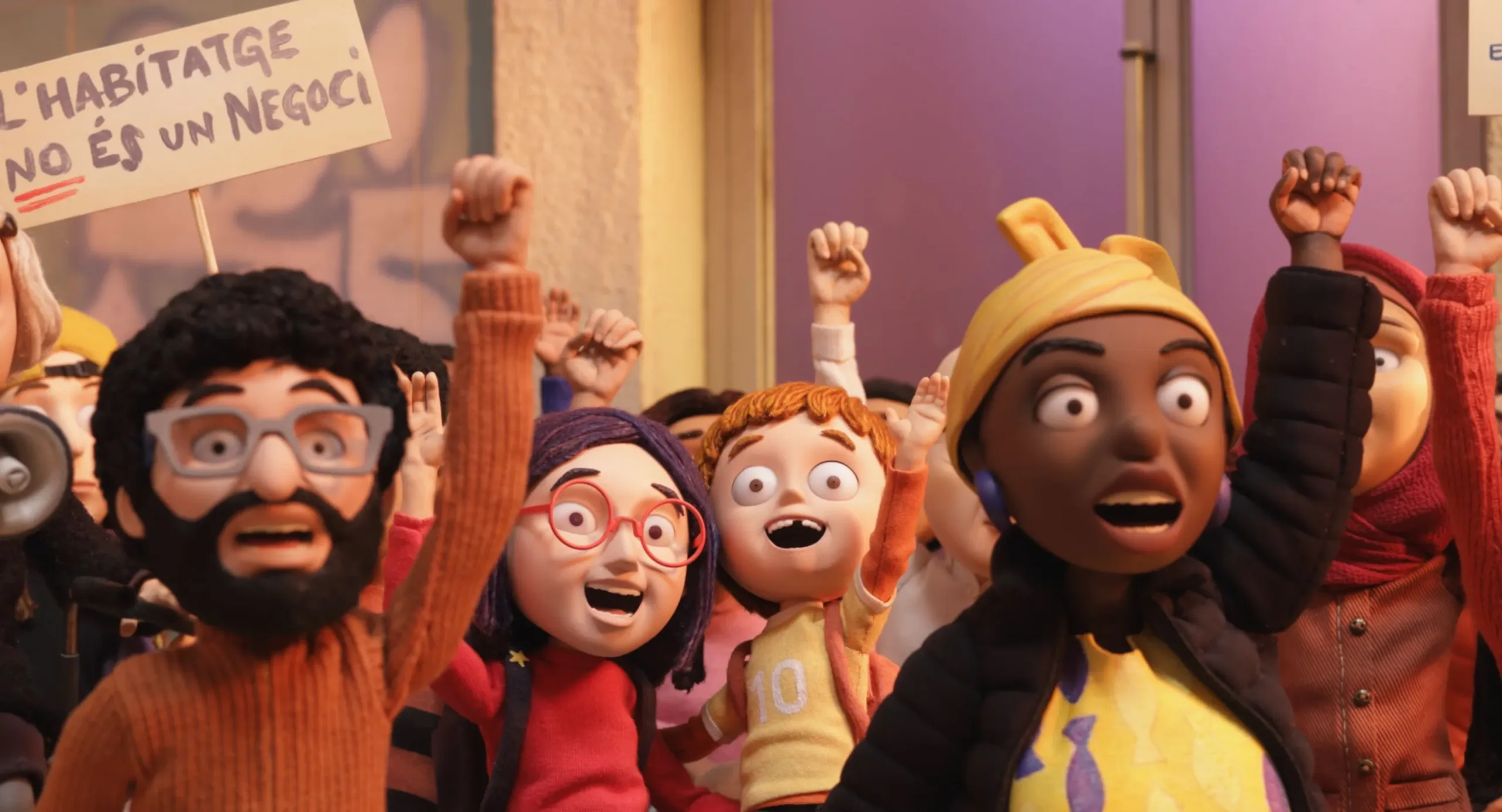
Director Irene Iborra Rizo’s characters are stylized without being sentimental, appearing like genuine city kids shaped by their environment. This stands in sharp contrast to the generic cuteness of many mainstream animated figures. These puppets have weight and presence. This authenticity extends to the setting itself.
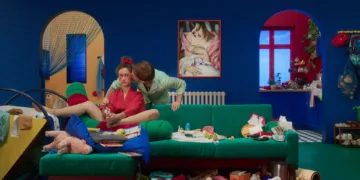
The meticulous recreation of Barcelona is stunning, capturing the energy of the streets through detailed, spray-painted graffiti, a warm and spiced color palette, and a careful rendering of Mediterranean light. The sound design completes the immersion. The new neighborhood is a cacophony of overlapping voices, distant music, rattling shutters, and children’s shouts.
It’s the sound of lives being lived in close quarters, which initially overwhelms the children but slowly becomes the vibrant pulse of their new home. Every artistic choice reinforces the story’s emotional foundation, making their struggle and eventual resilience feel profoundly real because the world itself feels so concrete.
When the Ground Gives Way
The film gives a name and a shape to childhood anxiety with its central metaphor: the “invisible earthquakes.” These are Olivia’s panic attacks, visualized on screen as the very ground cracking open beneath her feet, threatening to swallow her into an abyss. It’s a startlingly effective way to portray that feeling of losing control, of the world becoming unstable.
I remember feeling something similar as a kid during stressful times, that sense of the floor dropping out from under you. The film’s depiction is both fantastical and emotionally precise, using pure visual storytelling where dialogue would fail. This is a bold choice, trusting the audience to understand the emotion without having it explained.
This internal struggle is mirrored by her mother’s decline. As Ingrid slips into depression, her puppet’s colors literally seem to fade, her movements become sluggish, her energy vanishes, and her once-constant stories fall silent. The film shows two different responses to trauma: one explodes inward, the other implodes into stillness.
Adding to the pressure is a social worker, whose presence threatens to separate the family, pushing Olivia’s psychological stress to its limit. The film handles these topics with immense sensitivity, presenting the mental toll of their situation as a quiet but powerful force that avoids easy answers or quick fixes, reflecting a welcome maturity in family-oriented cinema.
The Community as a Safety Net
Initially, the family is isolated, adrift in a neighborhood that seems intimidating and harsh. Their squat is bare, their future uncertain. The film shows how this fear begins to recede not with a grand gesture, but a simple one: a neighbor arrives at their door with a large pot of chicken and beans.
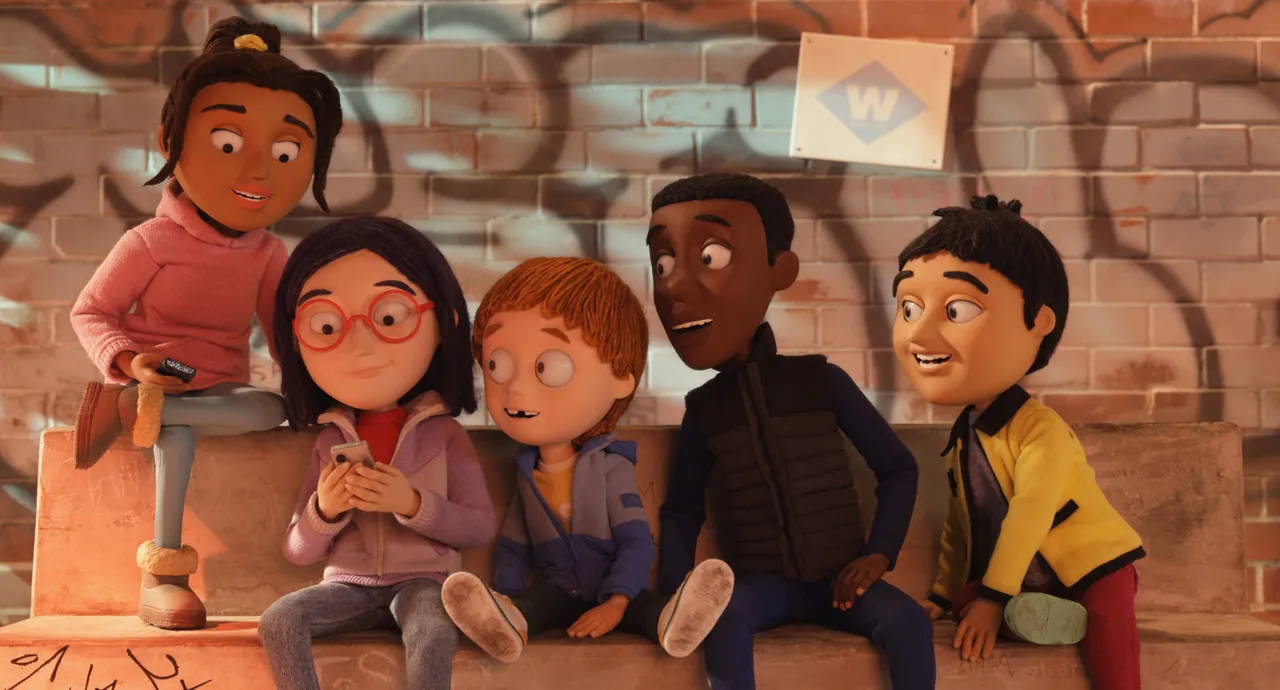
This act of kindness is the turning point, the first thread in a web of support that will grow around them. The film quietly builds a portrait of a community filled with people who have little, but share what they have. Olivia’s development is central to this theme. She begins the story trying to carry the weight of the world on her own, retreating inward during her “earthquakes.”
Through the film, she learns that asking for help is not a weakness. This is a significant departure from the typical hero’s tale. Her salvation isn’t a personal triumph; it’s a communal one. In our current cultural moment of July 2025, with so much emphasis on individualism, this message feels vital.
The film’s powerful final statement is that true strength comes from connection. It suggests that the answer to hardship is not found in individual grit alone, but in the collective embrace of a community ready to catch you when you fall.
Olivia and the Invisible Earthquake is an upcoming animated feature film that has already garnered recognition at international film festivals. The film’s Spanish release is scheduled for November 14, 2025, and it is expected to premiere in France on January 21, 2026.
Full Credits
Director: Irene Iborra
Writers: Irene Iborra, Eduard Solà
Producers: Anna Saura, Ibone Hormaechea
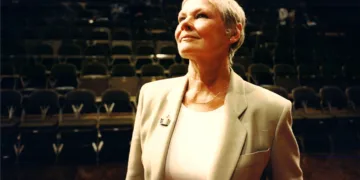
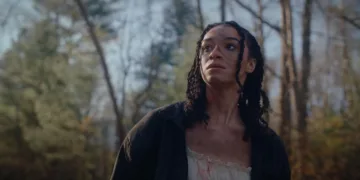
Cast: Emma Suárez, Celia Sol, Silvia Vilarrasa, Jordi Évole, Elvira Mínguez, Biel Pato, Sayfeddine Zhari
The Review
Olivia and the Invisible Earthquake
Olivia And The Invisible Earthquake is a beautifully handcrafted film that finds immense heart in hardship. Its stop-motion world is a marvel of texture and detail. The story bravely visualizes childhood anxiety while championing the power of community over individual struggle. It is a deeply moving, artistically rich piece of cinema that speaks with quiet power to our current times. This is a vital watch for anyone who believes animation can tell the most human of stories.
PROS
- Visually stunning stop-motion animation with a tangible, handcrafted quality.
- An innovative and sensitive portrayal of childhood anxiety and parental depression.
- A powerful and socially relevant message about community solidarity.
- Authentic character designs that feel grounded and real.
- Immersive world-building through its detailed depiction of Barcelona.
CONS
- Its mature themes and thoughtful, deliberate pacing might be challenging for very young viewers.