





















Netflix’s WWE: Unreal arrives with the fanfare of a championship entrance, promising an unprecedented look into the world’s biggest sports entertainment machine. The series follows the company during a seismic shift, tracking its debut on the streaming giant through its biggest event of the year, WrestleMania.
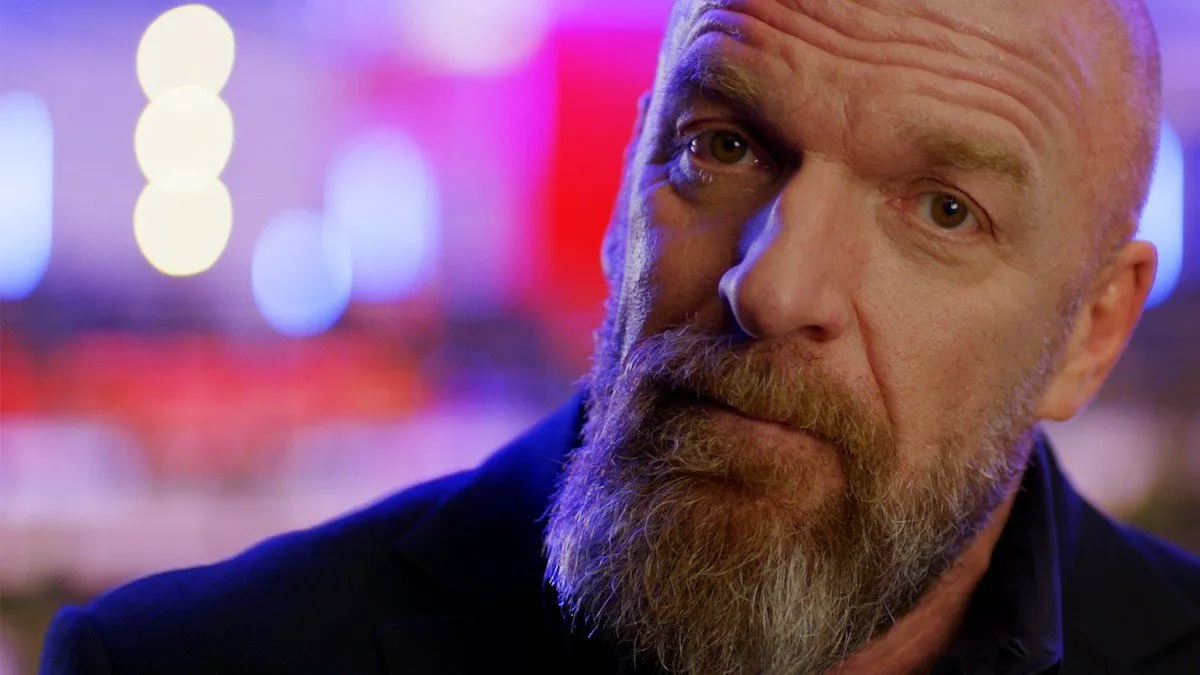
We are positioned as flies on the wall in rooms occupied by Chief Content Officer Triple H and top-tier talent like Cody Rhodes, CM Punk, and a reflective John Cena. The premise is tantalizing, posing a question as old as the carnival itself: what happens when the people who sell an illusion for a living decide to show you how the trick is done?
The show bills itself as a raw look at the creative process, a peek at the gears grinding beneath the spectacle. It invites us to see the blood, sweat, and decisions that forge heroes and villains inside the squared circle.
Working a Shoot, or Shooting a Work?
To understand WWE: Unreal, one must first understand “kayfabe,” the sacred pact of professional wrestling to present its staged world as authentic. This series claims to shatter that pact, but it feels more like it’s just adding another, shinier layer to it.
The show is sold as a look into the writers’ room, but what we get is less a warts-and-all documentary and more of a pristine corporate presentation. In an era where sports documentaries like Formula 1: Drive to Survive thrive by amplifying real-world friction and The Last Dance captivated millions by showcasing Michael Jordan’s relentless, often abrasive, pursuit of victory, WWE: Unreal feels like a relic.
It’s a work pretending to be a shoot. The creative process is depicted as a remarkably smooth, friction-free operation where every idea is golden and every performer is a dedicated professional. We see the final agreement on a storyline, but never the tense contract negotiation that made it possible, or the bitter argument between two writers with conflicting visions.
Famously thorny histories, like CM Punk’s acrimonious departure from and return to the company—a saga involving infamous press conferences, lawsuits, and legitimate animosity—are glossed over with the speed of a wrestler being hastily eliminated from a battle royal. Years of well-documented bad blood are reduced to a vague, easily resolved misunderstanding.
This sanitized approach is the show’s biggest misstep. It scrubs away the very element that makes backstage wrestling stories so fascinating: the messy, unpredictable collision of ego, ambition, and real-life animosity that has fueled fan engagement for decades. In the pre-internet age, this drama was the stuff of rumor, whispered about in newsletters and “dirt sheets.”
Today, fans are more informed than ever, yet the series treats them as if they are unaware of the very controversies that make the product compelling. By controlling the narrative so tightly, WWE: Unreal presents a version of reality that feels as constructed as a championship match. The direction reinforces this, with executives framed in heroic low-angle shots and a triumphant musical score that swells to divert attention the moment a difficult subject is broached. It’s a masterclass in corporate communication, but a failure in documentary filmmaking.
Body Slams and Beating Hearts
For all its carefully managed messaging, the series finds its soul when the corporate armor cracks. The show is at its best when it forgets to sell us something and instead focuses on the human beings executing the bodyslams. These moments of unvarnished vulnerability are what make the show worth watching, and the cinematography often shifts to reflect this, trading the slick, high-gloss presentation of the ring for a more handheld, intimate style backstage.
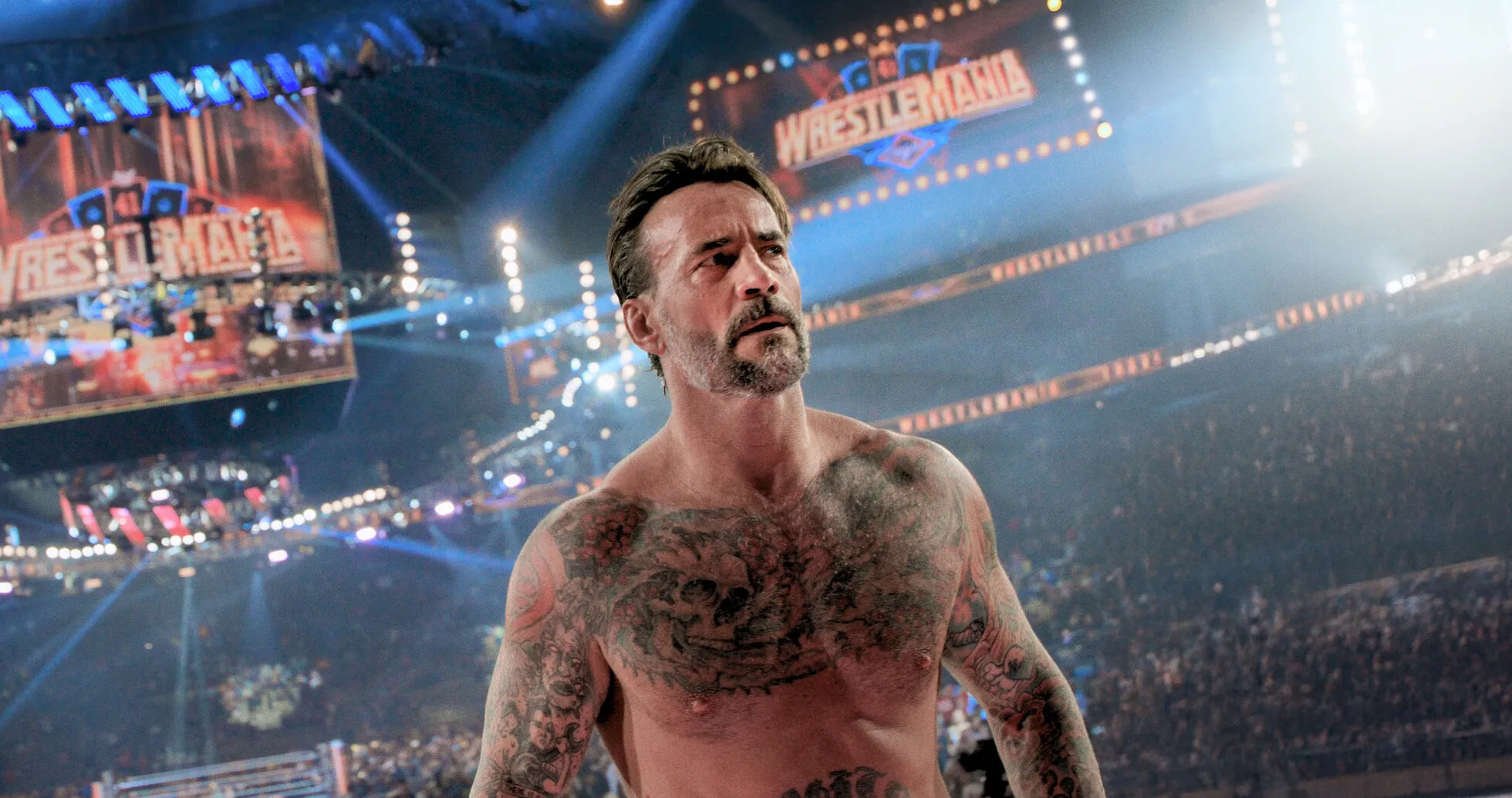
It’s here we see a hardened veteran like CM Punk, a man whose persona is built on defiant confidence, break down in the moments after his match. The camera lingers on his face, the roar of the crowd a distant echo, as the immense weight of a life spent chasing a dream finally settles on him. The tears are not for the fictional victory but for the real, documented sacrifices of a turbulent career.
Similarly, John Cena, a superstar for two decades, speaks with startling candor about his aging body and the fear of his final chapter. He carries himself with the careful deliberation of a man who knows any wrong move could be his last, a subtle performance that brilliantly blurs the line between the man and the character. His reflections on legacy feel less like a script and more like a confession.
The series also grants us time with Charlotte Flair, exploring her palpable crisis of confidence while returning from a career-threatening injury. The pressure of her famous lineage is a constant presence, and we see her grapple with a chilly fan reception, a potent reminder that the audience’s judgment is very real.
Beyond these dramatic beats, the show finds unexpected warmth in the mundane. The camera becomes an afterthought as a group of wrestlers, giants of the ring, sit on folding chairs comparing stories of in-ring mishaps with the giddiness of schoolchildren. These authentic interactions, filled with laughter and support, reveal the genuine bonds forged in a life lived on the road. It’s in these moments the show delivers on its promise, showing the real heart that beats beneath the larger-than-life characters.
All Dressed Up and Nowhere to Go
As a piece of television, WWE: Unreal is undeniably slick. The production values are top-notch, with dynamic editing and crisp cinematography that elevate it far above the standard WWE Home Video release. Yet for all its polish, the series feels like a missed opportunity of colossal proportions.
It teases a deep dive into John Cena’s monumental character turn, a decision that rocked the foundation of the company, but offers only surface-level details. We see the final plan, but where is the footage of the ten rejected pitches? Where are the arguments, the moment Cena himself may have pushed back, the raw process of creation? Instead, we get a PowerPoint-style graphic that neatly summarizes the outcome.
For a show predicated on explaining the ‘why’ of WWE storytelling, to completely ignore the single biggest question mark hanging over its flagship event, WrestleMania, is not just an omission; it’s a betrayal of its own premise. The baffling creative choices in the main event, involving celebrity guest stars and confusing finishes, are left completely unexamined.
This leads to the show’s profound identity crisis. It seems caught in a no-man’s-land, made for a phantom viewer who is both a total novice and a dedicated follower. The constant, slickly produced explainers on what a “steel cage match” is are an insult to the intelligence of any long-term fan, while a newcomer, lured in by the Netflix gloss, is given no compelling narrative reason to care about these rules in the first place.
This series exists as another piece of content in the WWE engine, designed not to illuminate but to feed the algorithm, a feature-length advertisement to keep you subscribed between weekly shows. It pulls back the curtain only to reveal another, more artfully decorated curtain, asking us to marvel at the construction of the puppet show while steadfastly refusing to introduce us to the puppeteers.
“WWE: Unreal” is a five-part Netflix documentary series that delves into the world of professional wrestling, exploring the behind-the-scenes machinations of WWE, including the writers’ room and the lives of the superstars outside the ring. It covers the period from WWE Raw’s debut on Netflix in January 2025 to WrestleMania 41. The series aims to attract new fans by showcasing the inner workings of the business. Narrated by Triple H, it features prominent figures like Cody Rhodes, John Cena, and Rhea Ripley. The show premiered on July 29, 2025, and all five episodes are available to stream on Netflix.
Full Credits
Director: Chris Weaver
Producers: Omaha Productions, NFL Films, Skydance Sports, WWE, Chris Park, Michael Hayes
Executive Producers: Peyton Manning, Jamie Horowitz, Ross Ketover, Keith Cossrow, Ken Rodgers, Jessica Boddy, Lee Fitting, Ben Houser, Marc Pomarico, with showrunner Erik Powers.
Cast: Triple H, Cody Rhodes, John Cena, Rhea Ripley, CM Punk, Jey Uso, Bianca Belair, Chelsea Green, Charlotte Flair, Xavier Woods
The Review
WWE: Unreal
WWE: Unreal is a visually polished but frustratingly shallow look into sports entertainment. While it shines in rare moments of genuine human vulnerability from its larger-than-life stars, it ultimately functions as a sanitized marketing tool. The series carefully avoids the real backstage drama and creative friction that fans crave, pulling back the curtain only to reveal another, more meticulously crafted one. It’s a beautiful, hollow spectacle that prioritizes brand protection over authentic storytelling.
PROS
- High production values and slick, modern cinematography.
- Provides genuinely moving moments of wrestler vulnerability and emotion.
- Captures candid, humanizing interactions between the talent backstage.
- Offers a compelling look at the physical and emotional toll of the profession.
CONS
- Functions more as a corporate marketing tool than a genuine documentary.
- Avoids addressing real-life controversies and backstage friction.
- Feels overly sanitized and curated, lacking dramatic tension.
- Confused target audience, over-explaining for fans and too niche for newcomers.