


























The terror in Death Relives begins on a dark road, not with a jump scare, but with the primal fear of seeing a loved one stolen away. As protagonist Adrián, you witness your mother’s abduction by a strange figure, a desperate chase leading you to a sprawling, oppressive mansion.
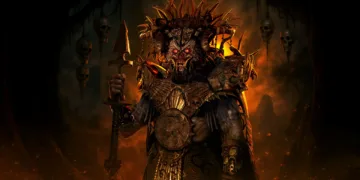
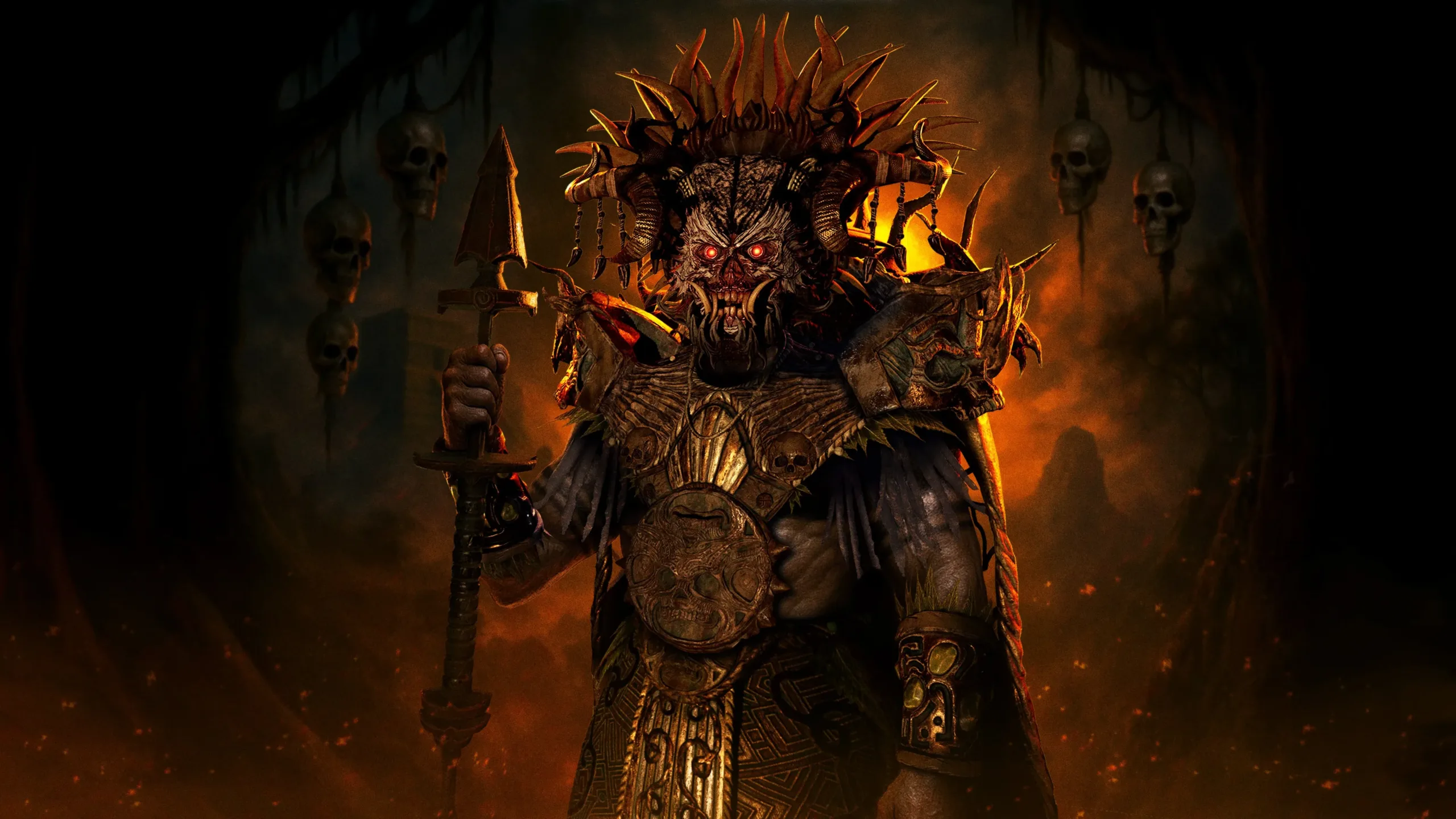
This is no ordinary estate. It is a profane temple dedicated to Xipe Totec, the Aztec “Flayed Lord,” a god of renewal and death who now hunts you through its halls. This is a first-person survival horror that channels the spirit of games like Amnesia: The Dark Descent, where you are prey, not a predator.
The focus is squarely on evasion and atmospheric dread. The game sets a chilling stage, steeping its modern horror framework in a thick layer of authentic, terrifying mythology. Your goal is simple, find your mother and survive. But in a place where history bleeds into reality, and a god walks the earth, survival is anything but simple.
A Divine Game of Cat and Mouse
The core of Death Relives is its tense relationship between the hunted and the hunter, a dynamic that owes a great deal to the established formula of hide-and-seek horror. It aims for the same feeling of profound helplessness found in titles like Outlast, where direct confrontation is a fool’s errand.
Your antagonist is not a mere monster; he is a god, an invincible being who is faster and stronger than you in every conceivable way. This immediately establishes a power dynamic that should, in theory, create sustained tension. The game reinforces this by removing genre staples like safe rooms, a key difference from the persistent stalkers in Alien: Isolation or the Resident Evil 2 remake.
Here, no place is truly secure. Xipe Totec is a constant, patrolling presence whose guttural sounds and heavy footsteps become a horrifying symphony of impending doom. Hearing those steps grow closer is a potent audio cue that forces you into the nearest closet or trunk, holding your breath and praying he moves on.
Also Read





When you cannot flee, the game provides a limited set of tools for a temporary reprieve. Your main source of information is the God Seed, a living plant fused to your wrist. It acts as a radar, a diegetic UI element showing your location, your objective, and the ominous marker for Xipe Totec.
Your defensive options are the Xizoltic, an ancient firearm with scarce electric ammunition, and an Obsidian Blade. A successful shot from the Xizoltic will stun the god, giving you a brief window to rush in and use the blade to banish him to Mictlan, the Aztec underworld. This sequence is frantic and risky, a desperate gamble when you are cornered.
However, this act of defiance is the game’s most interesting strategic component. The moment Xipe Totec is banished, the God Seed—which is mystically linked to him—begins to drain your health. You have traded immediate danger for a ticking clock. To recover this life, you must hunt down the ghostly priests that wander the mansion, kill them, and perform a blood ritual to heal the seed.
This reprieve is also finite because Xipe Totec will inevitably return, and when he does, he is stronger and more aggressive than before. This risk-reward system forces a fascinating choice: endure the constant threat of the hunt, or banish the god for a moment of peace at the cost of your life force and a much deadlier future encounter.
This clever design is unfortunately undermined by frustrating execution that transforms tension into tedium. Xipe Totec’s hearing is so sensitive that he can apparently detect you from halfway across the mansion, darting to your location the moment you make a slight noise or, maddeningly, right after you complete a puzzle. This turns long stretches of the game into a monotonous waiting game, forcing you to spend far too much time cowering in a hiding spot.
The design feels less like an intelligent predator and more like a scripted event, stripping the hunt of its organic feel. This is worsened by the erratic AI of the lesser enemies, the ghostly priests. They are described as being deaf, yet they can somehow detect you through walls and alert Xipe Totec, breaking the game’s own rules and leading to unfair deaths.
A Disconnected Call
Death Relives presents its story through two distinct, and warring, methods. The first is a traditional approach: a trail of collectibles, lore totems, and secret codes scattered throughout the mansion. These fragments build a world steeped in well-researched Aztec mythology, a clear point of passion for the developers who worked with Mexican cultural consultants and Nahuatl speakers to ensure authenticity.
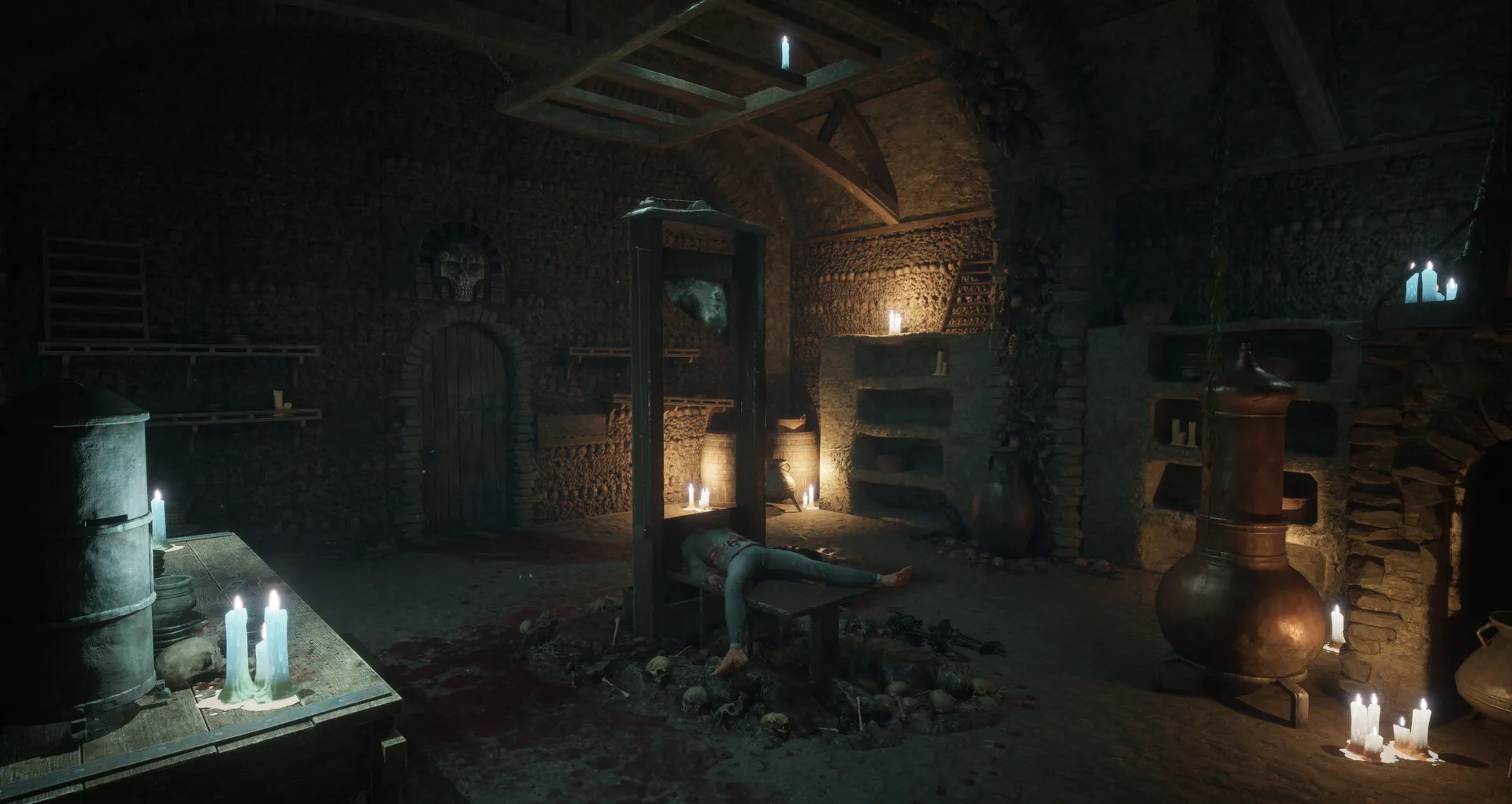
Yet, the narrative itself struggles to maintain momentum. The plot remains largely inert until its final act, leaving the majority of the game to feel like a series of disconnected horror vignettes rather than a cohesive story. The Aztec elements, while fascinating, often feel superficially “tacked on” to the mansion setting, as if two different games were stitched together.
The second narrative method is far more ambitious and deeply flawed: a companion app that turns your real-world smartphone into Adrián’s. After scanning a QR code, you gain access to his private digital life—a photo gallery, text message history, and social media feeds. This concept of transmedia storytelling, meant to blur the line between player and protagonist, is the game’s biggest swing and its most profound miss.
The only active conversation in the app is with Adrián’s father, Jeffry, a character powered by generative AI. You are meant to send him photos of QR codes found near puzzles for guidance. On paper, this is an innovative way to deliver hints. In practice, the AI is a failure. The conversations are shallow, the emotional beats are synthetic and unconvincing, and for some, the feature simply does not work, leaving you with a useless tool.
The use of AI extends beyond the chatbot, infecting the game’s art style and shattering its tone. Much of the imagery within the app, especially character photos, appears to be AI-generated. The results are grotesque and immersion-breaking, featuring people with mismatched limbs, distorted faces, and the uncanny, soulless look of an algorithmic approximation.
This is not just a visual problem; it is a philosophical one. A game attempting to tell a sincere, human story rooted in a rich culture resorts to a synthetic, hollow method of character portrayal. The app’s failings are compounded by a complete tonal dissonance.
The social media feeds contain juvenile parody names like “Malecraft” and “Abbassin’s Creative,” while text messages are poorly formatted and filled with excessive emojis. These low-effort gags clash horribly with the grim, terrifying atmosphere the rest of the game works so hard to build. The app is not just a gimmick; it is a critical flaw that actively detracts from the experience.
A Flawed Relic
Despite its significant issues, Death Relives possesses an artistic core that occasionally shines through the cracks. The audio design is arguably its most successful component, doing a tremendous amount of work to build and sustain a terrifying atmosphere. The soundscape of the mansion is a constant source of unease, from the ambient creaks and whispers to the sharp, distinct sound of stepping on broken glass.
The chase music is a standout, a panic-inducing mix of breathy rhythms and distorted bass that perfectly captures the feeling of a desperate flight. This audio excellence is matched by the presentation of Xipe Totec himself. His guttural sounds, brutal physical design, and grisly environmental impact—manifesting as blood-soaked altars and flayed skeletons—make him a genuinely frightening presence.
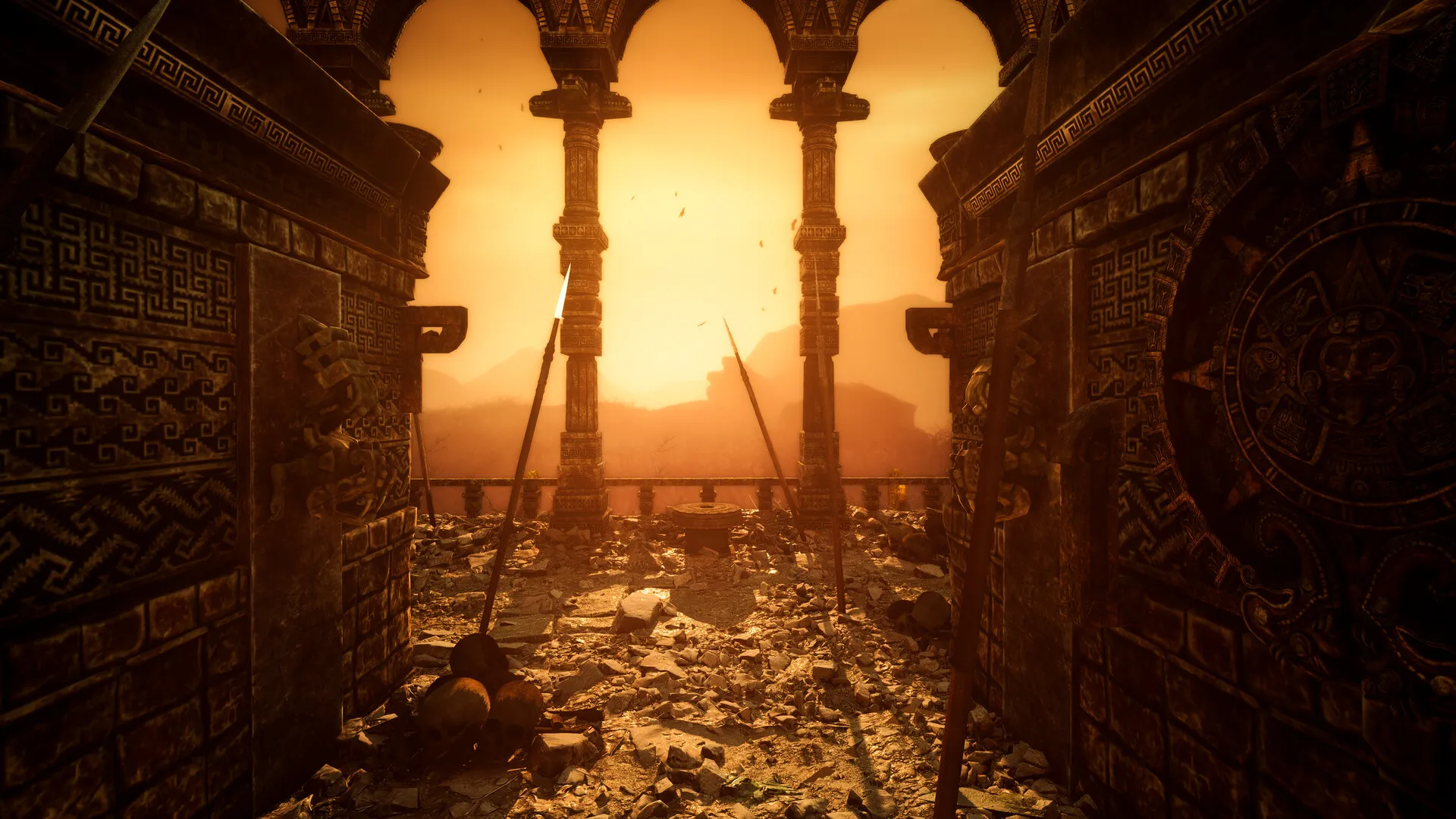
The decision to have him speak authentic Nahuatl, a result of dedicated cultural consultation, elevates him from a simple monster to a menacing, otherworldly entity. When the game’s lighting engine is not bugging out, it leverages Unreal Engine 5 to create moments of visual splendor, with gorgeous lighting that makes the horrific environments strangely beautiful.
This artistic ambition is in a constant, losing battle with a profound lack of technical polish. The game is plagued by a litany of performance issues that undermine its presentation at every turn. Players will experience distracting screen tearing, jarring graphical flickering, character models clipping through the environment, and severe object pop-in that breaks any sense of immersion.
Load times between rooms are long, disrupting the flow of gameplay. One of the most damning indictments of its technical state is the report of a game-breaking bug that left a player stuck in a spatial void, unable to progress.
This sloppiness extends to the character art and voice work. While Xipe Totec is impressively rendered, the human characters are not. They look gaunt, ghoulish, and unnatural, even in well-lit scenes. An early indicator of this lack of polish is an animation where the mother’s body fails to fit correctly in a car during a cutscene. The voice acting for the protagonist, Adrián, is similarly poor.
His delivery is stilted and oddly calm, even in moments of extreme terror, creating a disconnect that prevents the player from identifying with his plight. The interface itself is not immune, with conflicting button prompts adding another layer of frustration. Death Relives feels like a product torn between two identities: one a thoughtful, artistically potent, and culturally respectful horror concept, the other a buggy, unstable, and synthetically hollow execution that sabotages its own potential.
The Review
Death Relives
Death Relives is a fascinating failure. It presents a brilliant concept, leveraging authentic Aztec mythology to create a genuinely terrifying antagonist and a thick, dreadful atmosphere. However, its ambitious ideas are crushed under the weight of a clumsy execution. Frustrating stealth mechanics, rampant technical bugs, and a transmedia companion app that is more synthetic than immersive completely undermine its artistic vision. This is a game with a potent, beating heart, but it is trapped within a broken, glitch-ridden body. It stands as a cautionary tale of overreach.
PROS
- Genuinely terrifying antagonist design and presence.
- Superb sound design creates a deeply unsettling atmosphere.
- Authentic and respectful integration of Aztec mythology.
- The core risk-reward banishment mechanic is a clever idea.
CONS
- Numerous technical issues, including bugs, screen tearing, and pop-in.
- Stealth gameplay is tedious and frustrating.
- The AI-powered companion app is poorly implemented and immersion-breaking.
- Unpolished human character models and stilted voice acting.