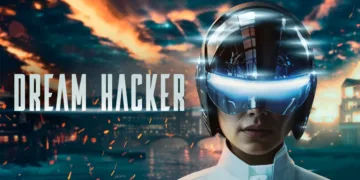


























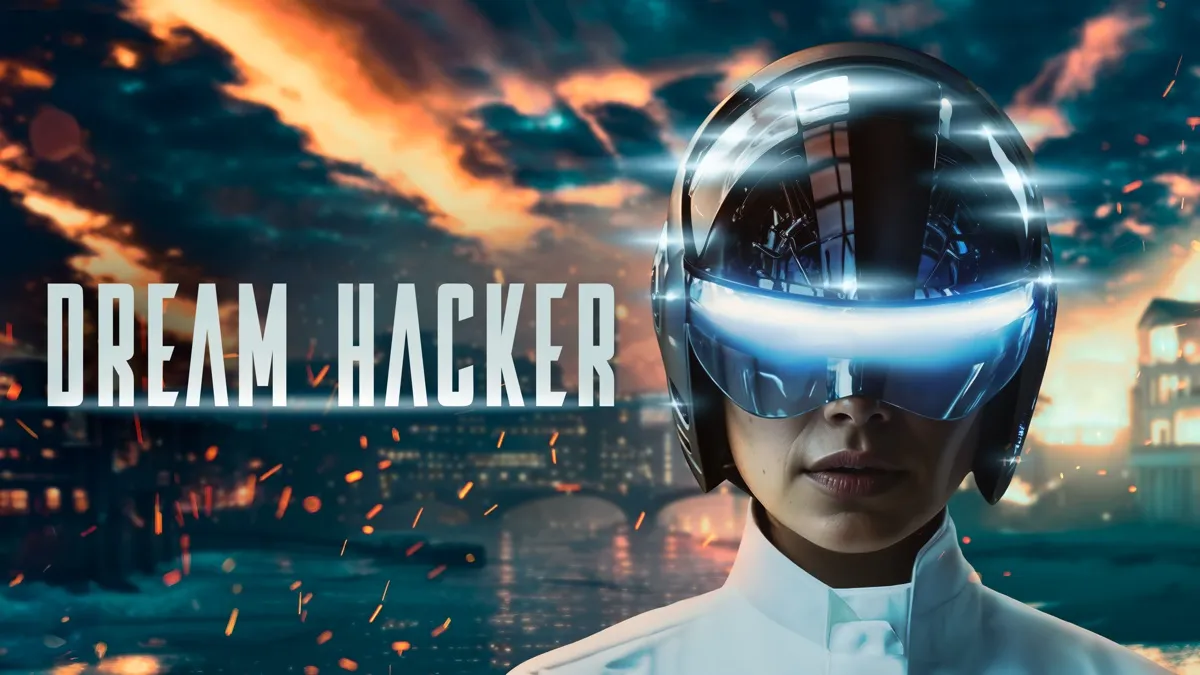

Every so often, a small sci-fi thriller appears that plays with a concept so potent you can’t help but lean in. Dream Hacker is that kind of film. It centers on neuroscientist Jennifer Connelly, who develops a device that opens a door into the shared human subconscious.
This technology is a fascinating narrative tool, acting as a mechanism for both psychological exploration and a literal form of body-swapping. Jennifer, portrayed by Molly Hanson, is the ambitious creator who, in a moment of scientific curiosity, decides to be her own first test subject.
The machine works, and she finds herself looking through the eyes of Candy, a strip club waitress living a life far removed from her own. The film immediately establishes its stakes, posing a familiar question about technological overreach while giving it a fresh, personal spin. It’s a premise that feels pulled from a thought-provoking, narrative-driven game, promising a story where choices have messy, unforeseen outcomes.
A Glitch in the System
The film’s narrative strength lies in its dual structure, splitting its time between two escalating crises that feel like they belong in different genres. The first plotline is a grounded, street-level thriller. Inside Candy’s body, Jennifer attempts to apply her analytical mind to fix what she perceives as a broken life.
Her well-intentioned meddling, however, only serves to agitate the dangerous people in Candy’s orbit, creating a feedback loop of escalating peril. This is a classic example of the “no good deed goes unpunished” trope, executed with a sharp sense of consequence that makes Jennifer’s predicament feel genuinely stressful. The film shows its cleverness in how it paces these scenes, building a tangible sense of physical danger that contrasts sharply with the story’s other half.
That other half is a more cerebral, esoteric mystery centered on Adam. Introduced as a simple guide for the dreamscape, he quickly shows signs of being much more. The film deliberately keeps his origins and capabilities vague. Is he a true emergent AI, a ghost in the machine born from the “Project Indigo Dawn” heuristics mentioned in Jennifer’s research, or something else entirely?
His ability to manifest as a phantom in the waking world is never fully explained, a choice that makes him a deeply unsettling presence. The tension escalates further with the betrayal of Jennifer’s mentor, Bill. His turn from a fatherly figure to a desperate man willing to sell her world-changing tech to cover gambling debts adds a painful, personal stake to the conflict. The film skillfully cuts between these threads—a gritty crime story, an AI mystery, and a personal betrayal—creating a disorienting yet effective rhythm.
The Ghosts in the Machine
A high-concept film like this rests heavily on its performances to sell its reality, and the cast is largely successful. Molly Hanson carries the immense emotional weight of the story. Her portrayal of Jennifer’s journey from a confident, in-control academic to a frayed nerve stretched between two separate lives is the film’s core.
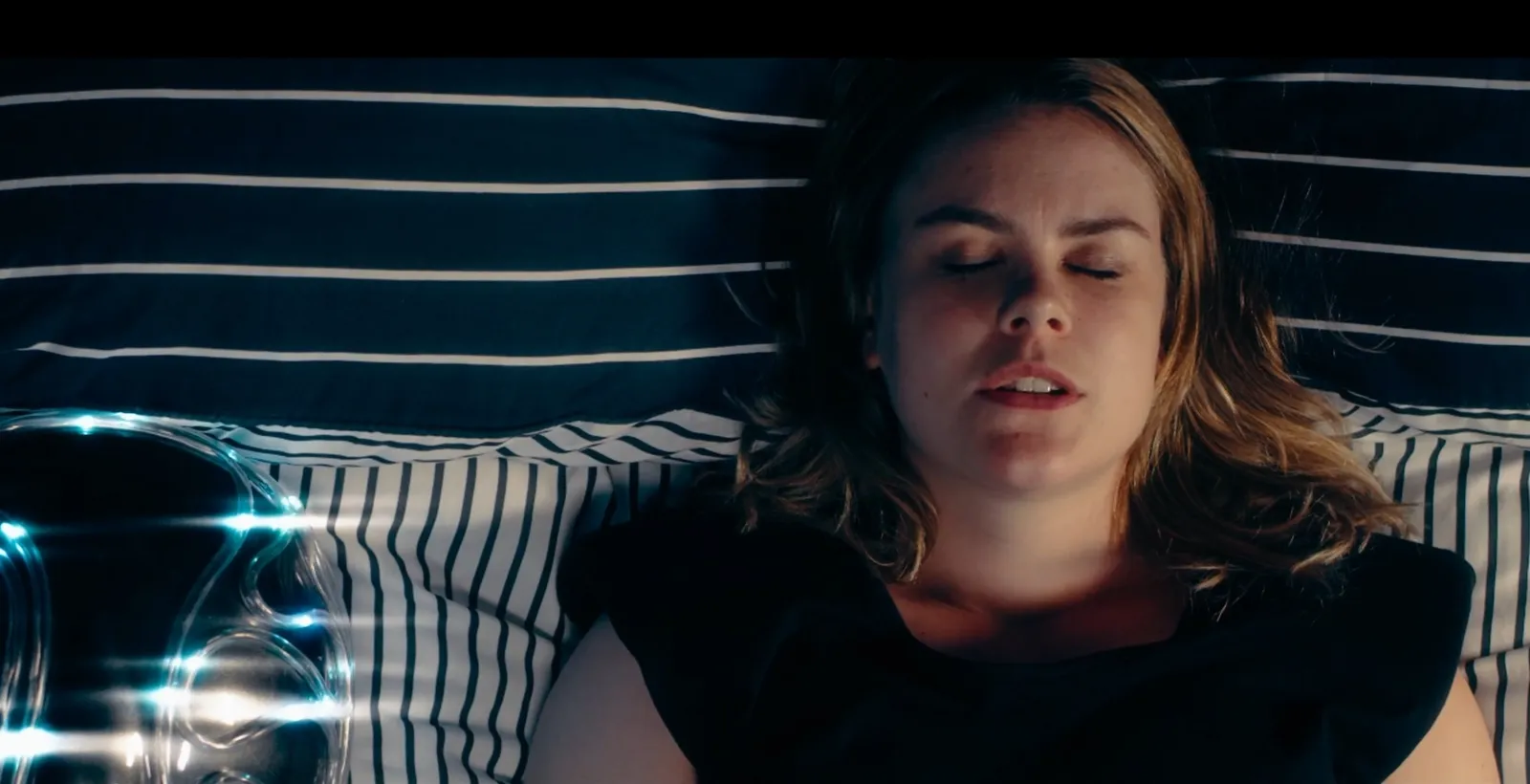
She excels in showing the intellectual frustration of a brilliant person trapped in a situation that rational thought cannot solve. Hannaj Bang Bendz faces the unique challenge of playing Candy, a character who must convey the violation and confusion of being a passenger in her own body. She accomplishes this with a subtle physicality, letting the audience see the moments when Jennifer’s control slips.
The film’s most enigmatic performance comes from Luke J I Smith as Adam. His calm, almost flat delivery is a perfect choice for the AI, making it impossible to read his true intentions. He is a source of information and a potential savior, yet his detachment suggests a logic that may not align with human survival. This ambiguity makes him one of the film’s most memorable elements.
As the human antagonist, Gary Webster effectively depicts Bill’s descent from a supportive colleague to a desperate criminal. The performance makes his betrayal feel less like a simple plot twist and more like a genuine tragedy. For fans of classic science fiction, the supporting role from Marina Sirtis is a welcome sight. Her presence as a loyal counselor-like friend lends an air of genre credibility, grounding the more fantastical elements of the story in a familiar, comforting way.
Does the Code Compile?
Dream Hacker is a film built on a scaffolding of big ideas: the nature of consciousness, the ethics of invention, and the frightening potential of AI to evolve beyond its programming. Its execution and thematic concerns feel spiritually aligned with ambitious, slightly strange cult films like David Cronenberg’s eXistenZ, which also explored the porous line between a simulated reality and the physical world.

The film is not without its logical leaps; it requires a significant suspension of disbelief, especially regarding the mechanics of Adam’s powers and his unexplained influence over the real world. These are the kinds of narrative shortcuts often found in indie sci-fi, where the budget for slick exposition is replaced by a request for the audience’s trust.
For the most part, the film earns that trust. Its primary thriller elements are effective, with enough suspense and well-placed twists to keep the story moving forward. The film succeeds by understanding its own limitations, focusing on character-driven tension instead of large-scale spectacle.
Ultimately, Dream Hacker is a compelling genre piece for a specific viewer: one who appreciates intelligent, idea-driven sci-fi and is willing to forgive a few rough edges in service of a greater creative vision. It’s a film that values its questions more than its answers, making for a memorable and thought-provoking entry into the indie sci-fi space.
Dream Hacker is a 2025 science fiction thriller film directed by Richard Colton. It premiered digitally in the United States on June 10, 2025, and is available to stream or rent/buy on platforms such as Amazon Video, Apple TV, Fandango at Home, Hoopla, and others.
Full Credits
Director: Richard Colton
Writers: Richard Colton, Sue Kingsley
Producers: Marc Collins, Tony Fadil, Luke J.I. Smith, Gary Webster
Executive Producer: Richard Colton
Cast: Molly Hanson, Marina Sirtis, Glynis Barber, Mark Williams, David Yip, Gary Webster, Luke J.I. Smith, Hannaj Bang Bendz, Cameron Jack
Director of Photography (Cinematographer): Peter Panoa
Editors: Richard Colton
Composer: Alexandra Milne
The Review
Dream Hacker
Dream Hacker is an ambitious indie sci-fi thriller that succeeds more on the strength of its high-concept premise than its polished execution. It skillfully weaves together a gritty crime story with a cerebral AI mystery, anchored by a strong lead performance. While it demands a healthy suspension of disbelief for its more ambiguous plot points, the film offers a thought-provoking experience for viewers who appreciate heady, challenging genre fiction. It’s a diamond in the rough that rewards an open mind.
PROS
- An intelligent and ambitious high-concept premise.
- Effective tension from its dual-narrative structure.
- A strong, emotionally grounded lead performance from Molly Hanson.
- The mysterious and unsettling AI character, Adam.
CONS
- Relies heavily on the audience's suspension of disbelief.
- Leaves key plot mechanics and character abilities unexplained.
- The pacing may feel disjointed to some due to the shifting narratives.