





















The horizon trembles until buildings appear to breathe, then deform, then nearly disappear. Jacqueline Zünd’s Heat begins with a vision of the Persian Gulf that feels less photographed than endured. Shapes blur through a violent shimmer. The sound does not accompany the image so much as press against it: metallic, swollen, almost insect-like, a roar trapped inside the skull. The film’s first argument is physical. Before anyone explains the danger of temperatures climbing beyond 50°C, the body understands.
Zünd has already imagined a sun-damaged future in her fiction film Don’t Let the Sun, but the terror of Heat comes from the absence of speculation. This is no warning from a distant century. The documentary looks at Dubai, Sharjah, Kuwait, and the wider Gulf as places where modern life has entered a pact with artificial cold. The pact holds, for now. A power grid hums, malls glow, ice bars sparkle, delivery apps function, and people move from sealed room to sealed vehicle with ritual precision. Outside, the sun waits.
Cities Built Against the Sky
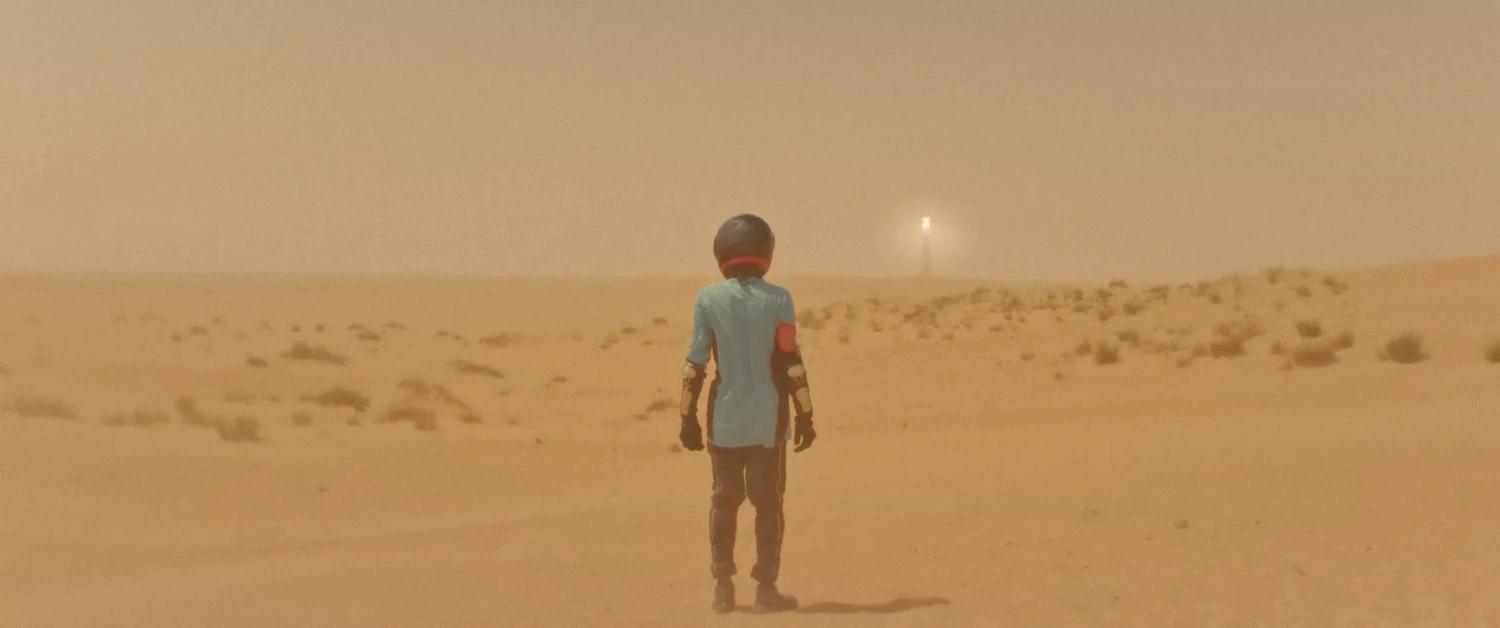
Cinematographer Nikolai von Graevenitz films the Gulf with a cruel, patient eye. His widescreen compositions make towers and highways resemble a failed colony on another planet, all glass ambition and sand-blasted vacancy. The dominant colors are yellow, brown, gold, and the sickly tint of dust caught in light. During the day, the exterior world seems corroded. At night, sodium lamps turn the streets into a fever dream.
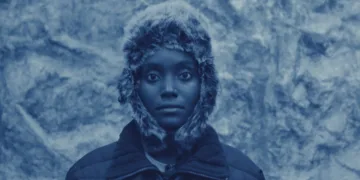
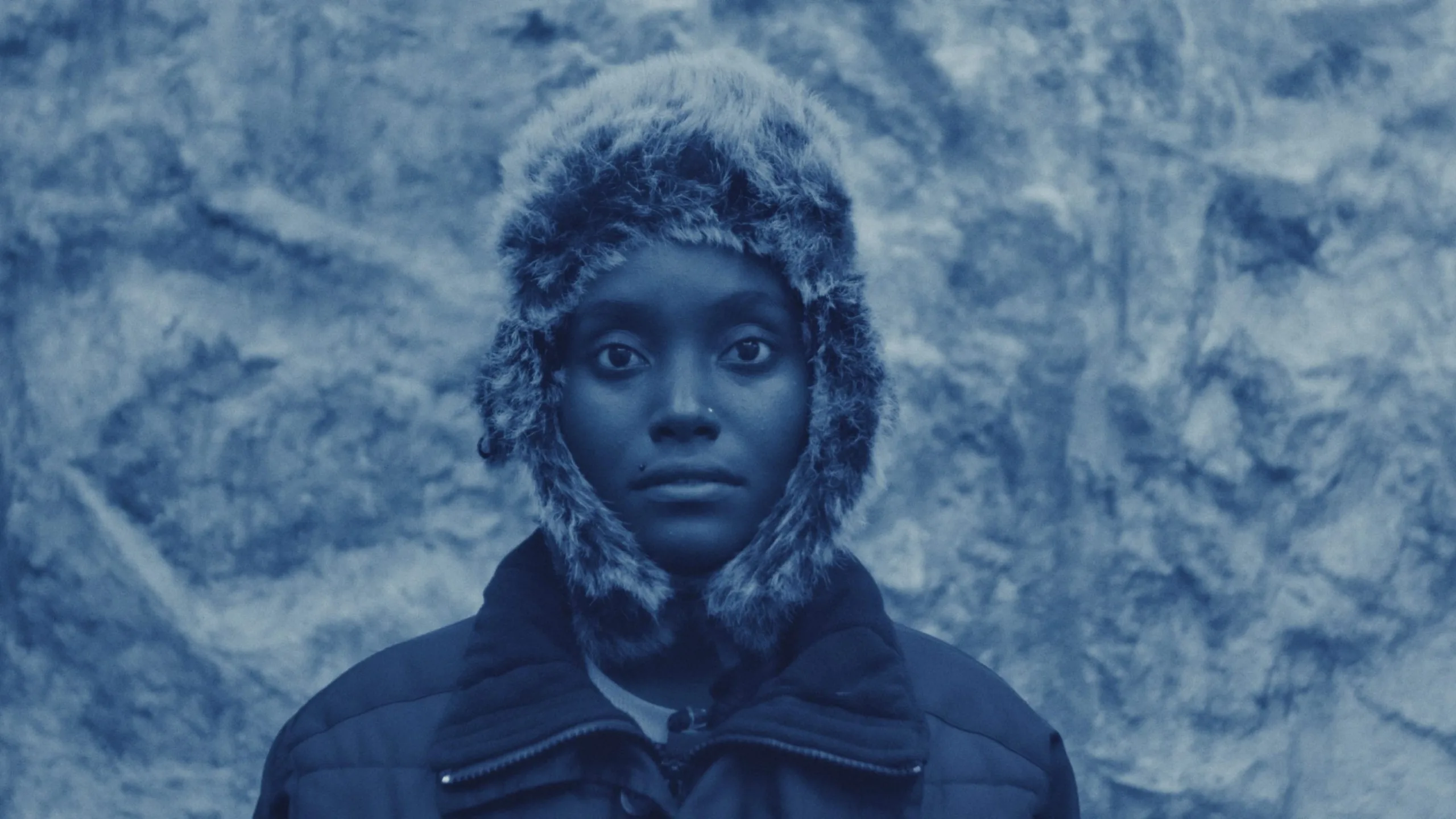
Zünd finds her sharpest visual irony indoors. Blue floods the ice bar where Sophy, a Kenyan migrant worker, serves hot drinks to customers wrapped in novelty cold. Outside, the city burns. Inside, she works at -6°C in gloves and winter clothing, then returns to heat so severe that her body is punished again by the reversal. The image would be absurd if it were not so exact: luxury here has become the right to choose which climate enters your skin.
The film keeps returning to spaces that sell imitation nature. A sign invites people to “Step Inside the Outdoors,” a phrase so grotesque it barely needs commentary. Running tracks loop through climate-controlled complexes. Malls become civic life with a thermostat. The real street, the real harbor, the real roadside lose their function as shared places. Heat does not merely raise temperature. It edits the city.
Also Read






The Unequal Weather of the Body
The people most exposed in Heat are rarely the people who built the fantasy of permanent comfort. Sophy speaks to her young son in Kenya through a screen, and those calls give her endurance a private shape. She is not framed as a saint of sacrifice. She is tired, practical, affectionate, trapped by the arithmetic of wages and distance. Her body crosses impossible temperatures because a child elsewhere may get a better life.
Francis, a Ugandan delivery rider, gives the film one of its most frightening testimonies. Inside his helmet, he says, his brain feels cooked. The helmet hides his face for much of the film, turning him into a moving reflection of the system that consumes him: visible as service, obscured as person. When he waits outside restaurants because drivers are not allowed to stand in air conditioning, the cruelty is almost casual. Someone inside is preparing food for someone else inside. Francis remains at the threshold, holding the city’s convenience on his back.
A detail about a colleague who died after heat stroke and a crash on his first day darkens every later image of a motorbike crossing empty roads. The app economy likes to speak in frictionless terms. Zünd restores the friction: asphalt, sweat, helmet, waiting, refusal, dizziness. The order arrives because someone has risked becoming part of the weather.
Essa Ramadan, the Kuwaiti meteorologist, speaks from another position, but his alarm belongs to the same film. He warns that a parked car can reach 70 or 80°C. He offers advice, forecasts danger, repeats that people do not listen. His most disturbing question is simple: what happens if the electricity cuts out? The whole region, in Zünd’s framing, seems to pause around that sentence. Towers, villas, malls, ice machines, pools, delivery networks, private rooms chilled to an artificial spring. All of it depends on the invisible mercy of power.
The Cats at the Harbor
Carina, a realtor in Sharjah, brings the film its oddest grace. After dark, she loads food and blocks of ice into her car and drives to feed stray cats near the harbor. The sight of the animals gathering around melting ice is almost unbearable in its smallness. There is no grand solution here, no heroic posture. Just cooling vapor, a little water, a few living bodies granted another night.
Her thread might seem sideways at first, but it gives Heat a vital moral texture. The film is full of structures that refuse care, then suddenly here is care without theory, care that looks faintly ridiculous, care with wet fur and melting cubes. Carina’s grief for the cats mirrors the migrant stories without flattening them into the same condition. The animals are not symbols in a clean equation. They are creatures pressed against the same lethal air.
Zünd’s sound design deepens that pressure. City noise often arrives muffled, as if heard through heat-thick glass. The sun is given a kind of voice, metallic and persistent, less music than menace. Voiceovers are spare. Testimony appears in fragments tied to action: walking to work, riding through traffic, rubbing cold hands after a freezer shift, placing ice between rocks.
The film weakens slightly when it moves closer to the protagonists’ private interiors near the end. That human proximity has tenderness, but the earlier distance is harsher, stranger, and cleaner. The first half understands that alienation can be a method. People reduced to silhouettes in a landscape of engineered cold and natural violence say something words cannot improve.
Heat becomes visible here as class, sound, architecture, labor, and animal thirst. The sun is no longer background. It is governance. It decides who waits outside, who orders from inside, who leaves the country for summer, who risks death on a motorbike, who places ice for cats after midnight, and who can still pretend this is weather rather than fate.
The Swiss environmental documentary Heat celebrated its world premiere in the International Feature Film Competition at the Visions du Réel film festival on April 20, 2026. Audiences tracking its festival trajectory can view the film as it travels through international documentary circuits and specialized screenings curated by its world sales agent, Taskovski Films. Serving as a real-world companion piece to the director’s 2025 narrative feature Don’t Let the Sun, this striking sensory exploration travels to the Persian Gulf to expose a capitalistic climate nightmare where temperatures surpass 50 degrees Celsius. The non-fiction narrative weaves together a collective mosaic of everyday individuals, detailing how extreme heat splits society down socioeconomic lines by trapping vulnerable migrant workers outdoors while the wealthy escape into heavily air-conditioned micro-climates.
Full Credits
Title: Heat
Distributor: Taskovski Films, Lomotion AG
Release date: April 20, 2026 (Visions du Réel)
Running time: 86 minutes
Director: Jacqueline Zünd
Writers: Jacqueline Zünd
Producers and Executive Producers: Louis Mataré, Magdalena Welter, Jacqueline Zünd
Cast: Sophy Njeri Jagnath, Essa Ramadan, Carina Bouali, Francis N., Kane Rodrigues, Hagop Moumojian, Masaki Hatsui
Director of Photography (Cinematographer): Nikolai von Graevenitz
Editors: Gion-Reto Killias
Composer: Marcel Vaid
The Review
Heat
Heat makes climate collapse feel intimate, bodily, and brutally uneven. Jacqueline Zünd’s images shimmer with the terror of a world where air conditioning has become a class privilege, and her strongest passages turn labor, architecture, sound, and animal thirst into one shared wound. The later intimacy softens some of its colder formal power, but the film’s vision remains severe: the sun is no longer weather. It is authority.
PROS
- Sensorial visual force
- Haunting Gulf cityscapes
- Strong migrant worker testimonies
- Striking sound design
- Tender stray-cat thread
CONS
- Later intimacy softens the alien mood
- Some subjects need clearer framing
- Political argument stays mostly implicit