
























![Kingdom Hearts Collection [I-III] Review](https://gazettely.com/wp-content/uploads/2026/10/Kingdom-Hearts-Collection-I-III-1-360x180.webp "Kingdom Hearts Collection [I-III] Review: KHII Holds Steady as Newer Entries Fluctuate 37")




A wheelchair ramp can be a mercy or a social indictment, depending on who is allowed to use it without being watched. Mari Sanders’ Dutch drama Stand Up understands disability as a lived condition shaped by flesh, architecture, sex, friendship, and the exhausting theatre of other people’s reactions. Its protagonist, Vera, played by Lucia Zemene, is 23, restless, funny, and still forming the loose outline of an adult self when a truck hits her after a night out in Rotterdam. She wakes in hospital with her left leg amputated above the knee.
The accident is filmed as rupture, yet the film’s sharper subject arrives afterward. Vera’s body becomes public property. Her parents monitor her rest. Her friends perform concern with the awkward solemnity of people who would like grief to come with instructions. Strangers look too long or look away too fast. The world does not need to become openly hostile to become humiliating. It only needs to keep asking Vera to absorb its discomfort.
Sanders, who lives with disability himself, refuses the standard ritual of uplift. The casting of Zemene, a real-life amputee, gives the film a physical and emotional accuracy that cannot be faked by careful blocking. Vera is never softened into moral usefulness. She is irritable in the hospital, cutting with her parents, reckless with her own frustration, and alive in ways that polite dramas about disability often deny their leads.
Pain Without Performance
The film’s most persuasive scenes are practical before they are symbolic. Vera trying to use the bathroom after the amputation carries a force that no speech about trauma could match. The action is ordinary, private, humiliating only because the body has suddenly made it difficult. Sanders holds on that difficulty long enough for the scene to register as labor, not spectacle.
That same directness shapes Vera’s relationship with her altered leg. Phantom pain, scarring, the uncertainty of surgery, and the possibility of a prosthetic are treated as part of an unstable daily grammar. Walking again is present as a desire, not the only acceptable proof of healing. The film is alert to the cruelty hidden inside that familiar screen arc, where a disabled character’s worth is measured by how convincingly the story can return them to a non-disabled ideal.
Vera’s anger also has a sexual charge, which gives the film some of its cleanest honesty. Her blunt complaint about being unable to walk, drive, or orgasm is funny because it is exact. It is also politically useful in the least slogan-like sense. Disabled bodies are so often granted dignity on screen at the cost of desire. Stand Up lets Vera miss sex, cycling, dancing, flirting, and the casual confidence of moving through a city without planning every threshold in advance.
Zemene plays these losses without asking for reverence. Around her parents, her silence tightens into resistance. In the rehabilitation center, her face opens when she encounters people who do not treat anger as a symptom to be managed. Her performance understands that self-acceptance is rarely serene. Sometimes it looks like swearing at a physiotherapist.
Community Without Sanctity
Xander, played with serrated charm by Daan Buringa, enters as Vera’s most useful disturbance. He is a wheelchair user and aspiring stand-up comedian, which gives the title its cleanest double edge. He is also the film’s main defense against therapeutic nonsense. When Vera asks if her accident happened for a reason, his answer cuts through the room: the reason is that a truck crashed into her.
That line could have become a manifesto. Sanders lets it stay a joke with teeth. Xander rejects pity, yet he is equally suspicious of glossy empowerment language that demands disabled people convert every wound into wisdom. When one of Vera’s friends claims she does not see the wheelchair, only the person, Xander’s correction lands with deserved impatience. Looking away from disability is not respect. It is another form of control.
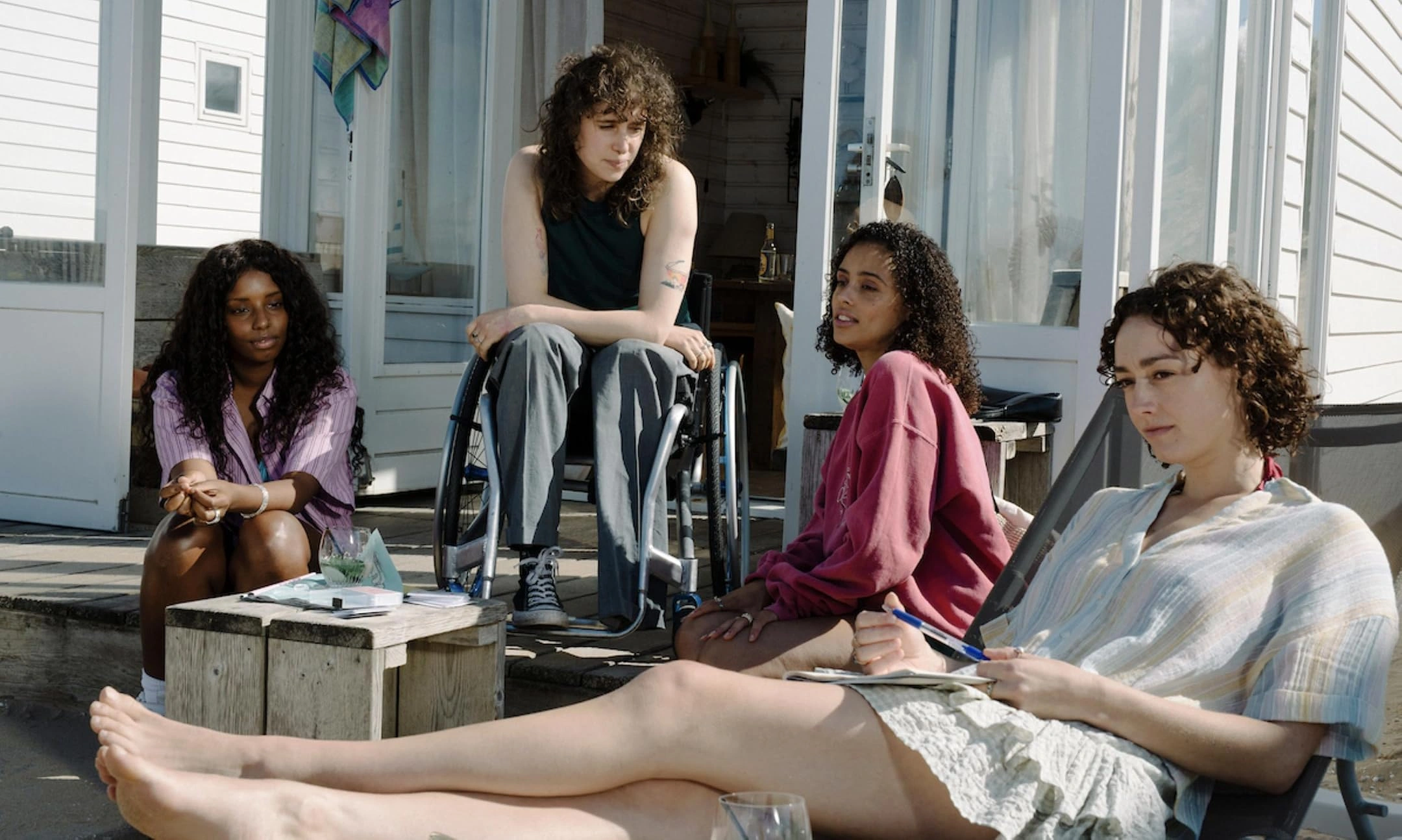
The rehabilitation group gives the film its liveliest social space. The cinema outing, where disabled patrons cheerfully disobey rules designed to keep them neatly positioned, becomes a small act of comic rebellion. The reference to Tod Browning’s Freaks, with its “one of us” communal chant, cuts sharply through Vera’s discomfort. She wants the warmth of belonging, yet belonging asks her to accept a version of herself she is still resisting.
The romance between Vera and Xander works because it is never cleaned up into salvation. Their bond has flirtation, tenderness, sexual awkwardness, and mutual irritation. Xander gives Vera access to a language she needs, but the film does not mistake him for an answer. He is ahead of her in some ways, trapped in his own pose in others. Their connection is strongest when it allows both of them to be difficult.
The Shape of Recovery
Sanders directs with a plainness that can look modest until its choices begin to accumulate. The opening club sequence, shot with handheld sway and drunken looseness, gives Vera’s pre-accident freedom a bodily rhythm. After the crash, the camera no longer treats movement as casual. Doorways, beds, bathrooms, cars, and public interiors become systems Vera must negotiate with effort.
Sal Kroonenberg’s hospital imagery is especially pointed in the scene where Vera watches her parents leave. The close-up on her face holds her emotional pressure in place, then the wider view of her parents walking away turns separation into composition. They are close enough to love her, too far away to understand her.
Yorgos Mavropsaridis’ editing gives the film a brisk surface without pretending recovery is swift. Time bends strangely after Vera’s accident. A life can change in one instant, then stall inside repetitive tasks, medical appointments, and social encounters that reopen the wound. Mink Steekelenburg’s restrained score respects that rhythm, staying beneath scenes instead of instructing the audience when to ache.
The film’s cultural intelligence rests in its refusal to make Vera exemplary. She does not become a saint, activist, warning, or inspirational object. She wants privacy, work, pleasure, mobility, friendship, and room to be unpleasant without having that unpleasantness explained away by trauma. Stand Up gives her that room, which is rarer than it should be.
The Dutch coming-of-age drama Stand Up celebrated its world premiere at the Tribeca Film Festival on June 6, 2026. Directed and written by Mari Sanders, the film follows Vera, a vibrant 23-year-old woman whose life is suddenly upended by a severe traffic accident that leaves her relying on a wheelchair. While struggling to adjust to her lost autonomy and her parents’ overprotective behavior, she builds a deep bond with Xander, a lifelong wheelchair user who opens her eyes to a new outlook on love, friendship, and self-acceptance. Film enthusiasts tracking the festival circuit can catch screenings through international sales agent Loco Films, with a wider European television broadcast planned later this year.
Full Credits
Title: Stand Up
Distributor: Gusto Entertainment, Loco Films, BNNVARA
Release date: June 6, 2026 (Tribeca Film Festival)
Running time: 95 minutes
Director: Mari Sanders
Writers: Mari Sanders
Producers and Executive Producers: Ineke Kanters, Lisette Kelder, Remy Mulder, Amanda Livanou, Katerina Tzourou, Robert Kievit
Cast: Lucia Zemene, Daan Buringa, Manouk Pluis, Kendrick Etmon, Hana Hussein, Guy Clemens, Tamar van den Dop, Bas Keijzer
Director of Photography (Cinematographer): Sal Kroonenberg
Editors: Yorgos Mavropsaridis
Composer: Mink Steekelenburg
The Review
Stand Up
Stand Up cuts through the pious habits of disability drama with rare precision. Mari Sanders builds Vera’s recovery from bathrooms, hospital beds, broken social codes, sexual frustration, and public space rather than speeches about courage. Lucia Zemene gives the film its flint: irritated, funny, wounded, proudly unfinished. The film’s plain shape keeps it from formal daring, and a few supporting figures remain lightly drawn, yet its refusal to sanctify Vera feels bracing.
PROS
- Lucia Zemene’s unsentimental lead performance
- Frank treatment of disability and desire
- Sharp Vera and Xander dynamic
- Strong practical details of recovery
- Restrained editing and score
CONS
- Simple narrative frame
- Some supporting characters feel thin
- Limited formal risk
- Xander can briefly overtake Vera’s arc







