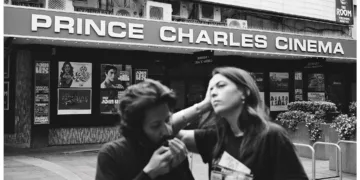





























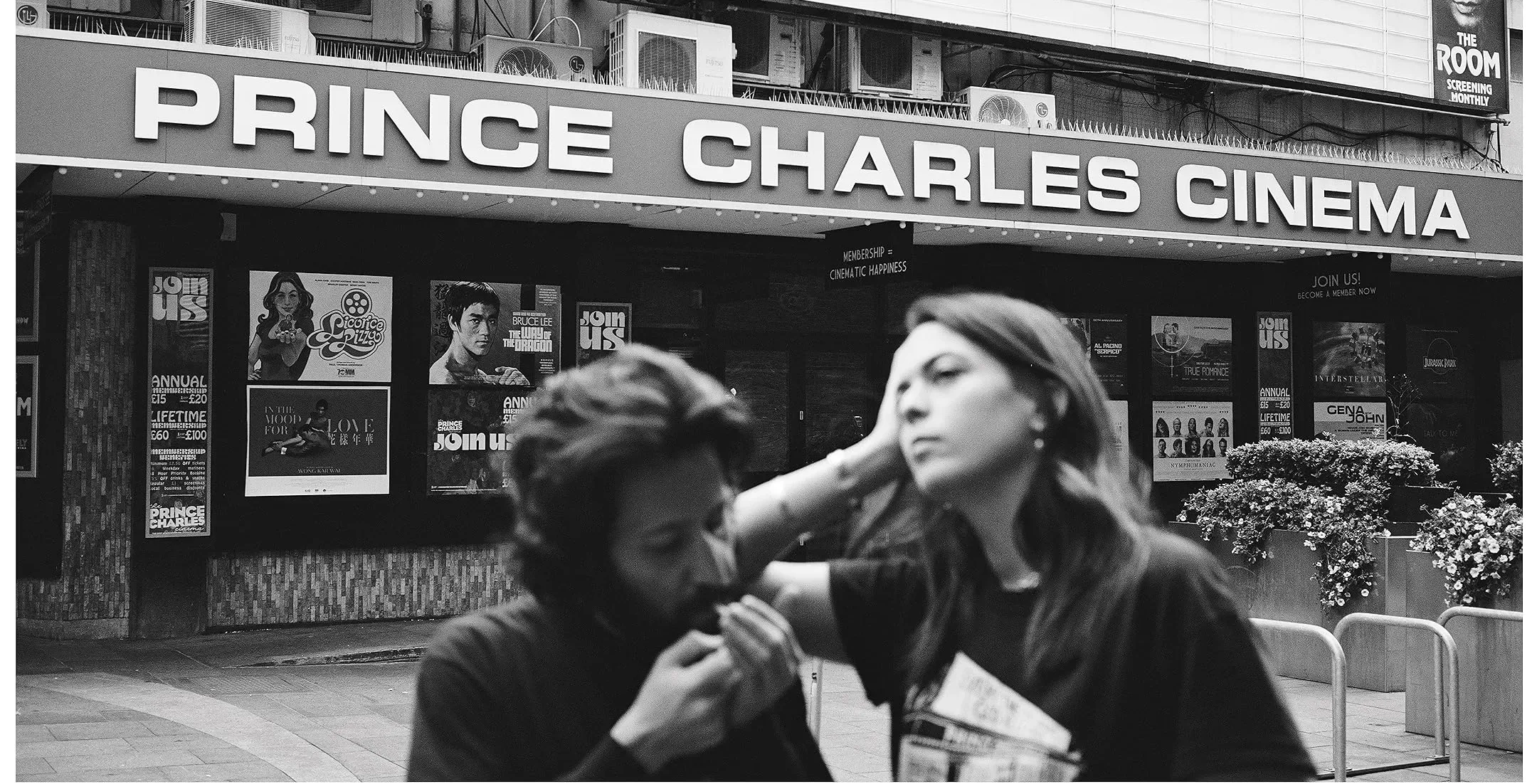

Some spaces are more than architecture; they are archives of shared experience. London’s Prince Charles Cinema is one such place, and Fil Freitas’s The Regulars treats it as such. This black-and-white comedy, a chronicle of one day behind the concessions stand, presents a deceptively simple narrative.
We follow a cadre of employees through the minor indignities and fleeting solidarities of their shift. The premise is slight, yet the execution is grounded in a potent reality, an effect amplified by the director casting himself and fellow staff.
The film’s micro-budget aesthetic and monochrome palette strip the world of distraction, forcing a focus on the human machinery that operates just out of the audience’s sight. It is a work of deep affection, shot through with a dry, observational wit that finds humor in the quiet desperation of customer service.
An Ensemble of the Disenchanted
The film’s structural integrity rests not on plot, but on the interpersonal dynamics of its characters. This collective, a mix of actual cinema workers and actors, achieves a rare, unvarnished chemistry that feels less performed than documented. Their camaraderie is forged in the crucible of public-facing work, a bond built on a shared, cynical worldview where the customer is a problem to be solved.
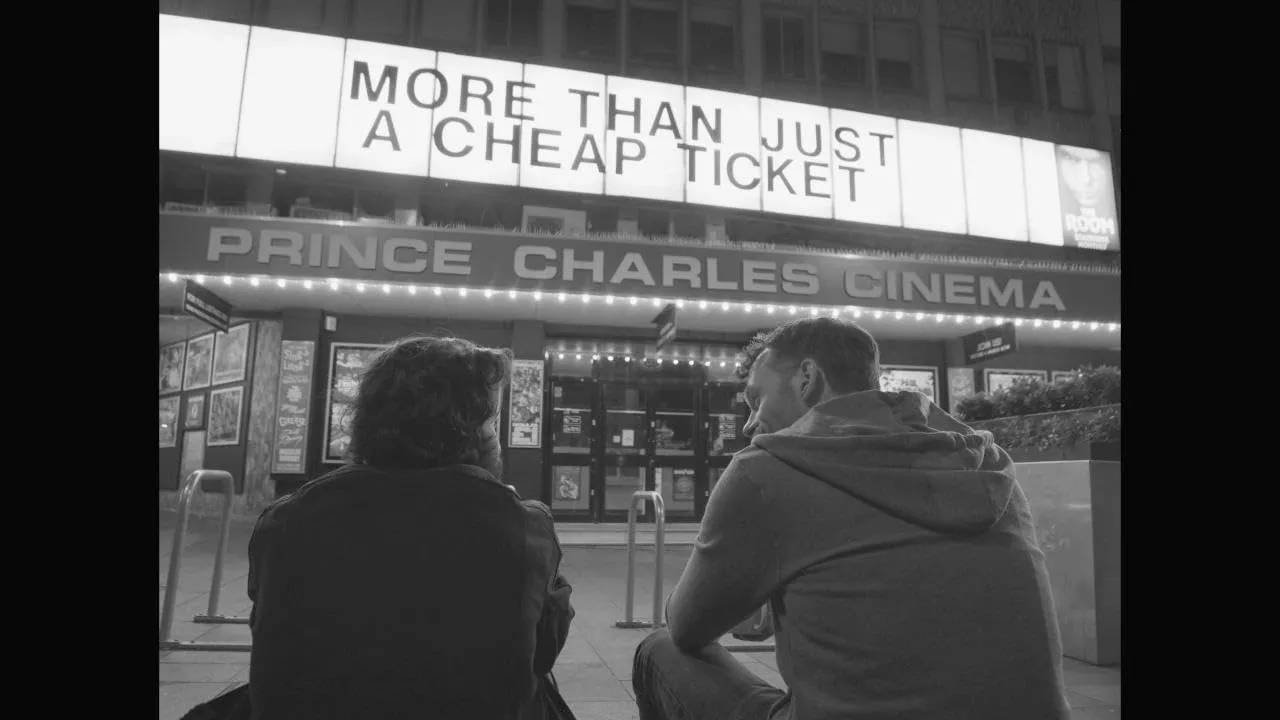
This cynical shield, a form of existential armor against the absurd, is the source of the film’s most potent humor. Freitas himself plays Fil, a protagonist whose slacker posture barely conceals a deep weariness; his resistance is passive, his rebellion measured in late arrivals and tasks left undone. He is the anchor for a collection of well-defined personalities who orbit him.
Also Read






We see the simmering hostility of Rob, a man whose misanthropy seems less a character trait than a philosophical position adopted against a world of loud chewers. There is also the quiet ambition of his girlfriend, Dusty, whose hope for a promotion outside the cinema creates a subtle, powerful tension with Fil’s inertia.
The dialogue captures the specific cadence of workplace banter, a language of inside jokes and mutual complaint that feels utterly authentic. This naturalism makes the viewer a voyeur, watching small, unscripted moments of human connection and friction unfold in the dead time between screenings.
Framing the Void
Freitas makes a virtue of necessity, transforming budgetary constraints into a distinct visual grammar. The choice of monochrome is not merely an homage to the indie darlings of the 1990s, like Clerks; it renders the cinema’s backrooms and corridors into a series of expressionistic cages.
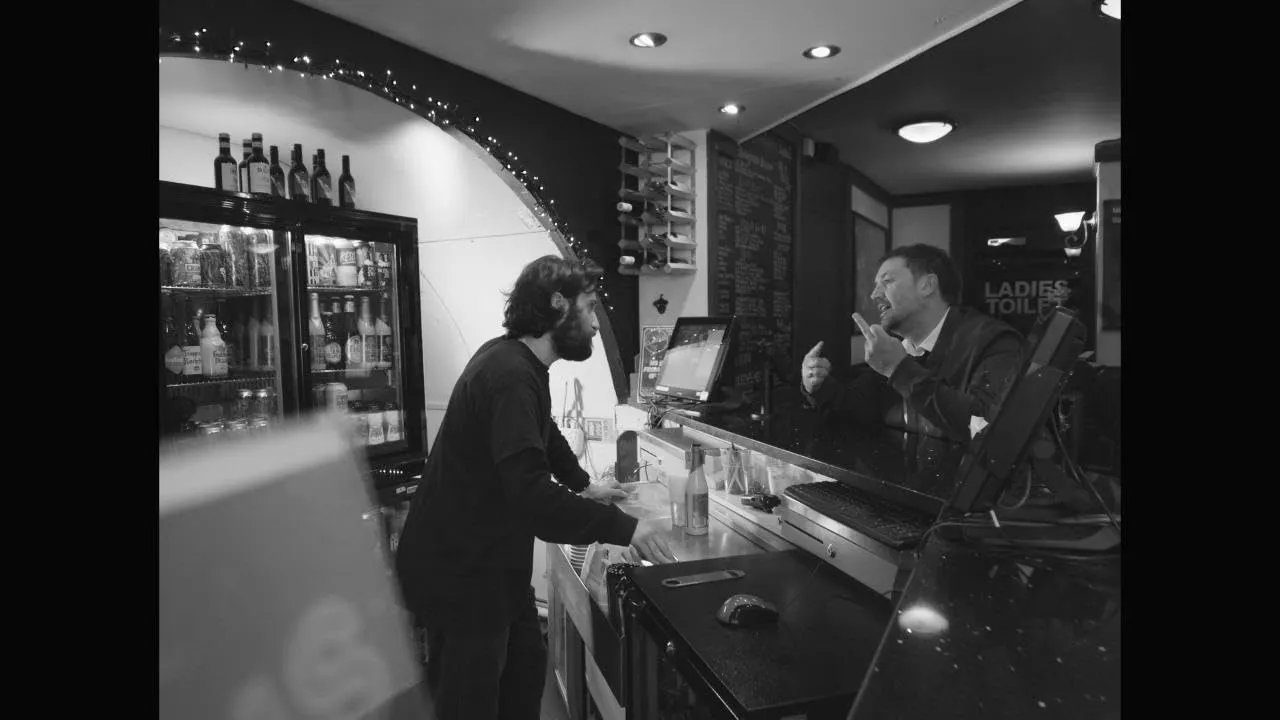
Ben Rolph’s cinematography expertly navigates these cramped interiors, the camera often locked down, observing the action with a patient, static gaze that emphasizes the staff’s physical and psychological confinement. The lighting feels sourced and practical, with the glow from a computer monitor or an exit sign carving figures out of the gloom.
This approach creates a low-key chiaroscuro where shadows conceal not criminal intent, but simply dust and neglect. This visual scheme is punctuated by moments of surprising fluidity, most notably a tracking shot through a bustling lobby that directly quotes Scorsese.
The homage is a rupture in the film’s vérité style, a brief, soaring glimpse of the cinematic grace these characters sell tickets for but rarely experience themselves. The diegetic sound design is equally immersive, a carefully layered mix of projector hums, the distant rumble of a movie soundtrack through a wall, and the sticky squeak of shoes on a floor that will never be truly clean.
Purgatory with Popcorn
Beneath its comedic surface, The Regulars explores a quiet existential condition. The cinema is presented as “a waiting room of ambition,” a professional limbo for aspiring artists and filmmakers. The daily grind is a temporary state that threatens to become permanent, a loop from which escape seems increasingly abstract.
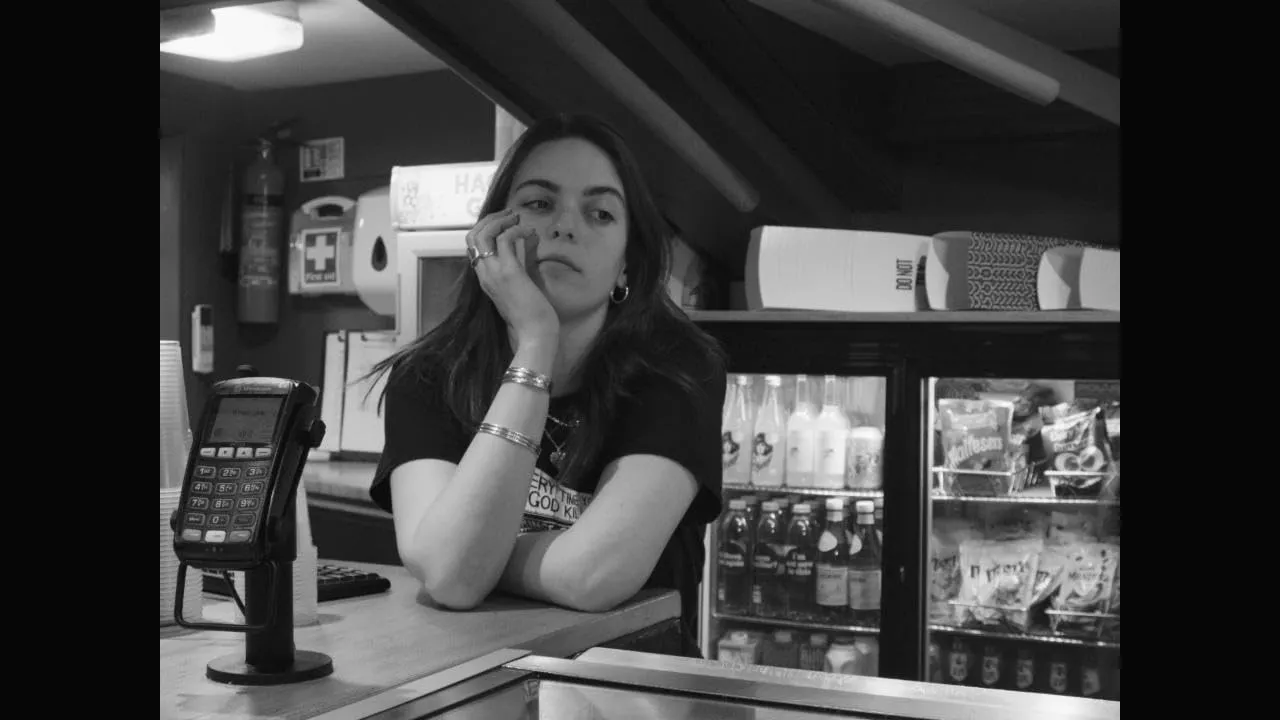
This faint hum of melancholy adds a surprising weight to the proceedings, posing questions of choice versus circumstance. Are these characters trapped by their environment, or do they choose this stasis as a shield against the risk of failure in their creative fields?
The film offers no simple answer. The building itself is personified as a silent confessor, its worn carpets and faded posters bearing witness to generations of deferred dreams. It is both a sanctuary from the outside world and the very instrument of the characters’ stagnation.
This is a film about labor, specifically the often invisible work that underpins cultural industries. By focusing on the mundane reality of finding a dead rat or cleaning a toilet, Freitas demystifies the cinematic experience. He creates a gentle but firm statement on the people who sustain the magic, long after the credits have rolled and the audience has gone home.
“The Regulars” is a British comedy film set in London’s Prince Charles Cinema. The film is based on the real-life experiences and stories of people who work at the cinema. It premiered at the UK Genesis Cinema, London on March 14, 2025. It is being released in UK cinemas on August 22, 2025. It has a runtime of 1 hour and 45 minutes.
Full Credits
Director: Fil Freitas
Writers: Fil Freitas
Producers: Fil Freitas, Dusty Keeney
Cast: Fil Freitas, Dusty Keeney, Ricardo Freitas, Kevin Johnson, Lauren Shotton, Sergio Barba, Lisa-Marie Flowers Larsen, Bronte Appleby, Robert Smith, Jonathan Foster, Bo Keeney, Ed Mannion
Director of Photography (Cinematographer): Ben Rolph
Editors: Fil Freitas
The Review
The Regulars
The Regulars is a sharp, funny, and deeply authentic portrait of workplace ennui. Its strength lies in its lived-in atmosphere and the genuine chemistry of its cast, who perfectly capture the cynical camaraderie of service work. While its plotless, observational style may feel slow to some, the film offers a poignant look at the space between ambition and reality. It is a small, skillfully made ode to the people who keep the lights on and the projectors running, finding a quiet dignity in the daily grind.
PROS
- Authentic and naturalistic performances from the ensemble cast.
- Witty, deadpan script that captures the humor of the service industry.
- Strong sense of place, making the Prince Charles Cinema a key character.
- Relatable themes of deferred ambition and workplace solidarity.
- Effective use of its low-budget, monochrome aesthetic.
CONS
- The minimal plot and observational pacing might not appeal to all viewers.
- Some stylistic choices feel heavily indebted to earlier indie films.
- The film's focus is narrow, which could limit its broader appeal.