





























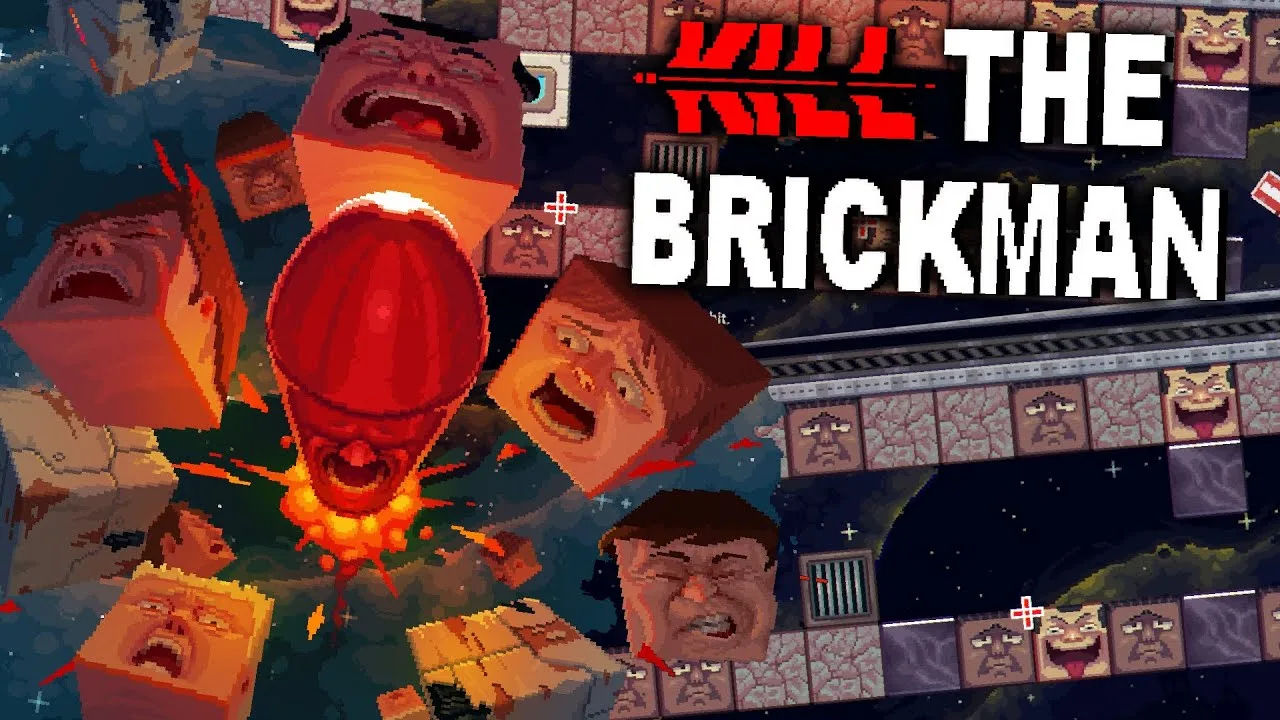

Kill The Brickman arrives as an unexpected experiment in genre fusion, transforming the frantic paddle-and-ball mechanics of classic Breakout into something resembling a tactical chess match. Published by poncle, the team behind Vampire Survivors, and developed by solo developer Doonutsaur, this turn-based roguelike replaces reflexes with calculation and speed with strategy.
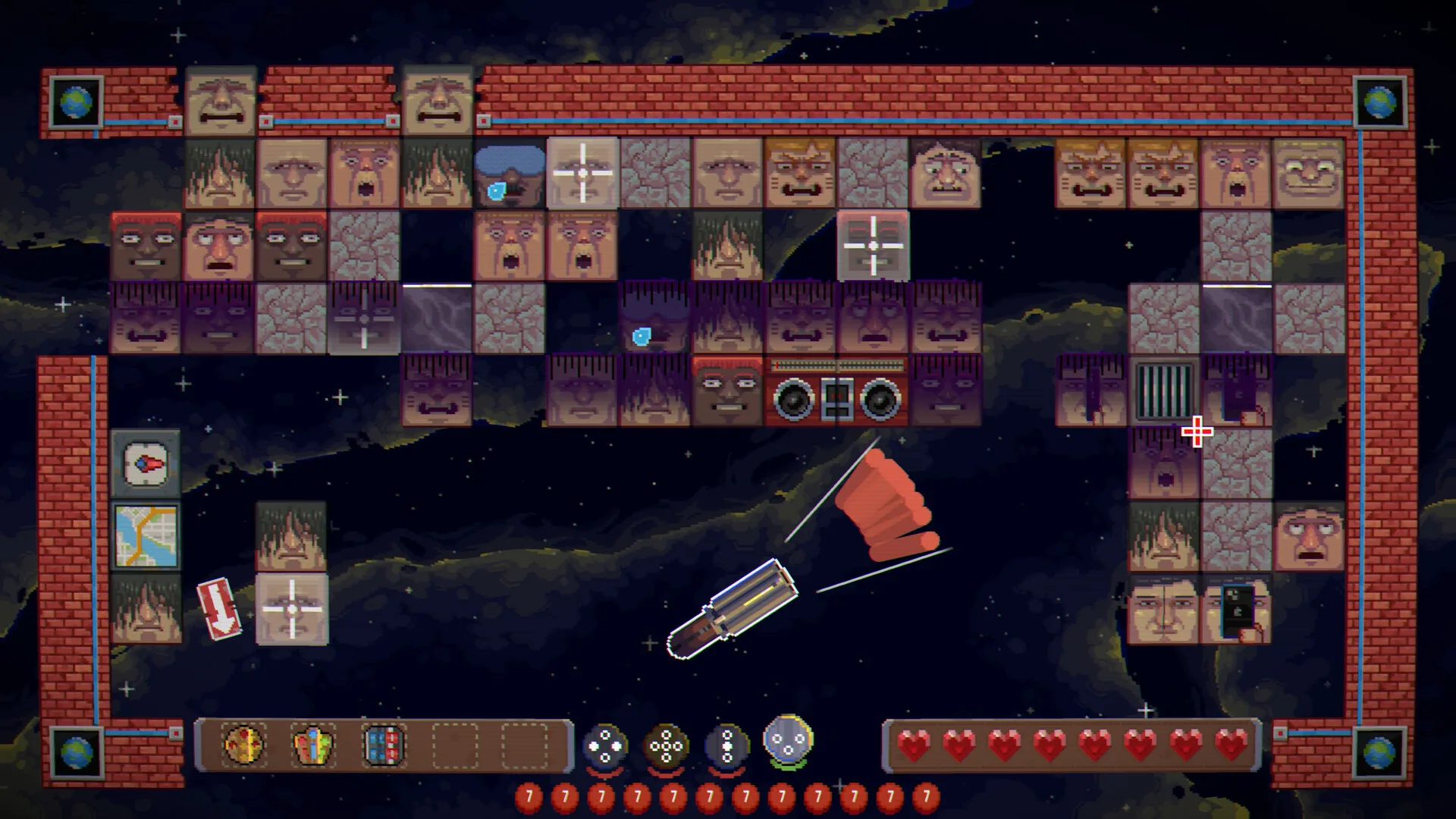
The premise borders on absurd: Earth faces invasion from rectangular alien bricks called Felloni, each sporting expressive faces that convey personality through pixel art animation. Instead of wielding the traditional paddle, players command a floating gun sight, carefully plotting each shot’s trajectory across grids filled with these anthropomorphic enemies. The deliberate pacing creates space for tactical consideration that traditional brick-breakers never allowed.
At $5 across PC, Xbox, and mobile platforms, the game shadow-dropped without fanfare or pre-orders, letting its mechanics speak for themselves. The visual presentation embraces minimalist pixel art while the Brickmen themselves become surprisingly endearing through their facial expressions and death animations. This genre-blending approach combines breakout fundamentals with roguelike progression systems, deck-building mechanics, and tactical shooting elements to create something genuinely different within familiar territory.
Tactical Depth Through Simple Components
The shooting mechanics center around three distinct bullet types that form the foundation of all tactical decisions. Red bullets explode on impact, creating area damage that can chain through clustered enemies. Blue bullets clone themselves mid-flight, multiplying into unpredictable patterns that can clear entire sections when properly angled. Green bullets apply corrosive damage over time, slowly eating away at tougher targets while you focus elsewhere.
What elevates these basic elements is the magazine system, where different gun magazines activate special properties based on bullet loading patterns. Some magazines require specific chamber arrangements to trigger their effects, while others need particular bullet types in exact quantities. These magazines also serve as physical barriers at the screen’s bottom edge, creating an additional layer of ricochet possibilities.
The aiming system provides trajectory previews for the first bounce, then relies on physics intuition for subsequent ricochets. Environmental elements become tactical tools: walls redirect shots, special blocks modify bullet properties, and even UI elements at screen bottom can be used for complex bank shots. This creates scenarios reminiscent of pool trick shots, where planning three or four bounces ahead becomes necessary for optimal damage.
Turn structure follows a predictable rhythm where players act first, then surviving Brickmen retaliate according to their individual behavior patterns. Some enemies remain passive targets, while others telegraph aggressive intentions through facial expressions before launching attacks. Boss encounters introduce enemies with defensive abilities, healing powers, or terrain manipulation that force tactical adaptation.
The buildcrafting system operates through shops between levels, offering weapon upgrades, enhanced bullets, passive relics, and new magazines. A risk-reward card system adds pre-level modifications where beneficial effects come paired with drawbacks. These decisions compound across a run, creating builds that can range from explosive chaos to precise surgical strikes depending on available options.
Health management becomes crucial since damage persists across all levels within a chapter, creating resource tension that influences every engagement. This system rewards careful planning while punishing reckless aggression, reinforcing the tactical approach throughout.
Structured Progression with Clear Gates
The campaign divides into four chapters containing ten levels each, with strict linear progression requirements. Each chapter must be completed before the next unlocks, creating clear advancement milestones that guide player development. This structure works well for skill building, though it can frustrate players expecting more open exploration.
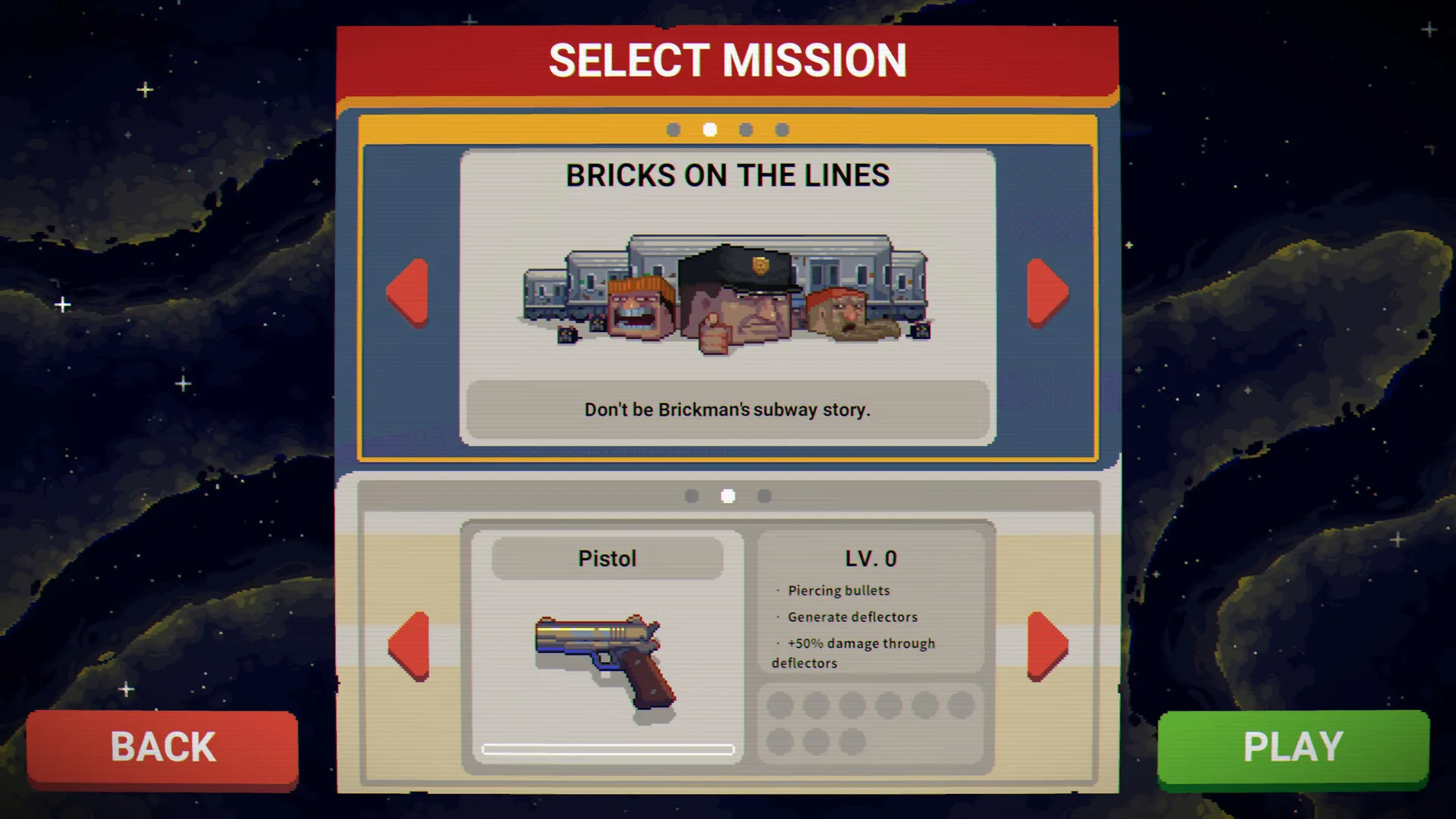
Three unlockable weapons provide meaningful progression rewards. The starting Revolver offers standard mechanics for learning fundamentals. The Pistol introduces piercing bullets that travel through multiple enemies, opening new tactical possibilities for lined-up shots. The Shotgun fires multiple projectiles simultaneously, dramatically changing risk-reward calculations for close-range encounters.
Weapon upgrades operate through experience points earned by progression distance and enemy eliminations. This creates incentives for replaying earlier chapters to strengthen equipment before tackling harder content, though the necessity isn’t always clearly communicated to new players.
Two primary game modes serve different play preferences. New Game mode provides the full campaign experience with persistent health across chapter levels, creating the intended resource management challenge. Locations mode offers single-stage puzzles with $30 starting budgets for quick tactical experiments, perfect for testing specific build ideas without long-term commitment.
Roguelike elements manifest through randomized shop inventories, card selections, and enemy placements that prevent identical runs. However, the randomization feels lighter than games like Slay the Spire or The Binding of Isaac, focusing more on tactical adaptation than dramatic build variety.
The learning curve presents genuine challenges as multiple complex systems intersect without gradual introduction. New players must simultaneously master bullet physics, magazine mechanics, enemy behaviors, upgrade synergies, and buildcrafting decisions. The available tutorial helps, though the information density can overwhelm initially. Most players find their footing after several complete runs, but the early confusion may deter some from reaching that breakthrough moment.
Polish, Value, and Lasting Appeal
Visual presentation succeeds through focused pixel art that prioritizes personality over technical complexity. The Brickmen themselves steal the show with expressive animations that convey pain, anger, smugness, and fear through minimal detail. Environmental art remains functional rather than spectacular, though this serves the tactical focus by avoiding visual clutter that might obscure important information.
Audio design stumbles with extremely limited musical variety. A single main track loops throughout most gameplay, becoming grating during extended sessions. Sound effects fare better, providing satisfying feedback for successful ricochets and impacts that enhance the tactical decision-making process. The audio limitations feel particularly noticeable given the game’s addictive potential for long play sessions.
Technical issues reflect the game’s indie origins and rapid development cycle. Translation problems leave some upgrade descriptions incomplete or missing entirely, forcing players to experiment blindly with certain items. Text display occasionally fails completely, showing blank descriptions for important upgrades. These problems appear addressable through patches, though they currently impact the new player experience.
Replayability comes through multiple sources: randomized elements create run variety, weapon progression encourages repeated playthroughs, and completionist goals provide long-term objectives. Most players will extract 15-40 hours from the current content depending on skill level and completion ambitions. The content volume feels appropriate for the price point, though hardcore roguelike fans may find insufficient depth for extended engagement.
Difficulty balance leans accessible, with most runs ending in victory rather than devastating failure. The challenge comes from optimization and experimentation rather than punishing consequences. However, the difficulty spike between first and second chapters creates a grinding requirement that isn’t intuitive, forcing players to replay content for weapon upgrades rather than progressing naturally.
Control implementation strongly favors mouse and keyboard over gamepad input. Precise aiming and inventory management work much better with direct cursor control, making the mobile and controller versions feel compromised by comparison.
At $5, Kill The Brickman delivers experimental gameplay that successfully innovates within established genres. The tactical approach to brick-breaking feels fresh and engaging, while the roguelike progression provides meaningful advancement hooks. This appeals most to players who enjoy puzzle-tactical games like Into the Breach or SteamWorld Heist, though it may disappoint those seeking pure action or extensive content depth. The game works perfectly for weekend experimentation and genre exploration, offering enough mechanical depth to reward dedicated play while remaining accessible to casual engagement.
The Review
Kill The Brickman
Kill The Brickman succeeds as an inventive genre fusion that transforms familiar brick-breaking into engaging tactical gameplay. The deliberate turn-based mechanics create genuine strategic depth, while the buildcrafting systems provide meaningful progression. Technical rough edges and limited content variety hold it back from greatness, yet the core innovation feels genuinely fresh. At $5, it represents solid value for players seeking experimental indie experiences. The tactical approach works brilliantly, making this a worthwhile purchase for puzzle strategy fans willing to overlook minor polish issues.
PROS
- Innovative tactical twist on classic brick-breaking
- Deep buildcrafting with meaningful weapon progression
- Charming pixel art and expressive character animations
- Excellent value at $5 price point
- Strategic depth rewards careful planning
CONS
- Repetitive single-track soundtrack becomes grating
- Steep difficulty spike requires grinding between chapters
- Technical issues with missing translations and tooltips