











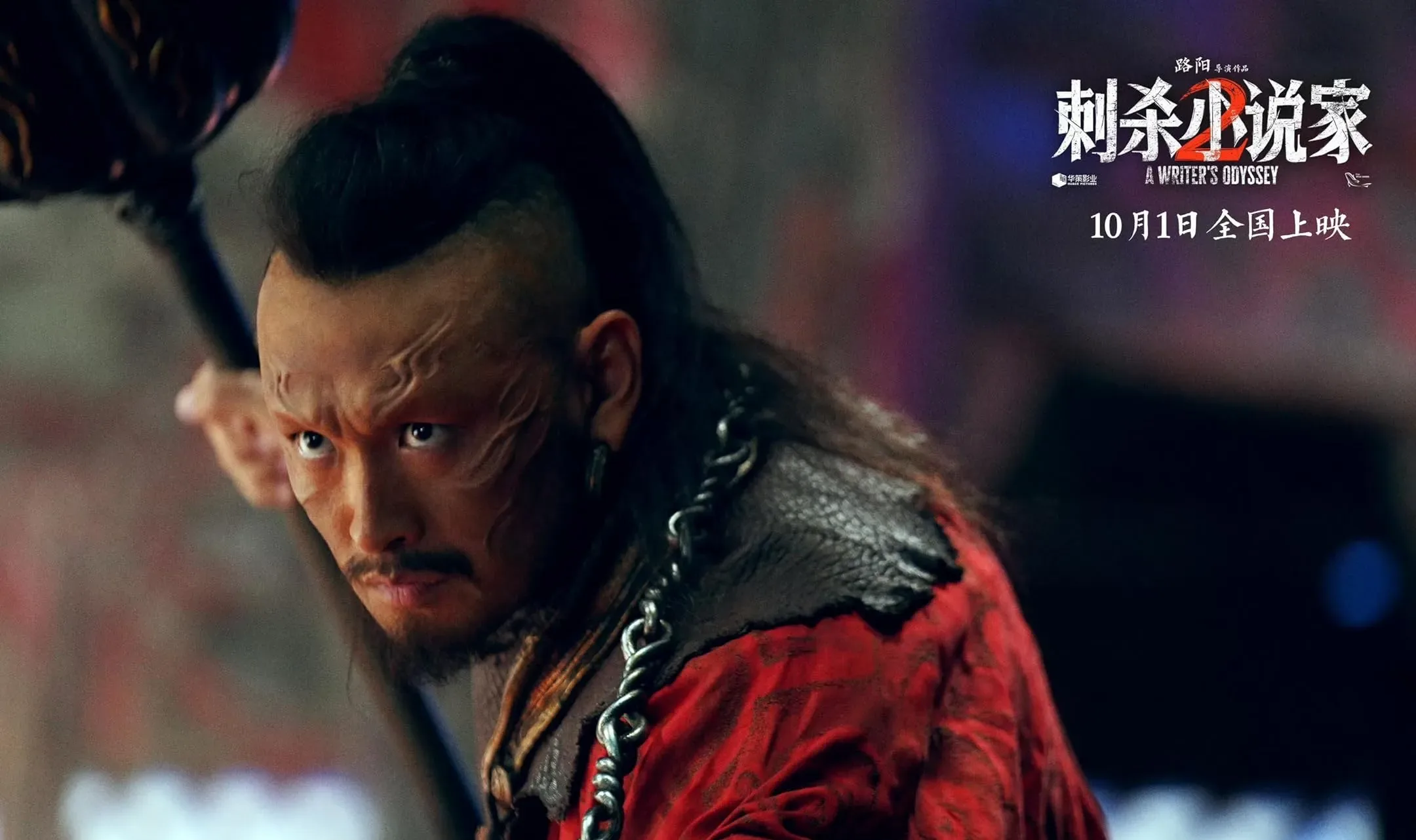

Every author fears the day their characters develop a will of their own, escaping the confines of the page to wreak havoc on their creator. A Writer’s Odyssey 2 takes this anxiety and builds a universe from it. The film returns to its core concept of a story bleeding into life, but this time the stakes are less personal and more existential.
An author, Lu Kongwen, finds himself again as the unwilling god of two realities, one mundane and the other a fantastical realm born from his imagination. Director Lu Yang moves the narrative away from a simple quest and into a far more treacherous territory: the author’s own psyche. This is no longer a story about what a man will do for his family, but what a creator does when he loses control of his own fable.
A World Forged from Chinese Aesthetics
The film’s greatest strength is its rejection of a globalized visual monoculture. Instead of borrowing from the well-worn lexicon of Western fantasy, the production design commits fully to a vision rooted in Chinese aesthetic tradition. The result is a world that feels both ancient and wholly new. Ethereal locations like Sky City are not merely grand; they are composed with the deliberate negative space and soft focus of an ink wash painting, suggesting a reality that is simultaneously present and dissolving.
The gnarled Heart Tree, a key location, appears less like a computer-generated asset and more like a calligraphic brushstroke given three-dimensional form. This careful art direction, blending practical construction with virtual extensions, creates a persistent dreamlike quality, as if the audience is moving through a philosophical concept rather than a physical place.
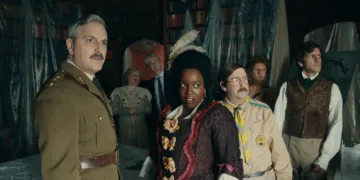
This aesthetic extends to the mythology itself. The powers wielded by the heroes and villains are not the kinetic energy bursts common in Hollywood. The abilities of the “Five Tigers of the Sky”—such as spirit-channeling or manifesting impenetrable stone armor—are elemental and symbolic. They feel like extensions of a character’s internal state.
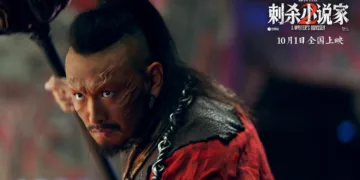
Even the antagonist, the “Red-Haired Demon,” is designed not just to be monstrous but to be a living embodiment of his chaotic, ambition-fueled ethos. This visual language ensures the spectacle is never hollow. Every fantastical element is a piece of the film’s central argument, a visual representation of the ideas battling for control of the narrative.
The Shifting Motives of the Storyteller
While the visuals are a triumph of cultural specificity, the narrative turns inward, toward universal questions of purpose. The sequel matures thematically, replacing the clear, tangible goal of the first film with a sprawling, ambiguous search for the self. The story presents its philosophical quandaries through the conflicting paths of its characters, refusing to provide a simple moral resolution. This commitment to ambiguity makes the intertwining of the two worlds feel tighter and more meaningful; the chaos of the fantasy realm is a direct reflection of the author’s own unresolved crisis of meaning.

Two figures dominate this internal landscape. “Jiu Tian” operates as a kind of Freudian superego, a father figure who represents the stability of tradition, moral integrity, and the duty one has to their own principles. He is the story’s conscience. In stark opposition is the Red-Haired Demon, a perfect manifestation of the id. He represents pure, unbridled will, a “success-at-all-costs” nihilism that rejects all moral frameworks in favor of personal victory.
The author, Lu Kongwen, is trapped between them, the struggling ego trying to mediate the demands of his conscience and his ambition. His indecision gives the film its murky, psychological-thriller core, turning the act of writing into a high-stakes moral dilemma with the fate of two worlds hanging in the balance.
A Tale of Two Realities: Narrative Cohesion and Disconnect
A film can have the most beautiful body in the world, but it means little if the skeleton is broken. In its latter half, the narrative structure of A Writer’s Odyssey 2 begins to collapse under the weight of its own ambition. The pacing stutters, and the plot introduces bafflingly convoluted concepts like “nested void realms”—a matryoshka doll of metaphysics that adds layers of confusion instead of depth. It feels like a narrative cul-de-sac, an “adolescent” attempt at profundity that leaves the audience stranded. The story simply gets lost.
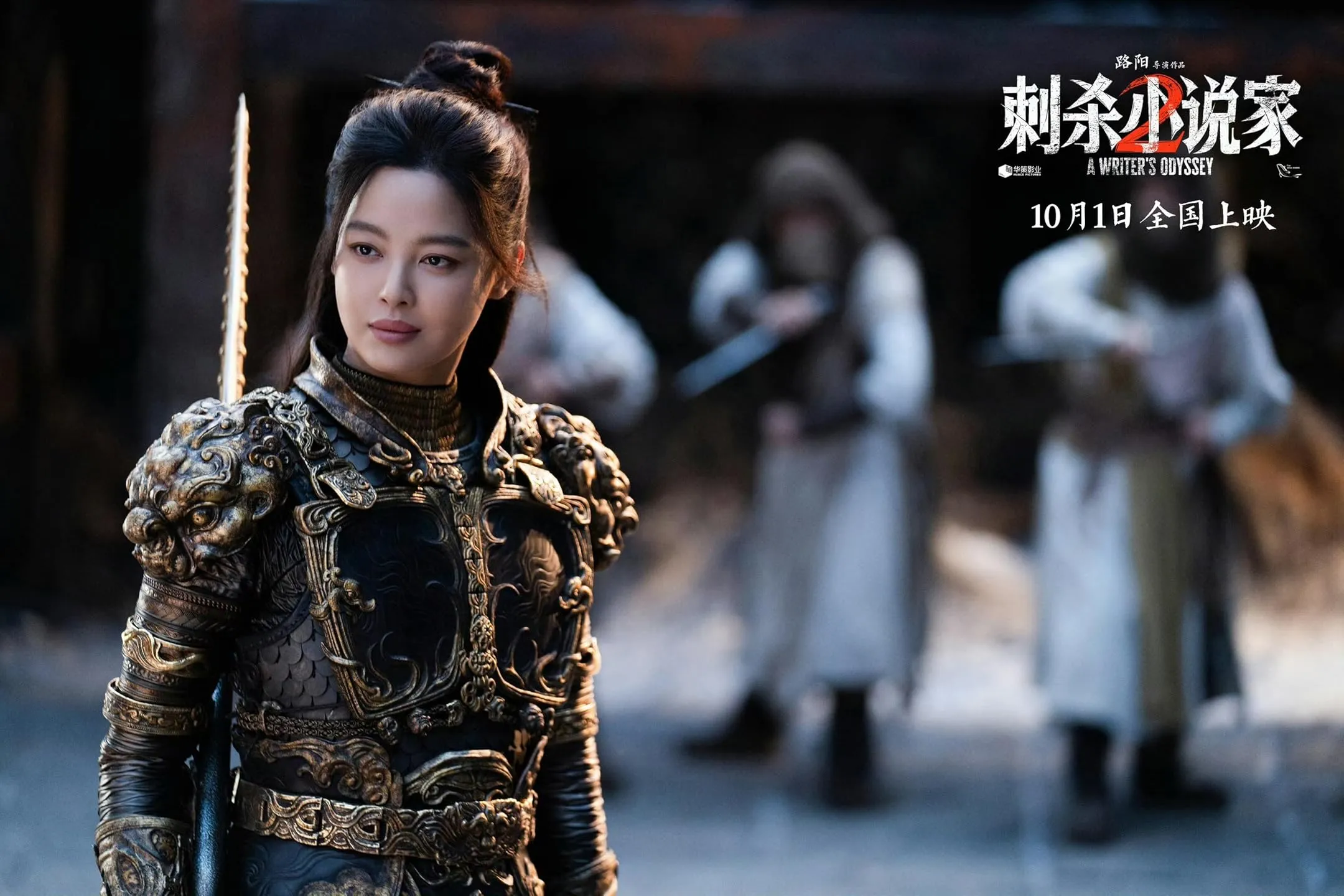
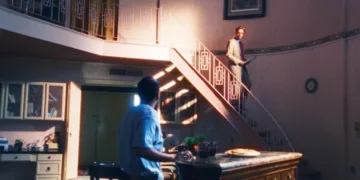
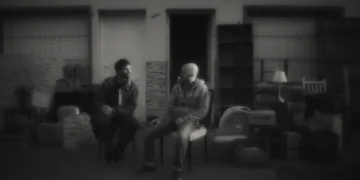
This conceptual messiness is worsened by a surprising lack of cinematic craft. The cinematography is shockingly artless. For a film with such breathtaking production design, the camera’s insistence on flat, functional lighting and unimaginative close-ups is a cardinal sin. It robs the world of shadow, and without shadow, there is no depth, no mystery, no psychology. The grand sets are rendered inert, like brightly lit museum exhibits.
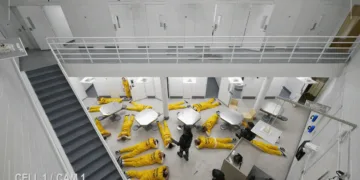
The editing follows suit, employing a fragmented, jarring rhythm that prevents any scene from building momentum or emotional resonance. The action sequences, which should be the payoff for all the world-building, are rote and weightless. They are a collection of movements without impact, staged within a world they seem disconnected from. It is a frustrating paradox: a film that succeeds in creating a universe, only to forget how to shoot it.
A Writer’s Odyssey 2 is a Chinese action-fantasy sequel set to be released in theaters starting October 1, 2025, in China, with international limited releases following closely thereafter in early October, including in the United States via cinema chains like AMC and Cinemark. The film, directed by Lu Yang, is currently in post-production and continues the story of novelist Lu Kongwen and how the fantasy world of his novel intersects with and impacts reality. In the sequel, the novelist faces a life crisis and an irresistible temptation, forcing him to join forces with his fictional characters to save both worlds from catastrophe. The sequel is based on the novel Godslayer, which is the follow-up to the source material for the first film. Streaming availability following the theatrical run has not been announced but may follow the pattern of the first film, which was available on platforms like Prime Video and iQIYI.
Full Credits
Director: Lu Yang
Writers: Zelin Li, Shuang Xuetao
Producers and Executive Producers: Ning Hao, Juan Wan, Frant Gwo, Wusheng Jiang
Cast: Deng Chao, Dong Zijian, Lei Jiayin, Guo Jingfei, Chang Chen, Angela Wang, Ding Chengxin, Xin Zhilei
Director of Photography (Cinematographer): Qiming Han
Editors: Lin Zhu, Liyun Zhu
Composer: Jed Kurzel, Jin Da Zhou
The Review
A Writer's Odyssey 2
A Writer's Odyssey 2 is a paradox. It presents a world of breathtaking visual intelligence, grounding its fantasy in a rich and specific Chinese aesthetic that is a marvel to behold. Its thematic shift toward existential questions of purpose and creation is ambitious and mature. Unfortunately, this brilliant conceptual framework is sabotaged by clumsy execution. A convoluted plot, flat cinematography, and disjointed editing ultimately shatter the beautiful illusion, leaving a film that is far less than the sum of its magnificent parts. It is a visual masterpiece trapped inside a narrative mess.
PROS
- Stunning art direction and world-building grounded in traditional Chinese aesthetics.
- Ambitious philosophical themes exploring the nature of creation and identity.
- Unique and culturally specific designs for characters and mythical abilities.
- Visually spectacular and a clear departure from Western fantasy conventions.
CONS
- Convoluted narrative structure that becomes confusing and nonsensical.
- Flat, uninspired cinematography and lighting that undermine the visuals.
- Fragmented editing and erratic pacing that disrupt narrative flow.
- Ordinary action choreography that fails to match the fantastical setting.