

























“She was one iron lady, we were hundreds.” The line, delivered with the earned confidence of hindsight, is the foundational statement of Daniel Draper’s documentary, Iron Ladies. It serves as both a reclamation of a title and a correction of the historical record. Draper’s film methodically dismantles the familiar narrative of the 1984-85 miners’ strike, a story usually told through images of men clashing with police.
He turns his camera instead toward the wives, mothers, and daughters who formed the Women Against Pit Closures (WAPC) movement. The film is constructed as a dual narrative, documenting a community’s steadfast resistance while simultaneously charting the profound, often unexpected, personal transformations ignited within the participants. It is a story about how a fight for economic survival became an unsought catalyst for individual liberation, told entirely through the voices of those who lived it.
The Picket Line as a Classroom
The film’s narrative engine is the direct testimony of the women, detailing their evolution from homemakers to formidable organisers. Draper’s structure allows their stories to build a larger picture of a sophisticated, grassroots operation born from immediate need. The accounts begin with the practicalities: establishing soup kitchens that fed entire towns, coordinating food parcels, and finding ways to pay bills without an income.
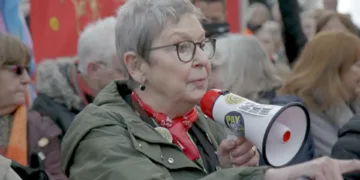
From there, the story expands into a chronicle of direct action. We hear vivid anecdotes of picketing alongside the men, of chaining themselves to government offices, and of the surprising international support from communities in France and Germany. The film does not sanitize the experience, dedicating significant time to the internal pressures the women faced. Participants recall being harshly judged by older generations and even their own mothers, who believed their activism was a dereliction of their duties in the home.
This internal conflict adds a potent layer to their struggle. Yet, the overwhelming arc presented is one of empowerment. For many, the strike was an unexpected liberation. The skills they learned in organising, public speaking, and fundraising became transferable to lives they had never imagined. It was their political education, a catalyst that led them to pursue university degrees, enter local politics as councillors and mayors, and find the strength to leave abusive relationships.
A Culture Under Siege
Iron Ladies effectively argues that the strike was a fight to preserve an entire way of life. Draper portrays the mining villages not as mere collections of houses, but as insulated, multigenerational organisms where personal identity was intrinsically linked to the colliery. By situating the 1984 strike within a longer history of industrial action, including the pivotal disputes of the early 1970s, the film provides crucial context for the deep-seated principles at stake.
Also Read






The narrative is geographically structured, moving between groups of women in Kent, Yorkshire, and Fife, showing how a national movement grew from distinct local efforts. This approach highlights the sheer scale of the women’s network. The film is steeped in the raw emotion that still lingers four decades later. The participants recount their experiences with police conduct with a sharp clarity, correcting the official media reports of “clashes” with their own memories of being systematically attacked.
Their anger towards Margaret Thatcher’s government remains palpable, as does a lingering bitterness for what they saw as the betrayal of political figures like Neil Kinnock. The documentary methodically pieces together a portrait of a culture under siege, fighting not just for jobs, but for its very existence against an implacable external force.
The Quiet Power of Testimony
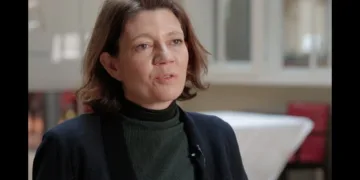
Draper’s filmmaking style is defined by its directness. The story is constructed almost entirely from talking-head interviews with the women, filmed in the quiet comfort of their living rooms. These present-day reflections are carefully interwoven with archival news footage, private photographs, and stark, melancholic shots of the derelict pit sites that now scar the landscape.

The contrast between the vibrant energy of the protest footage and the silent decay of the present is a potent visual theme. The film’s strength lies in this structural simplicity. It forgoes cinematic flourish, placing its complete trust in the power of its subjects’ testimony to resonate without distraction.
The result is a piece of vital oral history, an essential archive that preserves a perspective largely absent from mainstream accounts of the era. The narrative finds its resolution not in the strike’s political outcome, but in the enduring spirit of its participants. Their resilience is their victory. As one woman states with a perfect, understated finality, reflecting on the fate of her great adversary, “She’s dead and we’re still ‘ere.”
The film Iron Ladies is a feature-length documentary released in 2025, directed and written by Daniel Draper and produced by Shut Out The Light Films. The documentary tells the powerful, untold story of the working-class women of the Women Against Pit Closures organization who became the backbone of the 1984–85 Miners’ Strike, fighting for their communities against the British state. Featuring interviews with many of the women involved, it offers a vital oral history of that era and connects their struggle to contemporary activism. As of the time of the information, the film has been shown in various theaters and at film festivals across the UK as part of its screening run.
Full Credits
Director: Daniel Draper
Writers: Daniel Draper
Producers and Executive Producers: Christie Allanson, Daniel Draper, Matthew Bell, Susanne Levin
Cast: Heather Wood, Juliana Heron, Lynn Gibson, Rose Hunter, Linda Allbut, Maxine Penkethman, Carol Ross, Linda Erskine, Sally Higgins, Sue Piotrowski, Betty Cook, Kate Flannery, Lorraine Stansbie, Aggie Currie, Janet Wilson-Cunningham, Christine Powell, Kay Case, Kay Sutcliffe, Liz French
Director of Photography (Cinematographer): Cameron Brown, Daniel Draper
Editors: Christie Allanson
The Review
Iron Ladies
Iron Ladies is an essential reframing of a pivotal moment in British history. Its power lies not in cinematic technique but in the unadorned authenticity of its subjects. By giving voice to the women who sustained the miners' strike, the film constructs a deeply moving and vital oral history. It is a powerful testament to community resilience, grassroots organisation, and the unexpected personal awakenings forged in the crucible of a national struggle. An indispensable piece of documentary filmmaking that is both a historical corrective and a human story of profound strength.
PROS
- Preserves an essential, overlooked perspective on the miners' strike.
- The direct interviews with the women are authentic, compelling, and deeply moving.
- Successfully tells the dual story of a community's struggle and the participants' personal empowerment.
- The enduring spirit, anger, and resilience of the women provide a powerful emotional anchor.
CONS
- Its straightforward, talking-heads approach may feel dry or lack cinematic flair for some viewers.
- The film expects a degree of prior knowledge regarding the political figures and events of the era.