




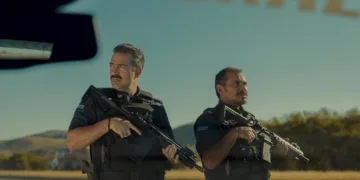
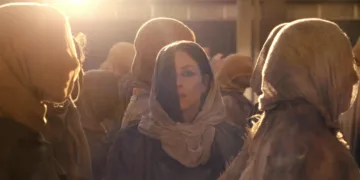
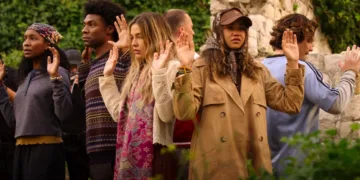






Where the Wind Blows arrives as a classic Western romance drama with a warm, familiar cadence. Director John Schimke shapes the film with the spirit of a 1950s star vehicle and the gentle tone of a family-friendly TV movie set against the unforgiving 19th-century American frontier. Adapted from Caroline Fyffe’s novel, the film leans on the Montana landscape, using expansive, striking cinematography to underscore the West’s scale and quiet.
The story opens with Chase Logan, played by Trevor Donovan, a lone cowboy sent to deliver cash and hard news at a remote cabin. His friend Nathan, played by C. Thomas Howell, has been killed after cheating at cards in a saloon.
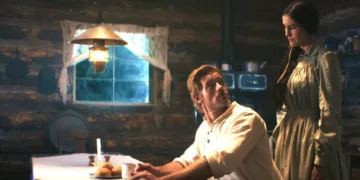
At the cabin, Chase meets Jessie Strong, played by Ashley Elaine, an unexpected young widow. Jessie, once an orphan, is in the process of adopting a girl, and the law requires a husband. That urgency pulls Chase, who prefers distance and refuses at first, into a temporary marriage that turns his life from solitary to domestic.
Pacing and the Power of Western Archetypes
The film’s structure moves from violence to home life, then to a necessary showdown. A saloon confrontation sets the tone for a lawless West, then the focus narrows to a makeshift family taking shape. The adoption drive gives the domestic stretch weight and purpose.
This arc relies on measured pacing. Some viewers may feel the central romance develops slowly, and some turns, including a forgotten sum of money, can read as clumsy. The slower rhythm serves a clear function, inviting the audience to sit with the frontier’s pressures and the characters’ resistance to new roles.
The comparison to a good open-world game fits the experience: time to walk the edges before committing to the main quest. The film embraces sturdy Western archetypes. Chase stands as the decent, honorable gunman with a guarded past. Jessie embodies the resilient frontier woman. Rob Mayes fills the role of the drifter who threatens their safety.
Also Read





These fixtures keep attention on emotional stakes. A pro-family, moral frame guides choices, with characters acting to protect women and children even when formal rules get bent. Shootouts gain weight from that stance, since every flash of violence carries a protective charge.
The Leads and Their Slow-Burn Dynamics
Western romance depends on the lead pairing, and this one rests on Trevor Donovan’s screen presence and Ashley Elaine’s grounded emotion. Donovan’s Chase Logan reads as a charismatic, physically imposing hero that fits the figure readers expect from the source novel. He plays a decent man wary of commitment who steps into the protector role only after resistance fades.
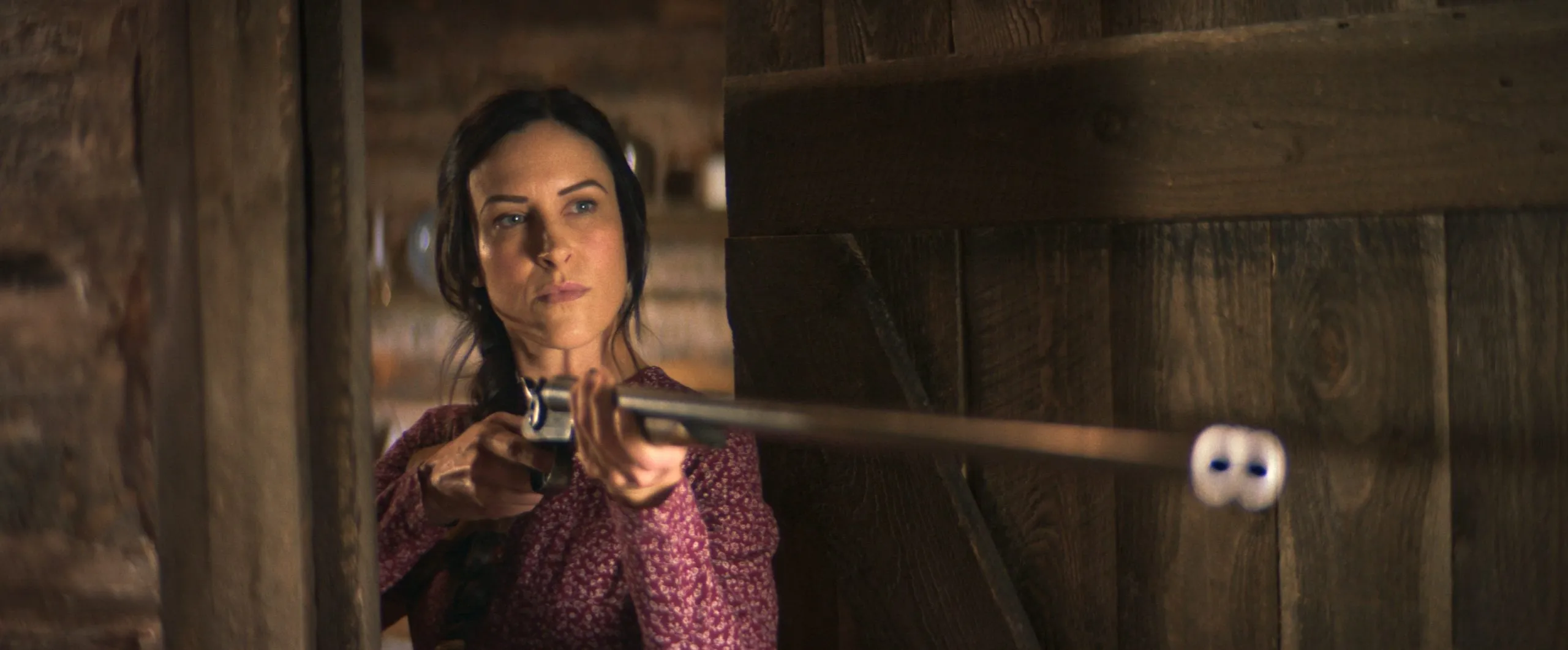
The recurring image of a shirtless Donovan reinforces an old-school heroic ideal. Elaine’s Jessie Strong plays with clarity and feeling. As a producer on the film, Elaine gives Jessie a mix of vulnerability and will, shaped by a past as an orphan and a present defined by building a family.
Her commitment to period authenticity shows in stunt work performed in restrictive clothing. Their chemistry favors restraint, then warms into firmness as the story advances. The connection grows gradually and becomes the film’s emotional center. Michelle Hurd’s Mrs. Hollyhock adds a steady, encouraging presence that ties the couple to community life.
Visual Scale and Production Integrity
John Schimke directs with affection for classic cinema and aims for a family-friendly romance within a rugged Western frame. Visual scale stands as the film’s clearest strength. The cinematography captures the quiet power of Montana and gives the project a polished look rooted in place.
This independent feature worked with a limited budget and a tight 17-day schedule, a condition that often narrows staging or technique. The team uses the available resources effectively to reach a consistent aesthetic. Ashley Elaine described a rain scene executed on a single take, which signals careful planning and focus under pressure.
Performances and imagery land with confidence, though some viewers observed moments where direction, editing, or technical execution feel uneven or pedestrian, a likely side effect of the fast shoot. The film still meets its central goal: it uses striking visuals to tell a romance that aims for clean sentiment, steady pacing, and a finale shaped by duty and care.
The movie is a Western romance-drama based on the novel of the same name by Caroline Fyffe. It follows a solitary cowboy named Chase Logan whose life is dramatically changed when he agrees to pose as the temporary husband of a beautiful widow, Jessie Strong, so she can finalize an adoption. The film was released by Level 33 Entertainment, with a limited theatrical and On Demand release beginning on October 24, 2025. It is set in the 19th-century American frontier and explores themes of love, family, and doing the right thing.
Credits
Title: Where the Wind Blows
Distributor: Level 33 Entertainment
Release date: October 24, 2025
Rating: PG-13
Director: John Schimke
Writers: Caroline Fyffe, John Schimke, Mike Maden
Producers and Executive Producers: John Schimke, Ashley Elaine, Don Paul, Brandon Smith, Eden Matson
Cast: Trevor Donovan, Ashley Elaine, C. Thomas Howell, Michelle Hurd, Lochlyn Munro, Rob Mayes, Colin Egglesfield, Don Swayze, Cole Keriazakos
The Review
Where the Wind Blows
Where the Wind Blows succeeds as a heartfelt, old-fashioned Western romance. Its striking cinematography of the Montana frontier and the charismatic, committed performances from Trevor Donovan and Ashley Elaine create an appealing experience. The film delivers a strong, moral, pro-family narrative that honors classic tropes. While the slow pace and some awkward plot devices hold it back from greatness, it remains a rewarding choice for viewers who appreciate low-stakes, visually rich frontier drama.
PROS
- Striking cinematography of the Montana setting.
- Strong moral, pro-family worldview.
- Charismatic leads (Trevor Donovan, Ashley Elaine).
- Successful old-fashioned Western romance aesthetic.
CONS
- Pacing is consistently slow, especially the romance.
- Relies heavily on established Western clichés and archetypes.
- Some plot devices are awkwardly handled or meandering.
- Uneven technical execution in direction and editing.