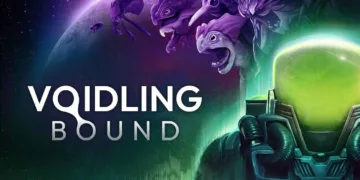



















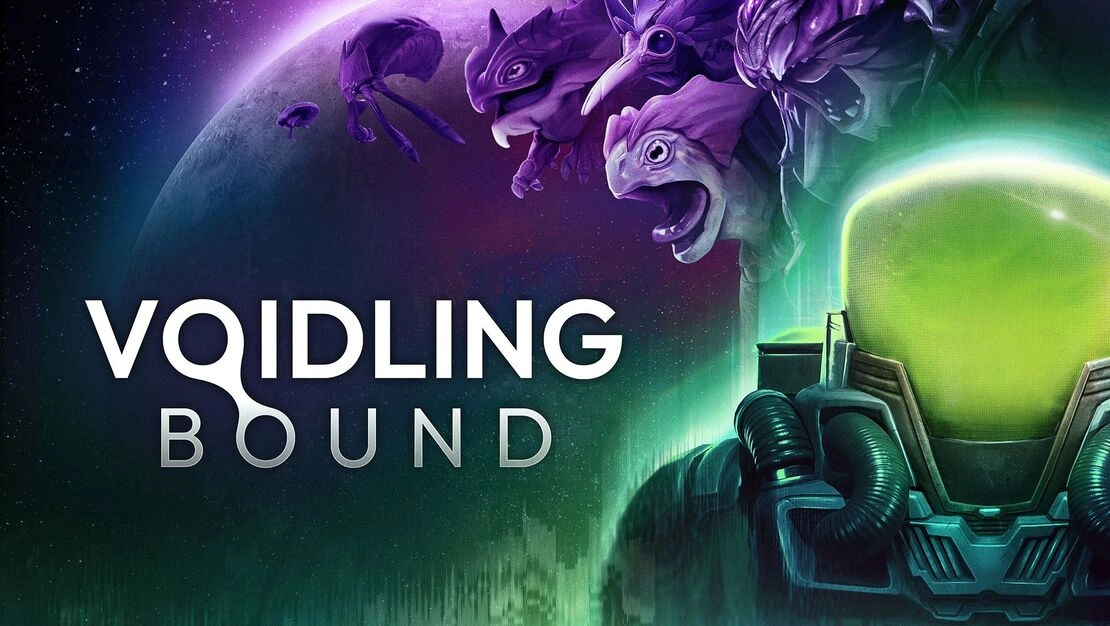

Voidling Bound has the shape of a creature collector, the reflexes of a third-person shooter, and the busy workshop energy of an RPG that hands you a toolbox, a monster egg, and a mild ethical concern. Developed by Hatchery Games, it casts you as a Space Wrangler aboard a ship fighting a parasitic corruption that has started chewing through entire planets. Humanity’s answer is a neural bond with alien creatures called Voidlings, which lets you control them directly on the battlefield.
The story is clean, functional sci-fi. A parasite threatens life, your crew coordinates missions, and the Voidlings become humanity’s best chance at survival. The writing rarely steals the spotlight, but it gives every mission a clear purpose. You are cleansing planets, collecting samples, finding eggs, and building stronger companions for the next drop.
The ship acts as your hub, with the Vivarium, mission board, training systems, breeding tools, and evolution stations all feeding into the same loop. Hatch an alien creature, raise it, mutate it, name it, then send the little bio-weapon back into danger. Cute, yes. Safe? Absolutely not.
The Joy of Building a Creature With Consequences
The Voidlings are the reason the game works. There are roughly eight or nine species, and each one has its own silhouette, combat role, movement feel, and personality. Some behave like armored tanks, others like ranged artillery platforms, nimble melee attackers, elemental casters, or support-leaning oddballs. That class-like design gives each new creature an immediate identity, which matters in a game where collection could have become a numbers exercise.
Eggs add a steady rhythm of anticipation. You find them during missions, earn them through play, or gain new creatures through ship systems. Back at the incubator, hatching can produce Voidlings with different base stats, traits, mutations, or elemental potential. Duplicates still have value, since they can feed progression, breeding, or sample collection. The game understands a simple truth of creature collectors: a duplicate is less annoying if it helps the lab get weirder.
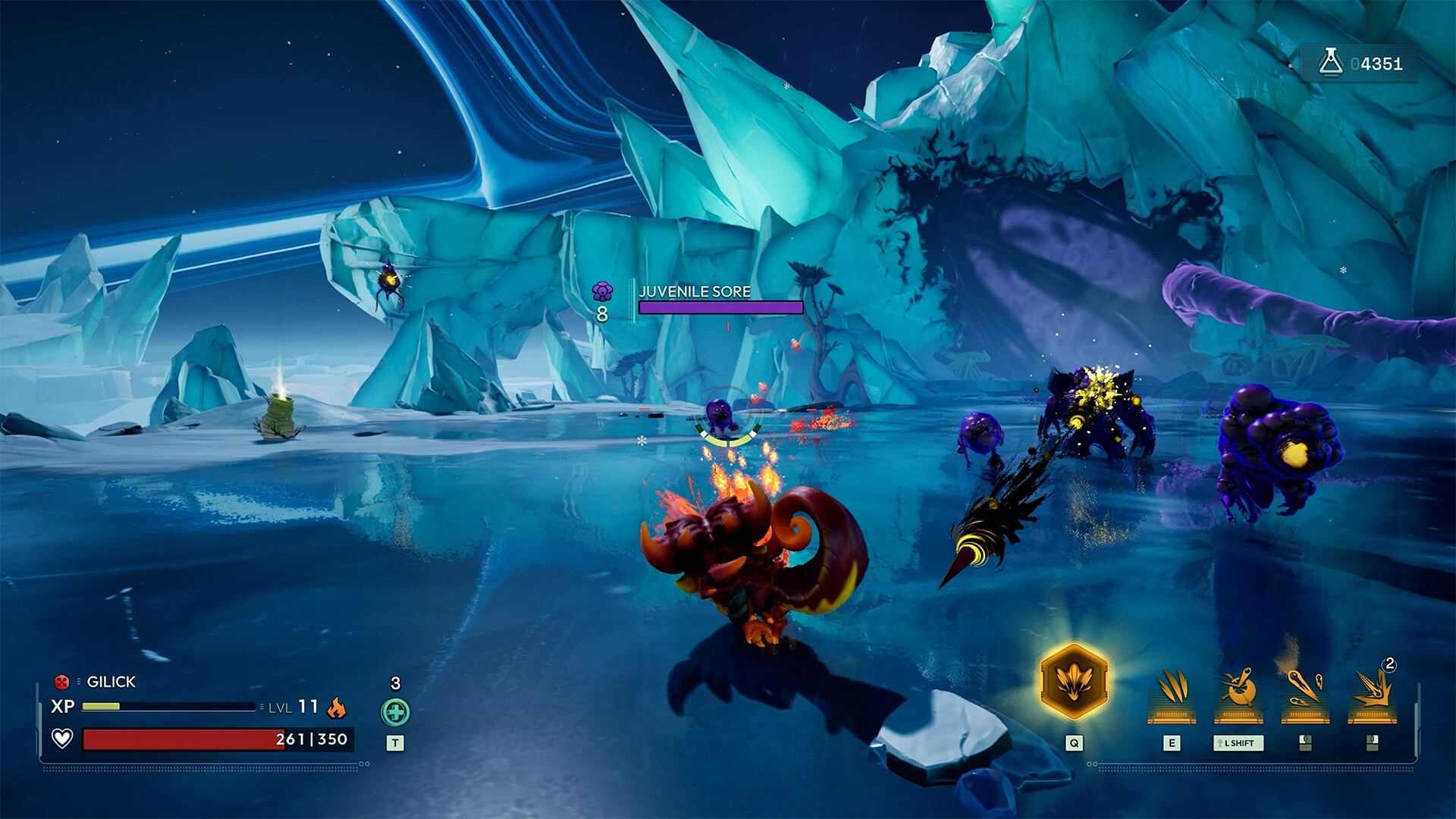
Evolution is where choice starts to carry real mechanical weight. Mutagens push Voidlings along elemental paths such as fire, ice, poison, electricity, or plasma. These paths reshape attacks, appearance, and combat purpose. A small dinosaur-like Voidling can become an ice specialist, firing freezing bolts, leaping into enemies with an icy ground slam, and shredding crowds with spinning blades. Another version of that same species can lean into fire, spreading lava pools and controlling space with explosive pressure. The body may come from the same egg line, but the result can feel like a different tactical answer.
Breeding strengthens that attachment. Pairing two Voidlings of the same species can produce offspring that inherit improved traits, stronger stats, or useful mutations, with nest upgrades improving the odds. This gives the player a reason to think across generations rather than treat each creature as disposable loot.
The Splicing Station, unlocked later, turns the whole system into a proper design playground. Colors, body parts, eyes, horns, patterns, passive traits, abilities, and elemental effects can be modified. Here, Voidling Bound moves closest to Spore by way of a build-focused action RPG. Your choices change how a creature fights, how it looks, and how much you care when it trots around the Vivarium like a tiny science project with claws.
Shooting, Cleansing, Grinding, and Testing the Build
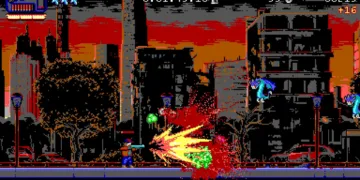
Active play begins on the ship. You pick a mission from the starmap or Atlas terminal, mind-link with a Voidling, and drop into alien environments in third-person action. The basic combat language is easy to read: move, shoot, slash, dodge, block, trigger cooldown abilities, manage close-range tools, and fire off an ultimate when the situation gets loud. Each Voidling shares a familiar structure of primary attack, secondary ability, melee or utility move, and ultimate, yet species, element, upgrades, and splicing can make that shared template feel surprisingly flexible.
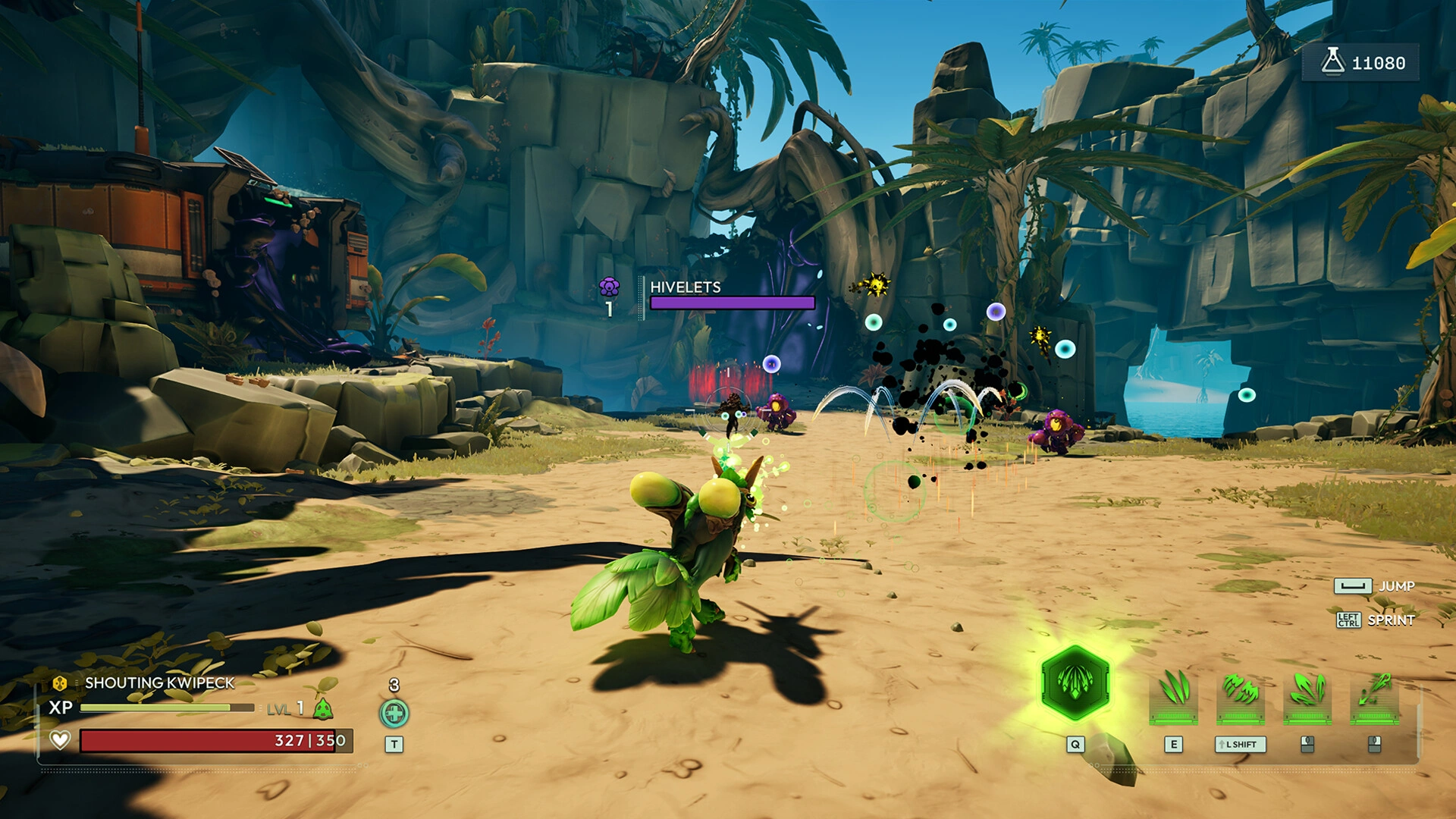
The best fights come from matching a build to a problem. A tanky creature can soak pressure and control space. A fast elemental attacker can keep distance while punishing weaknesses. A spliced mutation combo can make a familiar creature suddenly feel absurdly powerful. In those moments, the game’s systems and fiction click together. You are not choosing attacks from a menu because the RPG demands it. You are shaping an organism for survival in a hostile ecosystem.
Mission design is less inspired. Voidling Bound leans on exploration missions, corruption cleansing, survival waves, boss fights, side objectives, resource gathering, and arena-style encounters. The larger exploration stages are strongest because they let you roam semi-open planets, hunt for eggs, collect mutagens, search for hidden materials, and approach objectives at your own pace. Survival missions are snappier, usually focused on waves of enemies and crowd control, but they can feel too familiar after repeated runs. Cleansing corruption and clearing enemies has a satisfying rhythm, though the structure sometimes settles into routine.
Between missions, progression keeps the momentum alive. Species skill trees improve damage, range, cooldowns, utility effects, and passive strengths. The gym lets you train Voidlings with currency and short real-time timers, which reduces grinding but can weaken attachment if you rely on it too much. A creature that jumps from underused hatchling to max-level benchwarmer in minutes does not earn the same bond as one that fought through ugly boss patterns and barely survived.
The endgame Abyss mode gives the buildcrafting a sharper purpose. It functions like an escalating challenge run where you push through harder fights, claim rewards, or continue for greater risk. That format suits Voidling Bound because the game is always asking one question: how far can your strange little masterpiece go before the galaxy bites back?
A Bright Galaxy With Some Rough Edges
Voidling Bound looks cheerful in a way that keeps the parasite threat from turning the setting into gray sci-fi sludge. The planets are colorful, readable, and packed with strange alien flora, while corrupted zones give the environments a clear visual danger. The creature designs carry much of the charm. They can be adorable, ridiculous, menacing, and oddly expressive, sometimes all within the same species line.
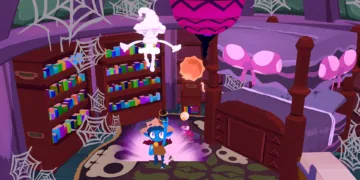
The Vivarium quietly does important emotional work. Watching Voidlings wander, sleep, and display inherited traits makes them feel less like loadout folders and closer to companions. That matters because the game’s deepest systems are built around attachment. You spend time on a creature’s stats, abilities, elemental direction, body parts, and name. The space between missions lets that work feel personal.
Combat animation and sound give the action a strong punch. Blasts, slams, elemental bursts, and heavy creature attacks have enough force to sell the fantasy of controlling alien predators rather than soft mascot pets. The music supports exploration and combat without becoming a major talking point.
Technically, the game appears sturdy. Controls feel responsive, handheld play on ROG Xbox Ally X runs smoothly, and reported issues are minor, mostly rare stutters or camera quirks.
The flaws sit around the edges. The story rarely lingers in memory. Mission types repeat. Early progression can feel slow before splicing opens up. Late-game menu hopping between ship systems can become tiring. Players expecting a huge monster roster may want a larger species count, though the evolution and splicing systems help stretch what is there. Voidling Bound keeps pulling the player back because building the next creature remains far stronger than the chores surrounding it.
The Review
Voidling Bound
Voidling Bound is a smart, colorful creature-collector action RPG with punchy combat, strong buildcrafting, and a creature customization system that gives player choice real weight. Its story is serviceable, and mission variety can wear thin, yet the loop of hatching, evolving, splicing, and testing Voidlings remains highly satisfying. The game shines brightest when its systems make each creature feel personally shaped.
PROS
- Deep Voidling customization
- Fun third-person combat
- Strong creature designs
- Rewarding evolution and splicing systems
- Colorful sci-fi worlds
CONS
- Repetitive mission structure
- Story lacks impact
- Early progression can feel slow
- Limited creature roster
- Late-game menu hopping can drag