





























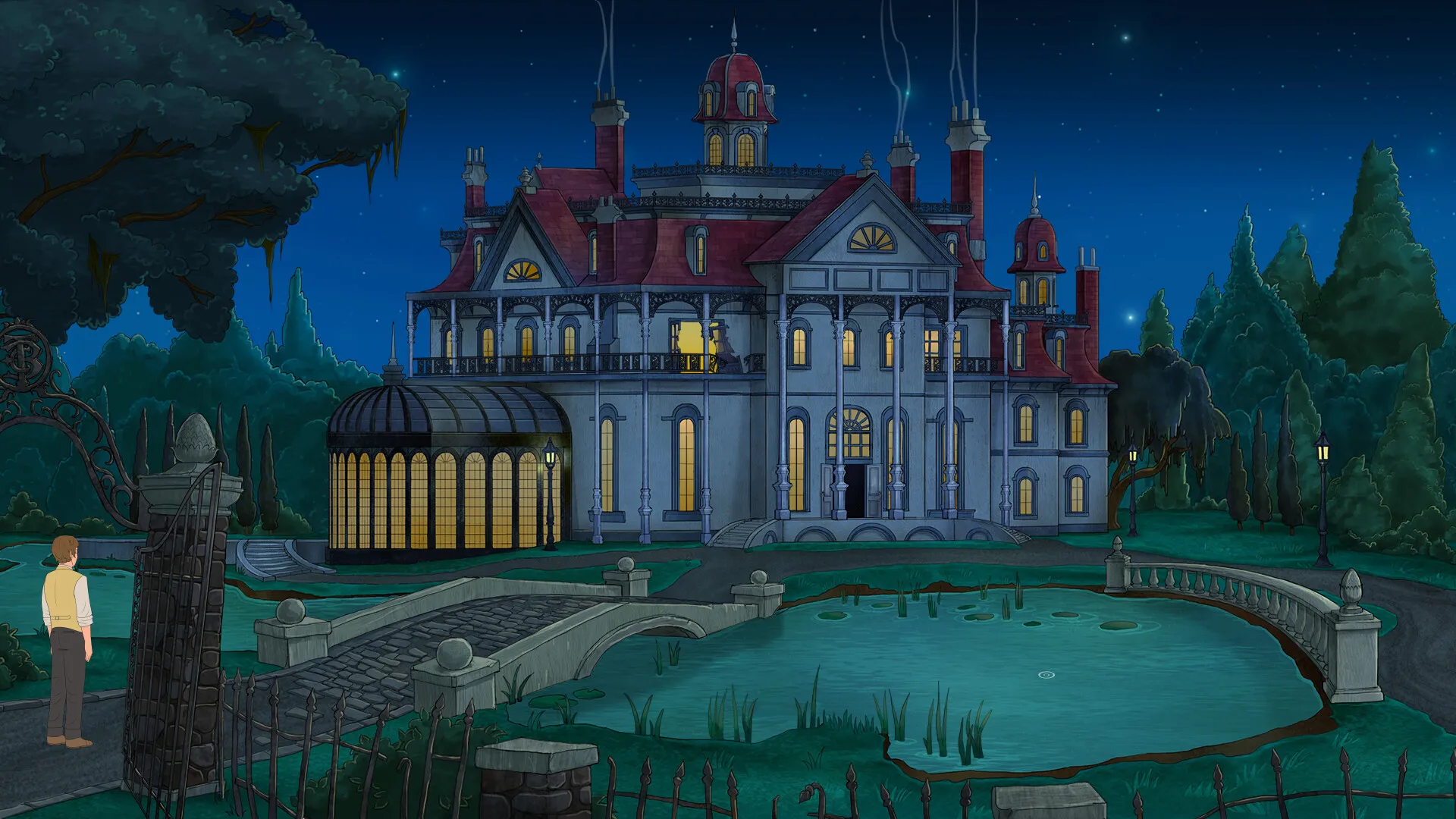

Foolish Mortals arrives as a classic 2D point-and-click adventure from Inklingwood Studios, a first release that looks to the genre’s golden age for structure and spirit. The story takes place in 1933 on Devil’s Rock Island, a fictional outpost off the Louisiana coast that leans into a southern Gothic mood. The player steps into the role of Murphy McCallan, an auditor who would rather chase treasure than balance ledgers. His assignment lists two tracks.
He must collect past-due debts for the Bellemore Trading Company, and he privately hunts a thirteen-million-dollar Bellemore fortune tied to a mass disappearance at the manor three decades earlier. The tone balances playfulness and unease, building a “merry and macabre” ghost tale that mixes dark magic, dry irony, and lighthearted energy into a game built to entertain.
Hand-Drawn Haunts and Big Band Harmonies
The presentation shows a careful return to classic form. Foolish Mortals uses richly drawn 2D art, with backgrounds that look painted by hand. The world design recalls the meticulous craft of The Curse of Monkey Island and Broken Sword.
Detail sits in every corner, from the peeling surfaces of Bellemore Manor to the rough stones of Causeway Beach where Murphy first steps ashore. Devil’s Rock Island holds together as one moody New Orleans-inspired setting with distinct places to explore. Players move through a run-down chapel, a cemetery with a chill in the air, and a once-luxurious riverboat that grounded years ago and never left.
Sound meets the art at the same level. The score shifts between tense cues and bold crescendos, creating atmosphere that fits the era. Moments of big band music enhance the 1930s Louisiana flavor. The game uses full voice acting. AJ LoCascio voices Murphy with a mix of wit and resolve that suits the character’s role as both clerk and covert adventurer.
Side characters carry clear identities in performance and writing. Living and spectral figures read as individuals, and the spirits appear as blue, transparent shapes that stand out immediately in a scene. Dialogue exchanges feel lively, which keeps routine interactions engaging while the story moves forward.
A Mystery of Greed, Love, and Pacing
The structure guides how much of the island the player sees at any time. The game divides into five segments: an extended prologue and four chapters. Each chapter arrives with a black-and-white title card and sets a primary objective.

Many arcs ask for specific items, such as ingredients for a voodoo spell. This cadence opens the map step by step, starting small and then widening the field. The approach teaches the layout through play and uses pacing to build comfort before the story points toward the manor and the larger island.
Murphy follows an early trail to the Bellemore treasure, loses it, and turns his attention to the Spirit Queen. The investigation peels back a secret that links greed, love, and witchcraft. The script delivers a twist that brings the plot into focus. Characters carry the emotional weight. Abigail Bellemore appears as a ghost bride who lingers in memory and image.
Rackham arrives as an imposing specter. A gruff grave keeper and a well-versed voodoo practitioner round out the living side of the cast. Murphy changes through these encounters, building unlikely bonds with the living and the dead who shape Devil’s Rock.
The “merry and macabre” tone holds in small beats, including scenes with ghosts who sip rum and play jazz. Supernatural devices such as gris-gris talismans and the presence of spirits do more than decorate the setting. They move the story and power puzzles, which keeps fiction, theme, and play tied together.
MacGyver Logic and Modern Design
Foolish Mortals keeps the core of a traditional point-and-click and layers in smart quality-of-life choices. A mouse-only interface drives the whole experience. Left click interacts, right click examines, and a hotspot highlighter toggles on demand.
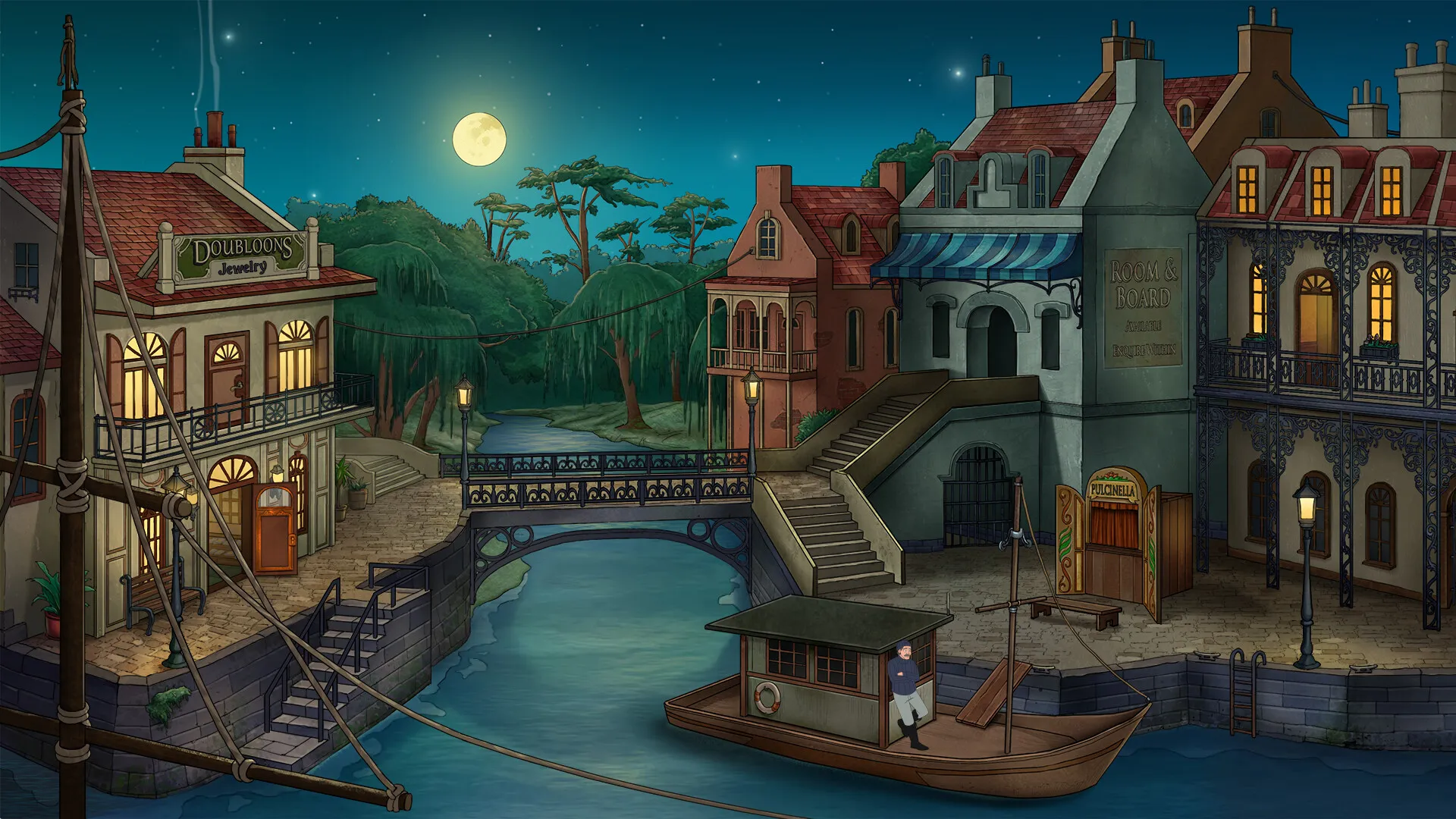
Murphy’s walk speed runs slow, so the player can double-click to quicken transitions. A detailed island map allows instant travel between major locations once discovered. The map updates to reflect progress, such as a lighthouse that now shines after a key event. Early hours restrict where you can go, then new areas open as goals expand. The curve stays steady and readable.
Puzzle craft shows comfort with classic adventure logic while aiming for clarity. Riddles ask for lateral problem-solving and reward persistence. Hints point without giving away answers. The game offers clear multi-step sequences that feel tactile. One path requires setting up a gramophone to play a record. Another asks for a clever way to pass as a captain to gain entrance to a club.
Objects rarely act as single-use throwaways. A simple empty glass soda bottle becomes an all-purpose tool across scenarios. A small set of puzzles uses timers. Generous windows keep tension manageable, and a toggle in the settings can turn those timers off, which respects different play styles.
Two hint systems help players keep momentum. Murphy’s Diary contains tiered guidance voiced from his point of view and breaks tasks into steps so that players can choose how much help they want. A quiet dynamic layer also nudges the player if the game detects a long stall.
These tools keep progress moving and reduce the risk of hard stops. The design avoids dead ends and unfair deaths, so wrong turns do not lock the player out of success. Unlimited manual save slots add security for experimentation and let players chart their own rhythm through the island.
One feature sits on the wish list. The game lacks a dialogue log and does not provide a way to replay spoken lines. Since conversations advance automatically, missed lines cannot be reviewed. That gap can matter in an adventure that leans on character voices and environmental clues.
Foolish Mortals ties narrative, mechanics, and mood into one adventure that treats pacing as design and character as puzzle fuel. The art and music build a sense of place, the chaptered structure teaches the island while the mystery grows, and the hint systems respect different levels of experience. The approach recalls classic series that used style and logic to create lasting memories, and it points to how a modern point-and-click can feel welcoming without losing the trickiness that defines the genre.
The Review
Foolish Mortals
Foolish Mortals is a triumph for the point-and-click genre and an impressive debut for Inklingwood Studios. It delivers a deeply satisfying blend of southern charm, supernatural mystery, and clever puzzle design. The high production values, stunning hand-drawn visuals, and cinematic sound elevate the experience far beyond a simple throwback. This is a must-play adventure that honors its influences while establishing itself as a modern classic.
PROS
- Stunning hand-drawn 2D art and atmosphere
- Exceptional soundtrack and full voice acting
- Clever, multi-layered puzzle design
- Effective, user-friendly dual hint system
- Dynamic, well-paced narrative progression
CONS
- Absence of a dialogue log or replay feature