











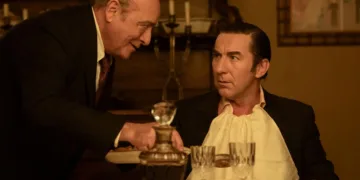
















The setting is Oklahoma, 1913. Sun-baked ground. Quick money. Jim Crow statutes lock the streets while derricks tilt at the sky. Sarah’s Oil opens on Sarah Rector, an 11-year-old African American girl with Muscogee ancestry, and fixes the plot to a volatile twist of chance: an oil strike on her inherited 160 acres, once dismissed as worthless.
The parcel arrives through the 1866 Treaty, a bureaucratic afterthought that erupts into unimaginable value. The instant the well hits, predators circle. White speculators arrive with smiles that do not reach the eyes, and the threats sharpen. The film adapts Tonya Bolden’s non-fiction book, Searching for Sarah Rector, and frames itself as a faith-minded historical drama with a clean moral throughline about ownership and obligation.
Narrative Geology and Fictional Fault Lines
The project seeks to honor Sarah Rector’s story and to underline her status as an early African American female multi-millionaire. The account comes through an adult Sarah’s voice, an unseen narrator performed by Tamala Jones. The vocal timbre is textured and slightly mournful, the language measured. The device folds time inward so each event lands with a feeling of inevitability. Fate whispers over the cut.
The script adopts a hybrid approach. It introduces a fictional figure named Bert Smith, a narrative insert that shifts the gravitational pull of the ethics in play. The question lingers across scenes: does this history require a composite ally to scale up its cinematic architecture? The screenplay answers in the affirmative, and the choice leaves a trace.
The backdrop supplies danger with little effort. In 1913, segregation governs sidewalks and doorways. Camera placement stresses barriers: thresholds, counters, narrow corridors that hem bodies into frames with hard lines. Joe and Sarah seek meetings with oil companies and meet doors that look open until the lens reveals the geometry of exclusion. A meeting turns to a manhandling.
A push. A fall. The image logic reads like early noir: corners, thresholds, abrupt angles. The oil men, fronted by Jim Devnan, played by Garret Dillahunt, run intimidation and trickery as a standard business model. Threats harden into action. A home is violated. The family dog is shot. The sequence plays like B-picture noir: cruel, fast, lit for panic.
Sarah’s belief system drives the spine of the plot. She holds that God gave her the land and “ears to hear” the oil, a conviction echoed by her mother, Rose. The screenplay positions that conviction as ethical ballast. Negotiations become arenas for poise. Sarah thinks through the noise, outmaneuvering Devnan in rooms designed to wear her down. The refusal to be belittled changes outcomes. Quietly.
Faces in the Crude Light: Character Analysis
Naya Desir-Johnson’s Sarah is a study in tensile stillness. The performance carries vulnerability in the eyes and calculation in the timing. The character reads a great deal and knows where to apply the knowledge. Her bargaining scenes work because the actor measures silence, then trims each line to its blade. She serves as emotional anchor and observational lens, a child’s perspective pressed against a past built for harm.

Joe, played by Kenric Green, and Rose, played by Sonequa Martin-Green, supply the home’s steadiness. The actors share a lived-in rapport that reads as trust. The warmth on screen does not turn saccharine. It grounds the noise around it.
The supporting cast tilts the film’s moral topography. Bert Smith, played by Zachary Levi, is the clearest intervention. He talks fast, smiles wide, and sells risk for a living. The performance finds wit and charm, and the jokes land, which also conceals self-interest until it no longer can.
A late flicker of decency appears, engineered by narrative timing. His occasional lapses into racial condescension are followed by quick contrition, an efficient device that smooths edges and speeds his path to usefulness. The screen time he occupies adjusts the viewer’s attention, which invites debate about whose dilemma the structure prefers.
Kate Barnard, played by Bridget Regan, functions as legal leverage. Mace Hernandez, played by Mel Rodriguez, provides friendly support. Late-stage appearances by the NAACP and by Native Police recalibrate the odds and signal institutional pressure entering the frame. The antagonists keep the chiaroscuro alive. Devnan, as embodied by Dillahunt, fits the period’s corrupt corporate mold without decorative psychology. Earl Raskin, played by Stelio Savante, brings coarse menace, a blunter instrument who fails upward until he fails loudly. Motive is simple. Greed, unadorned.
Visual Lexicon and Psychological Pacing
Cyrus Nowrasteh and Betsy Giffen Nowrasteh shape the screenplay for clarity and momentum. Historical battles arrive in compressed form, with cause and effect arranged for legible stakes. The approach favors access for a wide audience. Graphic brutality stays mostly outside the frame. A major death occurs off-screen, which lowers shock while keeping dread in the sound mix and the reaction shots. The choice stabilizes the tone.

Production values support the period frame. The cinematography paints the Oklahoma locations with painterly wides and measured dollies, then narrows to closer compositions for negotiations and threats. Warm earth tones dominate daylight, while interiors lean to practical lamps and softer falloff. Light often isolates faces against shadowed planes, a classic noir tactic repurposed for family drama. In some scenes the camera lingers on doors, contracts, and hands, so the objects carry tension. Editing keeps the rhythm even, with clean scene transitions and a preference for continuity that guides viewers through policy and paperwork without drift.
The mood tends toward kindness. Big-hearted, even sweet. The film avoids heavy sermonizing and resists overt religiosity in its textures. That restraint keeps the temperature moderate, which can flatten volatility. The aesthetic lands in a safe middle register where outrage becomes personal rather than structural. The frame treats injustice as the act of bad men in specific rooms. Systemic forces sit at the edge of the image, referenced yet rarely dissected. The strategy broadens appeal. It also softens the bite.
Sound design manages perception through placement and hush. Footfalls on wood floors in late-night passages carry weight. The silence after a slammed door runs long enough to sting. In crowd scenes, background chatter thins so a single line cuts through. These small choices regulate pulse. Viewers lean forward without quite noticing. Then a bang. Then quiet again. The film speaks fluent tension in a family-friendly dialect.
Genre lineage is clear. Expressionistic framing, brimmed hats against doorframes, and threat expressed through spatial constriction link the work to noir habits. The palette and period setting steer it toward the historical drama shelf. The hybrid produces familiar pleasures. It also guards the audience from the abyss. A sly trade-off. Effective, if safe.
The theme line stays steady. Perseverance under pressure. The plot keeps attention on Sarah’s claim to her land and her right to its profits, then saves the larger fortune for a final note. The central contest is endurance, legal and moral, with fists and warnings arriving before paperwork settles it. The film draws a line from this past to present fights by African American and Native communities to keep inherited land. The message lands without ornament. The past remains present. Courts do not end everything. Locks on doors help, until they do not.
Camera movement, composition, and light carry that message as much as dialogue. Tracking shots that shadow Sarah down hallways mark the terrain she must read. Static frames during negotiations frame her at equal height with men who expect otherwise. Warm backlight during family scenes creates a perimeter of safety that the plot keeps testing. The visual grammar writes the philosophy in quiet strokes. Identity finds shape under pressure. Agency requires vigilance. Free will looks like a child counting costs before speaking.
A quick aside. The dog’s fate proves the film understands noir’s rulebook: hurt something dear and watch the air go out of the room. Cruel, efficient, grimly cinematic.
The film stands by Sarah’s resolve and respects the facts it chooses to stage. It favors legibility, keeps its tone open to families, and finds images that fit both goals. The result entertains, informs, and keeps its conscience polished. The harder history sits just off camera, waiting for someone to pull focus.
Sarah’s Oil is an American biographical drama that premiered in US cinemas on November 7, 2025, distributed by Amazon MGM Studios. The film tells the remarkable true story of Sarah Rector, an 11-year-old African American girl in early 1900s Oklahoma who fights against greedy oil barons to maintain control of the oil-rich land she was allotted, eventually making her one of the nation’s first African American female millionaires. The movie is rated PG for thematic content, some violence, language including racial slurs, a suggestive reference, and brief smoking.
Credits
Title: Sarah’s Oil
Distributor: Amazon MGM Studios
Release date: November 7, 2025
Rating: PG
Running time: 1 hour 44 minutes (104 minutes)
Director: Cyrus Nowrasteh
Writers: Betsy Giffen Nowrasteh, Cyrus Nowrasteh, Tonya Bolden (Book)
Producers: Cyrus Nowrasteh, John Shepherd, Kevin Downes, Daryl C. Lefever, Andrew Erwin, Jon Erwin, Zachary Levi
Executive Producers: Derrick Williams, Tony Young, Katelyn Botsch, Robert Scott Fort, Sherry Kang, Russell Wilson
Cast: Zachary Levi, Naya Desir-Johnson, Sonequa Martin-Green, Garret Dillahunt, Mel Rodriguez, Kenric Green, Bridget Regan, Stelio Savante
Director of Photography (Cinematographer): Johnny Derango
Editors: Paul Seydor, Sean Albertson
Composer: Kathryn Bostic
The Review
Sarah's Oil
Sarah's Oil delivers visual richness and a captivating central performance by Desir-Johnson. The film utilizes a conventional narrative architecture to explore radical historical injustice, a choice that makes it accessible but limits its critical depth. While its picturesque cinematography and period detail are commendable, the narrative's dependence on a contrived, fictional co-star dilutes the power of Sarah Rector's authentic struggle for ownership and identity. It is a sweet, satisfying drama, though one that occasionally sacrifices hard historical nuance for broad appeal.
PROS
- Captivating, precise central performance by Naya Desir-Johnson.
- Impressive period detail and picturesque cinematography, creating an engrossing setting.
- Successful in bringing awareness to a powerful, marginalized historical figure.
- Strong chemistry and grounded presence from the supporting cast (Green and Martin-Green).
CONS
- Reliance on the fictionalized Bert Smith character dilutes the focus on the protagonist.
- Simplified, soft-pedaled presentation of historical violence and systemic racism.
- Predictable narrative structure common to uplifting historical dramas.
- Political messaging remains safe, avoiding deeper structural critique for wider accessibility.