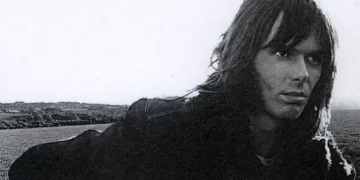
















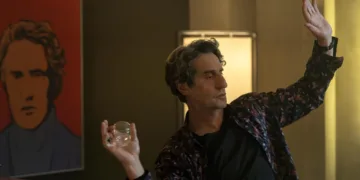











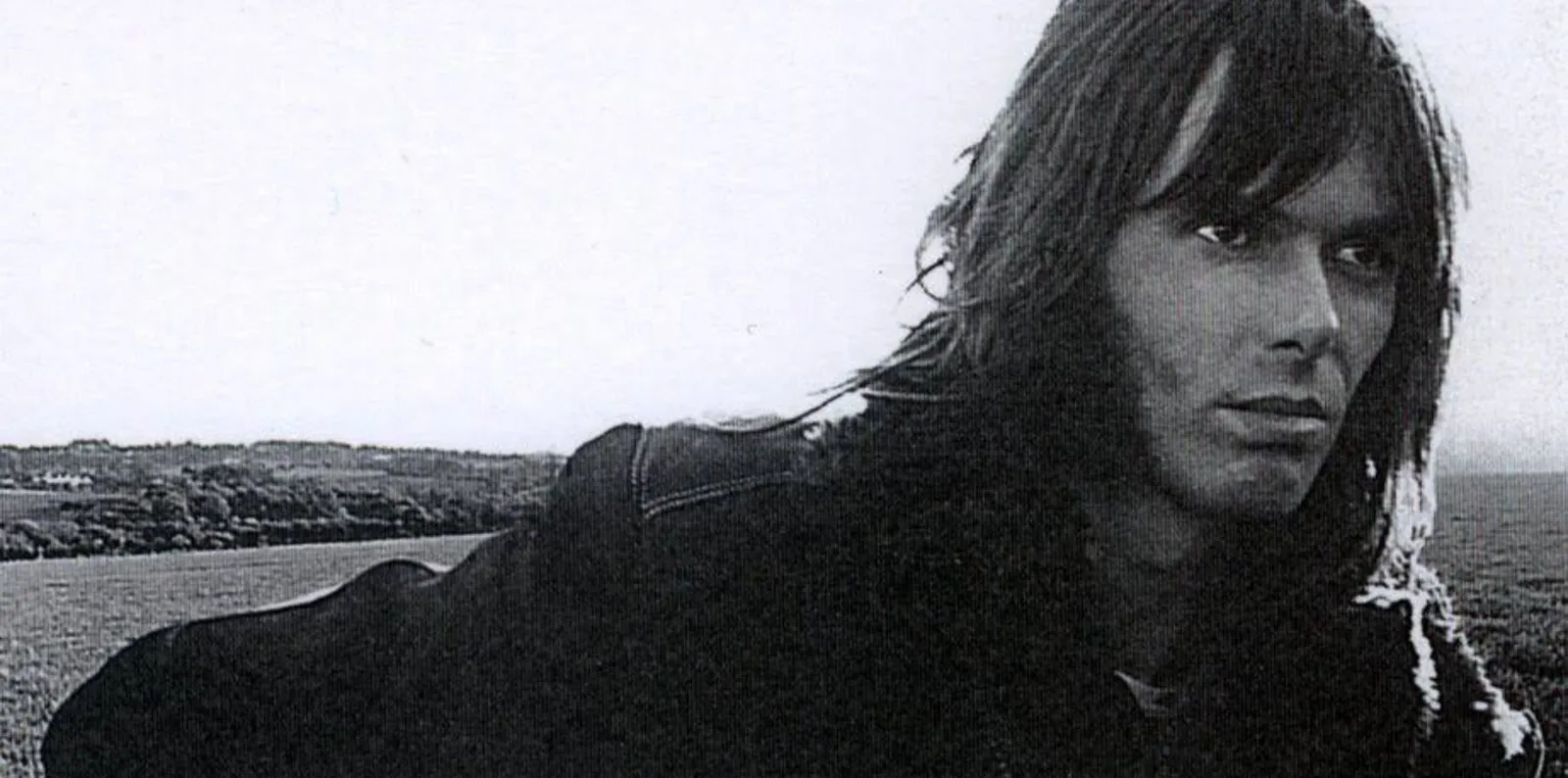

The Session Man treats Michael Treen’s documentary as a cool, meticulous study of professional paradox. At its centre stands Nicky Hopkins, the defining session pianist of the 1960s and 70s, whose hands shaped the sound of rock aristocracy.
Trained rigorously at the Royal Academy of Music, he filters that discipline into a blues-rock touch that feels both controlled and raw, precision turned into something that sounds impulsive. His piano lines thread through the work of The Rolling Stones, The Who, The Kinks, and the solo projects of The Beatles, crystallised in John Lennon’s Imagine.
He functions as the dependable, flexible constant alongside the volatile giants of the period, a quiet axis around which louder egos spin. Treen constructs the film as a kind of reverse star portrait, stripping away the mythology of flamboyant frontmen and adjusting the frame so that the sideman steps into the light of history. The result respects an artistic life that saturates rock history while the face attached to those notes remains largely unseen.
The Aesthetics of Accompaniment
Hopkins’s artistry lives in adaptation. He bends his classical foundation toward soul, rock, and the psychedelic currents of the San Francisco scene, and he extends that fluency to instruments such as the harpsichord. His touch brings specific grain and contour to each track; the film treats him as someone who shapes a recording rather than someone who simply executes a part. Treen’s most revealing choices sit in the way he uses archival footage and isolated musical passages.
The film turns listening into a visual act, cutting and arranging material so that the mechanics of a piano line become legible. Praise for Hopkins’s brilliance gives way to demonstration, and the spectator can track what the ear might usually file away as background. Keith Richards and Mick Jagger appear and describe a collaborator who functions as a fully integrated band member rather than a distant contractor. The long-standing paradox comes into focus through image and sound: Hopkins’s playing fuses with the DNA of classic tracks while his name hovers at the margins of fame.
The strongest passages arrive when Treen isolates Hopkins’s contribution inside familiar songs. The image may stay on archival material, yet the ear latches onto a single keyboard figure that holds the arrangement together like an unseen girder. The architecture of the music becomes apparent, and the film invites the audience to experience the uncanny sensation of realising how much of a beloved track rests on a part that usually slips past conscious notice.
The editing rhythm turns discovery into a small shock. Hopkins appears as the quiet architect that every towering act depended on, an alert collaborator whose ideas seem to flow without limit. The documentary keeps returning to this dynamic, and the repetition works on the viewer’s psychology, training perception to search for the piano line hiding in the mix.
Identity, Illness, and the Star Quality Void
The film eventually shifts from musical analysis into a character study shaped by shadow. Hopkins emerges as a figure defined not only by mastery but by chronic struggle. His long conflict with Crohn’s disease, a condition that renders the physical strain of touring almost impossible, locks him into the world of studios. Treen frames this as a kind of enforced destiny.
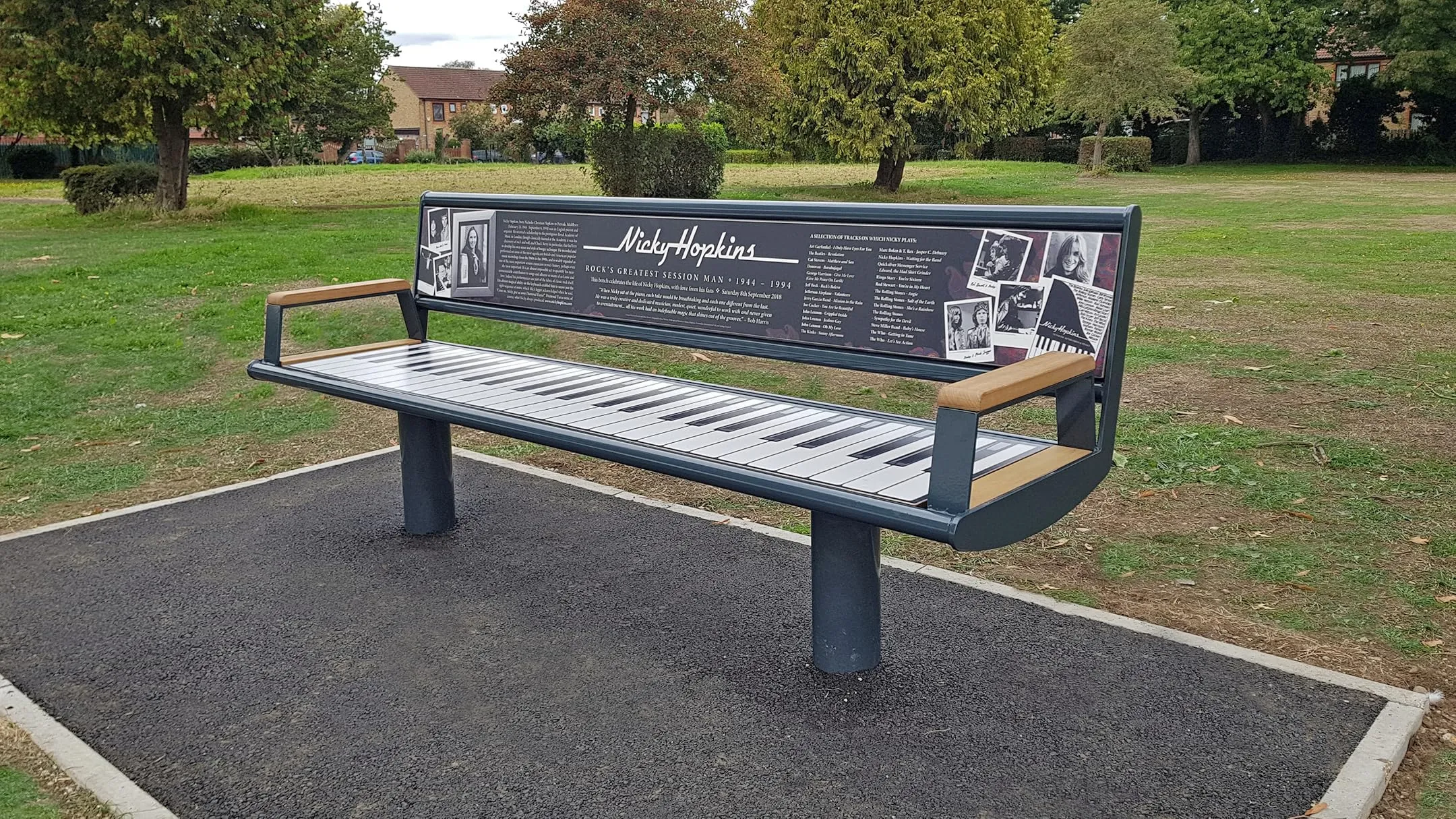
The glamour of live performance recedes, replaced by the relentless cycle of session work and the demands that come with it. The documentary looks directly at the darker textures of that routine: rapid turnarounds, dependence on alcohol and drugs to dull pain and maintain tempo, and a pattern that leads to rehab. Within this arc, the fact of his death at 50 acquires harsh emotional force; the score of his life tilts toward tragedy.
Accounts of Hopkins describe a modest temperament that made collaboration easy and generous. He undercuts his own legend with a quip, calling himself “the reincarnation of Chopin,” a line that functions as both joke and sly acknowledgment of his gifts. Treen raises a thorny question yet keeps it largely at the edges of the frame: why did a musician of this calibre fail to claim conventional stardom?
The film hints at an answer that sits somewhere between personality and industry appetite. Technical genius appears as one tool; fame seems to demand a louder, more brazen armour of ego that Hopkins either lacked or refused. His solo projects fade with little impact, a fact the film touches on without prolonged scrutiny and with a sense of professional courtesy.
The documentary affirms the quiet ethics of the sideman and keeps its gaze away from the harsher psychology of celebrity, where the star often survives by cultivating a flaw into a brand. The tension between artistic essence and public persona lingers as an unresolved question, and that uncertainty gives the portrait a faintly existential charge.
Pacing, Light, and the Archival Gaze
Michael Treen works with a wide span of musical and personal history, compressing decades into a documentary that moves quickly. The running time, under ninety minutes, produces a brisk tempo that can feel schematic, as if the film functions as an introduction rather than a thorough biography. Certain narrative strands seem to call for longer scenes and slower editorial breathing room.
Yet the sensory design of the piece carries its own pleasures. Bob Harris’s narration, steady and warm, guides the viewer through the chronology with the unhurried cadence of a seasoned broadcaster. His voice operates like a stable camera, holding the material together while images flicker past.
Visually, Treen leans on period archival footage to construct a textured surface. The grain of the images, their minor imperfections and muted colours, create a distinctly analogue atmosphere that suits Hopkins’s era. The look recalls worn vinyl sleeves and dim rehearsal rooms, and the contrast in these images gives the film a subtle noir echo, as if Hopkins’s life plays out in a series of musical alleyways and half-lit studios.
Some clips carry the slightly generic feel of common library material, and the scarcity of full music tracks, replaced by carefully chosen fragments, reveals the constraints at work. These choices shape the soundscape into something closer to a collage than a continuous concert.
Those restrictions do not interfere with the central project. Treen still manages to articulate, through image, sound, and structure, a long overdue acknowledgement of an artist whose work has travelled the world through other people’s names.
The documentary functions as a kind of moral rebalancing. It gives a measure of visual and narrative prominence to a musical mind that spent a career inside other people’s spotlights, a session genius who shaped the feel of rock history while remaining, quite literally, a figure in the shadows.
The Session Man is a documentary film dedicated to the life and career of Nicky Hopkins, the legendary and highly prolific session pianist who contributed to over 250 albums, including seminal works by The Rolling Stones, The Beatles, The Who, and The Kinks. Directed by Michael Treen, the film had its world premiere in October 2023 at the Doc’n Roll Film Festival and was released in North America on video-on-demand platforms like Amazon Prime in November 2024. As of November 2025, it is also scheduled for a theatrical release in UK cinemas, providing an in-depth look at a musician widely considered rock and roll’s greatest sideman.
Credits
Title: The Session Man
Distributor: Moviehouse Entertainment (Sales), Amazon Prime/VOD (North America)
Release date: October 26, 2023 (World Premiere, Doc’n Roll Film Festival), November 5, 2024 (North America VOD), November 21, 2025 (UK Cinemas)
Running time: 87 minutes (1 hour 27 minutes)
Director: Michael Treen
Writers: Mike Treen, Valentine Palmer
Producers and Executive Producers: John Wood, Mike Sherman, Michael Treen
Cast: Bob Harris (Narrator), Keith Richards, Mick Jagger, Peter Frampton, Dave Davies, Pete Townshend, Bill Wyman, Jim Keltner, Harry Shearer, Moira Hopkins (Nicky’s Widow)
Editors: Ashley Scott, Mark Giffin, Mike Treen
Composer: Mark Isham
The Review
The Session Man
The Session Man succeeds as a necessary historical correction, vividly demonstrating Nicky Hopkins's profound influence on rock's greatest recordings. It is an affectionate, musically rich tribute to a genius whose quiet artistry defined an era from the sidelines. The film captures the tragedy of his personal struggles and the brilliance of his playing. While it moves too quickly through complex life chapters and leaves the question of his anonymity unanswered, it offers compelling evidence that Hopkins was an indispensable architectural force in modern music.
PROS
- Vividly demonstrates Hopkins’s instrumental genius and versatility (piano, harpsichord).
- Features powerful testimonials from legendary collaborators (Jagger, Richards).
- Effective use of archival footage and isolated musical snippets.
- Successfully provides long-overdue recognition for a foundational sideman.
CONS
- Pacing is too fast, making the film feel like a primer rather than a definitive biography.
- Avoids deep analysis of why Hopkins never achieved solo stardom.
- The quick treatment of his later life and addiction issues feels somewhat cursory.