





























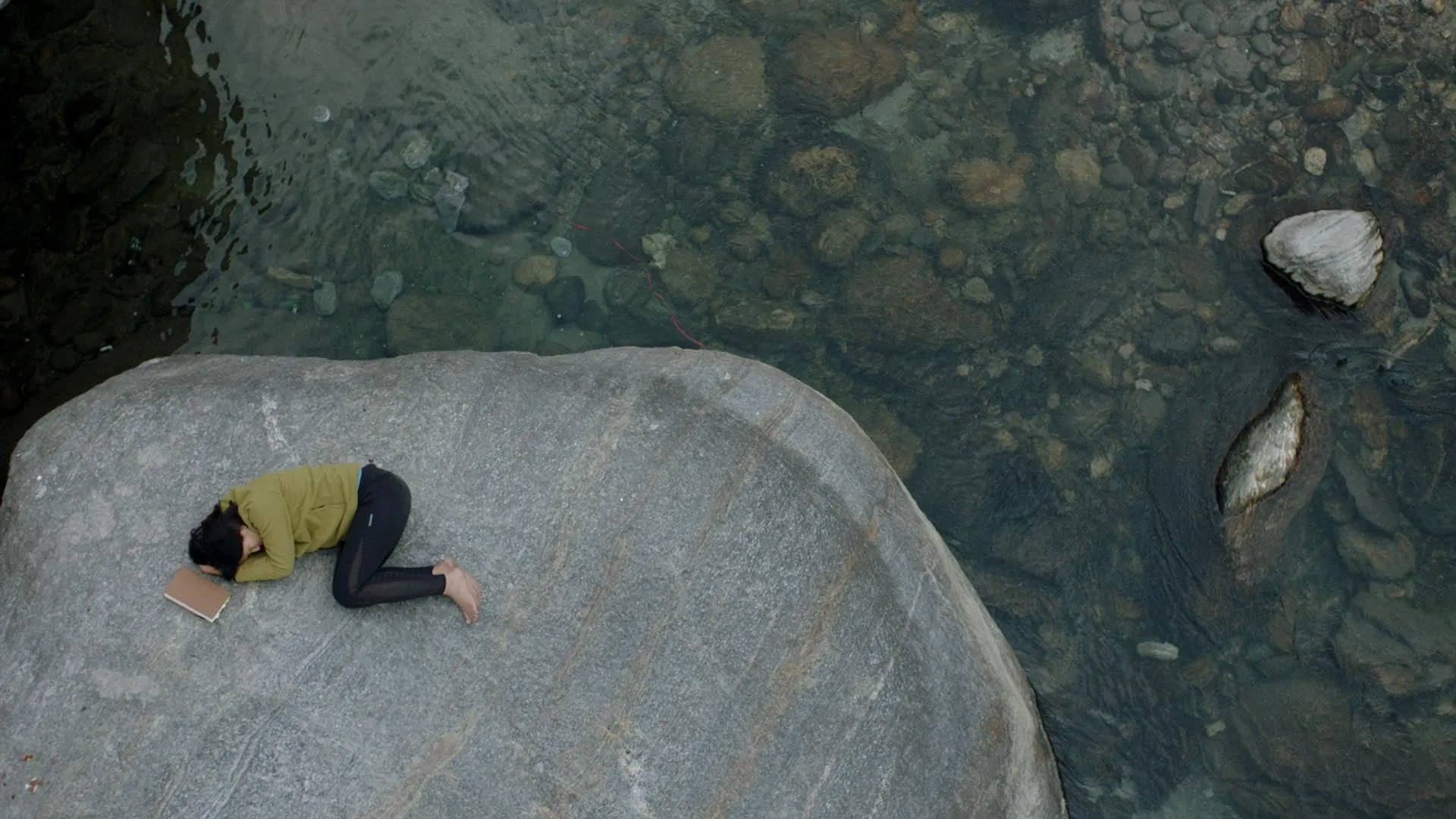

Tribeny Rai’s feature debut, Shape of Momo, arrives like a quiet murmur from the remote, high-altitude landscape of Sikkim in India. Shot primarily in the Nepali language, the film introduces Bishnu (Gaumaya Gurung), a 32-year-old who abandons her urban life in Delhi and returns to her ancestral village. Her return shapes a domestic scene that feels tight and airless. Three generations of women share the frame: a grandmother who waits for a distant son, a mother weighed down by family and community, and the pregnant sister Junu, seeking fragile refuge from a troubled marriage.
Bishnu’s arrival unsettles this delicate arrangement. The crisp Himalayan vistas seem piercingly beautiful while a quieter unease settles underneath. The landscape appears as an empty, echoing stage that hides the grinding difficulty of survival these women endure under the constant pressure of a patriarchal order. The mountains stand as witnesses to an interior human struggle that offers no clear path of escape.
The Architecture of Disquiet
Bishnu returns as an assertive, abrasive, fiercely independent figure, a presence that offers little conciliation or softness. The film refuses to soften her sharpness, and her difficult humanity feels fully present. She appoints herself as a challenger of perceived inequalities and insists on the superfluousness of men in women’s lives.
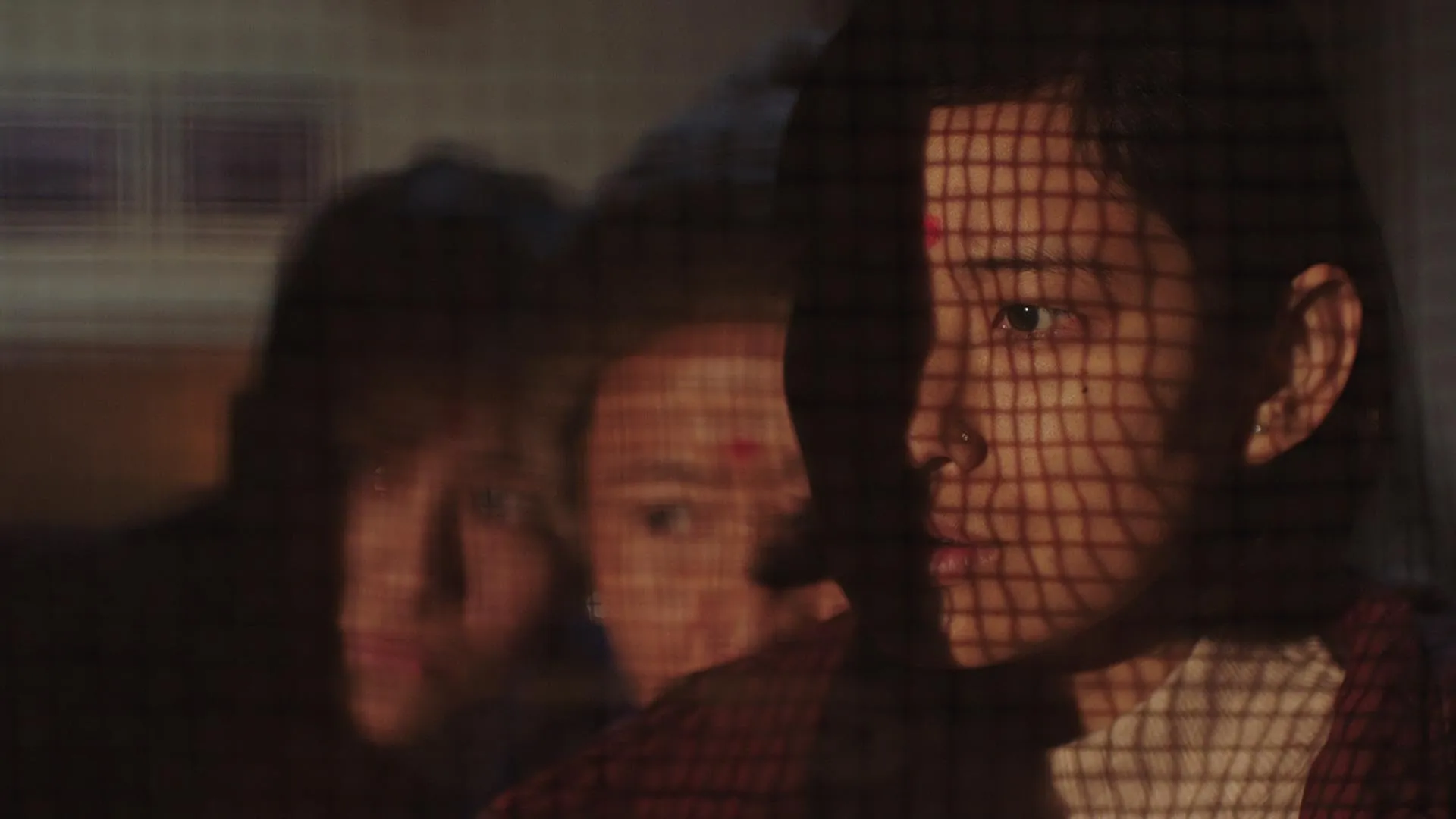
The household of women becomes a field of conflict, with the grandmother’s aching devotion to her absent son, the mother’s acceptance of domestic and communal burdens, and Junu’s attempt to flee the constraints of her marriage. Bishnu’s progressive arguments frequently spark friction with her relatives and the surrounding community, splintering the uneasy calm of the ancestral home.
She stands at a chilling intersection of duty, identity, and agency, pressed to define her sense of self against the weight of her own name. The sudden appearance of Gyan (Rahul Mukhia), a local architect, deepens this uncertainty. Their growing attachment serves as an existential trial that forces Bishnu to examine how firmly her feminist convictions hold once affection and desire begin to stir.
The Dumpling and the Dilemma
The film’s humanist core concerns the struggle for a self-defined identity, a search for recognition that moves beyond the prescribed roles of daughter, wife, or mother. This portrait of Tradition versus Modernity questions ancestral obligations while still observing the people who carry them with a wary tenderness. A vivid tension emerges between the customs Bishnu once escaped and the ambition she brings home with her.
The titular momo, the small, ubiquitous Nepalese dumpling, becomes the story’s symbolic anchor. The act of shaping and sharing the momo provides a cultural line that threads through the film. A misshapen dumpling suggests suffocating obligation and a sense of feminine failure. When sisters work side by side to make it, the food points to brief moments of honest, necessary connection.
The momo functions as a meal and as a vessel for memory, holding the enduring and confining pull of tradition. Other figures loom at the edges of the frame, including the specter of migrant labor and the relentless movement of looming development, each deepening the instability of Bishnu’s inner world.
A Vision of Unsentimental Truth
Tribeny Rai’s assured feature debut demands attention. The script, co-written with Kislay, forms a nuanced piece of work that folds peripheral concerns into Bishnu’s personal arc. The film resists the urge to simplify its characters or its setting. The hills feel populated by complex, contradictory individuals who resist and uphold the very structures that hold them in place.
Archana Ghangrekar’s widescreen cinematography is essential to this vision, a visual approach that drifts between the stark immediacy of documentary and the sweeping reach of a travelogue. The camera records both the beauty and the hardship of the Himalayan terrain, securing the story in a vivid sense of place. Gaumaya Gurung’s breakthrough performance as Bishnu holds the film steady, carrying her difficult, layered presence with conviction.
The supporting work remains strong, especially Shyama Shree Sherpa as Junu and the grounded presence of Pashupati Rai as the mother. The late Bhanu Maya Rai as the grandmother brings an unexpected, quiet grace. By tracing a specific regional experience of growth, the film finds something recognizable across distant lives. It speaks of the solitude that shadows progress and the relentless effort required to hold a space for one’s own desires.
Shape of Momo (Original Nepali title: Chhora Jastai) is the debut feature film from writer-director Tribeny Rai, set and shot in the remote region of Sikkim, India. The film had its World Premiere at the prestigious Busan International Film Festival on September 21, 2025, and has since screened at major international events like the San Sebastián International Film Festival. As of today, November 25, 2025, the movie is concluding its international festival run and has not yet received a wide theatrical release or been made available on major streaming platforms. Its availability will follow its acquisition by distribution companies, with expectations that niche streamers may show interest due to its intimate, culturally specific subject matter.
Full Credits
Title: Shape of Momo (Original Nepali title: Chhora Jastai)
Release date: World Premiere at the Busan International Film Festival on September 21, 2025.
Rating: PG
Running time: 114 minutes.
Director: Tribeny Rai.
Writers: Tribeny Rai, Kislay.
Producers and Executive Producers: Producers: Geeta Rai, Kislay. Executive Producers: Mike Goodridge, Xu Jianshang.
Cast: Gaumaya Gurung, Pashupati Rai, Shyama Shree Sherpa, Rahul Mukhia, Bhanu Maya Rai, Janaki Kadayat.
Director of Photography (Cinematographer): Archana Ghangrekar.
Editors: Anil Kumar, Kislay Kislay.
Composer: Mikhail Marak.
The Review
Shape of Momo
The film is a powerfully observed study of generational struggle and individual resistance set against a spectacular, yet unforgiving, Himalayan backdrop. Rai handles the friction between tradition and female autonomy with a raw, authentic complexity. It is a work of difficult beauty, forcing the viewer to meditate on the price of self-determination and the ambiguity of belonging. The film’s greatest strength lies in its refusal to offer easy solutions, embracing the humanity of its conflicted characters.
PROS
- Protagonist Bishnu is complex, abrasive, and deeply human.
- Beautifully shot, capturing both the majesty and the hardship of the Himalayan setting.
- Seamlessly blends personal, familial, and societal conflicts with thematic depth.
- Excellent performances across the board, particularly the core group of women.
- Effective use of the momo motif to represent duty and connection.
CONS
- The meditative, humanist focus may feel slow to some viewers expecting a conventional dramatic plot.
- The film avoids neat conclusions, which could leave some feeling unsatisfied.
- Bishnu's polemic nature makes her challenging to connect with consistently.