

























Dare You to Death arrives on streaming as a telling example of where Thai crime procedurals are heading. The story follows a high-stakes college gathering in which eight senior engineering students, calling themselves the Avengers, play Truth or Dare. What begins as a night framed as leisure ends with Puifai’s suspicious death, and the series treats that loss as the ignition point for an investigation into youth, influence, and the ways power circulates through supposedly ordinary spaces.
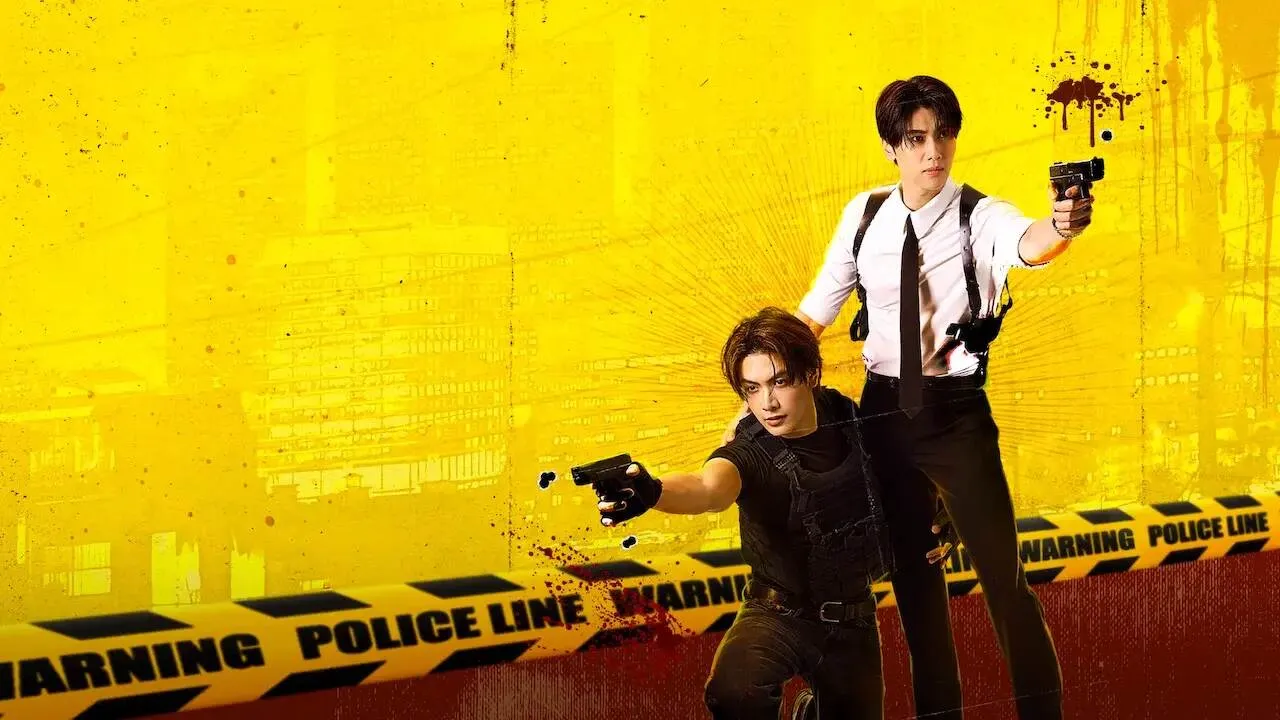
The case brings together two very different law enforcement figures. Jade, a local officer, first meets his new superior, Kamin, through an accidental traffic citation. Kamin shows up as a foreign-educated inspector assigned to lead Crime Investigations. Working in tandem, they dig into what happened to Puifai while also tracking a drug network connected to the Drink Me club.
The inquiry pushes them toward suspects who happen to be the children of influential political and military leaders, and each step forward carries the weight of a rigid social order that protects certain families. The stakes tighten for Jade when his younger brother, Jay, ends up on the list of students being scrutinized.
Interrogating Power and Hidden Histories
The show’s procedural machinery repeatedly puts legal accountability in direct contact with inherited status. Interrogations pull apart the Avengers’ polished unity and expose fractures inside the group. The series surfaces tension between Puifai and her boyfriend, Champ, while also pointing to Tar, whose earlier conflict with Puifai ties back to his struggles with substance use. Kamin conducts these interviews with a cool, observant presence, watching for small physical tells and signs of anxiety that suggest the students are holding something back beyond grief.
That search for clarity runs into institutional resistance, especially through figures like MP Ratana, who uses her political standing to keep her son out of the police’s reach. Scenes like these echo a familiar civic problem: the law becomes hardest to apply at the exact moment it threatens the comfort of the elite. Alongside the murder case, the secondary thread about drug distribution at the Drink Me club widens the frame to show how the city’s problems operate as a system rather than a set of isolated crimes.
Frequent flashbacks function as a stabilizing narrative device, supplying necessary context for Puifai’s history. These glimpses include her chronic health issues and her reliance on sleeping medication, details that complicate any easy reading of her as a single-note victim. The series invites attention to how private vulnerability gets managed, hidden, or exploited inside a social circle shaped by privilege and reputation.
Masculinity and Professional Evolution
Much of the show’s emotional pull rests on Archen Aydin as Jade and Natachai Boonprasert as Kamin. Jade embodies a shift toward a more accessible, humorous model of a screen detective. He carries a playful wit, and his commitment to the work still registers as real. His immediate fascination with Kamin introduces a visible vulnerability, and the series treats that openness as part of his professionalism rather than a distraction from it.

Kamin reads as an uptight and highly professional presence, someone who treats the job with discipline and guarded precision. He voices a clear philosophy about his role: he works without chasing authority for its own sake and avoids the performative gesture of flashing a badge. That stance matters in a story where the badge can mean access, intimidation, or theater depending on who is holding it and who is being questioned.
Their working dynamic begins with friction. Jade proposes a competition and frames partnership as something to be earned, which places pressure on hierarchy from the first day. Over time, the relationship shifts into mutual respect after a successful drug bust. Their chemistry plays through verbal sparring and through an undercover operation where they pretend to be in a romantic relationship, a choice that folds genre playfulness into the procedural frame while still keeping the investigation moving.
The supporting cast deepens the mystery’s moral texture. Jay, in particular, lands as a protective brother whose conviction complicates Jade’s ability to stay objective. Around them, the friends orbiting the Avengers often show an unsettling detachment from the death of their peer, and that chill registers as a pointed question about what happens to empathy inside insulated, privileged groups.
Aesthetic Tension and Genre Fusion
The production leans into a dark, immersive visual palette that sustains unease from scene to scene. Dim lighting and a moody aesthetic keep the show grounded in crime-thriller language, and the visual approach treats familiar locations as pressured environments where secrets feel close to the surface. The pacing moves with intention, shifting cleanly from the chaotic energy of the opening party to the clinical precision of forensic analysis.
Sound choices do important work in shaping tone. The vocal performances in the opening theme establish an emotional register that prepares the audience for the story’s weight. Some cues arrive with a deliberate explicitness to signal turns between drama and humor, yet the directing keeps tension as the primary throughline. The camera work matches that aim, capturing high-energy sequences like the pursuit of a drug dealer, then tightening into intimacy during quieter scenes at a rooftop bar.
Through this control of image, sound, and rhythm, Dare You to Death integrates the mechanical demands of police procedure with the personal stakes carried by its two investigators. It also points to a maturing style of genre storytelling on global platforms, where the narrative attention shifts toward the ways systemic corruption pressures individual choices and reshapes what justice can look like inside a stratified social order.
Dare You to Death premiered on December 18, 2025. It is available for viewing on GMMTV’s official YouTube channel and the Netflix and Viu streaming platforms. The plot focuses on the friction between a local captain and a foreign-educated inspector who must collaborate to solve a student’s suspicious death. Their investigation leads them into a web of secrets involving wealthy peers and illicit substance networks. The series features a dark visual style that emphasizes the high stakes of the mystery.
Full Credits
Title: Dare You to Death
Distributor: GMMTV, Netflix, Viu
Release date: December 18, 2025
Rating: TV-MA
Running time: 47 minutes
Director: Jade Bunyoprakarn
Writers: MTRD.S, Jade Bunyoprakarn
Producers and Executive Producers: Sataporn Panichraksapong, Darapa Choeysanguan, Ekkasit Trakulkasemsuk, Sakon Tiacharoen, Nuttapong Mongkolsawas, Supaporn Lertthitiverakarn
Cast: Archen Aydin, Natachai Boonprasert, Thipakorn Thitathan, Wachirawit Ruangwiwat, Wanwimol Jaenasavamethee, Harit Cheewagaroon, Teepakorn Kwanboon, Pathitta Pornchumroenrut
Director of Photography (Cinematographer): Phuchit Phuchitsri
Editors: Pradthana Noiyoo
Composer: Kacha Nontanun
The Review
Dare You To Death
Dare You To Death presents a sophisticated evolution of the crime procedural, effectively using the suspense of a murder mystery to critique the insularity of youth and the weight of systemic privilege. The production finds its strength in the atmospheric tension and the nuanced dynamic between its lead investigators. While the pacing occasionally lingers on stylistic shots, the emotional gravity and procedural depth create a compelling narrative. It is a bold, polished entry that challenges standard storytelling conventions by placing social consequences at the forefront of its thriller framework.
PROS
- The use of dim, moody lighting and a dark aesthetic perfectly maintains the thriller tone.
- The professional friction and evolving respect between Kamin and Jade provide a strong emotional anchor.
- Effectively explores how political and military influence can obstruct legal justice.
- The secrets within the "Avengers" group keep the audience guessing about the true nature of the tragedy.
CONS
- Some scenes linger excessively on slow-motion introductions or stylistic flair.
- Certain procedural moments, such as suspects using phones during questioning, feel unrealistic.
- The transition between lighthearted flirting and grim forensic investigation can feel abrupt.