

























Yeo Eui-ju reflects a very current television figure: the teenager whose public life and digital life operate on separate tracks. At school, she is a diligent senior in an all-girls high school. Away from that setting, she writes serialized Boys’ Love web novels under the pen name Imuk. Her stories first struggle to gain attention. Her routine changes when four attractive young men move into the house next door, then appear in her classroom as the school’s newest faculty members.
Eui-ju treats this proximity as creative fuel. She turns her teachers into fictional muses, reading romance into their platonic exchanges and transforming daily behavior into material for her chapters. The clash between her hidden hobby and academic life creates instant pressure. The story builds around the tension that follows after her homeroom teacher, Ga Woo-su, discovers her secret work.
It studies the gap between a vivid imagination and the stiff limits of ordinary life. The premise also points toward a sharp modern problem: real people becoming raw material for viral fiction. The show uses comedy to examine teen obsession, creative hunger, and the strange new intimacy created by digital platforms.
The Quartet of Muses and the Physics of Attraction
Kim Hyang-gi gives the series its anchor through a performance built around Eui-ju’s romantic inexperience. Eui-ju reads every glance between her teachers as proof of hidden passion. The show marks her outsider status through clear visual shorthand.
Her messy hair and oversized glasses become the uniform of her private literary identity. That private world remains under threat at home, where her younger brother uses her secret to extract snacks and favors. Their sibling dynamic pulls the high-stakes fantasy of web-novel success back into a comic, recognizable household rhythm.
The four teachers supply the archetypes Eui-ju needs for fiction. Ga Woo-su starts as a cold, logic-driven math genius. His first exchanges with Eui-ju revolve around strict discipline and an argument over a broken phone. He later moves from antagonist to reluctant collaborator. Yoon Dong-ju functions as the ideal romantic foil. He is a literature teacher and published novelist with a gentle manner.
Also Read






His habit of defending Woo-su’s harsh behavior gives Eui-ju prime story material. Jung Gi-jeon, the PE teacher, brings the physical charge her writing requires. His tactile nature and tendency to give colleagues massages pass through Eui-ju’s romantic filter. Noh Da-ju adds cultural range through his multilingual skills and polyglot identity, widening the group’s social texture.
A power struggle begins when Woo-su catches Eui-ju mid-chapter. He keeps her illicit writing secret, then demands influence over the story. He wants to become the hero, no longer a secondary figure in her fictional universe. This blackmail traps Eui-ju in an awkward collaboration. She faces major creative friction as she revises her characters to satisfy her muse’s vanity. The teacher-student hierarchy shifts into something stranger and funnier: editorial control disguised as discipline.
Meta-Narratives and the Ethics of the Gaze
The web novel gives the series much of its speed. Eui-ju’s story goes viral after she folds real-life incidents into her chapters. A fictional punch or a debt drawn from actual events hooks the digital audience. Writing becomes catharsis.
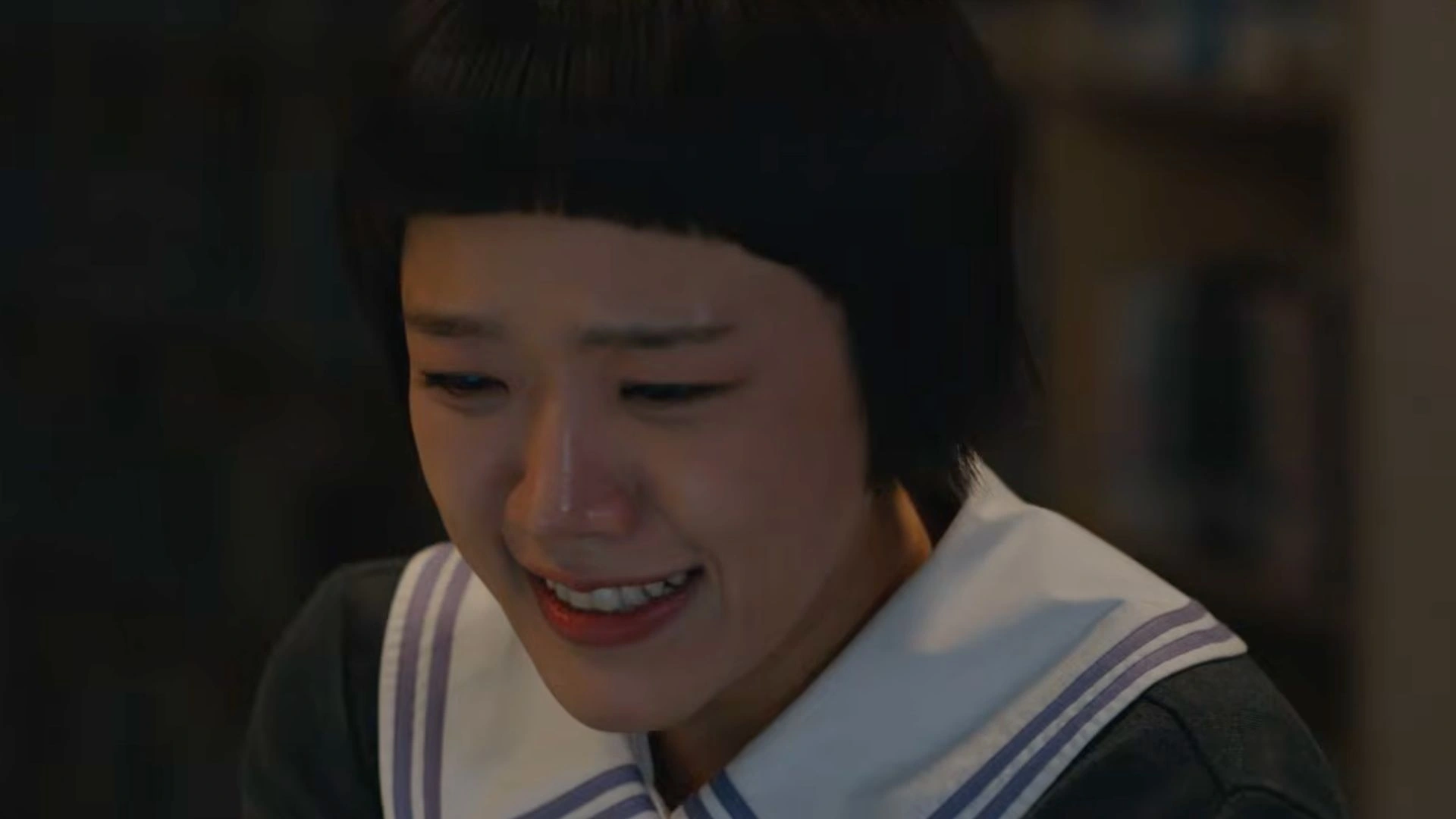
She uses fiction to get revenge for math demerits and long essays, giving comic shape to her powerless classroom position. The show studies the way she converts mundane incidents into heightened drama. A shared car ride or a plain conversation becomes charged through her writerly gaze. The production makes that process visible by placing Eui-ju on her balcony, in surveillance mode, or hiding in the teachers’ car.
The premise raises ethical questions about using real people without consent. Eui-ju lives with constant anxiety that the other teachers will discover their roles in her viral success. The series draws attention to the friction between private imagination and public reputation.
Ga Woo-su’s vanity gives the issue its sharpest comic edge. He cares deeply about his character’s rank in the story and seems far less worried about scandal. His fixation on becoming the protagonist reflects a modern obsession with self-image and digital representation. The show moves away from the familiar angry-teacher response and studies a narcissistic need for validation inside fiction.
Reality and fantasy blur across the series. Eui-ju’s imagination shapes how she reads the world. She struggles to separate her fictional versions of the men next door from their actual personalities. That gap works as a critique of media culture, where consumers project stories onto real people and then treat those projections as truth. The series reflects a growing social habit of turning identity into public content. Eui-ju’s creative ambition gives her power, and it also creates her greatest risk.
Cultural Stigma and the Exchange of Ideas
The school setting creates room for social pressure and cultural stigma. Eui-ju’s best friend, Choi Go-ya, represents a familiar barrier. Her open prejudice against the BL genre pushes Eui-ju deeper into secrecy. That detail reflects the stigma still attached to certain fandom spaces in South Korea.
Jennie, a Singaporean exchange student, alters this dynamic. She becomes a kindred spirit who also uses fiction to locate herself socially and emotionally. Their bond over web novels shows how digital media can cross national lines. Jennie’s admission that she learned Korean through these stories points to the format’s global reach.
Institutional pressure complicates the comic surface. The principal’s plan for a school documentary brings a new risk. Ga Woo-su’s refusal to take part in the filming suggests a traumatic past or a deep rebellion against authority.
That subplot brushes against the sunnier mood of Eui-ju’s writing and implies that the teachers have private lives her fiction fails to consider. Academic rivalry arrives through Eun Ha-su. As the top student, her jealousy over the attention Eui-ju receives in math class creates direct obstacles.
The 15-page essay on Euclid becomes a symbol of the clash between logic and creativity. Woo-su uses math as discipline. Eui-ju uses fiction as escape. Their conflict reflects a larger cultural tension between traditional academic success and the less conventional routes opened by the creator economy.
The series suggests that these worlds need some shared ground. Eui-ju’s demerits and failed tests become the cost of digital fame. The high school turns into a testing site for competing values: grades, reputation, creativity, popularity, and control.
Tonal Subversion and the Evolution of the K-Drama
The series uses physical comedy to steady its meta-premise. Slapstick beats, including students falling through doors and a pigeon-related mishap for Woo-su, keep the tone rooted in familiar comedy. These scenes give the show a recognizable genre base as it works through current digital concerns.
Eui-ju’s imagination appears through split screens and stylized sequences. Those visual cues separate her fictional world from the bright, warm tones of her real neighborhood. The color palette keeps the atmosphere youthful and optimistic.
The pacing moves quickly from the first neighborhood encounter to the classroom power struggle. That speed mirrors the consumption habits of the web-novel audience shown inside the series. The show treats the BL genre with self-awareness, acknowledging the fandom culture and tropes that drive digital engagement.
Making the genre a primary plot device allows the series to engage with a visible cultural shift in global entertainment. Once-niche media now occupies a much larger place on streaming platforms, and the show folds that shift into its own structure.
Traditional romance tropes are repeatedly reworked. The series avoids problematic teacher-student romantic pairings and places its energy on creative mentorship, coercive collaboration, and mutual blackmail. That choice gives the story a smarter shape. It favors artistic growth and comic negotiation over familiar romantic clichés. The focus stays on Eui-ju’s growth as a writer and Woo-su’s development as a mentor.
This direction signals a change in how television can handle charged relationships in school-based stories. The show challenges older formats by making creation the main source of power. In this world, the writer controls the room, which may be the funniest and most accurate thing the series has to say about the streaming age.
Absolute Value of Romance is a South Korean coming-of-age romantic comedy that premiered on April 17, 2026. The series is currently available for streaming on Coupang Play in South Korea and for international audiences through Amazon Prime Video. It centers on a high school student who leads a secret life as a writer of bold web novels, only to find that the four new handsome teachers at her school have inadvertently become the real-life muses for her fictional stories.
Where to Watch Absolute Value of Romance Online


Full Credits
Title: Absolute Value of Romance
Distributor: Coupang Play, Amazon Prime Video
Release date: April 17, 2026
Rating: TV-14
Running time: 60 minutes
Director: Lee Tae-gon, Kim Jun-hyung
Writers: Lee Min-joo
Producers and Executive Producers: Mediacorp, Good Wave Inc., Borderless Film
Cast: Kim Hyang-gi, Cha Hak-yeon, Kim Jae-hyun, Son Jeong-hyeok, Kim Dong-gyu, Kim So-hee, Yoon Hye-rim, Gladys Bay, Jung Da-on, Jang Jae-young, Han Se-hee, Noh Joo-eun, Yang So-min
Composer: Song Hyun-jong, Viola, Naiv
The Review
Absolute Value of Romance
This series provides a sharp look at the digital creator economy and the friction between creative ambition and academic structure. It avoids the tired pitfalls of teacher-student romance. Instead, it offers a clever meditation on how we project narratives onto others. While some physical comedy feels dated, the meta-commentary on web novel culture feels timely. It is a lighthearted yet thoughtful exploration of privacy and vanity in the streaming era.
PROS
- Clever subversion of traditional romantic tropes.
- Relatable exploration of online fandom and web novel culture.
- Strong performance by Kim Hyang-gi as a budding writer.
- Successful avoidance of problematic power dynamics between student and teacher.
CONS
- Minor plot points rely on significant logical inconsistencies.
- Slapstick humor occasionally distracts from the sophisticated meta-narrative.
- Supporting student characters remain somewhat underdeveloped.