


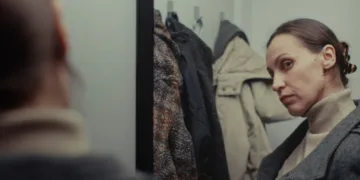




























Blue Therapy opens a carefully staged door into relationships already under severe pressure. The series follows relationship expert Karen Doherty as she meets several couples in a clinical setting, each one arriving with a conflict serious enough to threaten the future of the partnership.
Set in the United Kingdom, the show presents its therapy sessions through a polished reality-TV frame, placing the participants inside a grand mansion whose elegance sits uneasily beside the emotional labor happening in the room. Doherty brings twenty years of experience to these conversations, and the premise is built around honesty, trust, and the hard business of trying to repair damage once it has become visible.
The first sessions are structured around a familiar narrative mechanic: the polite surface cracks, then the deeper problem begins to name itself. Viewers watch the couples move from guarded introductions into more painful admissions, with each revelation landing as both personal truth and episodic drama.
The series joins traditional therapy with contemporary reality television technique, and the cameras alter the emotional temperature. Their presence invites performance at the same time that vulnerability is being requested. That tension shapes the show from the start. Private crises become story beats for a viewing audience.
Unspoken Debts and the Clinical Gaze
Karen Doherty works with a calm, steady authority. She asks direct questions, then lets silence do some of the heavier lifting. That technique strips away the familiar defenses couples may rely on at home, where an argument can be postponed, softened, or simply dodged until tomorrow. In this room, avoidance has fewer places to hide.
Daisy and Jay bring in a relationship strained by the arrival of a child. Their conflict is tied to Jay’s apparent lack of responsibility, and the show pinpoints one especially revealing detail: he left the hospital for hours to get a tattoo immediately after his daughter was born. As a piece of character information, it tells the audience plenty. The moment suggests a gap between the role Jay has entered and the maturity he brings to it.
Mike and Yasmin face a crisis built around financial secrecy. Yasmin learns that Mike has hidden his unemployment and significant debt from her, creating a major breach of trust in a relationship where she provides most of the income. The issue is practical, emotional, and narrative all at once. Money becomes the visible problem, yet concealment is the real fracture.
Maria and Viktor arrive with a conflict about the future. Maria wants a clear commitment through marriage. Viktor avoids the subject entirely. Maria describes the promise rings he gave her as tools used to quiet her concerns, a small object carrying a large emotional charge. Across these sessions, a pattern forms. The men often withhold information or emotional commitment. The women seek stability, then find themselves carrying much of the emotional weight alone.
Doherty does not treat these imbalances as material for easy judgment. She studies the habits that keep the couples from connecting honestly. The therapy room becomes the place where deferred truths are finally placed on the table, and the show is strongest when it allows that process to unfold without too much editorial decoration.
The Aesthetic of Conflict
The production design creates a sharp visual split from the subjects being discussed. Luxury vehicles bring the couples to a grand mansion, a choice that borrows the visual language of dating shows and suggests high-stakes competition. The setting gives the series a glossy surface that can feel strangely mismatched with the therapeutic purpose. The room is asking for honesty. The packaging keeps reaching for spectacle.

Confessionals give participants a separate space to address the camera. These moments supply another angle on the joint sessions, turning each relationship into a story told in fragments: the argument, the reaction, the private explanation, then the next confrontation. The structure is clean, even familiar, and it gives the show momentum. It can also make the emotional material feel processed through reality-TV machinery before it has time to settle.
The soundtrack adds to that tension. Loud pop music frames the emotional beats and occasionally clashes with the seriousness of the sessions. It signals the intended response during tense exchanges, guiding the viewer toward a reaction instead of letting the scene breathe. The episodes also rely on frequent recaps of the same arguments, making sure each conflict remains fresh in the audience’s mind. Cliffhangers carry attention from one segment to the next.
Those glossy choices create the show’s main structural problem. Deep emotional pain is shaped into highlights, and private struggle becomes something tidy enough to consume. The emphasis shifts toward spectacle at points, and that affects how the couples present their problems. Their sessions begin to feel like pieces of a larger media event, even when the emotional stakes inside them are very real.
Communication Failures and Public Vulnerability
The cameras make honest disclosure harder. Participants know they are building a public image in real time, even during sessions meant to strip image away. Some arguments feel slightly performative, shaped in a way that seems ready for social media reaction. That does not make the pain false. It does complicate the storytelling.
Miscommunication runs through the series as its clearest recurring theme. Partners fail to listen. They project insecurities onto each other. They talk around the issue, circle the same grievance, then return to the same wound with fresh irritation and little progress.
The show’s fast rotation between couples gives the episodes pace, yet it limits how deeply each relationship can be examined. Emotional crises arrive in short bursts, which keeps the structure moving and leaves some arcs feeling underdeveloped.
Many of the problems shown come from basic emotional immaturity. Some participants lack the healthy limits needed for a long-term partnership. The therapy sessions remain the most grounded parts of the series because Doherty gives them steadiness. Her presence brings order to material that the editing often pushes toward drama.
Blue Therapy also makes room for a harder truth: professional intervention cannot repair every relationship. Some couples appear too damaged by incompatibility or lack of respect for a session to fix what has already broken. Still, the participants show bravery by admitting failure in front of a wide audience. They expose vulnerable mistakes to public scrutiny, giving the series a raw view of modern love under pressure. Effective communication takes active listening, honest self-examination, and the willingness to face truths that are easier to avoid.
Blue Therapy premiered on Netflix on March 4, 2026. This reality series features seven real life couples who enter intensive therapy to address deep relationship issues and secrets. The sessions are led by Karen Doherty, a seasoned therapist with two decades of experience. The show focuses on Black British couples and emphasizes emotional honesty and truth. You can watch the entire eight episode season on the Netflix platform.
Where to Watch Blue Therapy Online


Full Credits
Title: Blue Therapy
Distributor: Netflix
Release date: March 4, 2026
Rating: TV-MA
Running time: 32, 40 minutes
Director: Andy Amadi
Writers: Andy Amadi
Producers and Executive Producers: Luti Fagbenle, Anna Edwinson, Vanessa Van-Yeboah, Andy Amadi
Cast: Karen Doherty, Maria, Viktor, Mike, Yasmin, Daisy, Jay, Debbie, Kelvin, Dami, Jermaine, Junior, Carmen, Shay, Mons
The Review
Blue Therapy
The series succeeds through the clinical precision of Karen Doherty. Her ability to expose deep relational friction provides honest insight. The intrusive production style creates a conflict between sincerity and entertainment. While the flashy setting feels out of place, the raw honesty of the participants remains effective. It provides a sharp look at the difficulty of modern commitment. The show works best when it focuses on the therapy rather than the television tropes.
PROS
- Karen Doherty provides a steady and insightful presence in every session.
- The participants reveal difficult truths regarding debt, unemployment, and infidelity.
- The sessions strip away the polite excuses couples use to avoid conflict.
- The show clearly identifies how partners fail to listen to one another.
CONS
- The loud pop music often clashes with the somber tone of the therapy.
- The luxury mansion and cars feel unnecessary for a show about emotional healing.
- Frequent recaps and dramatic pauses slow the pace of the episodes.
- Rotating quickly between many couples prevents a deep understanding of their history.