

























Netflix’s Nemesis, co-created by Courtney A. Kemp and Tani Marole, spreads an eight-episode cat-and-mouse chase across the starkly divided neighborhoods of Los Angeles. The series plants two stubborn opponents on opposite sides of the law.
Coltrane Wilder, an elegant criminal strategist running a high-stakes heist crew, wants one final multi-million-dollar score to fund a permanent retirement into legitimate real estate following a profound domestic tragedy. Fixed firmly on his trail is LAPD Detective Isaiah Stiles, an investigator driven to obsession by a multi-year fixation on a crew his bosses insist does not exist.
Directed in its opening chapters by Mario Van Peebles, the production maintains a tricky balance between organized theatrical thefts and messy domestic friction. As both men commit fully to their parallel targets, their professional fixations tear apart their home lives, triggering a collision course where systemic realities and bloodlines crash together. The show delivers a glossy, highly stylized examination of criminal networks, municipal policing, and the heavy toll extracted by a single obsession.
Domestic Warfare and the Broken Mirror
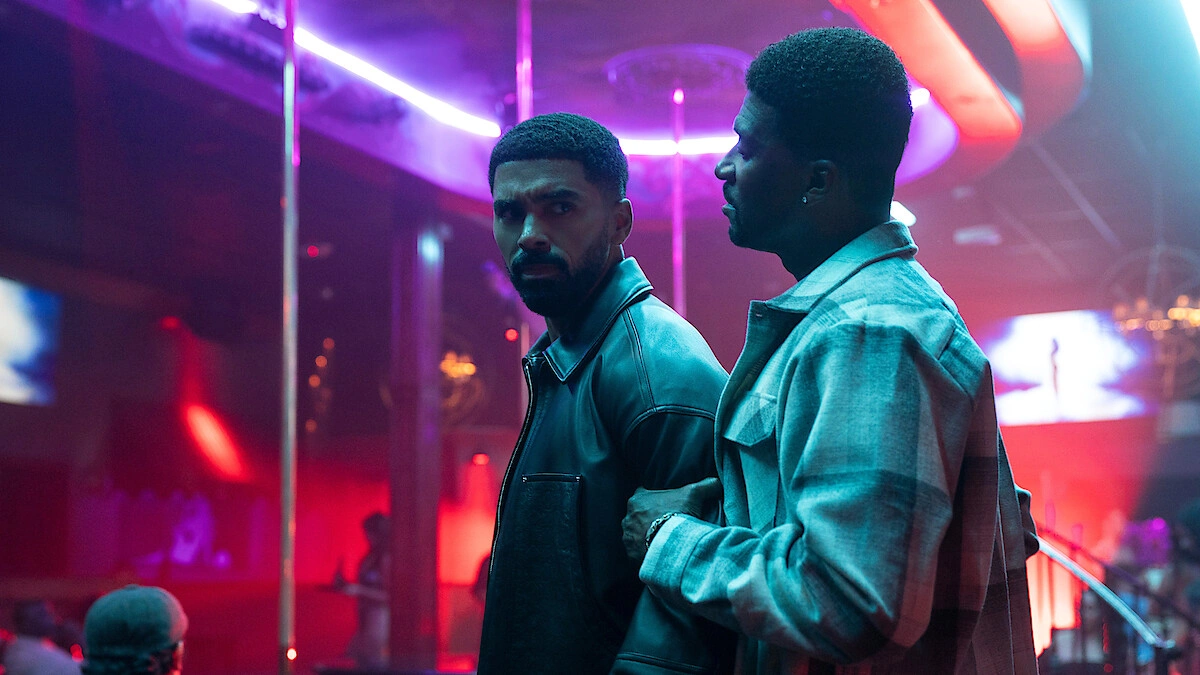
The ideological friction between Isaiah Stiles and Coltrane Wilder forms the narrative backbone, operating as a cracked mirror of professional focus. Matthew Law plays Detective Stiles with a jittery, sleep-deprived intensity, capturing a police officer spiraling into a psychological black hole. He spends two years chasing a phantom four-man crew to avenge his slain trainee, Manny Shaw, ignoring superiors who insist the target is a myth.
Y’lan Noel plays Wilder with a calm, businesslike elegance. This thief operates with a strict ethical blueprint, displaying immediate fury when a team member goes rogue or when a robbery results in civilian deaths. Wilder wants a clean corporate exit, a desire complicated by his double life as a property developer.
This male obsession leaves a trail of collateral damage at home, where the female cast members carry the emotional weight:
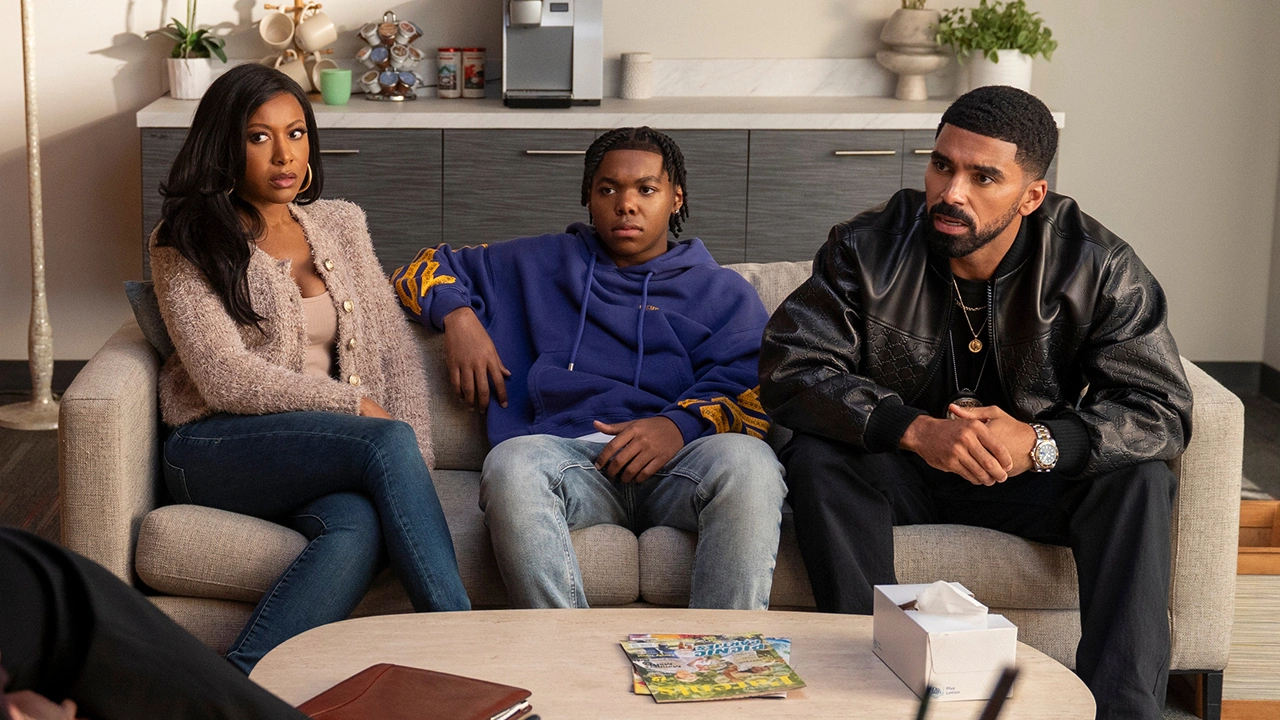
The Wilder Home: Ebony, played with quiet exhaustion by Cleopatra Coleman, suffers through the isolation of a late-term miscarriage. She grows hostile toward Coltrane’s criminal lifestyle, weary of empty promises that each dangerous score will be the final job.
The Stiles Home: Candice Stiles, portrayed by Gabrielle Dennis, actively ejects Isaiah from her life, banishing him to the guest house before initiating a separation. Her life gains fresh complications through interactions with an old flame, Assistant District Attorney Malik Jacobs, played by Jeff Pierre.
The Facilitator: Sophina Brown shines as Charlie, Ebony’s highly fashionable older sister. She operates as the sharp logistical planner who delivers the inside intelligence on major targets.
These contemporary battles are further complicated by multi-generational history. Isaiah’s father, Amos “Nightmare” Stiles, played by Moe Irvin, is an infamous former street figure whose legacy pushes Isaiah into a defensive overcorrection, leading the detective to violate legal protocols to secure arrests. This generational fallout drops heavily onto fifteen-year-old Noah Stiles, played by Cedric Joe. Neglected by an absent father, Noah retreats from his immediate family, seeking validation from his grandfather Amos, a choice that threatens to repeat a cycle of street-level trauma.
Cinematic Lineage and Cultural Geography
Nemesis operates with a high level of media intelligence, flashing its creative inspirations directly to the audience. The pilot opens during a high-society Halloween party in Beverly Hills, where Coltrane Wilder arrives disguised as Nino Brown from the 1991 film New Jack City. This visual signal honors the history of Black urban cinema, a connection strengthened by hiring Mario Van Peebles to direct the first two episodes.
Van Peebles embeds meta-cinematic nods throughout his chapters, including a secondary character watching his father’s historic film, Sweet Sweetback’s Baadasssss Song. The soundtrack mirrors this sharp self-awareness, using tracks from Clipse to offer a cold commentary on the mathematical calculations running through the criminal operations.
The larger architectural framework enters direct conversation with Michael Mann’s 1995 masterpiece, Heat. The series adopts that film’s specific structural design, tracking an obsessed investigator stalking a thief desperate to retire. Kemp and Marole alter this classic blueprint by relocating the narrative geography away from traditional Hollywood backdrops. The action lives in Baldwin Hills, View Park, and South Central, shifting the cultural identity of the traditional Los Angeles crime thriller.
The production rewrites the traditional parts written for women, correcting a historical flaw found in Mann’s classic. The script builds independent storylines for Ebony and Candice, giving both women clear agency and independent financial and romantic choices that change the trajectory of the central investigation. The series updates a familiar masculine format, using high-stakes action as an entry point to study family survival in a modern metropolitan landscape.
High-Velocity Action and Melodramatic Speed Bumps
When the series focuses on criminal mechanics, the technical execution is exceptionally strong. The opening Beverly Hills poker robbery, the multi-store diamond district heist, and the high-speed freeway shootouts are staged with impressive theatricality. The criminal team shifts visual identities constantly, moving from vintage 1930s gangster costumes to terrifying hockey masks and glittering diamond face coverings.
The direction employs fluid camera language and synchronized stunt choreography to make these robberies feel genuinely dangerous. A daylight shootout in Century City uses real geographic landmarks effectively, transforming a familiar commercial district into a tactical war zone.
The narrative momentum hits a wall during the domestic subplots. The series stalls once it leaves the pavement, trapping characters in repetitive, static conversations about work-life balance that fail to move anyone forward. Episode 6, titled “The Die is Cast,” represents the worst of these structural errors.
The chapter spends almost an hour on an extended chase sequence filled with continuous gunfire and explosions, destroying the gritty realism built in the early episodes and turning the production into a soapy action cartoon that fails to progress the plot until the final minutes.
The script suffers from highly predictable television setups. The romantic triangle involving Candice, Isaiah, and Assistant District Attorney Malik relies heavily on standard soap opera conventions, offering little artistic invention. The creative team struggles to balance the two genres, frequently choosing repetitive arguments over dynamic storytelling.
The viewer receives multiple iterations of the same marital complaints, slowing the series down. These domestic distractions feel like unnecessary weight on an otherwise sleek engine, forcing the viewer to sit through family squabbles when they would rather watch a high-speed getaway vehicle.
Performance Portrayals and Precinct Politics
The primary acting choices offer a distinct stylistic contrast. Matthew Law portrays Detective Stiles with a frantic, wild-eyed energy that effectively tracks a civil servant losing his mind. He handles the physical demands of the role well, presenting a man completely consumed by frustration.
Y’lan Noel plays Coltrane Wilder with an icy, buttoned-down composure, delivering threats with a quiet arrogance. A limitation exists within this central pairing, however. Both leads occasionally appear too pristine and emotionally flat, lacking the raw, unwashed grit needed to make their direct standoffs feel dangerous. They often look like fashion models playing at war, softening the impact of their psychological rivalry.
The supporting players frequently rescue the production from its script limitations:
The Heist Crew: Tre Hale provides a grounded presence as the loyal Stro, working alongside Jonnie Park’s silent efficiency as Choi. Quincy Isaiah is a highlight as Deon, playing the volatile, immature uncle with an erratic energy that introduces genuine danger into the team’s planned operations.
The police station benefits from a deep bench of character actors. Michael Potts subverts the cliché of the angry police captain by giving James Sealey a layer of paternal warmth, while Mike O’Malley and Domenick Lombardozzi supply steady, natural workplace humor.
The female ensemble regularly outshines the material provided to them. Cleopatra Coleman, Gabrielle Dennis, and Sophina Brown find moments of deep emotional clarity within a narrative that frequently forgets to develop their subplots.
They lift standard archetypes through sheer performance power, culminating in a striking confrontational scene between Ebony and Charlie in the final hour. These actors find the humanity in a series that regularly threatens to prioritize expensive explosions over its people. Will a potential second season finally align the domestic writing with the high-caliber talent of its ensemble?
The series premiered on May 14, 2026. Audiences can view all eight episodes exclusively on the streaming platform Netflix. The narrative tracks a hard-hitting cat-and-mouse game through the neighborhoods of Los Angeles, mapping the psychological friction between an unyielding police detective and a precise thief who tries to retire from a life of crime.
Where to Watch Nemesis Online


Full Credits
Title: Nemesis
Distributor: Netflix
Release date: May 14, 2026
Rating: TV-MA
Running time: 60 minutes
Director: Mario Van Peebles, Millicent Shelton, Rob Hardy, Ruben Garcia
Writers: Courtney A. Kemp, Tani Marole, Gabriela Uribe, Monica Mitchell, Mike Flynn, Matt K. Turner, Nkechi Okoro Carroll
Producers and Executive Producers: Courtney A. Kemp, Tani Marole, Chris Selak, Philipp Barnett, Mario Van Peebles
Cast: Matthew Law, Y’lan Noel, Cleopatra Coleman, Tre Hale, Domenick Lombardozzi, Jonnie Park, Ariana Guerra, Gabrielle Dennis, Michael Potts, Sophina Brown, Jeff Pierre, Cedric Joe, Moe Irvin, Quincy Isaiah, Mike O’Malley, Shane Johnson, Stephanie Sigman, Khalilah Joi, Siua Ikale’o
Composer: 1500 or Nothin’
The Review
Nemesis
Nemesis succeeds as an action-packed cat-and-mouse thriller, combining spectacular tactical heists with sharp cultural mapping of Los Angeles. While its domestic melodrama occasionally drags the momentum down with repetitive arguments, the stellar supporting cast and exceptional stunt orchestration maintain a high baseline of entertainment. It honors classic cinema blueprints while providing meaningful autonomy to its female ensemble. For viewers seeking a stylized, suspenseful crime saga, this series delivers a solid, highly watchable experience. Can a second season elevate the domestic writing to match the high-caliber action?
PROS
- Spectacularly staged heist sequences and tactical urban shootouts.
- Sophisticated adaptation of classic crime tropes that empowers female characters.
- Excellent use of authentic Los Angeles cultural geography.
- Strong supporting performances, particularly from Quincy Isaiah and Sophina Brown.
- Exceptional technical execution regarding camera movement and stunt choreography.
CONS
- Repetitive domestic exposition scenes that disrupt the pacing.
- Excessive melodrama in the mid-season chase sequences.
- Flatness in the emotional delivery of the two main male leads during face-to-face standoffs.
- Predictable romantic subplots that rely heavily on standard television tropes.