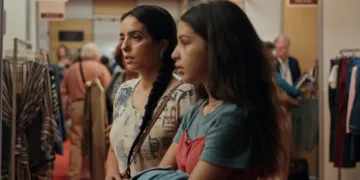



















The working-class suburbs of Paris give writer-director Rudi Rosenberg’s second feature, Words Of Love (Quelques mots d’amour), a stark, lived-in ground. This domestic drama studies the emotional wreckage left by paternal abandonment inside a fragile single-parent home.
Erika is raising two young children with very little money, and her daughter, Abigaëlle, carries an intense need to meet her absent father, Antoine. Rosenberg builds the film around an unusual structural device, a dual timeline separated by a seven-year leap. I remember watching similarly gritty European kitchen-sink dramas in college and noticing how cramped rooms can press on a young person’s sense of self.
Rosenberg makes a work of social realism with heavy melodramatic pressure and flashes of natural domestic humor. The film reflects contemporary worries about fractured households and views the family unit as a delicate ecosystem shaped by old neglect.
The Anatomy of Absence: Plot Trajectories and Fraying Ties
The story opens with a devastating rejection. Erika takes seven-year-old Abigaëlle to Antoine’s apartment block, where a caretaker refuses them entry at the door. Antoine appears as a silent, distant silhouette behind a window curtain, an image that feeds Abigaëlle’s lifelong fixation and leaves her with raw uncertainty. Soon after, the family adopts Vanilla, a stray mudi shepherd dog.
The animal brings a rare source of simple affection into a tense home. After the seven-year ellipsis, the film shifts from childhood hope to adolescent obsession. The teenage Abigaëlle launches a frantic investigation to find her father’s new family. Her pursuit creates fierce tension between Abigaëlle and Erika.
The mother faces a painful inner struggle, caught between shielding her daughter from harsh truths and stopping a fixation that has turned corrosive. My own household passed through a similar season of quiet strain, and Rosenberg catches that domestic claustrophobia with sharp accuracy.
The damage from this pursuit falls heavily on the younger half-brother, Yoni. He changes from a cheerful child into a sidelined youth with behavioral difficulties of his own. Family resources and emotional attention are swallowed by his sister’s desperate search, leaving him pushed aside. The film bends traditional linear growth by tracking how an unhealed psychological wound deepens across a decade.
Framing the Domestic Space: Soundscapes and Shifting Lenses
Cinematographer Éric Dumont uses precise formal choices to define the atmosphere. Static camera work gives the film an observational, documentary-like texture, recalling classic European independent cinema. These rigid frames capture the heavy stillness of the apartment.
During crowded family gatherings, Dumont turns to fluid movement, catching the noisy energy of an extended family network. Sound plays an equal part in building this domestic world. Inside the apartment, Yoni’s loud rock music and heavy guitar reverb seem to shake the small rooms, reflecting the cramped and stressful living conditions.
This interior racket clashes with the exterior score from clarinetist Yom and electronic artist Chapelier Fou. Their lilting melodies soften the screenplay’s emotional weight and create brief pockets of relief. Rosenberg uses comic balance to manage the material. He adds witty dialogue, child-centered gags, and sharp observational comedy to ease the bleakness of the abandonment plot.
The method fits a current independent-cinema pattern, where heavy social issues arrive with bittersweet humor close behind. Some jokes feel slightly disruptive, breaking the naturalistic spell to hand the audience an easy laugh. Having grown up with a loud family soundtrack myself, I found the careful sync between abrasive rock and quiet domestic grief to be one of the film’s strongest technical choices.
Faces of Frustration: Performance and the Final Movement
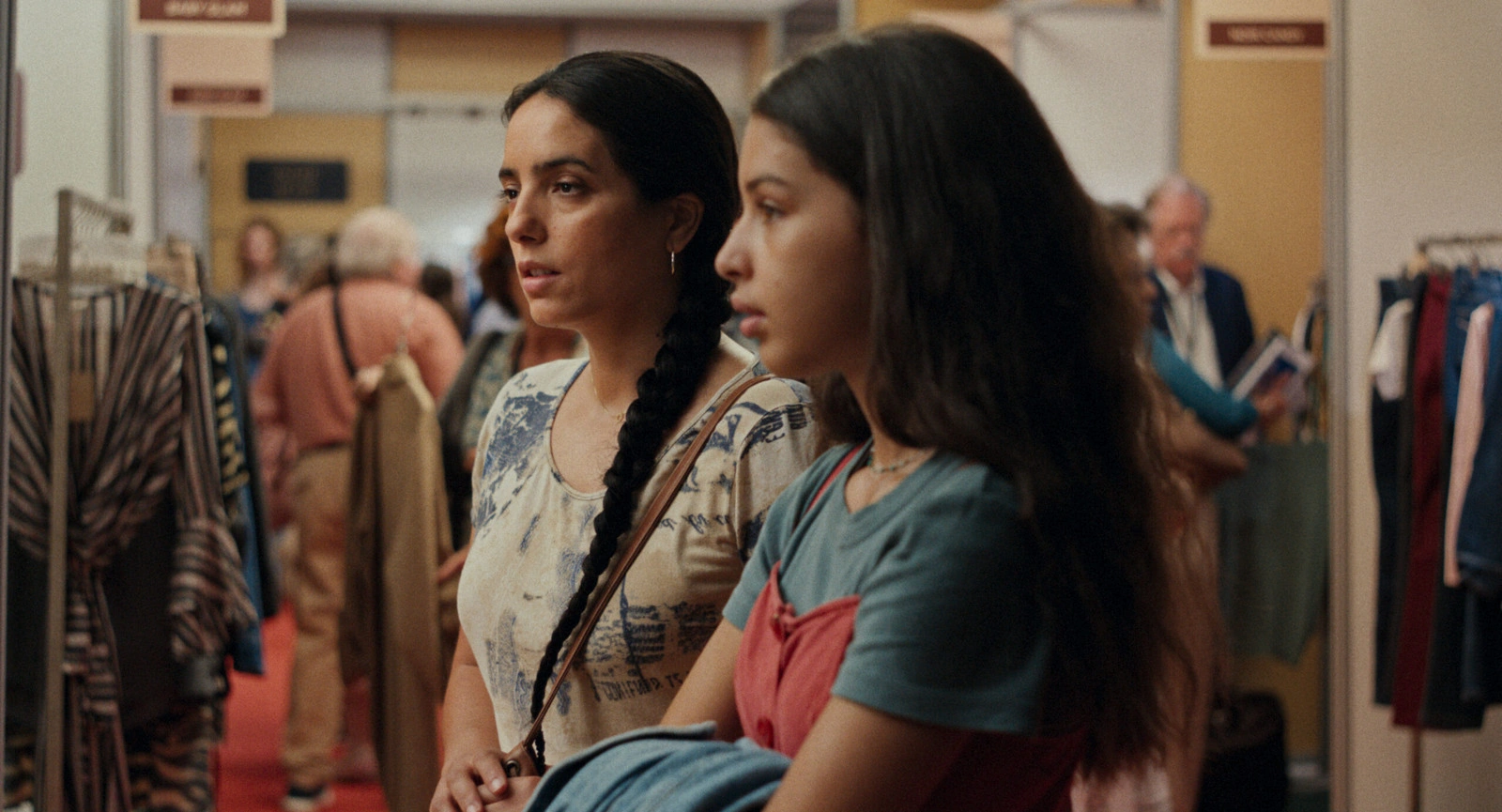
The film’s temporal structure creates real challenges for the cast during the age transitions. Physical and behavioral continuity between the child actors and their teenage counterparts feels shaky. The older Yoni seems miscast, with little physical resemblance and the impression of a character from a completely different background. Nour Salam stands out as the teenage Abigaëlle.
She gives the character defensive anger, vulnerability, and the identity confusion of a young woman searching for answers in a world that denies her a complete history. Hafsia Herzi gives an uneven performance as Erika. She conveys physical exhaustion and fierce maternal protectiveness, then loses force during major arguments. In those high-stakes exchanges, Erika reads as overly petulant, missing the emotional weight the scenes demand.
Stephan Chargeboeuf has limited screen presence as Antoine, using cold, dismissive expressions that fit a simplified villain archetype. The final scenes struggle with a sharp shift in tone. A story rooted in realistic social friction suddenly settles into a conventional, sweet resolution. The tidy climax feels detached from the grit of the earlier acts. The complex storytelling habits established early give way to a predictable crowd-pleasing finish.
Words Of Love made its official world premiere on May 14, 2026, screening in the Un Certain Regard section at the 79th Cannes Film Festival. Because the movie has fresh festival status, wide streaming access is currently restricted to industry screenings and marketplace previews. Audiences seeking a public viewing can look forward to the theatrical release managed by Ad Vitam Distribution, which is locked for October 28, 2026, in France, followed by international rollouts handled by StudioCanal.
Full Credits
Title: Words Of Love
Distributor: Ad Vitam Distribution, StudioCanal
Release date: May 14, 2026
Running time: 97 minutes
Director: Rudi Rosenberg
Writers: Rudi Rosenberg, Bruno Tracq
Producers and Executive Producers: Hugo Sélignac
Cast: Hafsia Herzi, Nour Salam, Ella Bedoucha, Aïdan Djouadi, Mateo Danila, Eden Sarfati, Paulette Chétrit, Jacques Sebban, Stephan Chargeboeuf
Director of Photography (Cinematographer): Éric Dumont
Editors: Delphine Genest, Bruno Tracq
Composer: Yom, Chapelier Fou
The Review
Words Of Love
Words Of Love succeeds as an observational study of domestic absence, anchored by Nour Salam's brilliant performance. Rudi Rosenberg captures the quiet friction of a fractured household with stylistic grit. The production falters in its casting transitions and an uneven lead performance. Its final scenes abandon social realism for conventional melodrama, creating a jarring tonal shift. It remains an affecting piece of independent cinema.
PROS
- Nour Salam provides a raw, authentic performance that grounds the adolescent search for identity.
- Éric Dumont's static cinematography establishes an effective documentary-style realism within the Paris suburbs.
- The internal sound design uses apartment noise skillfully to reflect psychological confinement.
CONS
- The seven-year temporal leap introduces jarring physical and behavioral casting inconsistencies.
- Hafsia Herzi’s performance occasionally lacks the necessary emotional gravity during heavy dramatic confrontations.
- The sugary climax compromises the gritty, realistic tone established throughout the first two acts.