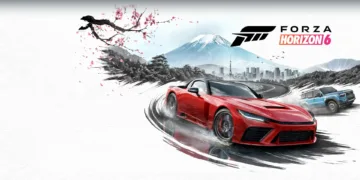



























Forza Horizon 6 takes the open-world racing franchise to Japan, a location deeply tied to global car culture. The map stitches together a dense recreation of Tokyo with varied rural ecosystems, featuring nine distinct regions including the snowy peaks of Sotoyama, the forested Takashiro hills, and the coastal stretches of Ito.
Players enter the festival as tourists, starting with modest vehicles that establish an authentic sense of scale and progression. The open world contains 74 areas and nearly 700 individual roads designed specifically to support drifting, street racing, and open exploration.
Playground Games utilizes this setting to highlight localized automotive themes, from narrow mountain passes to neon-lit urban centers. The game serves as an expansive playground for car enthusiasts, blending structured events with freeform driving across a highly detailed representation of the Japanese landscape.
Map Design as Narrative Space
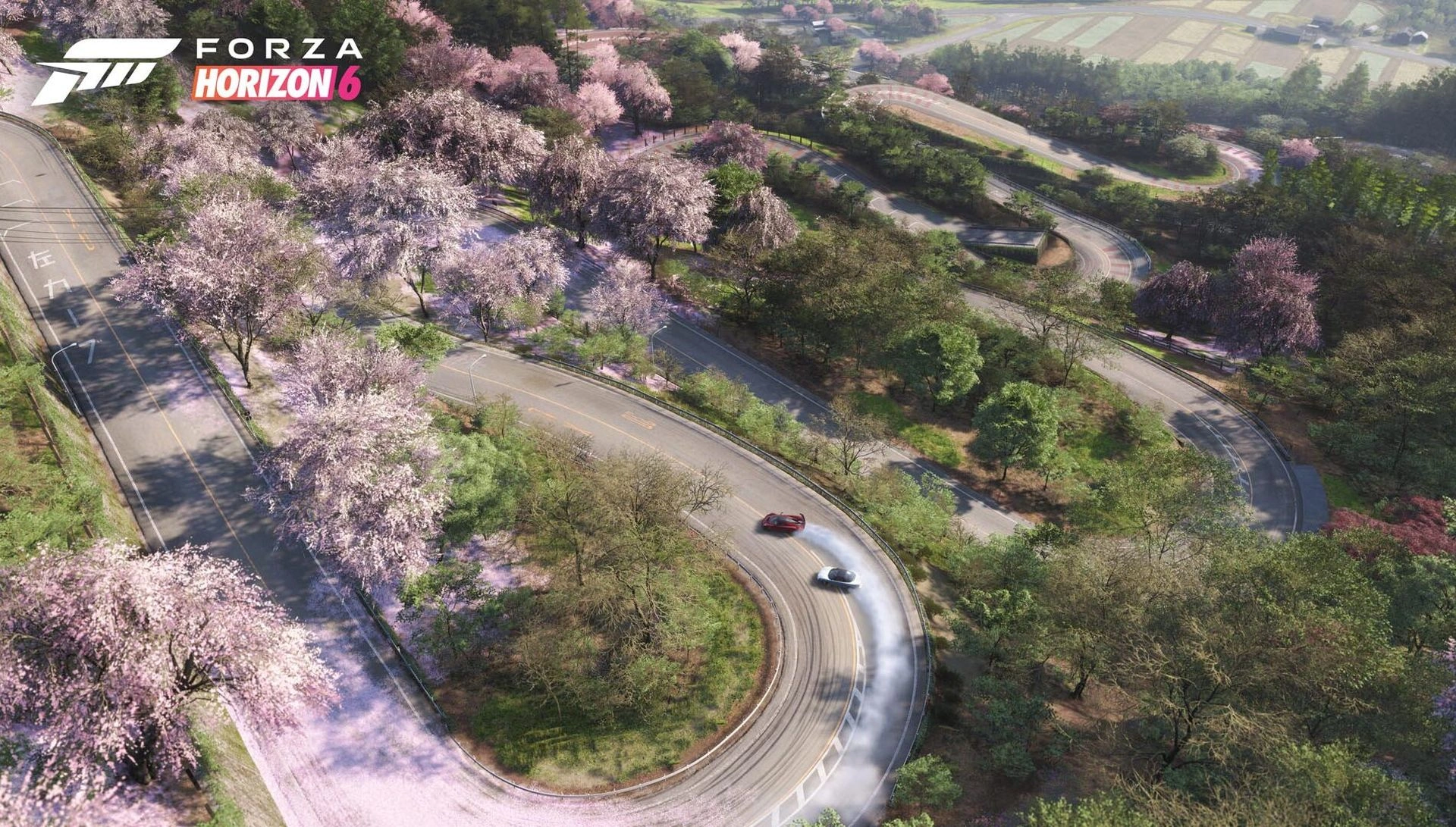
Playground Games builds its version of Japan as a specialized theme park for car culture, prioritizing geographic density over absolute replication. The world splits into nine distinct regions that position contrasting ecosystems directly adjacent to each other. Drivers move from the dense neon grids of Tokyo straight into the snowy elevations of the Sotoyama region, or across the forested hillsides of Takashiro and the coastal stretches of Ito.
This extreme topographical verticality alters how players experience geography. The transition from industrial shipping docks at sea level to the high-altitude passes of the Japan Alps creates a profound sense of physical scale, making the landscape feel like a massive sandbox. The map covers 74 areas and nearly 700 roads, a structural layout that distributes activities across logical environmental zones.
The environmental design functions much like a dense role-playing game map where individual zones reward slow exploration. Localized structural details provide a sense of place. Parking areas are completely customized to their specific neighborhoods, ranging from multi-level drift hubs by the docks to tight concrete spaces tucked beneath highway overpasses and rural convenience stores.
Also Read





Non-interactive petrol stations are scattered across the landscape to ground the world in real-world infrastructure. The road surfaces themselves communicate variety through changing physical details. Grooved asphalt inside metropolitan tunnels transitions to corrugated gravel on rural estate pathways, while asphalt mountain passes feature permanent rubber scoring from previous drivers.
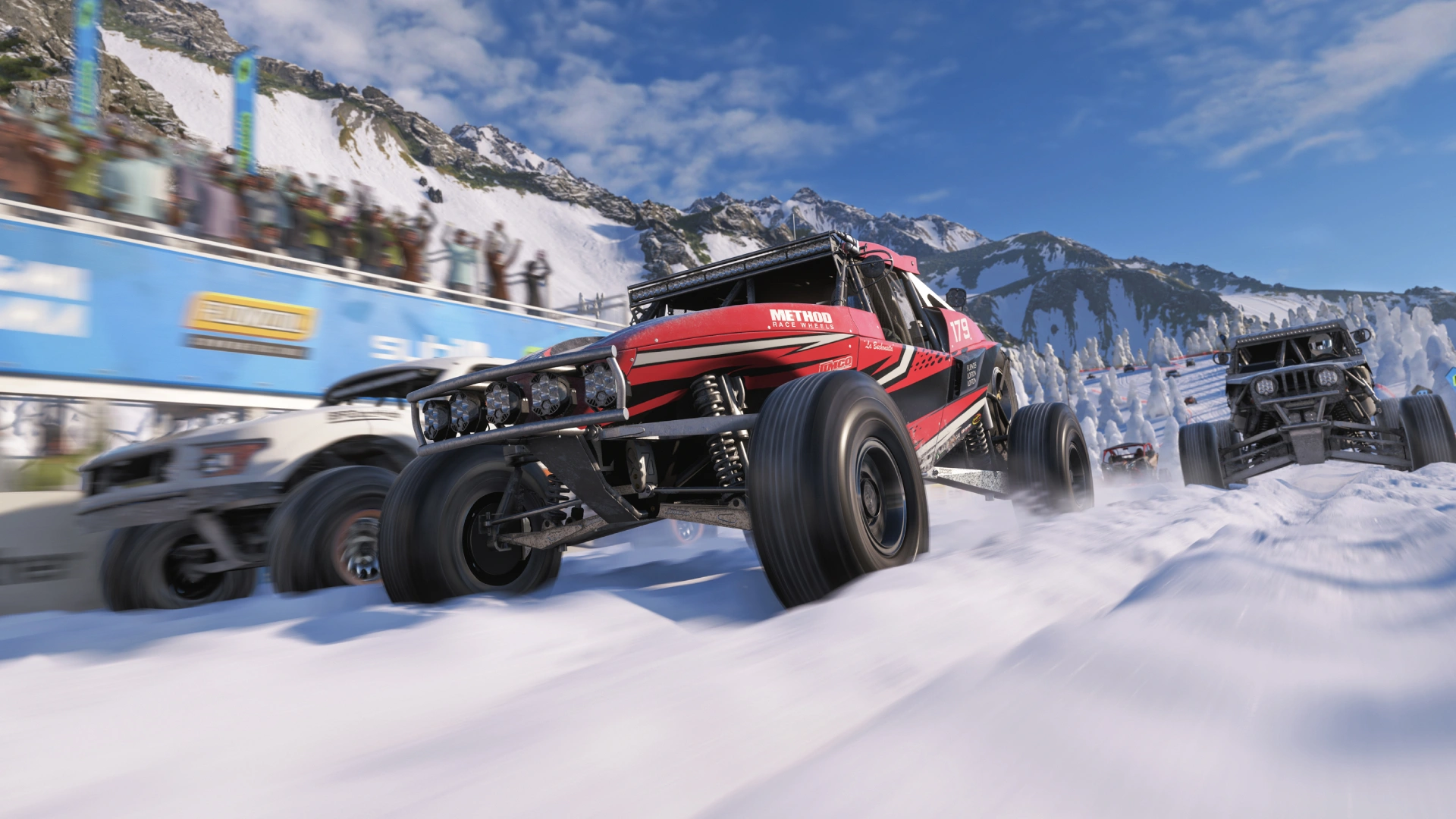
The world conditions shift dynamically through a system of 72 micro-seasons. These shifts introduce visual mutations like spring cherry blossoms or dense summer foliage, changing the thematic flavor of the space. Weather changes physically wrap around the vehicles. Cold weather encrusts car bodies in a rough layer of frost, and cold air causes visible exhaust vapor to billow behind the cars. This visual loop connects the machine directly to the environment, reinforcing the mechanical reality of the world.
Mechanical Synergy and Event Design
The handling model strikes a deliberate balance, anchoring arcade accessibility with a simulation-heavy sensation of weight and tire adhesion. Vehicles react realistically to momentum shifts, yet steering inputs remain responsive on a standard gamepad. For players utilizing a dedicated steering wheel peripheral, the physics engine delivers upgraded fidelity. Front-end tire grip delivers precision surpassing past installments, giving drivers a clear tactile sense of exactly how tires grip tight mountain asphalt or slip on frosty surfaces.

This mechanical foundation supports a revamped suite of event typologies that emphasize player skill. Horizon Rush events present timed obstacle courses packed with tight technical corners and massive jumps, using cinematic flourishes like low-flying helicopters and rocket launch backdrops to frame the spectacle. Touge Battles shift the focus to intimate, one-on-one competitive matches on winding mountain roads, testing precise placement over raw speed.
For players who prefer pure optimization, Time Attack Circuits operate as seamless hotlapping stations. These open-world nodes feature immediate, class-specific leaderboards that allow competitive drivers to challenge player records without loading screens. Drag Racing tracks offer instantaneous straight-line sprints, providing a frictionless space for the tuning community to test gear ratios and engine builds without delay.
These additions coexist with traditional open-world activities. Standard PR stunts like Speed Traps, Danger Zones, and Drift Zones are placed with clear intention along the roads, matching the natural flow of the topography and serving the environment’s geographic logic.
The high-production Showcase events present scripted set-pieces against unorthodox opponents, highlighted by a race through Tokyo against a massive mechanical walker. The Goliath race represents the ultimate test of endurance, taking 22 minutes to complete a single lap that links every region of the map, demanding sustained focus and mechanical mastery across changing terrain types.
Progression Architecture and the Economy of Choice
The campaign structure abandons the immediate wish-fulfillment of its predecessor, introducing a meaningful progression loop modeled after classic role-playing frameworks. Past Forza Horizon entries positioned players as instant superstars; this installment starts them as unranked festival outsiders who must earn their standing.
Progress requires climbing through seven distinct wristband tiers, which locks early events to low-performance Class D vehicles. This design choice forces players to understand the mechanical quirks of slower cars, making subsequent speed upgrades feel earned. Advancing to a higher tier requires generating enough experience to unlock a high-stakes finale, structured as either a traditional Showcase or a technical Horizon Rush obstacle race.
Reaching the final tier unlocks Legend Island, a dedicated endgame zone. The surrounding narrative builds immense anticipation for this location; the actual space functions primarily as a concentrated hub for late-game activities and the unlocking of historical events like the Goliath race.
To balance this linear racing career, the game introduces a parallel progression architecture through the Collection Journal. This split progression model tracks non-racing exploration via the Discover Japan path, allowing players to choose how they engage with the world. Advancing this track requires earning seven distinct stamps by completing diverse regional activities. Drivers can hunt down regional food and beverage mascots scattered across the terrain, or complete narrative-driven Horizon Stories like joining a Tokyo drift club or assisting with automotive photography.
A distinct highlight is the Tokyo City Food Delivery job, which places the player in an overpowered, miniature commercial truck for timed, high-stress deliveries through urban traffic. Progressing through the journal unlocks property options and rewards players with classic exploration loops, including an expanded selection of hidden Barn Finds and nine unique Treasure Cars hidden behind photographic landmark clues. This dual-track framework ensures that every mechanical action translates into meaningful systemic reward.
Sandbox Customization and Social Infrastructure
The creative sandbox expands significantly by giving players ownership over physical spaces within the world. Unlocking rural Estate properties awards massive plots of land that serve as development canvases. Players can use the comprehensive track and park builder tools to construct custom race tracks or detailed stunt arenas, deploying a vast array of structural assets and environmental props. This internal editing extends to personal garages, allowing drivers to customize their private showrooms with structural details and workshop props to create personalized spaces.

Vehicle personalization receives a targeted, highly requested mechanical upgrade in the livery editor, which now allows the placement of vinyl decals directly onto rear and side glass surfaces. This visual ownership pairs with a new approach to car commerce. Players can find customized aftermarket vehicles parked directly within the open world, bypassing menu navigation entirely. These pre-modified machines and rare variants are available for real-time inspection and purchase at discounted credit rates, turning car acquisition into an organic discovery mechanic.
The social architecture integrates these elements into shared-world spaces. Dedicated open-world car meets function as physical lobbies where players park, inspect individual builds, and download custom liveries seamlessly. For competitive players, the new Spec Racing mode addresses long-standing balance concerns by enforcing fixed car models with locked parts and identical tuning configurations.
This enforcement eliminates the influence of community optimization trends, creating a level playing field focused purely on driver skill. This balanced format runs alongside returning multiplayer modes, including the vehicle battle-royale and the stealth-focused Hide and Seek variant.
Sensory Systems and Technical Execution
Technical execution on console hardware offers two distinct performance profiles. Quality Mode delivers a native 4K resolution locked at a stable 30 frames per second, maximizing visual density. Performance Mode targets a fluid 60 frames per second at a dynamic 4K resolution, prioritizing input responsiveness for high-speed driving. Both modes maintain absolute performance stability without visual stuttering.
Acoustic design uses spatial audio systems to enrich the environment. Engine notes echo realistically within concrete urban tunnels, while snowy mountain expanses visibly muffle tire and exhaust sounds. The auditory experience is supported by curated radio stations, including Hospital Records, Horizon XS, Horizon Wave, Sub Pop, and the specialized Gacha City Radio, anchored by returning radio hosts who provide dynamic commentary based on player achievements.
Accessibility remains a foundational element of the design. The game features a highly customizable high-contrast mode alongside optional automated driving assistance toggles to accommodate diverse player requirements. Specialized sensory indicators provide distinct audio and visual cues to help players identify vehicle collisions instantly, ensuring clear feedback during intense events.
The Review
Forza Horizon 6
Forza Horizon 6 delivers a masterful open-world racing experience by pairing precise handling mechanics with an exceptionally structured progression system. Returning to explicit tier locks makes vehicle acquisition feel earned, while the Japanese map offers incredible verticality and meticulous infrastructure detail. Minor shortcomings like an anticlimactic endgame zone do little to diminish the brilliant dual-track campaign design and expanded creative sandbox. It is an exceptional simulation-arcade hybrid that respects the player's time and choice.
PROS
- The structured progression loop makes advancing through tiers feel meaningful and rewarding.
- Meticulous map design provides varied biomes and highly detailed, localized parking structures.
- Upgraded steering wheel peripheral physics offer precise front-end tire grip communication.
- The dual-track Collection Journal seamlessly accommodates diverse exploration and racing styles.
- Spec Racing mode establishes a perfectly balanced, skill-focused multiplayer framework.
CONS
- Legend Island serves as a somewhat anticlimactic endgame location given the in-game anticipation.
- Character voice acting occasionally lacks natural delivery during narrative segments.
- Minor auditory and visual bugs require an occasional software restart during early play.