





























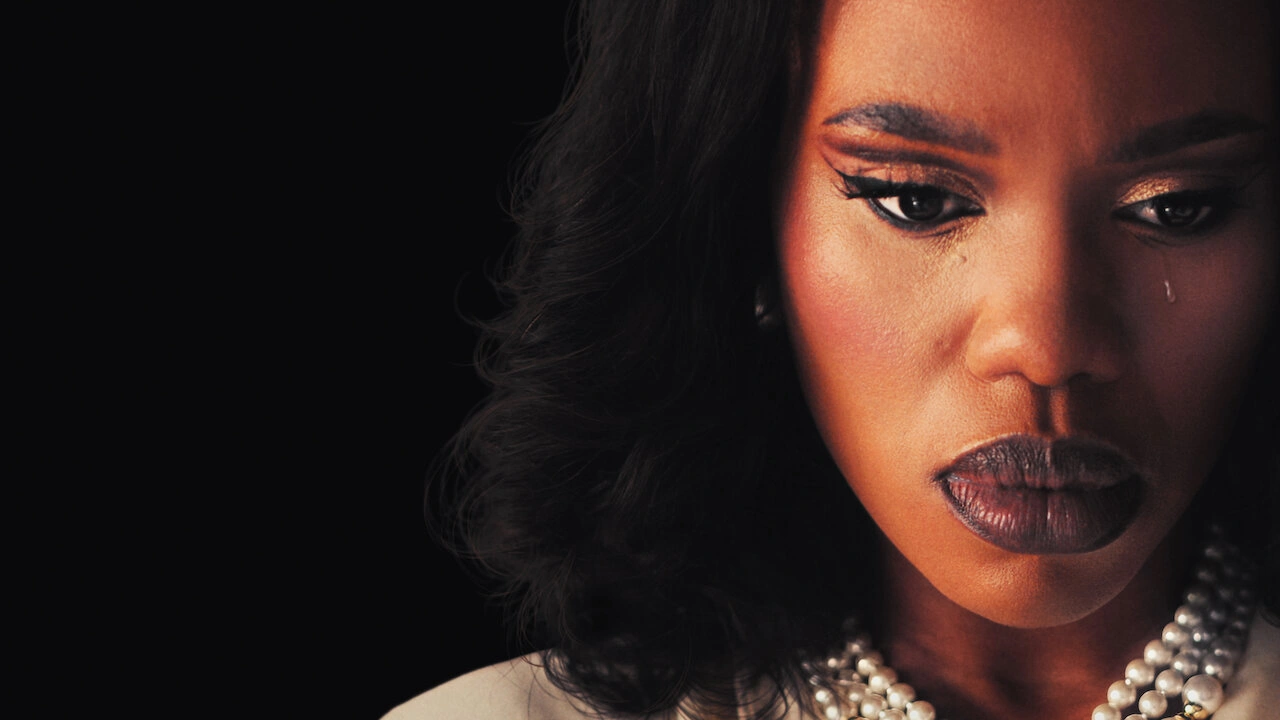

The Polygamist enters Netflix’s catalogue with the confidence of a show that has no interest in whispering. Based on Sue Nyathi’s novel, this South African telenovela stretches across 22 episodes and follows Jonasi Gomora, a self-made CEO whose empire looks immaculate from the outside while his private life burns like bad wiring behind expensive walls.
Jonasi has money, status, influence, and the social polish of a man accustomed to applause. He also has wives, mistresses, secrets, and a talent for creating emotional wreckage. His marriage to Joyce Gomora, once tied to love and business ambition, has collapsed into humiliation and fury. Joyce, an influencer with a public image to protect, becomes the series’ emotional anchor.
The opening funeral scene, with Joyce dressed in white and speaking venomously to Jonasi’s coffin, gives the show its moral temperature. This is love after corrosion. This is power after the invoice arrives. Matipa Nkosi, Jonasi’s mistress, ignites much of the early conflict, turning the story into a glossy spectacle of betrayal, sex, family warfare, and revenge.
Marriage, Ownership, and the Business of Desire
The central drama of The Polygamist comes from a simple idea: Jonasi treats relationships like acquisitions. His personal life mirrors his corporate world, where loyalty can be negotiated, damage can be managed, and people can be moved around like assets on a spreadsheet. It is a chillingly familiar fantasy, especially in societies where patriarchal authority often hides behind family language, wealth, or tradition.
Joyce and Jonasi built J&J Holdings together, which makes his betrayal feel economic as much as romantic. He has left their home for Matipa, sends divorce papers, and still expects Joyce to absorb the disgrace with the grace of a woman trained for public composure. Joyce refuses. Her rage becomes the show’s engine, and the moment she burns Jonasi and Matipa’s passports and tickets captures the series’ entire emotional grammar. Subtle? No. Effective? Often.
The accidental house fire that follows is pure telenovela combustion, literal and symbolic. The marriage is already ash. The show simply gives the damage flames.
The younger characters, including Mpume, Menzi, Sarah, and Freedom, extend the drama beyond Jonasi’s bed-hopping empire. Their club storyline brings class tension, drugs, reckless masculinity, and generational anxiety into the frame. Freedom, in particular, functions like a loose electrical cable, sparking trouble while hinting at deeper family fractures.
The series has a weakness for pileups. One secret rarely arrives alone. Betrayal brings another betrayal, then a confrontation, then a public scene, then someone makes a spectacularly poor choice. It can be exhilarating. It can also feel like narrative hypertension.
Joyce Holds the Emotional Center
Gugu Gumede gives The Polygamist its strongest pulse. As Joyce, she plays humiliation without reducing the character to suffering. There is pride in her posture, fury in her silence, and a bruised intelligence beneath her most explosive actions. Joyce could have become a decorative wronged wife, the kind of figure melodrama sometimes places near the center while giving her little interior life. Gumede prevents that flattening.

Her performance is at its best when Joyce’s public mask begins to crack. The influencer persona matters because Joyce understands performance as survival. She offers relationship advice online while her own marriage decays in private, a cruel joke with very modern teeth. In the age of curated happiness, Joyce becomes a symbol of domestic theatre, the smiling face placed over structural rot.
S’dumo Mtshali plays Jonasi with enough charisma to explain why people orbit him and enough arrogance to make that orbit feel dangerous. Jonasi is selfish, manipulative, and allergic to accountability, yet Mtshali keeps him human. That does not absolve the character. It makes him easier to recognize. Plenty of powerful men have mistaken charm for moral credit.
Kwanele Mthethwa gives Matipa a sharp presence within a role that can lean toward familiar seduction tropes. Matipa is ambitious and strategic, yet the series sometimes frames her rise through Jonasi too narrowly. Still, Mthethwa finds calculation, vulnerability, and hunger in the character.
The supporting ensemble commits fully to the heightened world. Kenneth Nkosi, Sthandiwe Kgoroge, Khanyi Mbau, Celeste Ntuli, Vuyo Biyela, Noluthando Shabalala, Wonder Ndlovu, and Nolwazi Mafeka all understand the assignment. Some reactions arrive at hurricane level, then again, this is a show where emotional restraint would probably be escorted off the premises.
Glamour, Excess, and the Pleasure of Bad Decisions
Visually, The Polygamist knows how to sell power. Johannesburg’s wealthy spaces are presented through polished interiors, executive offices, glossy parties, expensive wardrobes, and the carefully arranged surfaces of status. The production design has a clean, aspirational sheen, giving the series a strong identity rooted in South African luxury and class contrast.

Wardrobe plays a major role in that identity. Joyce’s looks often feel like armor. Jonasi’s corporate world is dressed in confidence, sometimes with a faint whiff of overcompensation. The glamorous settings help the show turn private betrayal into public theatre, which is where telenovelas often do their finest dirty work.
The pacing is both a blessing and a headache. Episodes run around 25 to 30 minutes, which makes the show easy to binge. The 22-episode structure gives the drama room to sprawl, flirt, scheme, and combust. It also leaves space for repetition. Arguments circle back. Cliffhangers do not always receive satisfying payoff. Some emotional beats recur with the persistence of an unpaid bill.
Still, the show remains watchable because it understands pleasure. The Polygamist is comfort melodrama with sharper cultural edges: marriage as property dispute, sex as leverage, wealth as camouflage, family as battlefield. It is often ridiculous, frequently exhausting, and sometimes genuinely absorbing. The best moments suggest a sharper study of patriarchal control and public image. The weaker moments settle for scandal because scandal is easier to refill.
That contradiction is part of the experience. The series wants to critique Jonasi’s appetite while feeding the viewer a full banquet of his consequences. Messy? Absolutely. Addictive? Annoyingly, yes.
The Polygamist is a South African drama telenovela television series that premiered its 22-episode first season globally on Netflix on June 12, 2026. Based on the bestselling 2012 novel by Zimbabwean author Sue Nyathi, the narrative centers on a wealthy, self-made CEO whose carefully structured family empire and curated public reputation completely dissolve when his extensive web of secret wives, mistresses, and lies is violently exposed. Audiences looking to watch the high-gloss production can stream the complete first season online immediately by logging into their Netflix account.
Where to Watch Online


Full Credits
Title: The Polygamist
Distributor: Netflix
Release date: June 12, 2026
Rating: TV-MA
Running time: 30–45 minutes per episode
Director: Akin Omotoso, Rolie Nikiwe
Writers: Busisiwe Zwane (Based on the novel The Polygamist by Sue Nyathi)
Producers and Executive Producers: Busisiwe Zwane
Cast: Gugu Gumede, S’dumo Mtshali, Kwanele Mthethwa, Noluthando Shabalala, Kenneth Nkosi, Wonder Ndlovu, Celeste Ntuli, Sthandiwe Kgoroge, Luyanda Zwane, Nolwazi Mafeka, Vuyo Biyela, Ntobeko Mathebula
- Composer: Zethu Mashika
The Review
The Polygamist
The Polygamist is lavish, messy, and shamelessly addictive, a South African telenovela that turns betrayal into spectacle and patriarchal control into melodramatic fuel. Gugu Gumede gives the series its emotional force, while S’dumo Mtshali keeps Jonasi fascinating in all his selfish ruin. The 22-episode run can feel repetitive, with scandals stacked higher than the furniture in Jonasi’s mansion, yet the show’s glamour and heat make it hard to ignore.
PROS
- Gugu Gumede delivers a powerful lead performance
- Glossy South African setting gives the series strong visual identity
- Addictive telenovela pacing keeps the drama moving
- Themes of marriage, power, image, and control give the story weight
- Strong wardrobe and production design
CONS
- Some conflicts become repetitive
- The 22-episode season feels stretched
- Certain cliffhangers lack satisfying payoff
- Dialogue can sound too rehearsed
- The melodrama occasionally overwhelms character depth